
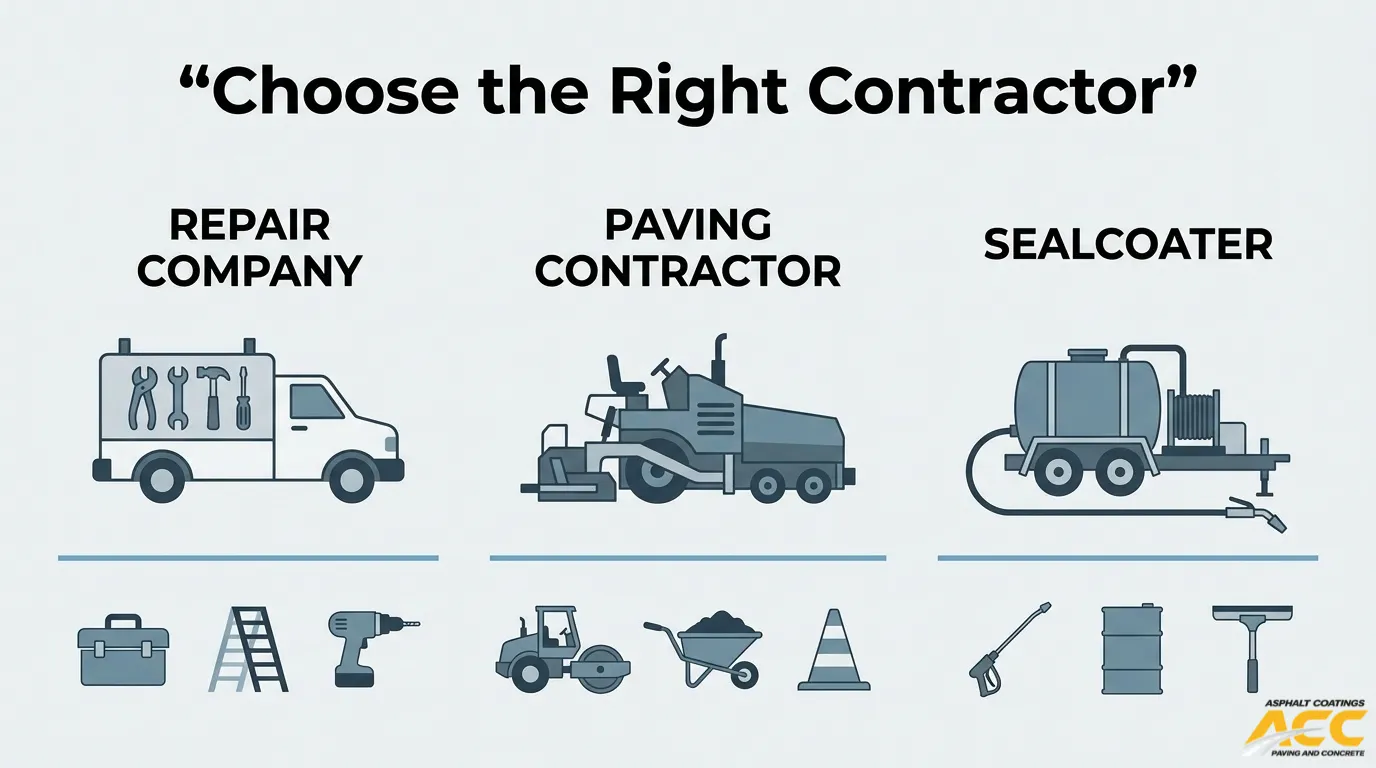
Parking Lot Repair Company vs. Paving Contractor vs. Sealcoater: Who Should You Call for Each Parking Lot Problem?
October 9, 2026
A parking lot repair company, a paving contractor, and a sealcoater are three distinct contractor types, each built to solve a different category of asphalt damage. Calling the wrong one wastes budget and leaves the actual problem unresolved. This guide covers contractor distinctions and licensing, problem-to-contractor matching, when to call each specialist, crack and joint
Read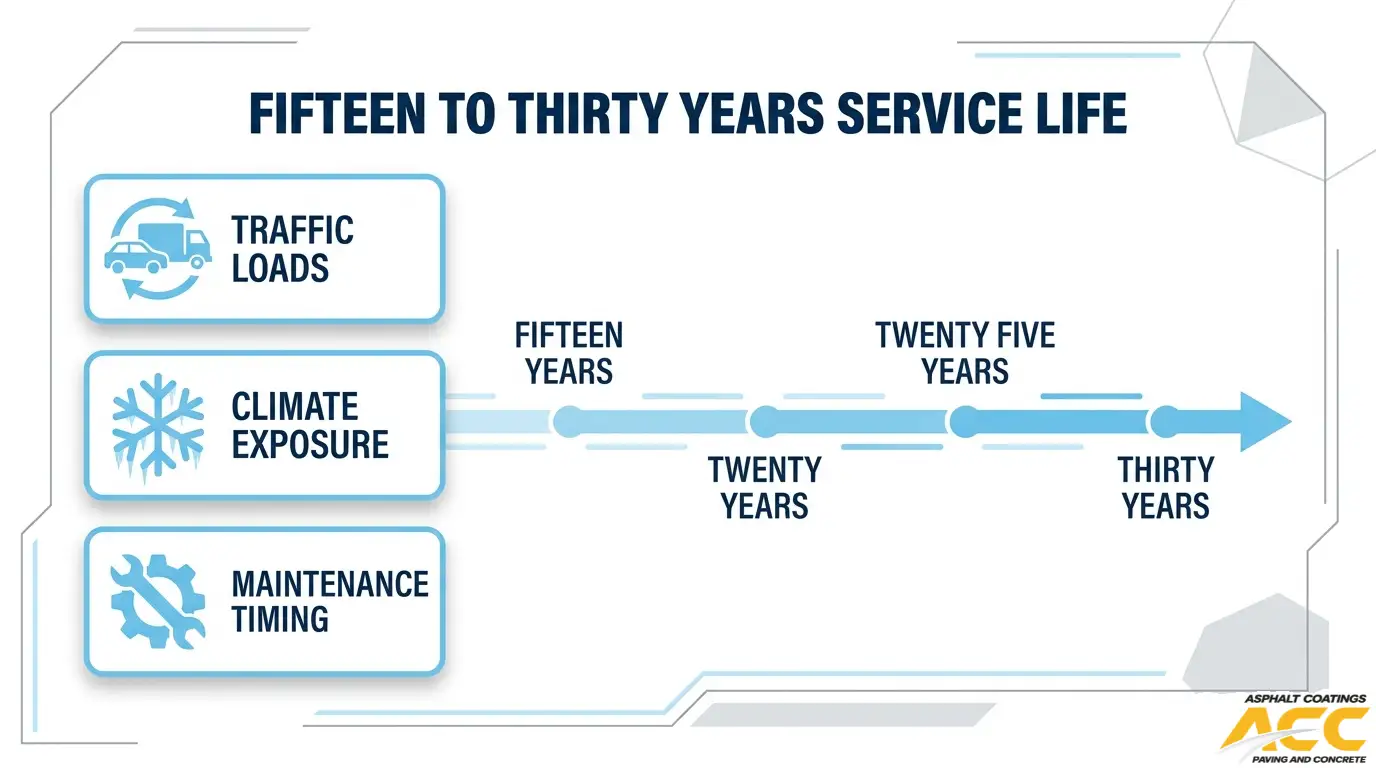
How Long Does Asphalt Paving Last – Complete Guide
August 27, 2026
Asphalt paving for commercial properties is a layered system of binder, graded aggregates, and prepared base courses that typically delivers 15 to 30 years of service life. Actual longevity depends on how climate, traffic, structural design, maintenance, and installation quality interact across the pavement’s deterioration curve. This guide covers durability factors and property-type benchmarks, climate
Read
Commercial Asphalt Sealcoating Process: Steps & DIY Guide
August 27, 2026
Commercial asphalt sealcoating is a pavement preservation method that applies a protective emulsion layer over existing asphalt to shield it from ultraviolet radiation, water infiltration, chemical spills, and freeze-thaw damage. A DIY guide pairs with this process by giving property managers the knowledge to evaluate project scope, execute smaller jobs independently, and make informed decisions
Read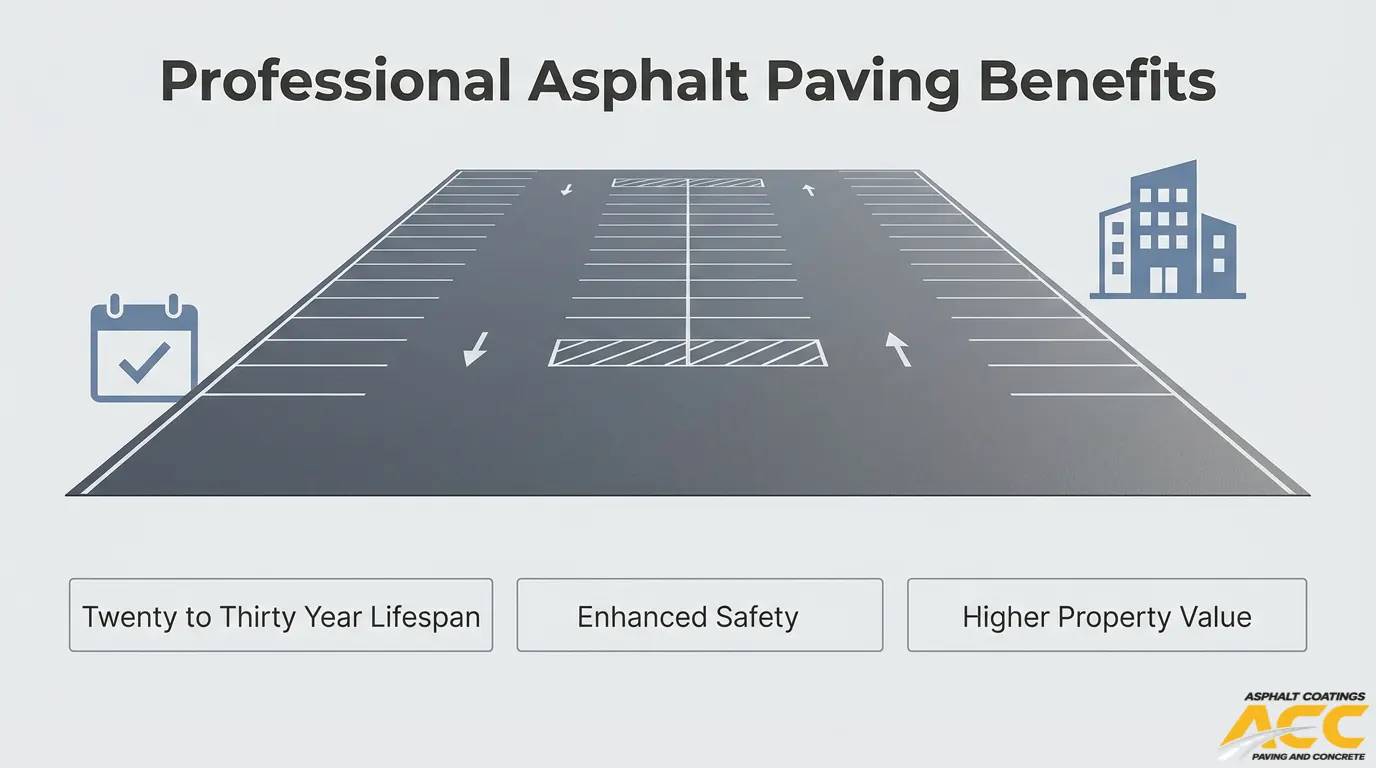
Benefits of Professional Commercial Asphalt Paving
August 27, 2026
Professional commercial asphalt paving is the engineered installation of asphalt surfaces on commercial properties to deliver lasting durability, safety, and financial return. When executed by qualified contractors, it produces pavement that can perform for 20 to 30 years with proper maintenance. This guide covers functional performance, curb appeal and property value, cost and ROI strategy,
Read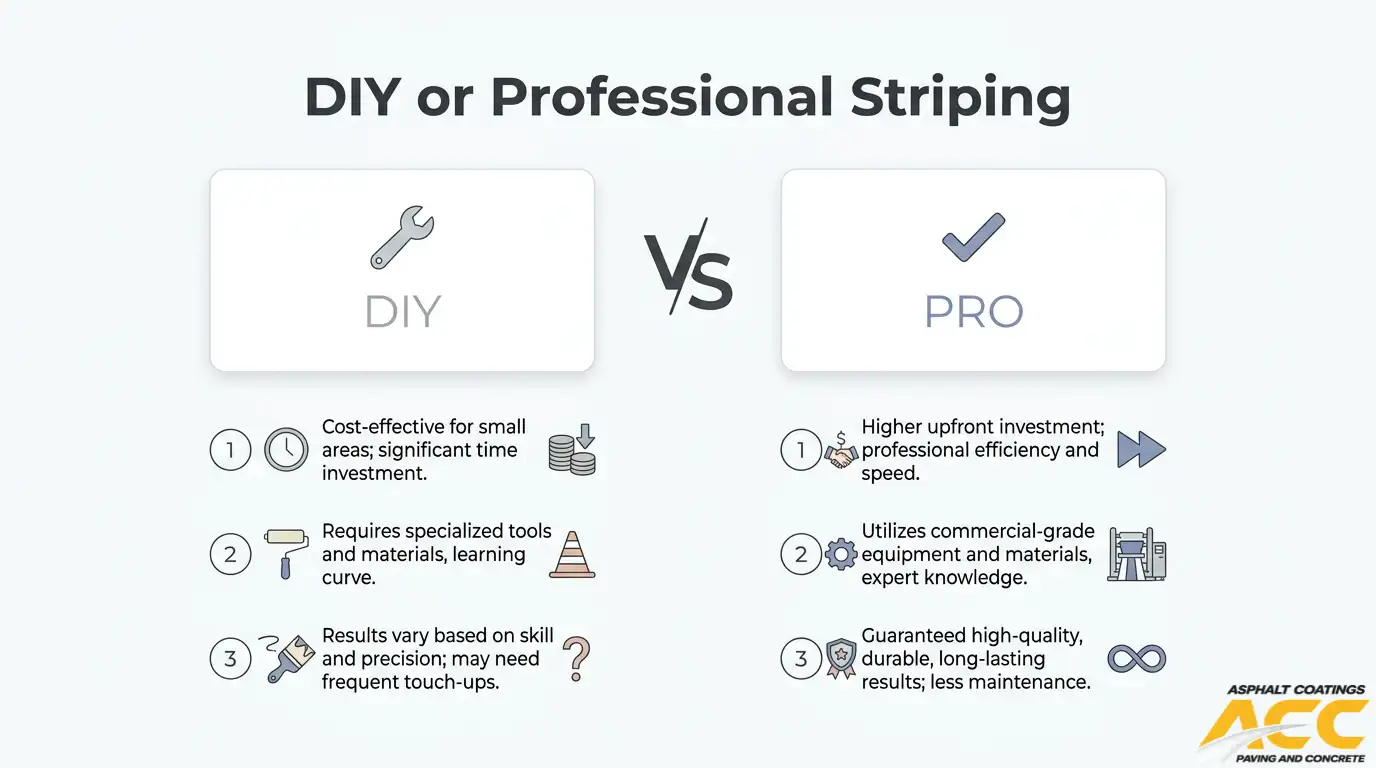
DIY vs. Professional Pavement Striping
August 27, 2026
Pavement striping is the application of painted lines, symbols, and markings to asphalt or concrete surfaces that organize traffic flow, define parking stalls, and designate accessible spaces, fire lanes, and pedestrian corridors. For commercial properties, the choice between handling this work yourself and hiring a professional contractor carries real consequences for safety, legal compliance, and
Read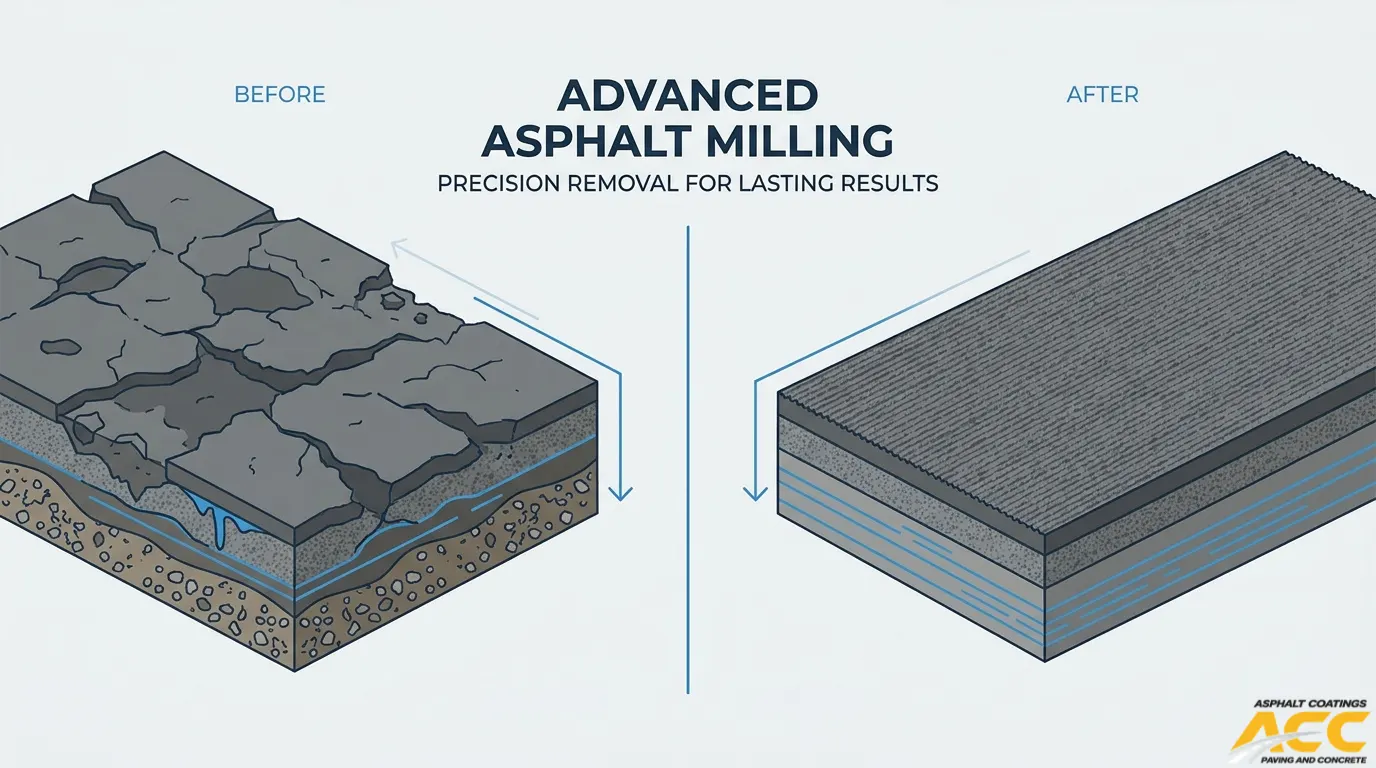
Advanced Asphalt Milling: Techniques & Best Practices
August 27, 2026
Advanced asphalt milling is the controlled cold removal of deteriorated pavement to a specified depth and profile, restoring commercial surfaces for overlay, recycling, or full reconstruction. This guide covers the milling process and advanced techniques, equipment and tooling selection, climate and environmental considerations, parking lot best practices and maintenance integration, safety and traffic management, RAP
Read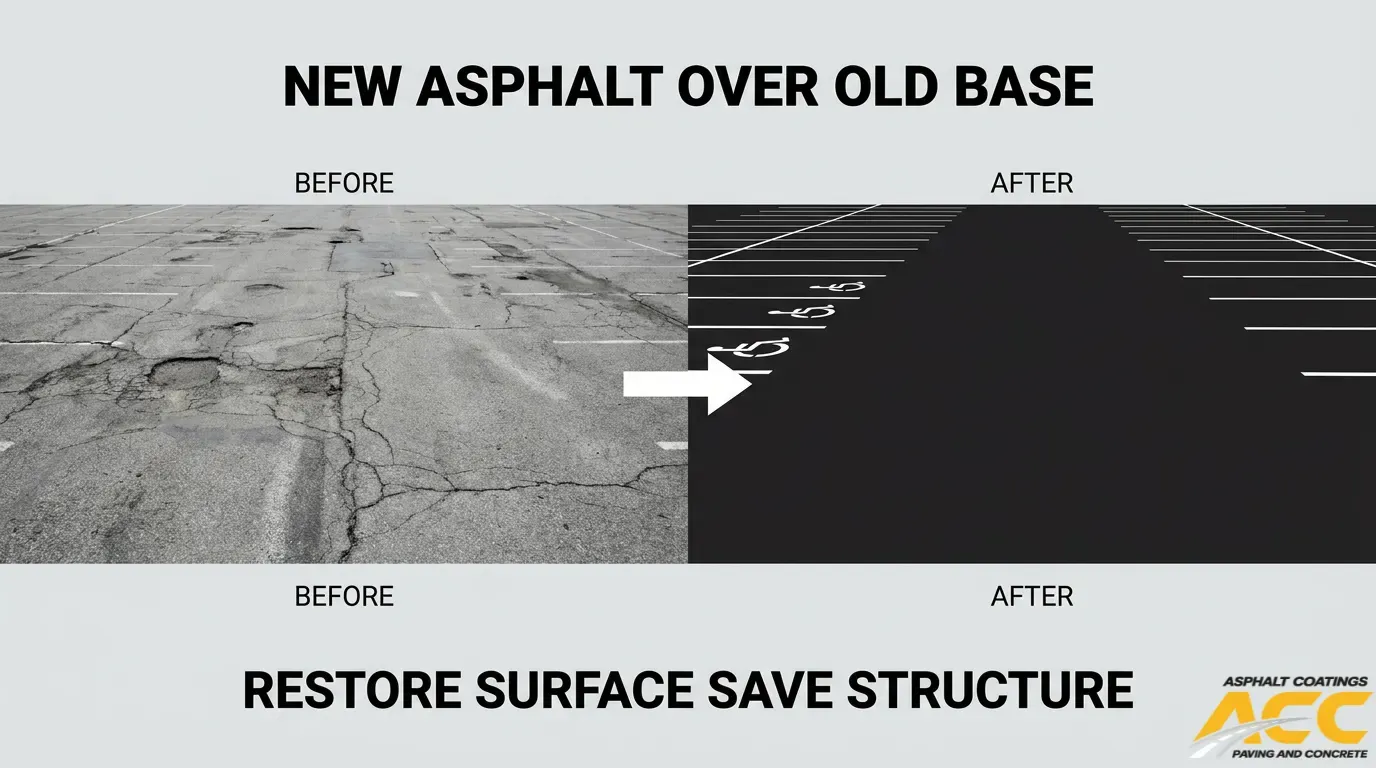
What is Asphalt Overlay? Process & Commercial Benefits
August 27, 2026
Asphalt overlay is a pavement rehabilitation method that places a new layer of hot mix asphalt, typically 1 to 3 inches thick, over an existing surface to restore ride quality and structural capacity without removing the underlying base. This guide covers overlay fundamentals and candidacy criteria, the step-by-step installation process, commercial benefits and long-term ROI,
Read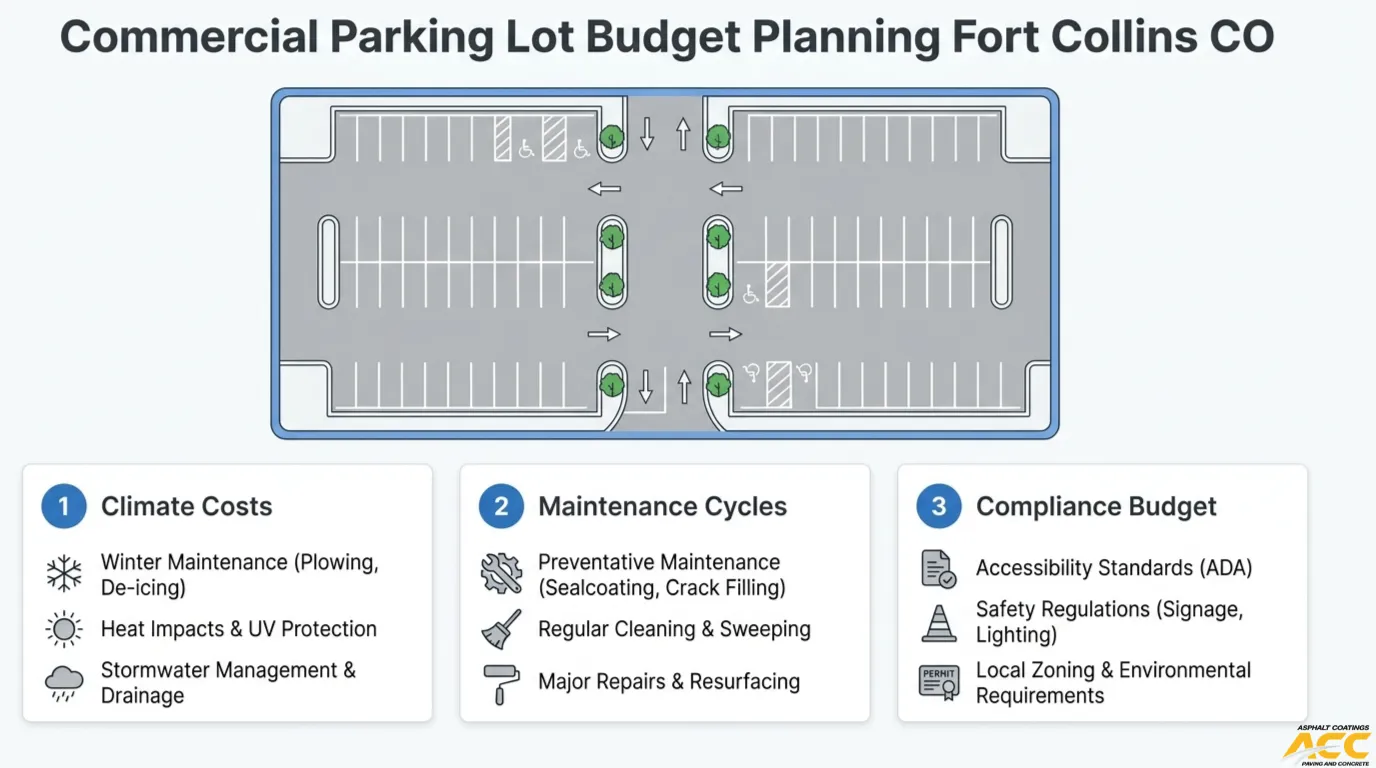
How Should You Plan a Commercial Parking Lot Maintenance Budget in Fort Collins, CO?
August 4, 2026
A commercial parking lot maintenance budget is a structured annual allocation that covers every service needed to preserve pavement condition, meet compliance standards, and prevent costly emergency repairs across a property’s life cycle. This guide covers essential budget line items, Fort Collins climate impacts, annual cost estimation by property type, material and design decisions, maintenance
Read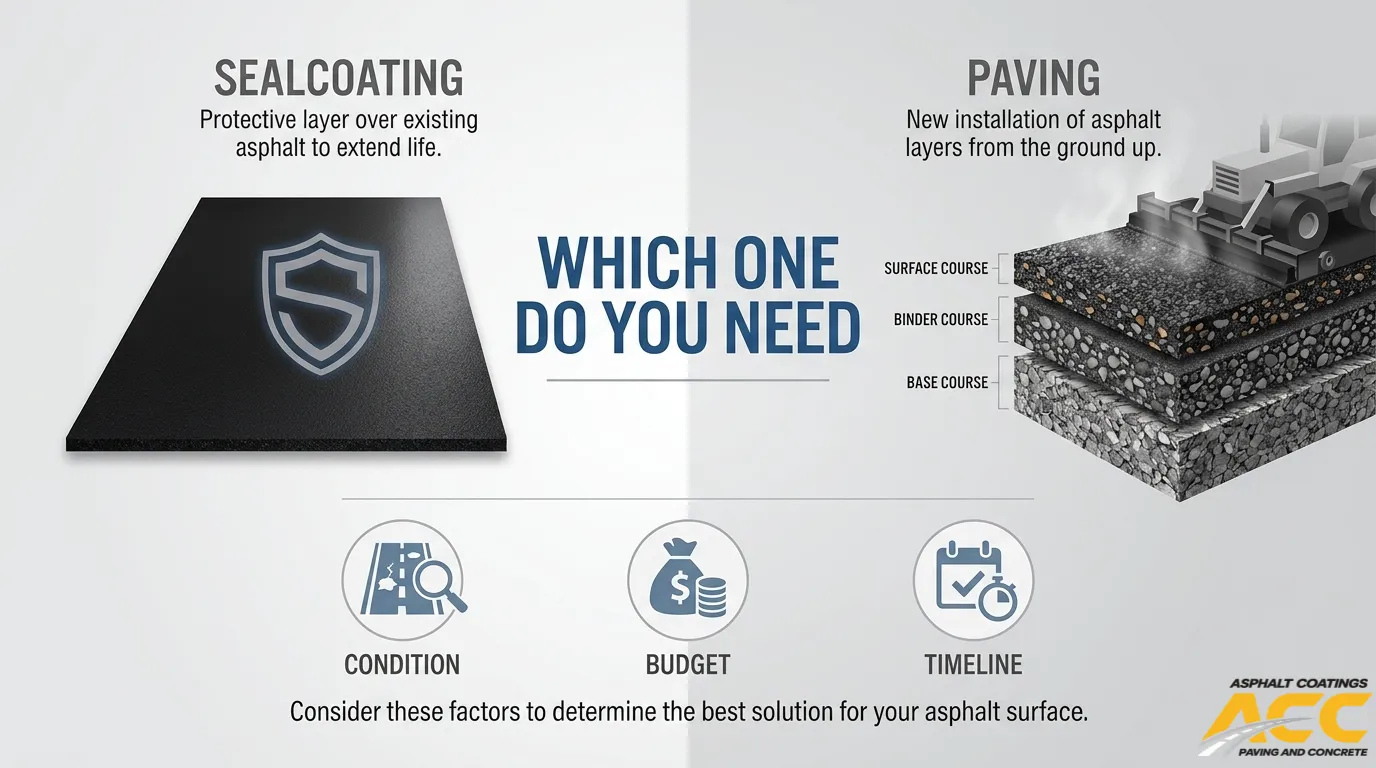
Sealcoating vs. Paving: How to Know Your Commercial Parking Lot Actually Needs
August 3, 2026
Sealcoating is a preventive surface treatment that shields structurally sound asphalt from UV rays, water, and chemical damage; paving is the installation or replacement of the asphalt structure itself. Choosing between them depends on your lot’s current condition, not preference. This guide covers how each service works and when it applies, condition assessment methods for
Read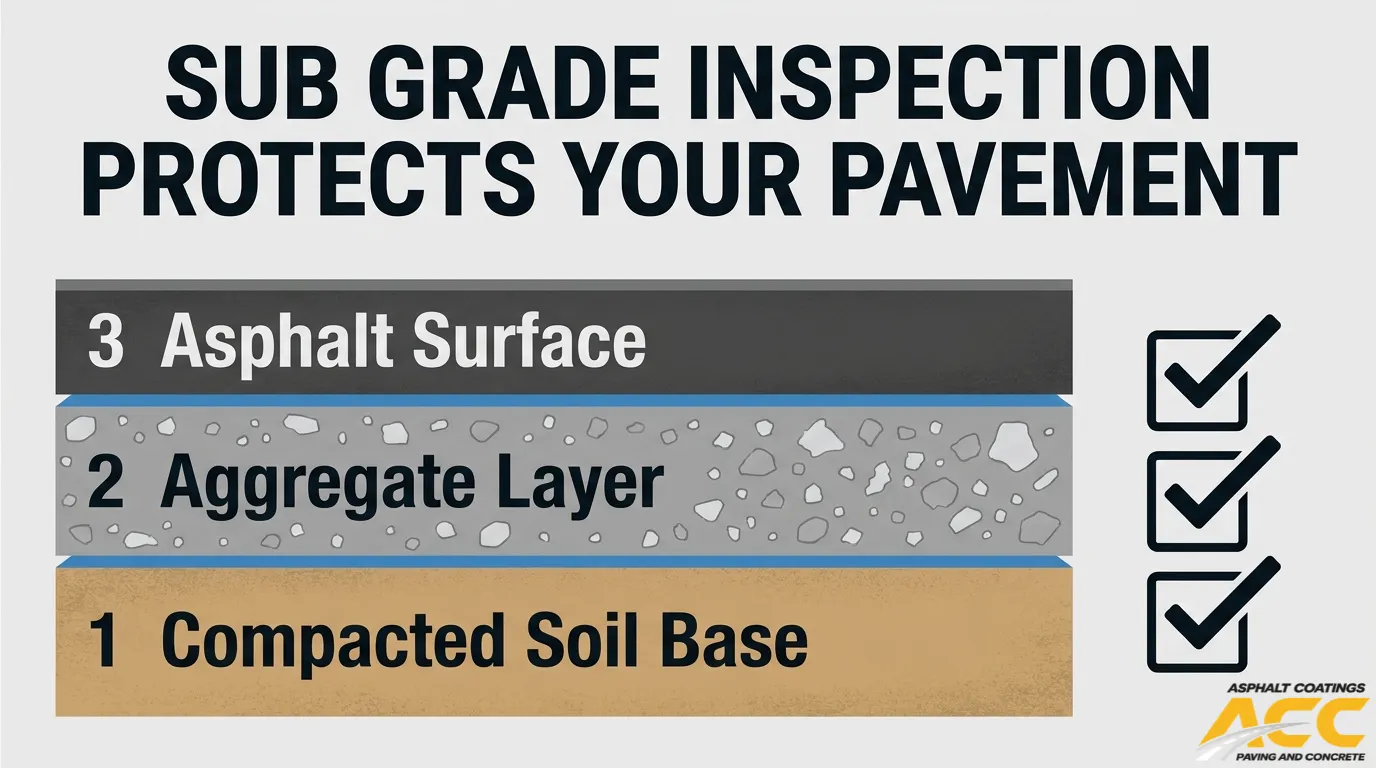
Importance of Sub-Grade Inspection Before Commercial Asphalt Paving in Fort Collins
August 3, 2026
Sub-grade inspection is the process of evaluating the compacted native soil beneath a commercial pavement structure to confirm it can support every layer built on top of it. It is the single most important quality-control step before asphalt paving begins. This guide covers Fort Collins soil and climate challenges, failure consequences of skipped inspections, inspection
Read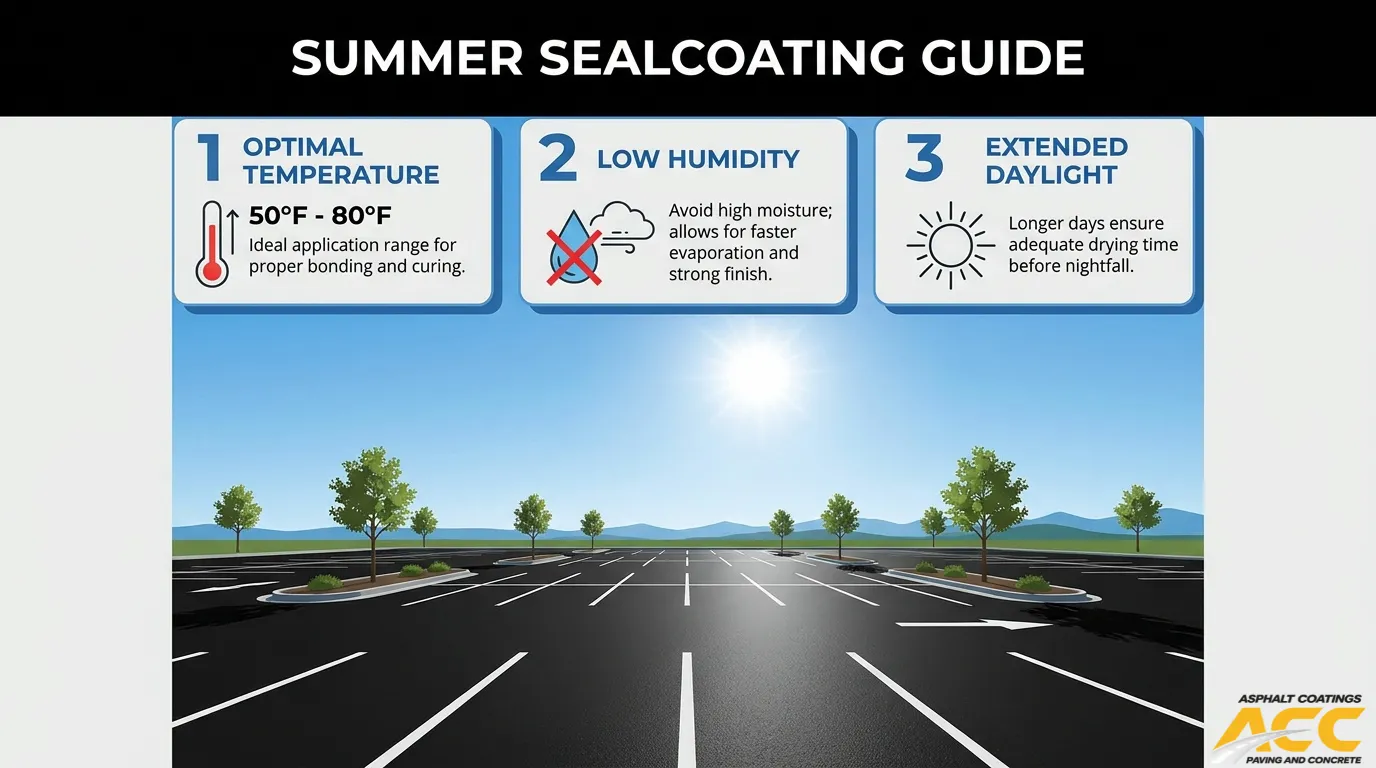
Why Is Summer the Best Time to Sealcoat a Commercial Parking Lot in Fort Collins?
July 31, 2026
Summer sealcoating is the application of a protective asphalt sealer during warm, dry months when temperature, humidity, and daylight conditions allow the material to cure fully and bond tightly to the pavement surface. This guide covers Fort Collins’ summer climate advantages for sealcoating, how a summer-applied sealcoat extends pavement life, operational benefits for property managers,
Read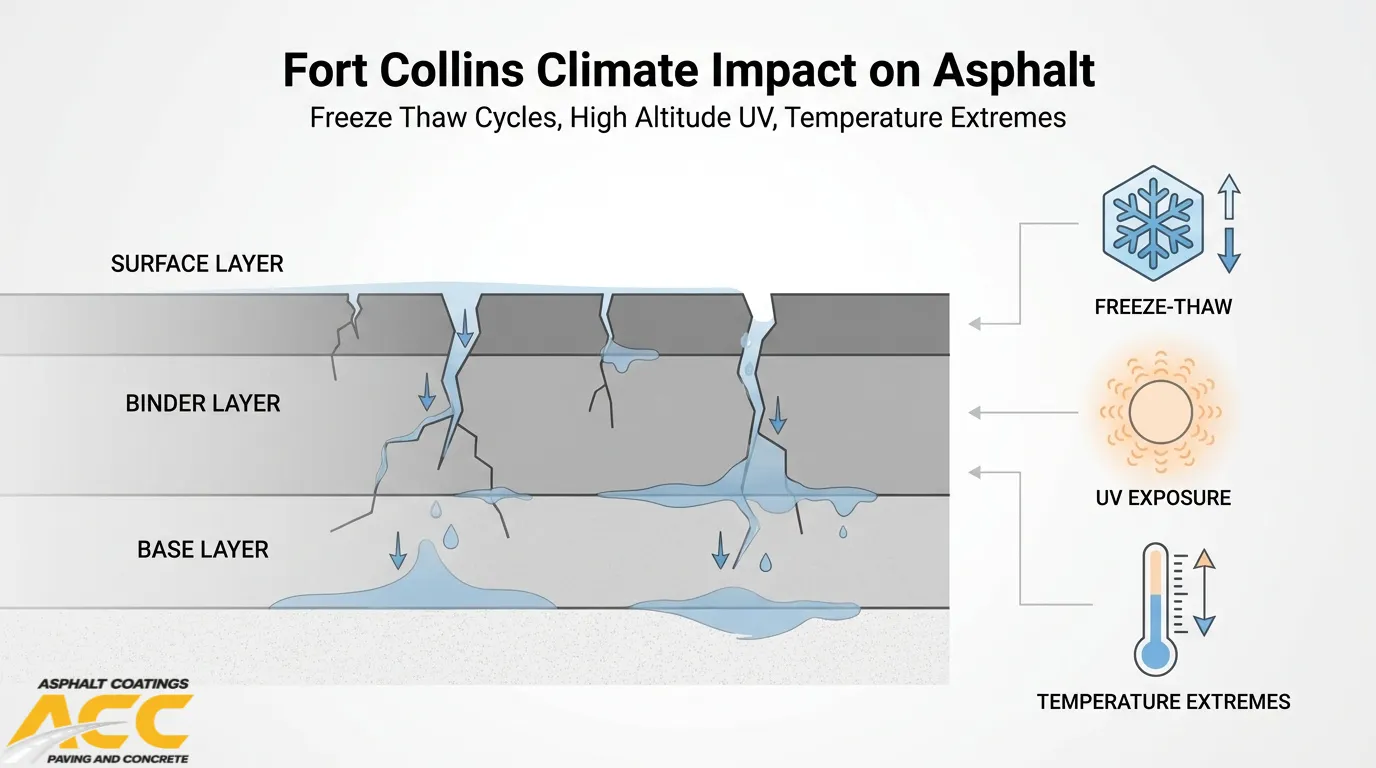
How Fort Collins Weather Impacts Asphalt and What to Do About It
July 31, 2026
Fort Collins weather impacts asphalt through a combination of freeze-thaw cycling, extreme seasonal temperatures, moisture infiltration, and high-altitude UV radiation that compound each other to accelerate pavement deterioration far faster than in lower-elevation or milder climates. This guide covers Fort Collins’ unique climate stressors and how they damage pavement, the specific distress signs property managers
Read
What Are the Major Benefits of Sealcoating Commercial Asphalt in Fort Collins, CO?
July 31, 2026
Sealcoating is a preventive asphalt treatment that applies a protective barrier over commercial pavement to shield it from UV radiation, moisture, chemical exposure, and daily traffic wear. This guide covers pavement protection and lifespan extension, long-term cost savings, safety and compliance, curb appeal and traffic flow, scheduling and cost factors, project preparation, and choosing the
Read