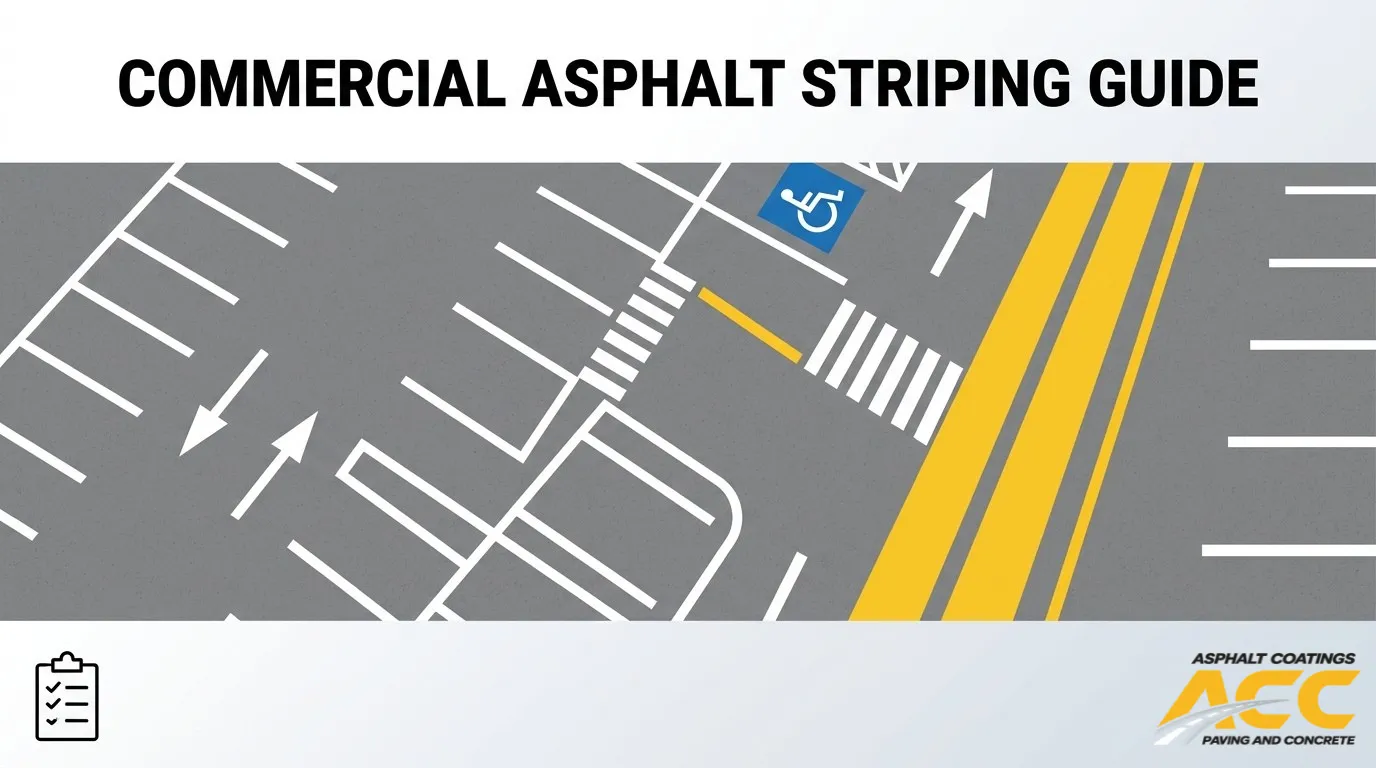
Sealcoating is a preventive asphalt treatment that applies a protective barrier over commercial pavement to shield it from UV radiation, moisture, chemical exposure, and daily traffic wear.
This guide covers pavement protection and lifespan extension, long-term cost savings, safety and compliance, curb appeal and traffic flow, scheduling and cost factors, project preparation, and choosing the right contractor.
Sealcoating guards asphalt binder from oxidation, freeze-thaw cycling, and water infiltration, the three forces that drive premature cracking, raveling, and structural failure in Fort Collins’ cold semi-arid climate. By sealing surface pores before damage begins, commercial properties can extend pavement life by years and avoid costly base-level repairs.
Sealed asphalt costs a fraction of what unprotected pavement demands over a 30-year lifecycle, making routine sealcoating one of the strongest returns on investment in commercial property maintenance. The treatment also reduces reactive spending on pothole repair, resurfacing, and emergency patching.
A freshly sealed surface improves slip resistance, sharpens striping contrast for safer traffic flow, and helps maintain the even grades that ADA-accessible parking spaces require. The uniform dark finish restores professional curb appeal that influences tenant retention and customer perception. Asphalt Coatings Company has delivered commercial asphalt and concrete solutions across Colorado’s Front Range since 1986, including ADA-compliant work and parking lot striping that keeps properties both safe and professionally maintained.
Commercial lots in Fort Collins typically need sealcoating every one to two years, though traffic volume, pavement condition, and material choices all affect both timing and cost. Proper site preparation, phased closures, and clear stakeholder communication keep each project on schedule. For commercial property managers juggling these variables, working with an experienced contractor who understands Colorado’s climate challenges and handles asphalt, sealcoating, and concrete services in-house simplifies project coordination and delivers more predictable outcomes.
Sequencing crack sealing and patching before sealcoat application ensures a continuous, watertight barrier. Selecting a contractor with in-house crews, verified commercial experience, and transparent bid details protects both the pavement and the investment behind it.
Why Is Sealcoating So Important for Commercial Asphalt in Fort Collins, CO?
Sealcoating is so important for commercial asphalt in Fort Collins, CO because the city’s extreme climate accelerates pavement deterioration through UV oxidation, freeze-thaw cycling, and moisture infiltration. Without a protective seal layer, commercial asphalt surfaces lose flexibility, develop cracks, and require costly structural repairs far sooner than necessary.
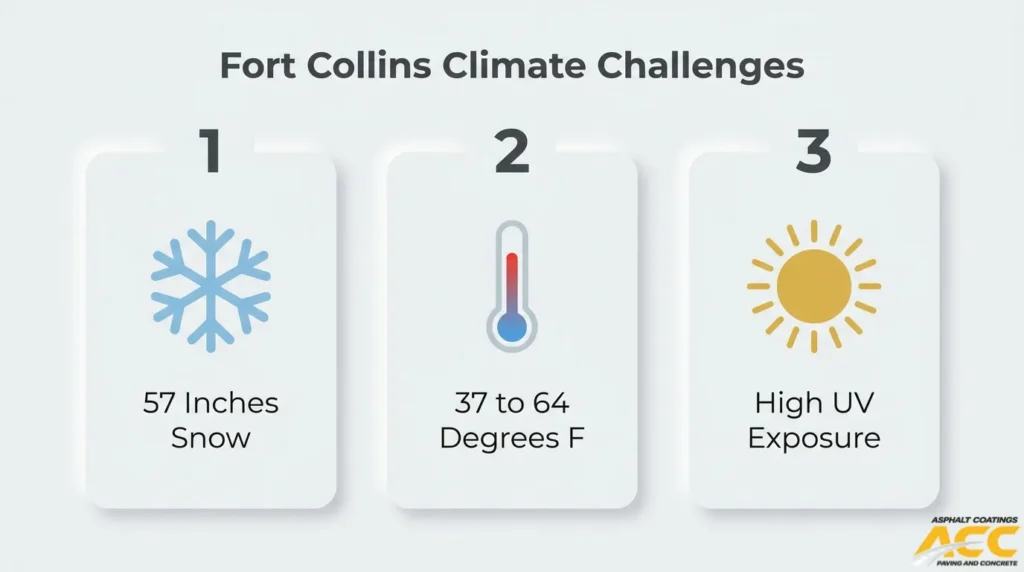
Fort Collins presents a uniquely harsh environment for asphalt pavement. According to U.S. Climate Data, the city experiences a cold semi-arid climate with annual temperatures ranging from a low of 37°F to a high of 64°F, combined with 57 inches of average annual snowfall. These wide seasonal temperature swings cause asphalt to expand and contract repeatedly, while snowmelt forces water into every surface imperfection. Intense high-altitude UV radiation compounds the problem by accelerating oxidative aging, which stiffens and embrittles the asphalt binder.
For commercial properties, the stakes are even higher. Parking lots at retail centers, office parks, and industrial facilities endure constant vehicle traffic, fuel drips, and deicing chemical exposure on top of environmental stress. Sealcoating creates a sacrificial barrier that absorbs this punishment instead of the structural asphalt beneath. Property managers who skip this preventive step often face accelerated cracking, pothole formation, and premature resurfacing needs that dwarf the modest cost of routine seal applications.
The following sections break down the ten major benefits of sealcoating, from extending pavement lifespan and blocking water penetration to improving safety, curb appeal, and long-term return on investment for commercial properties across Fort Collins.
How Does Sealcoating Extend the Lifespan of Commercial Asphalt Pavement?
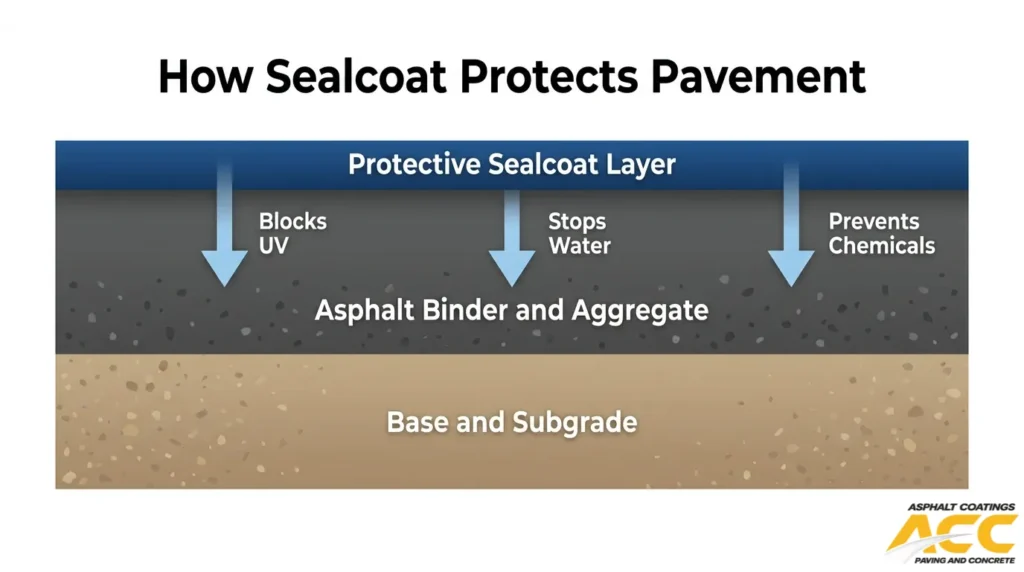
Sealcoating extends the lifespan of commercial asphalt pavement by creating a protective barrier that shields the binder from environmental damage, chemical exposure, and daily wear. Without this layer, asphalt deteriorates faster and requires costly interventions sooner.
Commercial pavement faces constant stress from vehicle traffic, UV radiation, moisture infiltration, and petroleum-based fluid leaks. Each of these factors breaks down the asphalt binder that holds aggregate together, accelerating surface deterioration. Sealcoating slows this process by sealing the porous surface and preventing damaging elements from reaching the underlying pavement structure.
According to DBK Pavement Maintenance, regularly sealcoating a commercial parking lot offers significant ROI by maximizing pavement lifespan and reducing the risk of damage, which most business owners consider a cost-efficient way to keep their pavement in shape. When applied on a consistent schedule, sealcoating effectively resets the clock on surface aging, giving the pavement additional years of service before major rehabilitation becomes necessary.
For commercial property managers juggling tight maintenance budgets, few preventive measures deliver as much long-term value per dollar spent. Sealcoating does not reverse structural failure, but it dramatically delays the progression from minor surface wear to expensive base-level repairs, keeping pavement functional and presentable for years longer than unprotected surfaces.
Understanding how sealcoating interacts with Colorado’s freeze-thaw cycles reveals another critical layer of protection.
In What Ways Does Sealcoating Protect Asphalt From Colorado’s Freeze-Thaw Cycles?
Sealcoating protects asphalt from Colorado’s freeze-thaw cycles by creating a waterproof barrier that prevents moisture from penetrating the pavement surface. When water enters cracks and pores, it expands as it freezes, then contracts during thaws, progressively widening those openings. Sealcoat seals the surface and blocks this cycle at its source.
Colorado’s Front Range climate makes this protection especially critical. Fort Collins alone averages 57 inches of annual snowfall, with temperatures swinging between a yearly high of 64°F and a low of 37°F, according to U.S. Climate Data. Those rapid temperature shifts can push pavement through dozens of freeze-thaw events each winter season.
Without a protective seal, moisture infiltrates the asphalt binder, accelerates oxidation, and weakens the pavement’s internal structure. Each freeze event forces trapped water to expand, breaking aggregate bonds from within. Over successive cycles, this process creates potholes, alligator cracking, and base failure that require costly structural repairs.
For commercial properties handling heavy vehicle traffic, this kind of subsurface damage compounds quickly. Sealcoating acts as the first line of defense by filling surface voids and maintaining a flexible, water-resistant membrane. Properties that maintain a consistent sealcoating schedule dramatically reduce the moisture intrusion that drives freeze-thaw deterioration, keeping repair costs predictable rather than reactive.
How Does Sealcoating Help Prevent Oxidation, Drying, and Surface Raveling?
Sealcoating helps prevent oxidation, drying, and surface raveling by creating a protective barrier that shields asphalt binder from UV radiation, air exposure, and moisture loss. Without this barrier, the binder hardens, becomes brittle, and loses the flexibility that holds aggregate in place.
Oxidation is the primary driver of asphalt aging. When UV rays and oxygen interact with the petroleum-based binder, a chemical reaction stiffens the material over time. According to research published in Taylor & Francis Online, oxidative aging is responsible for irreversible asphalt stiffening and embrittlement, leading to increased susceptibility to fatigue cracking. Once the binder loses its elasticity, it can no longer flex under traffic loads or temperature shifts, and the pavement surface begins to dry out visibly.
Drying follows oxidation closely. As the binder hardens, it shrinks and pulls away from the aggregate particles embedded in the asphalt matrix. This process accelerates in Colorado’s semi-arid climate, where low humidity and intense high-altitude sun exposure compound the effect. The result is a faded, gray surface that feels rough and chalky underfoot.
Surface raveling is the final stage of this deterioration sequence. Loose aggregate breaks free from the dried, brittle binder, creating a rough texture that worsens under vehicle traffic. Once raveling begins, it exposes deeper pavement layers to further weathering, and the damage accelerates rapidly.
Sealcoating interrupts this cycle at its earliest point. The sealant film blocks direct UV contact with the asphalt binder, slowing the oxidation reaction significantly. It also seals the surface pores that allow air and moisture to penetrate, preserving the binder’s flexibility and keeping aggregate firmly bonded. For commercial properties that endure constant vehicle traffic, this protection is especially critical because every pass of a tire over raveled pavement pulls more aggregate loose.
From a practical standpoint, oxidation prevention is the single most cost-effective reason to maintain a sealcoating schedule. Replacing aggregate loss and repairing raveled surfaces costs far more than the routine application of a protective coating. Understanding how sealcoating blocks water infiltration adds another layer to its protective value.
How Does Sealcoating Reduce Water Penetration and Prevent Crack Formation?
Sealcoating reduces water penetration and prevents crack formation by creating a waterproof barrier over the asphalt surface that blocks moisture from reaching the porous aggregate and subgrade layers below. Without this protective layer, water infiltrates small surface voids, weakens the pavement structure, and accelerates cracking.
Unprotected asphalt is inherently porous. Rainfall, snowmelt, and standing water gradually seep into the binder matrix, softening the base and loosening aggregate bonds. In Fort Collins, where seasonal temperature swings push moisture through repeated freeze-thaw cycles, this process intensifies rapidly. Each cycle expands trapped water into ice, widening micro-fractures until visible cracks appear on the surface.
Sealcoating fills these surface voids with a dense, flexible membrane that repels water on contact. According to Pavement Interactive, transverse thermal cracks allow moisture infiltration, and cracks less than 1/2 inch wide can be sealed to prevent entry of moisture into the subgrade and further raveling of crack edges. By applying sealcoat before cracks widen past that threshold, property managers block the primary entry point for destructive moisture.
The waterproofing benefit extends beyond surface-level protection. When water penetrates deeper layers, it causes pumping, where fine material is ejected from underlying layers through cracks under moving loads. Sealcoating prevents this chain reaction by stopping water at the surface before it can compromise structural integrity.
For commercial properties handling heavy vehicle traffic daily, this moisture barrier is one of the most cost-effective defenses available. Addressing water penetration proactively with sealcoating eliminates the conditions that lead to potholes, base failure, and full-depth repairs, keeping pavement structurally sound and maintenance budgets predictable.
How Can Sealcoating Lower Long-Term Maintenance and Repair Costs for Commercial Properties?
Sealcoating lowers long-term maintenance and repair costs for commercial properties by creating a protective barrier that prevents the damage requiring expensive fixes. According to DBK Pavement Maintenance, sealcoating costs between $0.13 and $0.30 per square foot, a fraction of what resurfacing or full-depth repairs demand. When left unprotected, asphalt deteriorates faster from UV exposure, water infiltration, and chemical spills, accelerating the timeline for costly interventions such as patching, milling, or complete replacement. Routine sealcoating on a one-to-two-year cycle keeps minor surface wear from compounding into structural failures. For commercial property managers budgeting across multi-year capital plans, this preventive approach consistently reduces total pavement expenditures over the life of the parking lot.
How Does Sealcoating Improve Safety for Customers, Tenants, and Employees?
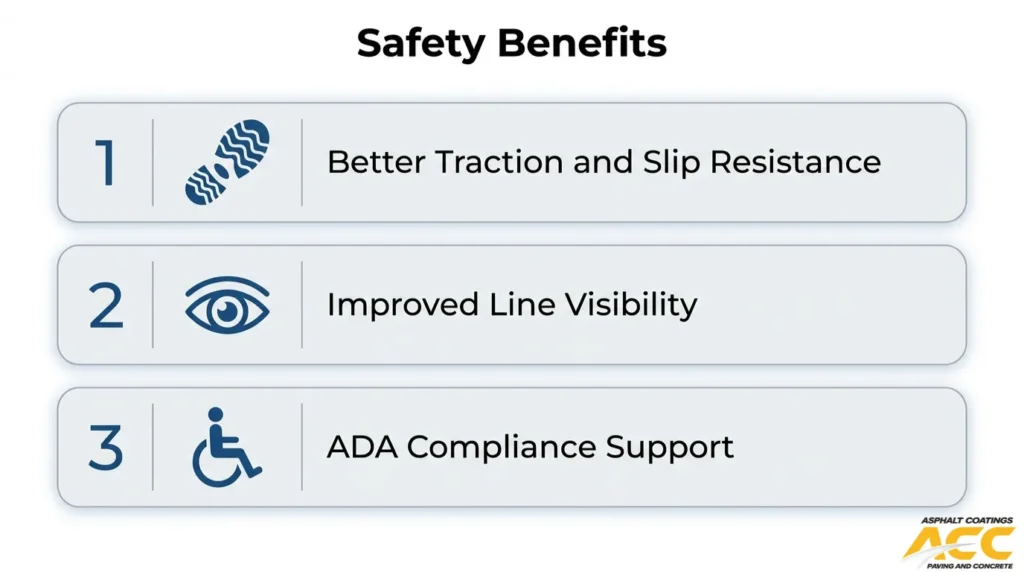
Sealcoating improves safety for customers, tenants, and employees by creating a smoother, more uniform pavement surface that reduces trip hazards, improves traction, and makes parking lot markings easier to see.
When asphalt deteriorates, cracks and potholes become liability risks for anyone walking or driving across the lot. A sealed surface fills minor surface voids and restores a consistent texture, which helps prevent stumbles, twisted ankles, and vehicle damage. According to Safety Direct America, citing OSHA guidelines, a static coefficient of friction of 0.5 is recommended as a baseline for adequate slip resistance, with higher values needed for tasks like pushing carts or walking on slopes. Freshly sealcoated pavement supports better friction characteristics compared to weathered, raveled surfaces where loose aggregate creates unpredictable footing.
Beyond slip resistance, the uniform dark finish of a sealcoated lot enhances the contrast of painted lines, directional arrows, and crosswalk markings. This improved visibility helps drivers navigate traffic lanes and pedestrians identify safe walking paths, particularly during low-light conditions. For commercial property managers, maintaining a sealed surface is one of the most practical steps toward reducing premises liability exposure. A lot full of cracks and uneven patches signals neglect; a well-maintained surface signals that safety is a priority.
Consistent sealcoating also makes routine maintenance like striping and ADA-compliant marking updates more effective, since paint adheres better to a smooth, sealed surface than to a rough, oxidized one.
How Does Sealcoating Improve Curb Appeal and Professional Image for Fort Collins Properties?
Sealcoating improves curb appeal and professional image for Fort Collins properties by restoring a uniform, deep-black finish that signals active maintenance and attention to detail. A well-maintained parking lot shapes first impressions for customers, tenants, and visitors before they ever enter a building.
Faded, gray asphalt with visible cracks and oil stains communicates neglect. Sealcoating reverses that perception by creating a smooth, consistent surface that looks freshly paved. For commercial properties like shopping centers, office parks, and healthcare facilities, this visual distinction directly influences how professional and trustworthy a business appears.
The rich black color also enhances the contrast of parking lot striping and directional markings, making the entire property look more organized and intentional. When tenants and customers see clean, well-defined pavement, they associate the property with higher standards of management.
For property managers competing for tenants along Fort Collins’ commercial corridors, pavement condition often factors into leasing decisions. A deteriorating lot raises concerns about deferred maintenance elsewhere on the property. Investing in regular sealcoating eliminates that doubt and reinforces the property’s market positioning.
From an expert standpoint, curb appeal is one of the most undervalued returns on a sealcoating investment. The functional benefits of protection and longevity get most of the attention, but the immediate visual transformation often drives the decision for property managers who need to maintain occupancy rates and attract quality tenants.
Sealcoating’s visual impact pairs naturally with clear, high-contrast line striping to further define traffic flow and parking organization.
How Can Sealcoating Support Parking Lot Striping Visibility and Traffic Flow?
Sealcoating supports parking lot striping visibility and traffic flow by creating a uniform, dark surface that maximizes contrast with painted line markings. This improved backdrop makes directional arrows, stall boundaries, and fire lane designations easier for drivers and pedestrians to see.
When asphalt ages without protection, the surface fades to a patchy gray that blurs the edges of parking lot striping. Oil stains, tire scuffs, and surface raveling further diminish line clarity, making it harder for drivers to identify lanes, turning points, and designated spaces. Freshly sealcoated pavement restores a consistent jet-black finish that sharpens the contrast between white or yellow traffic paint and the underlying surface.
Beyond aesthetics, this visibility directly affects traffic flow. Clearly defined lane markings, directional arrows, and crosswalk boundaries reduce driver confusion, minimize wrong-way turns, and keep vehicles moving predictably through high-traffic commercial lots. For properties with complex layouts, such as shopping centers or healthcare facilities, that predictability prevents bottlenecks and reduces the risk of fender-bender collisions.
Sealcoating also provides a smoother surface for paint adhesion. Striping applied over a sealed surface bonds more effectively than paint laid on rough, oxidized asphalt, so markings retain their sharpness longer between restriping cycles. This means property managers spend less on frequent repainting while maintaining the professional, well-organized appearance that customers and tenants expect.
From a practical standpoint, coordinating sealcoating and striping in a single maintenance cycle is one of the most efficient approaches for commercial property managers. Applying fresh striping immediately after a sealcoat cures ensures maximum adhesion and the longest-lasting visual impact, keeping compliance markings and traffic guidance crisp through Colorado’s demanding seasonal conditions.
How Does Sealcoating Help Commercial Properties Stay Closer to ADA and Local Compliance Standards?
Sealcoating helps commercial properties stay closer to ADA and local compliance standards by maintaining smooth, even pavement surfaces that support accessible parking requirements and safe pedestrian movement.
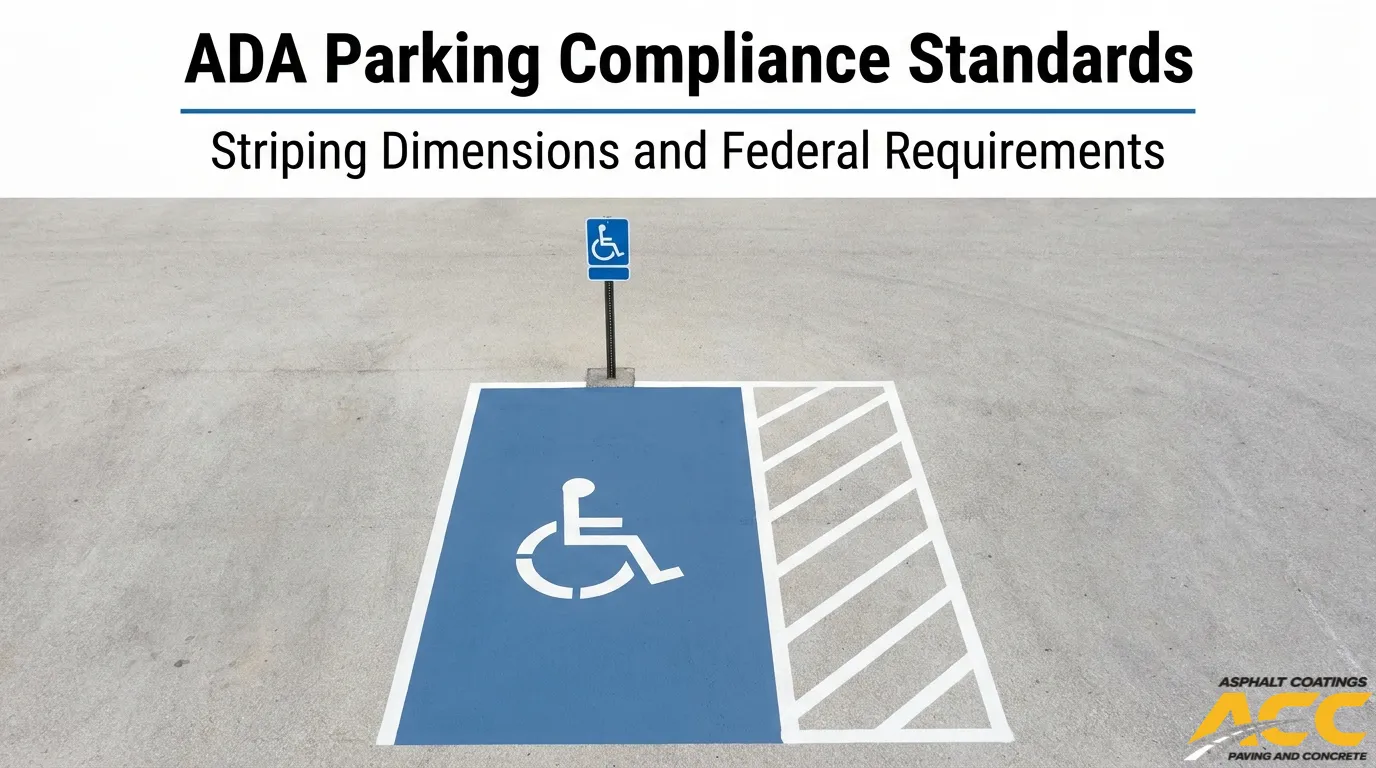
When asphalt deteriorates through cracking, settling, or surface erosion, parking lot slopes can shift beyond allowable thresholds. According to the U.S. Access Board, accessible parking spaces must have no more than a 1.48 percent slope in all directions, with spaces at least 96 inches wide and access aisles at least 60 inches wide. Uneven surfaces make it difficult to maintain these precise measurements over time.
Regular sealcoating slows the breakdown that causes surface irregularities, helping preserve the grade and smoothness that accessibility standards demand. Well-maintained pavement also keeps striping for accessible spaces, van-accessible designations, and access aisles clearly visible and properly positioned. For properties with 26 to 50 total spaces, at least one accessible space is required; larger lots need proportionally more, with at least one of every six accessible spaces sized for vans.
Beyond ADA requirements, consistent surface maintenance supports local code compliance by reducing trip hazards and ponding water that can compromise pedestrian safety. Proactive sealcoating is one of the most practical ways property managers can avoid the surface degradation that triggers costly compliance corrections down the road.
How Often Should Commercial Properties in Fort Collins, CO Schedule Sealcoating?
Commercial properties in Fort Collins, CO should schedule sealcoating every one to two years. Climate severity, traffic volume, and past maintenance all influence the ideal timeline, as the following sections explain.
How Do Climate and Seasonal Conditions in Fort Collins Affect Sealcoating Frequency?
Climate and seasonal conditions in Fort Collins affect sealcoating frequency by accelerating asphalt wear through extreme temperature swings, heavy snowfall, and intense UV exposure. According to U.S. Climate Data, Fort Collins experiences a cold semi-arid climate with an annual high of 64°F, an annual low of 37°F, and an average of 57 inches of snowfall per year. These large seasonal contrasts, with warm summers and cold winters, create repeated freeze-thaw cycles that open cracks and weaken pavement structure faster than milder climates would. Spring, the wettest season, compounds the problem by driving moisture into any existing surface damage. Because of these conditions, most commercial lots in Fort Collins benefit from sealcoating closer to the annual end of the one-to-two-year range.
How Do Traffic Type and Volume at Commercial Sites Change Sealcoating Schedules?
Traffic type and volume at commercial sites change sealcoating schedules by increasing the rate of surface abrasion and fluid exposure. High-use parking lots at retail centers, gas stations, and distribution warehouses endure constant turning movements, heavy delivery trucks, and frequent oil or fuel drips. All of these factors strip the sealcoat layer faster than light passenger traffic at a small office park. Properties with consistent heavy vehicle traffic or high daily turnover often need annual sealcoating, while lower-traffic commercial sites can extend to every two years. Evaluating both vehicle weight class and daily trip count gives property managers a realistic schedule rather than relying on a generic timeline.
How Do Previous Maintenance Practices Influence When You Should Reseal?
Previous maintenance practices influence when you should reseal by determining the current condition of the existing surface. Pavement that has received timely crack sealing, patching, and consistent sealcoat applications retains its structural integrity longer, allowing property managers to stay comfortably within the standard two-year cycle. Neglected surfaces with unfilled cracks, oxidized binder, or faded previous coats typically need resealing sooner because the protective layer has already degraded. A freshly paved asphalt surface, by contrast, should receive its first sealcoat within 6 to 12 months after installation to protect the curing pavement early.
Knowing your ideal schedule is the first step; understanding cost factors helps you budget effectively for each application.
What Factors Affect the Cost of Sealcoating a Commercial Asphalt Property?
The cost of sealcoating a commercial asphalt property depends on surface area, pavement condition, material choices, and project logistics. The following sections break down how each factor shapes your final price.
How Does Total Square Footage of Asphalt Impact Sealcoating Cost?
Total square footage of asphalt impacts sealcoating cost because it is the primary unit contractors use to calculate pricing. Larger commercial lots require more material and labor, but they often benefit from lower per-square-foot rates due to economies of scale.
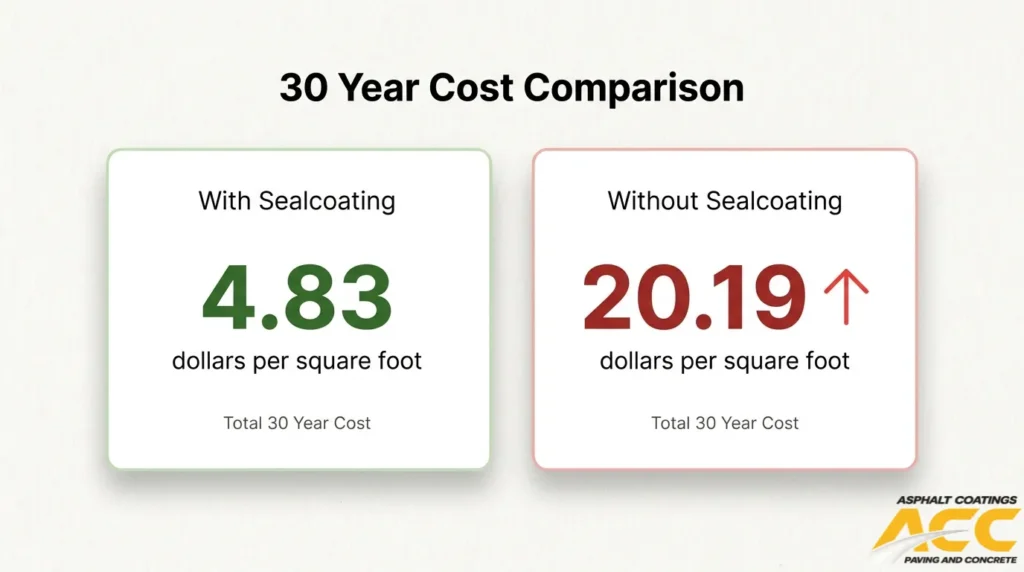
According to the Pavement Coatings Technology Council, over a 30-year period, sealed asphalt costs $4.83 per square foot total, while unsealed asphalt costs $20.19 per square foot, including repairs and replacement. That gap widens with every additional square foot of pavement. For property managers overseeing large lots, investing in sealcoating early is one of the most straightforward ways to control long-term pavement expenses.
How Do Pavement Condition and Pre-Repair Needs Change the Price?
Pavement condition and pre-repair needs change the price because damaged surfaces require additional work before sealcoat can be applied. Cracks, potholes, and areas of base failure must be addressed first to ensure proper adhesion and a lasting result.
Common pre-repair tasks that add to the total cost include:
- Crack sealing to prevent moisture from reaching the subgrade.
- Pothole patching to restore structural integrity in failed areas.
- Oil spot treatment to remove contaminants that inhibit sealcoat bonding.
- Minor grading corrections where drainage issues have caused standing water.
A lot in good condition with only surface wear will cost significantly less than one requiring extensive prep. This is why consistent maintenance cycles tend to keep each sealcoating project more affordable over time.
How Do Material Specs, Coats, and Additives Influence Sealcoating Cost?
Material specs, coats, and additives influence sealcoating cost by directly affecting both material expense and application time. Higher-grade sealer formulations, additional coats, and performance-enhancing additives all increase the investment per square foot.
Key variables that shape material-related pricing include:
- Sealer type: Refined coal tar sealers and asphalt-based sealers carry different price points and performance characteristics.
- Number of coats: Two coats provide better coverage and durability than a single coat, though they increase material and labor costs.
- Additives: Sand, rubber, or polymer additives improve traction, flexibility, and wear resistance, but they raise the per-gallon material cost.
Choosing cheaper materials may lower the upfront price, yet it often shortens the interval before reapplication is needed. For most commercial properties, specifying the right material and coat count up front delivers better value per cycle.
How Does Project Timing and Site Access Affect Overall Sealcoating Pricing?
Project timing and site access affect overall sealcoating pricing because scheduling constraints and logistical complexity add labor hours and coordination costs. Peak-season demand, phased closures, and limited access points all factor into what contractors charge.
Conditions that typically increase project cost include:
- Peak-season scheduling: Summer months bring higher demand, which can raise prices and reduce availability.
- Phased applications: Properties that cannot close entirely require multiple mobilizations to seal sections around active traffic.
- Limited access or tight layouts: Narrow drive aisles, islands, and confined areas slow equipment movement and reduce crew efficiency.
- After-hours work: Night or weekend applications to accommodate tenant operations add premium labor rates.
Planning sealcoating during shoulder seasons or coordinating full-lot closures when possible often reduces both cost and project duration. With cost factors clarified, preparing the lot properly ensures each dollar spent delivers maximum pavement protection.
How Should Property Managers Prepare Their Commercial Lot for a Successful Sealcoating Project?
Property managers should prepare their commercial lot by completing site cleaning, coordinating traffic flow, and communicating timelines to all stakeholders. The following subsections cover surface preparation, traffic planning, and stakeholder communication.
What Site Cleaning and Surface Preparation Steps Are Typically Required?
The site cleaning and surface preparation steps typically required include removing all debris, treating oil stains, and repairing damaged pavement before the sealcoating crew arrives. A thorough preparation process ensures the sealer bonds properly to the asphalt surface.
Key steps property managers should coordinate:
- Remove all loose gravel, dirt, leaves, and trash from the pavement using power sweeping or blowing equipment.
- Treat oil spots and fluid stains with a primer or degreaser so the sealcoat adheres evenly.
- Fill cracks and complete any necessary patching before sealcoating begins.
- Clear the lot of all vehicles, dumpsters, portable signage, and other obstructions.
- Mark or flag sprinkler heads, utility covers, and drainage grates for the crew.
Skipping any of these steps is one of the most common mistakes property managers make; even a thin layer of dirt or an untreated oil stain can cause the sealcoat to peel within months.
How Should You Plan Around Tenant, Customer, and Delivery Traffic?
You should plan around tenant, customer, and delivery traffic by scheduling the project in phases that keep portions of the lot accessible at all times. Sealcoated surfaces typically require 24 to 48 hours of cure time before vehicles can return, so phased closures prevent full operational shutdowns.
Effective traffic planning includes:
- Dividing the lot into sections and sealcoating one zone at a time while routing traffic to open areas.
- Coordinating with delivery vendors to adjust schedules or use alternate access points during active work zones.
- Placing temporary directional signage, cones, and barricades to guide drivers safely around closed sections.
- Scheduling the project during lower-traffic periods, such as weekends or off-peak business hours.
For properties with heavy daily traffic, phased sealcoating is not optional; it is the only realistic approach that protects both the fresh surface and the business operations underneath it.
What Should You Communicate to Stakeholders Before and During Sealcoating?
You should communicate project timelines, lot closure details, and parking alternatives to stakeholders before and during sealcoating. Clear communication prevents confusion, reduces complaints, and keeps the project on schedule.
Essential communications include:
- Notifying tenants and businesses of exact dates, affected zones, and expected cure times at least two weeks in advance.
- Providing a map showing phased closure areas and designated temporary parking locations.
- Posting visible signage at lot entrances on the day work begins.
- Designating a single point of contact for questions or schedule changes during the project.
Proactive communication is what separates a smooth sealcoating project from one that generates tenant frustration. With preparation complete, the next step is understanding how sealcoating works alongside other asphalt services like crack sealing and patching.
How Does Sealcoating Interact With Other Asphalt Services Like Crack Sealing and Patching?
Sealcoating interacts with other asphalt services by serving as the final protective layer applied after structural repairs are complete. The sequence matters: crack sealing, patching, and milling address damage first, while sealcoating locks in those repairs.
Why Should Crack Sealing Usually Occur Before Sealcoating?
Crack sealing should usually occur before sealcoating because open cracks allow moisture to reach the subgrade, undermining any surface protection applied on top. When sealcoat is sprayed over unsealed cracks, it bridges the gap temporarily but cannot prevent water from infiltrating below.
According to Pavement Interactive, water bleeding occurs when water seeps out of joints or cracks through an excessively porous HMA layer, and pumping ejects water and fine material from underlying layers through cracks under moving loads. Sealing cracks first eliminates these entry points so the sealcoat forms a continuous, watertight barrier across the entire surface. For most commercial lots, skipping this step is false economy; sealed cracks hold the structural repair in place while sealcoat shields everything above.
How Does Patching or Milling Prior to Sealcoating Improve Results?
Patching or milling prior to sealcoating improves results by restoring a stable, even surface that sealcoat can bond to uniformly. Potholes, alligator cracking, and depressions create uneven profiles where sealcoat pools or wears unevenly within weeks.
Patching replaces failed pavement sections with new hot-mix asphalt, rebuilding structural integrity in localized areas. Milling removes damaged surface layers to a consistent depth, producing a textured profile that promotes stronger adhesion. Without these corrections, sealcoat simply masks deterioration rather than protecting sound pavement. Addressing structural deficiencies before applying the final coat ensures the entire system performs as intended.
When Is It Better to Repave Instead of Relying on Sealcoating Alone?
Repaving is the better choice when structural failure extends beyond what crack sealing and patching can address. Widespread alligator cracking, severe subgrade failure, or surfaces where more than 25 to 30 percent of the area requires patching typically signal that preservation treatments alone will not restore performance.
Sealcoating protects sound pavement from oxidation and moisture, but it cannot add structural capacity to a failing base. If the lot’s drainage, grade, or foundation is compromised, a mill-and-overlay or full-depth replacement delivers the long-term value that surface treatments cannot match. A professional pavement evaluation clarifies which approach fits the lot’s actual condition.
Understanding how these services work together helps property managers plan maintenance budgets more effectively.
How Do You Choose the Right Sealcoating Contractor for a Commercial Project in Fort Collins?
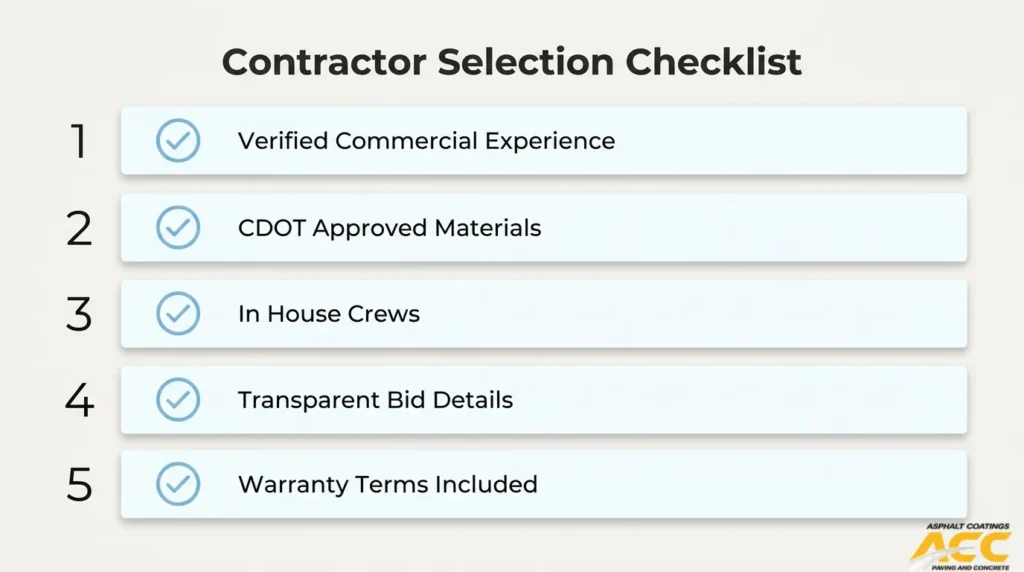
You choose the right sealcoating contractor by evaluating experience, certifications, materials knowledge, crew structure, and bid transparency. The following sections cover what to look for in each area.
What Experience and Certifications Should a Commercial Sealcoating Contractor Have?
A commercial sealcoating contractor should have documented experience on large-scale parking lots, not just residential driveways. Commercial lots demand different equipment, staging plans, and material volumes than home projects. According to El Cor Construction, residential driveways only need sealcoating every 2 to 3 years due to lower traffic, while commercial properties face far more demanding conditions that require specialized knowledge.
Look for contractors who hold relevant certifications, carry commercial general liability insurance, and can provide references from property managers or facility owners. Experience with Colorado’s freeze-thaw conditions is especially valuable, since improper application in cold-climate regions leads to premature coating failure.
What Questions Should You Ask About Materials, Mix Design, and Application Methods?
The questions you should ask about materials, mix design, and application methods include:
- What sealer base does the contractor use, and why?
- How is the mix design adjusted for your lot’s traffic level and surface condition?
- Which application method will be used: spray, squeegee, or a combination?
- How many coats will be applied, and what is the dry time between them?
According to NEAL Manufacturing, dual applicator machines that combine both squeegee and spray methods produce results lasting 40% longer than single-method applications alone. A contractor who cannot explain their material specifications or application approach in detail likely lacks the expertise a commercial project requires.
Why Do In-House Crews and Single-Source Service Matter for Quality and Scheduling?
In-house crews and single-source service matter because they give property managers one point of accountability for quality, timelines, and communication. When a contractor subcontracts sealcoating to a separate crew, scheduling conflicts multiply and quality control weakens. The subcontractor has no direct relationship with you, which makes resolving issues slower and less reliable.
A single-source contractor that also handles crack sealing, patching, and striping can sequence each phase properly without coordination gaps between multiple vendors. For commercial properties with tight tenant schedules, this streamlined approach reduces downtime and keeps the project on track.
How Should You Compare Sealcoating Bids Beyond Just the Lowest Price?
You should compare sealcoating bids by examining scope of work, material specifications, number of coats, surface preparation steps, and warranty terms. The lowest bid often omits critical line items such as crack filling, oil spot treatment, or proper edging.
Key factors to compare across bids include:
- Square footage coverage and number of sealer coats included
- Type and grade of sealer specified
- Surface preparation scope, including cleaning and crack repair
- Traffic control and phasing plan for tenant access
- Warranty duration and what it covers
A bid that skips surface prep or uses a single thin coat may cost less upfront but will fail years sooner. Evaluating total value over the coating’s lifespan is a far more reliable way to protect your pavement investment.
With contractor selection criteria in place, partnering with a local Colorado expert ensures these standards are met.
How Should You Approach Commercial Asphalt Maintenance and Sealcoating With a Local Colorado Expert?
You should approach commercial asphalt maintenance and sealcoating by partnering with a local Colorado expert who understands the region’s climate demands and commercial traffic pressures. Commercial parking lots require sealcoating every one to two years due to heavy vehicle traffic and fluid exposure. The sections below cover how Asphalt Coatings Company protects commercial pavement and the key takeaways from this guide.
How Can Asphalt Coatings Company’s Sealcoating and Crack Sealing Services Help Protect Your Commercial Pavement?
Asphalt Coatings Company’s sealcoating and crack sealing services help protect commercial pavement by combining Colorado-specific expertise with proven materials and in-house crews. Since 1986, Asphalt Coatings Company has served Colorado’s Front Range with commercial asphalt solutions.
Asphalt Coatings Company offers crack sealing services using CDOT-approved materials to address cracks before they allow moisture into the subgrade. According to the Pavement Coatings Technology Council, refined coal tar-based sealers offer fuel resistance, stronger adhesion, and greater resistance to sun, rain, and freeze-thaw aging compared to asphalt-based alternatives. Freshly paved surfaces should be sealcoated within the first 6 to 12 months to ensure early protection.
Asphalt Coatings Company offers sealcoating, crack sealing, patching, striping, and ADA-compliant concrete work with in-house crews as a single-source provider. For commercial property managers seeking dependable, long-term pavement protection, that integrated approach eliminates coordination headaches and keeps maintenance on schedule.
What Are the Key Takeaways About the Major Benefits of Sealcoating Commercial Asphalt in Fort Collins, CO?
The key takeaways about the major benefits of sealcoating commercial asphalt in Fort Collins, CO, center on long-term cost savings, structural protection, and property image:
- Sealcoating shields asphalt from oxidation, UV damage, and the freeze-thaw cycles that define Fort Collins winters.
- Crack sealing before sealcoating prevents moisture infiltration that leads to subgrade erosion and fatigue cracking.
- Routine sealcoating every one to two years costs far less than resurfacing or full replacement.
- A well-maintained surface improves slip resistance, striping visibility, and ADA compliance readiness.
- Professional curb appeal signals to customers, tenants, and employees that the property is managed with care.
For most commercial properties, the single highest-value maintenance decision is scheduling sealcoating before visible deterioration begins. Asphalt Coatings Company brings 39 years of Colorado Front Range experience to every project, delivering sealcoating, crack sealing, patching, striping, and concrete services with in-house crews built for commercial-scale work.