
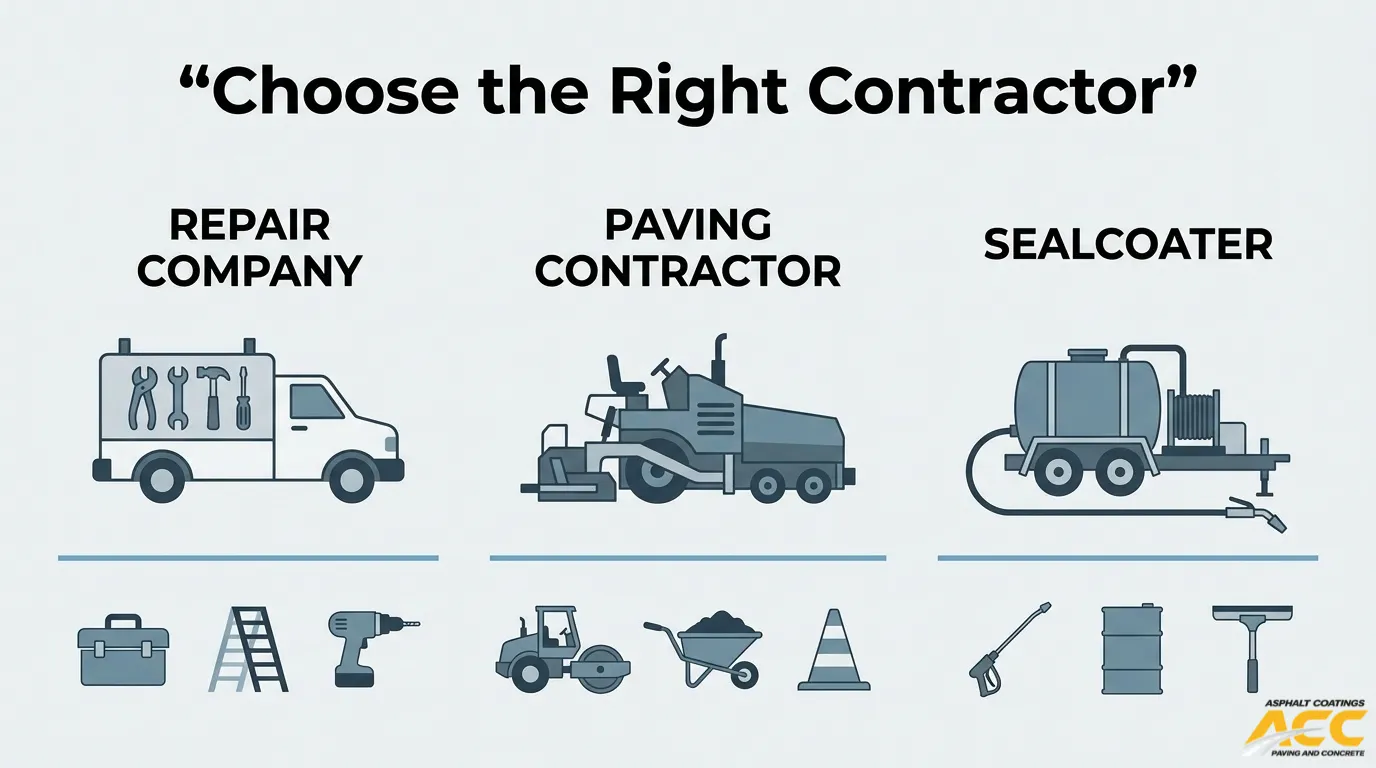
Parking Lot Repair Company vs. Paving Contractor vs. Sealcoater: Who Should You Call for Each Parking Lot Problem?
October 9, 2026
A parking lot repair company, a paving contractor, and a sealcoater are three distinct contractor types, each built to solve a different category of asphalt damage. Calling the wrong one wastes budget and leaves the actual problem unresolved. This guide covers contractor distinctions and licensing, problem-to-contractor matching, when to call each specialist, crack and joint
Read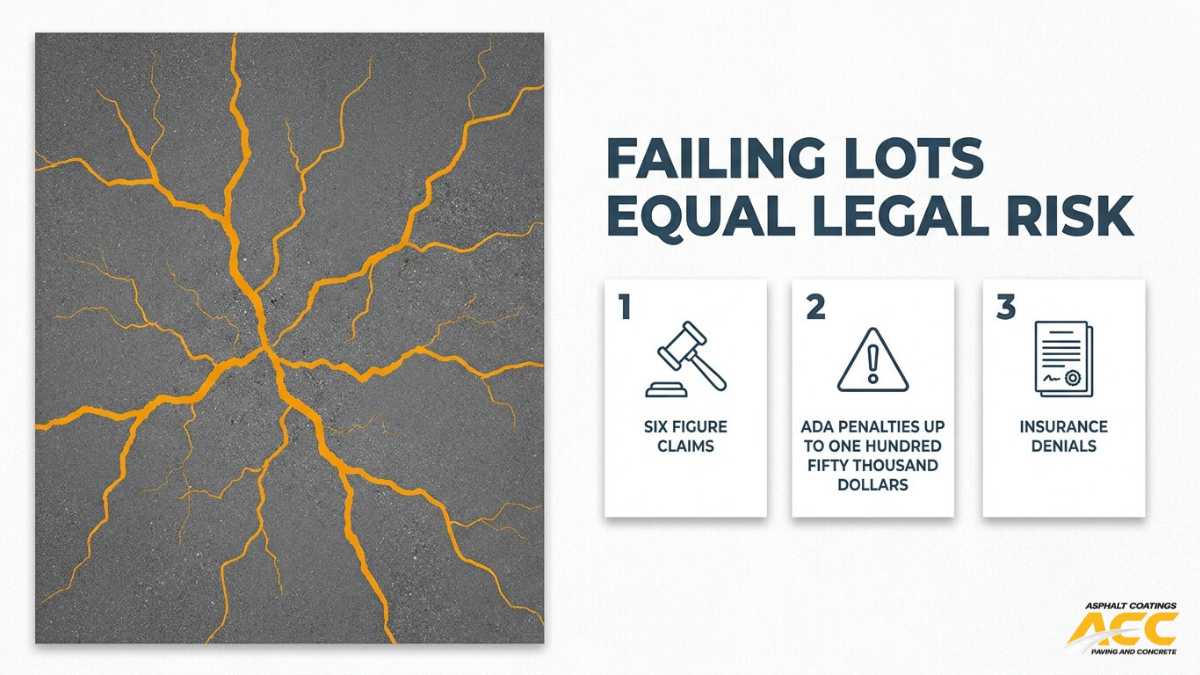
How Failing Parking Lots Increase Legal and Liability Risk
April 27, 2026
A failing parking lot is a premises liability case waiting to happen. Commercial property owners owe a legal duty of care to every person who walks across their pavement, and neglected surfaces give plaintiffs the evidence they need to prove negligence. We cover property owner legal obligations, specific surface hazards that generate claims, how slip-and-fall
Read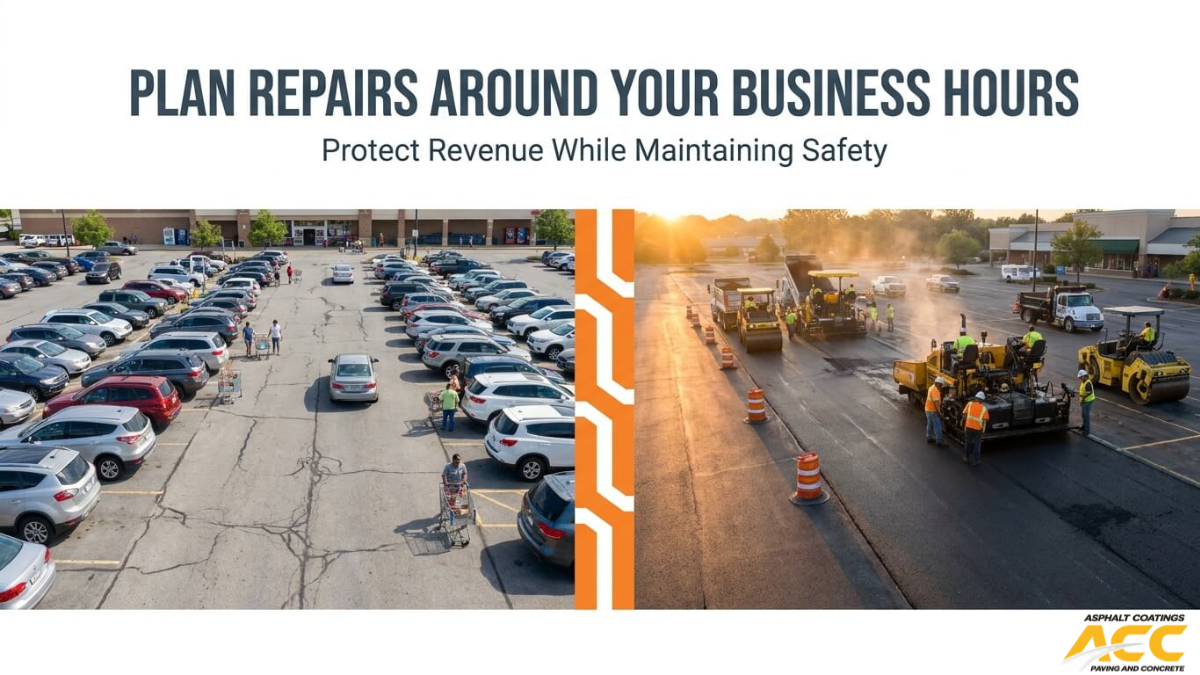
Planning Asphalt Repairs Around Peak Business Hours
April 27, 2026
Planning asphalt repairs around peak business hours is the process of scheduling pavement maintenance to align with low-traffic windows, protecting revenue, tenant relationships, and customer safety throughout the project. This guide covers the business risks of poorly timed repairs, peak traffic patterns across commercial property types, repair urgency assessment, scheduling strategies that maintain parking access,
Read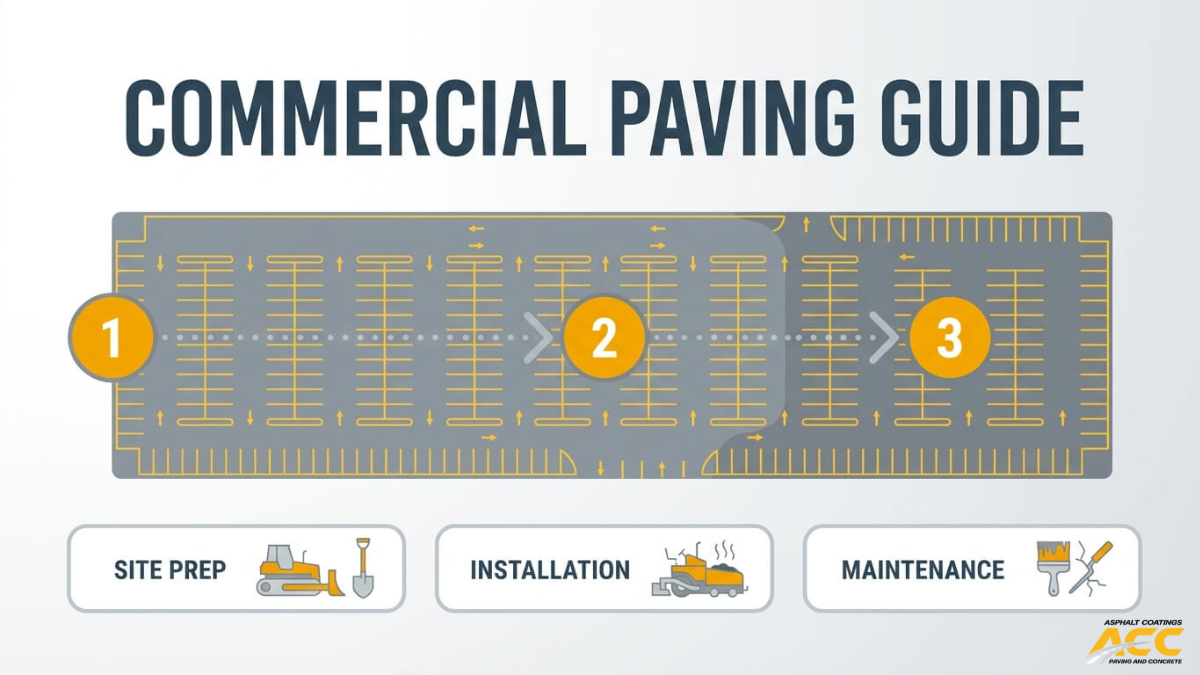
What Businesses Should Expect During a Commercial Paving Project
April 27, 2026
A commercial paving project is a multi-phase construction process that transforms a property’s asphalt surfaces through coordinated demolition, grading, installation, and finishing work. We created this guide to cover site assessment and planning, project timelines and construction phases, business disruption management, weather and regulatory factors, cost planning, quality verification, and long-term maintenance. Site assessment and
Read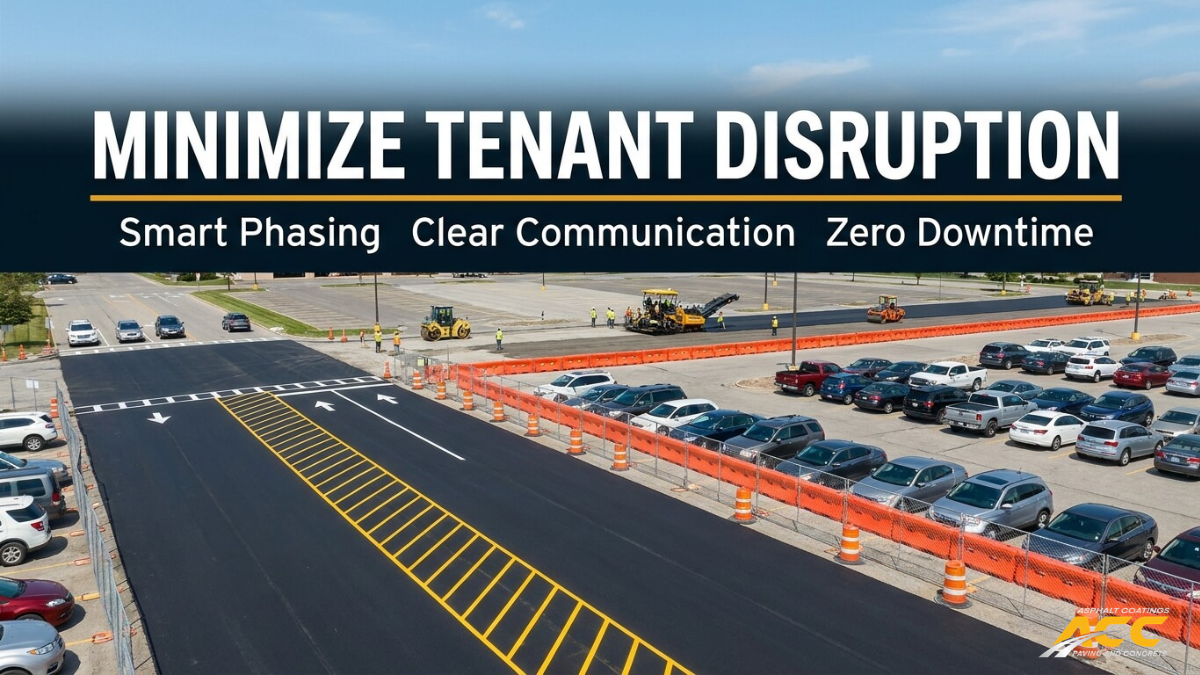
How to Minimize Tenant Disruption During Asphalt Repairs
April 27, 2026
Minimizing tenant disruption during asphalt repairs is the process of coordinating communication, phased scheduling, safety measures, and contractor selection to keep commercial properties operational while pavement work proceeds. This guide covers tenant communication protocols, parking and access planning by property type, phased scheduling strategies, pedestrian safety during active paving, noise and dust control, contractor selection
Read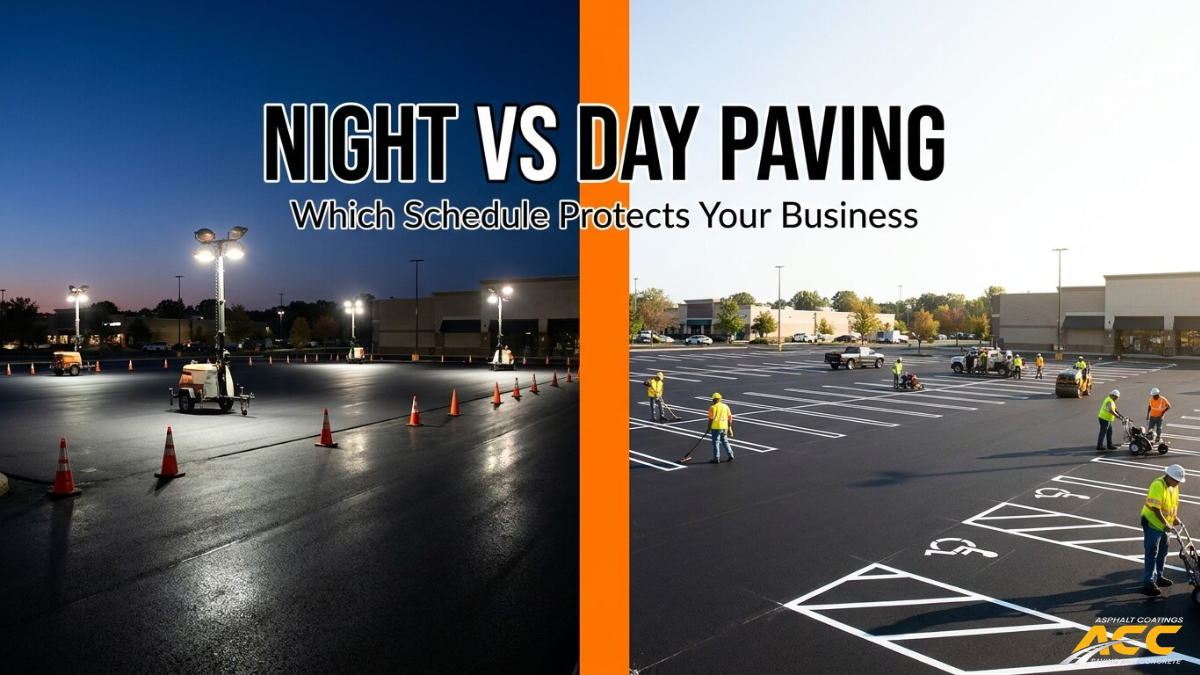
Night vs Day Asphalt Paving: What Works Best for Commercial Sites
April 27, 2026
Night vs day asphalt paving is a scheduling decision that directly affects pavement quality, business revenue, and project costs for commercial properties. The choice depends on how ambient temperature influences the hot mix asphalt compaction window, how site traffic patterns shape operational disruption, and when local conditions allow crews to deliver the best result. This
Read
How Long to Wait Before Driving on New Asphalt
April 17, 2026
When you’ve just invested in new asphalt paving, we understand the anticipation of using your freshly paved surface. You’re likely wondering exactly when it’s safe to drive on your new investment without causing damage. We’re here to provide you with expert guidance based on the latest industry standards and research, ensuring your new asphalt surface
Read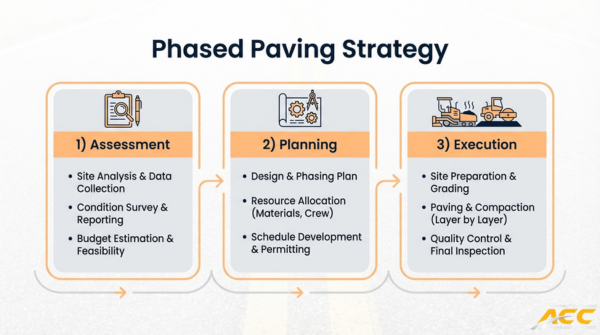
Phased Asphalt Paving Strategies for Multi-Tenant Properties
April 6, 2026
Phased asphalt paving is a construction approach that divides a multi-tenant parking lot into sequenced work zones, resurfacing one section at a time so the property stays operational throughout the project. This guide covers pre-construction evaluation, property-specific phase design, seasonal scheduling, tenant access and communication, phase transition quality, cost structure, and long-term maintenance planning. Successful
Read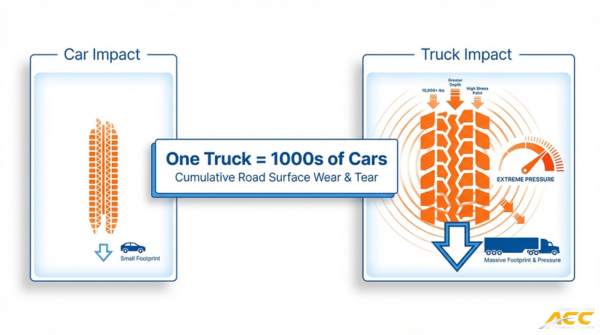
Designing Asphalt for Heavy Truck and Delivery Traffic
April 6, 2026
Asphalt designed for heavy truck and delivery traffic is a pavement system engineered with specialized mix designs, increased structural thickness, and reinforced subgrade preparation to withstand axle loads that are exponentially greater than those from passenger vehicles. This guide covers load mechanics and why trucks demand different pavement engineering, mix designs and thickness standards for
Read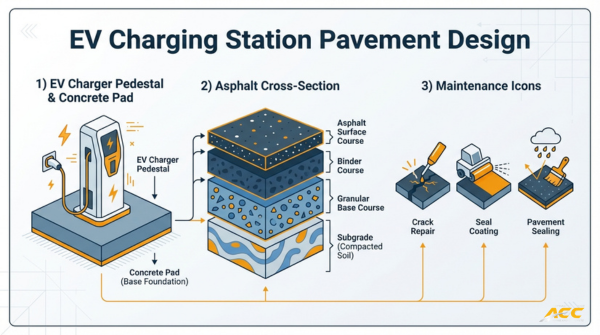
How EV Charging Stations Impact Asphalt Design and Maintenance
April 6, 2026
EV charging stations impact asphalt design and maintenance by introducing heavier vehicle loads, prolonged static stress, thermal cycling from equipment, and chemical exposure that standard parking lot pavement sections are not engineered to handle. This guide covers the unique demands EVs place on pavement, the design specifications charging areas require, common damage patterns at charging
Read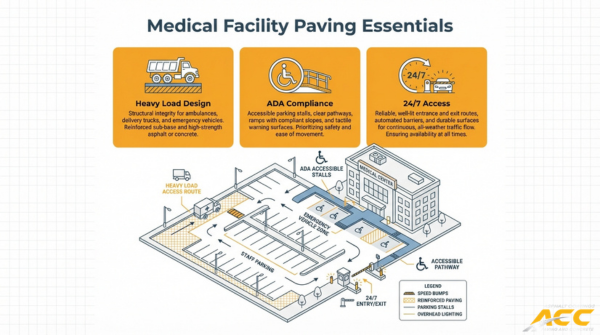
Asphalt Paving Considerations for Medical and High-Traffic Facilities
April 6, 2026
Asphalt paving for medical and high-traffic facilities is a specialized discipline that balances heavy structural demands, strict regulatory compliance, and uninterrupted facility operations. We built this guide around pavement engineering and design, ADA compliance and parking layout, drainage and climate resilience, phased construction logistics, and long-term maintenance planning. Pavement engineering for these facilities starts with
Read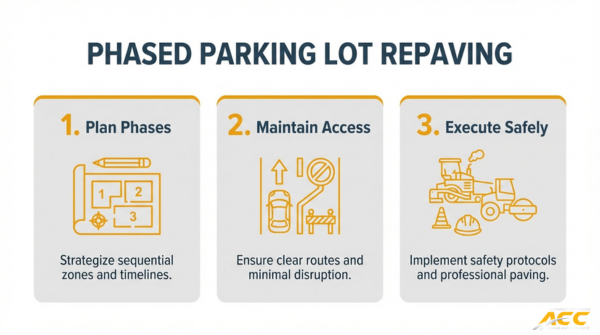
How to Repave a Parking Lot Without Shutting Down Your Business
April 6, 2026
Phased parking lot repaving is a project management approach that divides a commercial lot into sequential work zones, allowing each section to be paved while the rest stays open for customers, tenants, and daily traffic. This guide covers phased planning and seasonal scheduling, communication and parking management during construction, paving methods and project timelines, cost
Read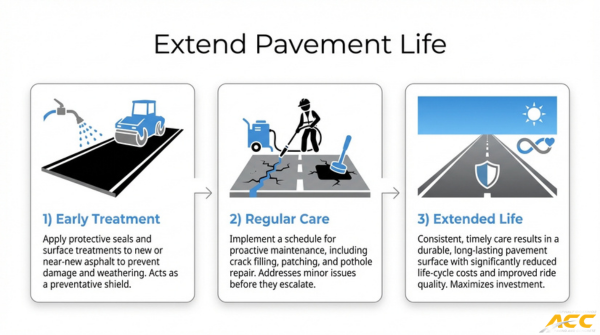
How Preventive Asphalt Maintenance Extends Pavement Lifespan
April 6, 2026
Preventive asphalt maintenance is a proactive strategy of applying scheduled treatments to pavement while it remains in good condition, rather than waiting for visible failures to trigger costly reconstruction. Every dollar spent on preservation can save several times that amount in future rehabilitation, making it one of the most cost-effective infrastructure investments available to commercial
Read