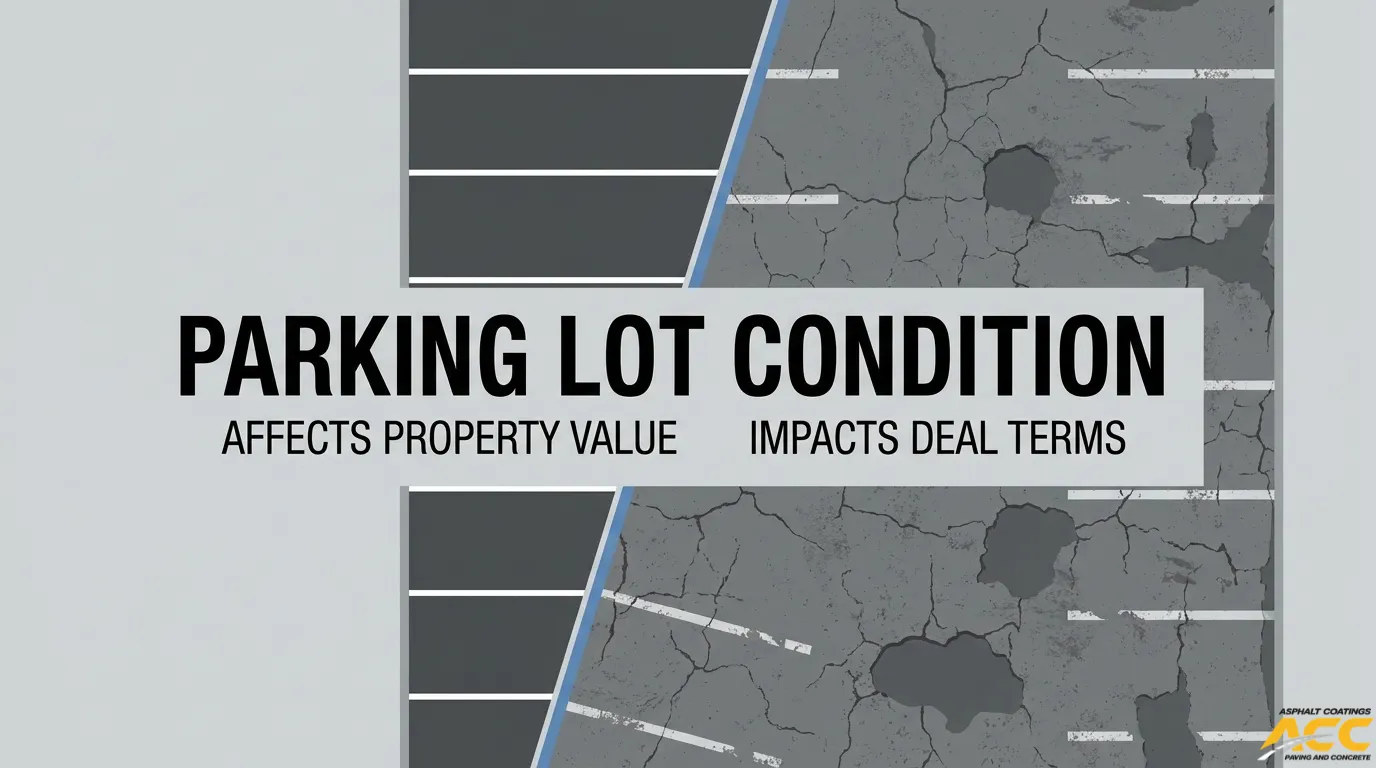
A failing parking lot is a premises liability case waiting to happen. Commercial property owners owe a legal duty of care to every person who walks across their pavement, and neglected surfaces give plaintiffs the evidence they need to prove negligence.
We cover property owner legal obligations, specific surface hazards that generate claims, how slip-and-fall lawsuits develop, ADA compliance penalties, the role of deferred maintenance in strengthening plaintiff cases, insurance and financial consequences, Colorado’s climate impact on pavement, and proactive strategies that reduce exposure.
Premises liability law holds property owners accountable when unsafe conditions injure visitors, and parking lots receive heavy legal scrutiny because they serve as the first and last point of contact for every guest. Invitees at commercial properties receive the highest level of legal protection, obligating owners to inspect for and correct hazards before injuries occur.
Potholes, cracked surfaces, faded striping, poor drainage, non-compliant ADA access, and deteriorated curbing each represent documented claim sources. ADA violations alone carry federal penalties up to $150,000 per incident, and lawsuits can be filed based on non-compliance without any physical injury.
Slip-and-fall settlements routinely reach six and seven figures, while deferred maintenance gives plaintiffs their strongest leverage. Missing repair logs and lapsed inspection schedules establish constructive notice, which increases settlement amounts and can prompt insurers to deny coverage entirely.
Colorado’s roughly 120 annual freeze-thaw cycles and 15 to 20% higher UV radiation at elevation accelerate pavement failure faster than most regions. Quarterly inspections, timely repairs, and professional sealcoating and striping programs build the documented maintenance history that protects property owners in court.
What Legal Duties Do Property Owners Owe to Parking Lot Users?
Property owners owe a legal duty of care to keep parking lots reasonably safe for visitors. This section covers the standard of care for commercial properties, how premises liability law applies to parking lots, and the legal distinction between invitees and licensees.
What Is the Duty of Care for Commercial Property Owners?
The duty of care for commercial property owners requires them to behave with the level of care that a reasonable person would exercise under the same circumstances, according to the Legal Information Institute at Cornell Law School. This obligation includes regular inspections, timely repairs, and maintaining conditions that protect anyone who enters the property.
Tenants, visitors, and vendors who enter commercial properties are entitled to the presumption of safety. When a property owner neglects pavement conditions, poor lighting, or drainage issues in a parking lot, that gap between what is reasonable and what exists on the ground becomes the basis for a negligence claim. For property managers overseeing commercial lots, this standard is not abstract; it translates directly into documented maintenance schedules and prompt hazard correction.
How Does Premises Liability Law Apply to Parking Lots?
Premises liability law applies to parking lots as a form of negligence law that holds property owners accountable when unsafe conditions cause injury to visitors. The core principle is straightforward: property owners have a duty to protect those on their land.
In premises liability cases, the property owner is most commonly liable, especially the landlord responsible for common areas like parking lots, as noted by Attorney at Law Magazine. This means that potholes, cracked pavement, and faded markings in a shared parking area typically fall under the landlord’s responsibility, not the tenant’s. Because parking lots serve as the first and last point of contact for every visitor, they receive significant scrutiny in injury claims. Failing to address known surface defects often becomes the central evidence in these cases.
What Is the Difference Between Invitees and Licensees in Parking Lots?
The difference between invitees and licensees in parking lots determines the level of legal protection each visitor receives:
- Invitees enter the property for a purpose that benefits the owner, such as customers shopping at a retail store or clients visiting an office. Property owners owe invitees the highest duty of care, including proactive inspection for hidden hazards.
- Licensees enter with the owner’s permission but for their own purpose, such as a delivery driver using the lot or a social guest. Owners must warn licensees of known dangers but are not always required to actively search for hidden risks.
Most parking lot visitors at commercial properties qualify as invitees. This classification matters because it obligates owners to inspect for and correct hazards before an injury occurs, not simply react after the fact. Understanding which category applies to your visitors shapes the entire scope of your maintenance and liability strategy.
What Parking Lot Hazards Create the Most Liability Exposure?
The parking lot hazards that create the most liability exposure include potholes, cracked surfaces, faded striping, poor drainage, ADA non-compliance, and deteriorated curbing. Each of these conditions represents a documented source of premises liability claims.

Potholes and Pavement Failures
Potholes and pavement failures are among the most common and costly sources of parking lot liability. These defects create trip-and-fall hazards for pedestrians and can damage vehicles, generating both injury claims and property damage lawsuits. According to Pro Seal & Paving, neglected pavement with potholes, cracks, and faded striping creates immediate liability for business owners. Once a pothole forms, water infiltration accelerates the damage, widening the void and increasing the risk with each freeze-thaw cycle. Property owners who delay pothole repair often face stronger negligence arguments because the visible nature of these defects makes constructive notice easy to establish.
Cracked or Uneven Surfaces
Cracked or uneven surfaces pose significant trip hazards that frequently result in premises liability claims. According to Rose Paving, widening cracks, especially those wider than a quarter inch, and multiple cracks forming connected patterns are signs of a parking lot becoming a liability risk. Uneven pavement caused by settling, root intrusion, or base failure is particularly dangerous because pedestrians may not notice subtle elevation changes. For property managers, the threshold between cosmetic wear and actionable hazard is lower than most assume; even minor surface irregularities can support a claim if an injury occurs.
Faded or Missing Striping and Markings
Faded or missing striping and markings increase liability exposure by eliminating the visual cues that organize traffic flow and pedestrian movement. According to Rose Paving, faded parking lot striping, if clearly worn or difficult to see, can be seen as a contributing factor to accidents, increasing liability exposure for property owners. Without clear lane markings, crosswalks, stop bars, and directional arrows, the risk of vehicle-pedestrian collisions rises substantially. This hazard is often underestimated, but as our analysis of how faded striping leads to liability lawsuits demonstrates, worn markings signal deferred maintenance and weaken a property owner’s defense.
Poor Drainage and Standing Water
Poor drainage and standing water create slip-and-fall conditions that are difficult for property owners to defend against in court. Pooling water conceals underlying pavement defects, such as potholes and uneven surfaces, compounding the danger for pedestrians who cannot see what lies beneath. Inadequate drainage also accelerates pavement deterioration by allowing moisture to penetrate the asphalt surface and erode the subgrade. The ASCE Library identifies potholes, concrete scaling, and delamination as common deteriorations in parking structures, and standing water drives all of these failure modes. Correcting grading and drainage issues early eliminates one of the most persistent sources of both structural damage and legal claims.
Non-Compliant ADA Access and Signage
Non-compliant ADA access and signage exposes property owners to federal penalties, private lawsuits, and significant financial liability. According to Winsparking, ADA parking violations carry penalties up to $150,000 per incident. Common violations include missing access aisles, incorrect slope grades, absent signage with the International Symbol of Accessibility, and failure to designate van-accessible spaces. Unlike general premises liability claims that require proof of injury, ADA lawsuits can be filed based on non-compliance alone. This makes ADA deficiencies one of the most legally aggressive hazard categories a commercial property can face.
Deteriorated Curbing and Concrete Walkways
Deteriorated curbing and concrete walkways create trip hazards along the pedestrian routes that connect parking areas to building entrances. Crumbling curbs, spalled concrete, and heaved sidewalk sections are frequent sources of ankle and knee injuries. Because these elements are part of the primary walking path, they receive heavy foot traffic and high legal scrutiny when injuries occur. Damaged curbing also undermines ADA accessibility by disrupting accessible routes and curb ramp functionality. For commercial properties, maintaining curbs and walkways in sound condition is not optional; it is a core component of meeting the duty of care that premises liability law demands.
Understanding each hazard category helps property owners prioritize repairs, and our complete guide to common parking lot issues covers the specific solutions for each.
How Do Slip-and-Fall Claims Arise From Neglected Parking Lots?
Slip-and-fall claims arise from neglected parking lots when deteriorated surfaces, standing water, or unclear markings cause pedestrian injuries. The following subsections cover potholes and trip hazards, pooling water, and poorly marked surfaces.

How Do Potholes and Trip Hazards Lead to Injury Claims?
Potholes and trip hazards lead to injury claims when pedestrians strike uneven pavement, cracked surfaces, or raised edges they cannot reasonably anticipate. Neglected pavement with potholes, cracks, and faded striping creates immediate liability for business owners. According to the Professional Liability Insurance Group, a jury awarded over $11.3 million to a shopper who fractured her ankle after tripping on an uneven surface at a Florida retailer, with the store found 90% liable due to building code violations tied to unsafe parking lot conditions.
These cases succeed because property owners have a clear duty to repair known hazards. When a pothole or spalled concrete section persists for weeks or months, plaintiffs can argue constructive notice, which dramatically strengthens their position. For most commercial properties, fixing a pothole costs a fraction of what even a modest settlement demands.
How Does Pooling Water Contribute to Slip-and-Fall Lawsuits?
Pooling water contributes to slip-and-fall lawsuits by creating slick, often invisible hazards on parking lot surfaces. When asphalt settles unevenly or drainage systems fail, standing water collects in low spots where pedestrians walk. Thin water films are particularly dangerous because they reduce traction without being visually obvious, especially in low-light conditions.
Property owners who allow drainage problems to persist face strong negligence arguments. According to the U.S. Department of Justice, about 95% of tort cases resolve through settlements, meaning most pooling water claims never reach trial but still carry significant financial consequences. Settlements for slip-and-fall cases commonly range from $10,000 to $100,000, though severe injuries push amounts far higher. Addressing grade corrections and drainage maintenance before an incident occurs is far less costly than defending a claim after one.
How Do Poorly Marked Surfaces Cause Pedestrian Accidents?
Poorly marked surfaces cause pedestrian accidents by eliminating the visual cues that guide safe foot and vehicle traffic through parking lots. Faded striping obscures lane boundaries, crosswalks, stop bars, and accessible route indicators. According to Rose Paving, faded parking lot striping, if clearly worn or difficult to see, can be viewed as a contributing factor to accidents, increasing liability exposure for property owners.
Without visible markings, pedestrians lose awareness of traffic flow patterns and designated walkways. Vehicles also behave less predictably when lane lines disappear, compounding the risk to people on foot. Because restriping is a routine, low-cost maintenance task, courts and juries tend to view faded markings as clear evidence of neglect.
Understanding how specific surface failures trigger claims helps property owners prioritize the repairs that carry the greatest legal weight.
What Role Does ADA Non-Compliance Play in Parking Lot Liability?
ADA non-compliance exposes commercial property owners to federal penalties, private lawsuits, and significant financial liability. The following sections cover specific ADA parking requirements, the financial penalties for violations, and how non-compliant surfaces trigger federal legal action.

What ADA Requirements Apply to Commercial Parking Lots?
ADA requirements that apply to commercial parking lots are defined by the 2010 ADA Standards for Accessible Design. According to ADA.gov, accessible parking spaces must be at least 96 inches wide with a 60-inch access aisle, and surface slopes cannot exceed 1:48 (2.08%) in any direction.
Additional requirements include:
- Accessible spaces must be located on the shortest accessible route to an accessible entrance.
- The slope along any accessible route cannot exceed 1:12 in the direction of travel.
- Each accessible stall must display the International Symbol of Accessibility.
- Van-accessible spaces require an additional “Van Accessible” sign.
When a business restripes its parking spaces, it must bring accessible spaces into full compliance. These are not optional guidelines; they are enforceable federal standards that apply to every commercial lot.
What Are the Financial Penalties for ADA Violations?
The financial penalties for ADA violations are severe and escalate with repeated offenses. According to Johnson & Sons Paving, federal fines for ADA non-compliance can start at $75,000 for a first offense and reach up to $150,000 for subsequent violations if the issue remains unresolved.
Beyond fines, consequences for noncompliance may include:
- Monetary damages awarded to plaintiffs
- Legal fees for both defense and plaintiff attorneys
- Court-ordered injunctive relief requiring immediate remediation
These penalties accumulate quickly when multiple parking lot deficiencies exist simultaneously. For property owners managing large commercial lots, a single ADA audit revealing several violations can generate six-figure exposure before any personal injury claim is even filed.
How Can Non-Compliant Surfaces Trigger Federal Lawsuits?
Non-compliant surfaces can trigger federal lawsuits under Title III of the ADA, which allows both the Department of Justice and private individuals to take legal action against property owners. Cracked, heaved, or deteriorated pavement that disrupts required slopes, blocks accessible routes, or obscures striping creates measurable violations of the 2010 ADA Standards.
Unlike standard premises liability claims that require proof of injury, ADA lawsuits do not require a plaintiff to suffer physical harm. A visitor who encounters a non-compliant accessible space or inaccessible route can file suit based on the barrier alone. These cases often demand corrective construction, attorney’s fees, and civil penalties, making them costly even without a settlement for bodily injury.
Maintaining compliant surfaces is one of the most controllable ways to prevent this type of federal exposure. With deferred maintenance strengthening plaintiff cases, ADA compliance becomes even more critical.
How Does Deferred Maintenance Strengthen a Plaintiff’s Case?
Deferred maintenance strengthens a plaintiff’s case by providing evidence that a property owner knew, or should have known, about hazardous conditions and failed to act. The subsections below cover constructive notice, the evidentiary role of maintenance records, and how documented neglect influences settlement amounts.

What Is Constructive Notice and How Does It Apply?
Constructive notice is a legal doctrine establishing that a property owner should have known about a hazard, even without direct knowledge, because the condition existed long enough for reasonable diligence to detect it. According to The Oakes Firm, premises liability law provides two paths to establish negligence: actual notice, where the owner directly knew about the hazard, and constructive notice, where the hazard persisted long enough that a reasonable owner would have discovered it.
For parking lot claims, this distinction matters enormously. A pothole that develops overnight presents a different legal scenario than one that has been deteriorating for months. When deferred maintenance allows visible damage to persist, plaintiffs can argue the property owner had constructive notice simply because the condition was obviously long-standing.
How Do Maintenance Records Become Evidence in Court?
Maintenance records become evidence in court by revealing whether a property owner exercised reasonable care or ignored known hazards. Repair logs, inspection schedules, and past complaint records can showcase whether the property owner had actual or constructive notice of a dangerous condition, as noted by Omaha NE Lawyer’s premises liability analysis.
Missing or incomplete records can be equally damaging. When documentation is poor or nonexistent, courts and juries often interpret the gap as neglect. Conversely, consistent records showing regular inspections and timely repairs demonstrate proactive care. For property managers, the absence of a paper trail is not a neutral position; it is a liability accelerator that plaintiffs’ attorneys routinely exploit.
How Does Documented Neglect Affect Settlement Amounts?
Documented neglect increases settlement amounts by strengthening the plaintiff’s proof of negligence. According to Jordan Law’s 2025 analysis, the stronger the evidence that an owner was negligent, including constructive notice of known hazards, the higher the potential settlement in a slip-and-fall case.
This dynamic creates a compounding financial problem. Deferred maintenance initially saves money on repairs, but once a claim is filed, that same neglect becomes the plaintiff’s strongest leverage during negotiations. Property owners with documented histories of ignored repair requests or lapsed inspection schedules face significantly less favorable settlement positions. Proactive maintenance and thorough documentation remain the most cost-effective defenses against escalating claim values.
Understanding how deferred maintenance fuels claims leads naturally to the financial consequences that follow.
What Insurance and Financial Consequences Follow Parking Lot Claims?
Parking lot claims trigger rising premiums, potential coverage denials, and substantial lawsuit costs. The following sections cover how repeated claims affect commercial insurance, when insurers deny coverage, and what property owners face in typical injury lawsuits.
How Do Repeated Claims Affect Commercial Insurance Premiums?
Repeated claims affect commercial insurance premiums by triggering higher rates, stricter underwriting, and reduced coverage options. According to Moody’s Analytics, the average annual growth rate of commercial property insurance costs nationwide has been about 9.7% since 2017. Properties with multiple slip-and-fall incidents on record accelerate this trend for their own policies.
Large verdicts compound the problem. As nuclear verdicts like the $11.3 million parking lot payout become more common, insurers have responded by limiting policy limits, adding exclusions, and reducing capacity for premises liability risks. Commercial General Liability Insurance typically carries limits of $1 million to $2 million, which often proves insufficient against these awards. For property owners managing aging parking lots, each unresolved hazard becomes a compounding financial risk that extends well beyond the claim itself.
When Can Insurers Deny Coverage for Known Hazards?
Insurers can deny coverage for known hazards when evidence shows the property owner was aware of a dangerous condition and failed to act. According to Arash Law, insurance companies often try to reduce payouts or deny claims in parking lot incidents, especially when evidence does not clearly support liability or coverage.
Insurers rely on specific documentation to evaluate claims:
- Maintenance logs and inspection records
- Service documentation and repair history
- Incident reports from prior injuries
When these records reveal gaps, or worse, show that the owner received complaints about potholes or cracked surfaces without making repairs, the insurer gains grounds for denial. Documented neglect signals that the property owner assumed the risk knowingly, which shifts the financial burden entirely onto the business.
What Are the Typical Costs of Parking Lot Injury Lawsuits?
The typical costs of parking lot injury lawsuits range from $10,000 to well over $1 million, depending on the severity of injuries and evidence of negligence. According to Brown & Crouppen Law Firm, the average personal injury settlement amount is approximately $55,056, based on data from over 5,861 cases.
Severe cases produce far higher figures. Documented settlements include a $500,000 payout for lost wages and rehabilitation, a $400,000 settlement from a slip-and-fall at a government facility, and a $1.9 million settlement against a retail chain. About 95% of tort cases resolve through settlements rather than trial, meaning most property owners pay these costs without ever entering a courtroom. Proactive pavement maintenance remains the most cost-effective way to avoid these escalating financial consequences.
How Do Colorado’s Climate Conditions Accelerate Parking Lot Failure?
Colorado’s climate conditions accelerate parking lot failure through two compounding forces: repeated freeze-thaw cycles and intense high-altitude UV radiation. Together, these stressors degrade asphalt faster than in most other states.
How Do Freeze-Thaw Cycles Worsen Pavement Deterioration?
Freeze-thaw cycles worsen pavement deterioration by forcing water into existing cracks, where it expands as ice and widens the damage with each cycle. Colorado’s climate produces an estimated 120 freeze-thaw cycles annually, causing persistent mechanical stress and cracking in asphalt. During winter, hail, snow, and freezing rain compound this effect. Water that pools in small surface imperfections refreezes overnight, gradually turning hairline cracks into potholes. For property owners concerned about liability, this rapid progression means a minor crack in October can become a trip hazard by March.
How Does High-Altitude UV Exposure Degrade Asphalt Surfaces?
High-altitude UV exposure degrades asphalt surfaces by accelerating oxidation, which makes the binder brittle and prone to cracking. According to Sealcoat and Asphalt, high altitudes in Colorado produce lower air pressure and more UV rays, speeding up asphalt aging while large temperature swings contribute to further deterioration. Denver’s elevation results in approximately 15 to 20% higher UV radiation compared to sea level. This intensified exposure strips essential oils from the asphalt binder faster than property owners typically expect, leaving surfaces gray, brittle, and vulnerable to water infiltration. When combined with freeze-thaw cycling, UV-weakened pavement deteriorates at a compounding rate that standard maintenance schedules from lower-elevation regions simply do not account for. Proactive maintenance strategies must address both of these climate factors to limit hazard formation.
What Proactive Steps Reduce Liability Risk in Commercial Parking Lots?
Proactive steps that reduce liability risk in commercial parking lots include implementing a written preventive maintenance plan, conducting regular inspections with thorough documentation, and completing timely repairs. Each strategy builds a defensible record of due diligence.

How Does a Preventive Maintenance Plan Demonstrate Due Diligence?
A preventive maintenance plan demonstrates due diligence by establishing a documented, systematic approach to hazard prevention that satisfies the reasonable person standard courts apply in premises liability cases. According to the Expert Institute, property managers can reduce liability risks by implementing a proactive, written property maintenance and risk management plan that includes regular inspections and timely repairs.
A strong plan should address:
- Scheduled sealcoating and crack sealing intervals
- Seasonal pavement assessments before and after winter
- ADA compliance reviews for striping, signage, and accessible routes
- Drainage system maintenance to prevent standing water
- Budget allocation for anticipated repairs
Without a written plan, property owners lack the paper trail needed to prove they acted responsibly. Having one in place before an incident occurs is the single most effective way to counter claims of negligence.
What Inspection and Documentation Practices Protect Property Owners?
Inspection and documentation practices protect property owners by creating verifiable evidence that hazards were identified and addressed within a reasonable timeframe. According to Gopher State Sealcoat, regular inspections at least once every quarter and after significant weather events are among the simplest yet most effective maintenance strategies.
A visual inspection checklist should cover:
- Pavement surfaces for cracks, potholes, and heaving
- Drainage systems for blockages or pooling
- Striping visibility and ADA marking compliance
- Lighting functionality in pedestrian areas
- Curbing and walkway conditions
Every inspection should be dated, signed, and stored with photographs. These records serve as direct evidence of actual notice, or more importantly, the absence of constructive notice, when a claim arises. Consistent documentation often determines whether a case settles quickly or escalates.
How Does Timely Repair Limit Legal Exposure?
Timely repair limits legal exposure by eliminating hazards before they cause injury and by demonstrating that the property owner responded with reasonable care. According to the Professional Liability Insurance Group, proper risk control, including consistent maintenance of all walking surfaces, can lower the chance of incidents that lead to expensive verdicts like the $11.3 million slip-and-fall case awarded in Florida.
Delays between identifying a hazard and completing the fix give plaintiffs the strongest possible argument for constructive notice. Courts examine the gap between when a defect was reported or should have been discovered and when repair occurred. Shorter response times weaken plaintiff claims significantly.
For property owners managing commercial lots, prioritizing repair speed over perfect scheduling is a practical legal safeguard. With the right maintenance partner and documentation in place, professional milling and paving services can further strengthen this protective framework.
How Can Professional Paving and Maintenance Help Manage Parking Lot Liability?
Professional paving and maintenance help manage parking lot liability by eliminating surface hazards, restoring ADA-compliant markings, and creating documented proof of due diligence. The following sections cover how sealcoating and striping reduce legal risk, and the key takeaways from this article.
Can Commercial Sealcoating and Striping Services Reduce Your Legal Risk?
Yes, commercial sealcoating and striping services can reduce your legal risk by addressing the surface defects and visibility failures that drive most parking lot injury claims. Sealcoating improves surface visibility and enables clear, compliant striping for accessible parking spaces, directly aiding ADA compliance. According to Asphalt Inc., improved striping and fewer surface defects from sealcoating can reduce incidents, with a conservative estimate of $500 in annual avoided claim costs.
Well-maintained surfaces with visible markings also improve traffic flow, reducing the pedestrian and vehicle conflicts that generate lawsuits. For property owners navigating Colorado’s aggressive freeze-thaw cycles, professional sealcoating is one of the most cost-effective ways to stay ahead of deterioration before it becomes a liability event.
Asphalt Coatings Company provides commercial sealcoating, parking lot striping, crack sealing, and ADA-compliant concrete work across Colorado’s Front Range. With in-house crews and 39 years of Colorado-specific expertise, Asphalt Coatings Company delivers the documented maintenance programs that demonstrate due diligence and protect commercial properties from preventable claims.
What Are the Key Takeaways About How Failing Parking Lots Increase Legal and Liability Risk?
The key takeaways about how failing parking lots increase legal and liability risk center on three principles: legal duty, financial exposure, and proactive prevention.
- Property owners owe a duty of care to every person who enters their parking lot, and premises liability law holds them accountable when neglected conditions cause injuries.
- Surface hazards such as potholes, cracked pavement, faded striping, and non-compliant ADA access create direct liability exposure, with ADA violations alone carrying penalties up to $150,000 per incident.
- Deferred maintenance strengthens plaintiff cases because missing repair logs and inspection records establish constructive notice of known hazards.
- Slip-and-fall settlements routinely reach six and seven figures, while rising insurance costs make reactive approaches increasingly expensive.
- Colorado’s climate, with intense UV radiation and approximately 120 annual freeze-thaw cycles, accelerates asphalt deterioration faster than most regions.
- Quarterly inspections, timely repairs, and professional sealcoating and striping programs build the documented maintenance history that protects property owners in court.
Investing in professional paving maintenance is not just an operational expense; it is the most practical legal safeguard a commercial property owner can implement.