
Why Is Contractor Insurance Important for Paving Projects?
July 24, 2026
Contractor insurance for paving is a collection of specialized commercial policies that protect paving businesses, property owners, and the public from financial losses caused by jobsite accidents, property damage, environmental contamination, and professional errors. These policies function as a financial safeguard for every party involved in asphalt and concrete projects. This guide covers policy types
Read
Commercial Asphalt Repair Pricing in Fort Collins: Cost, Lifespan, & Value Answers
July 29, 2026
Commercial asphalt repair pricing in Fort Collins reflects the relationship between repair method, expected service life, and total cost of ownership across a pavement’s full life cycle. Costs range from $0.19 per square foot for sealcoating to $7 per square foot for full-depth paving, with each option delivering a different return based on site conditions
Read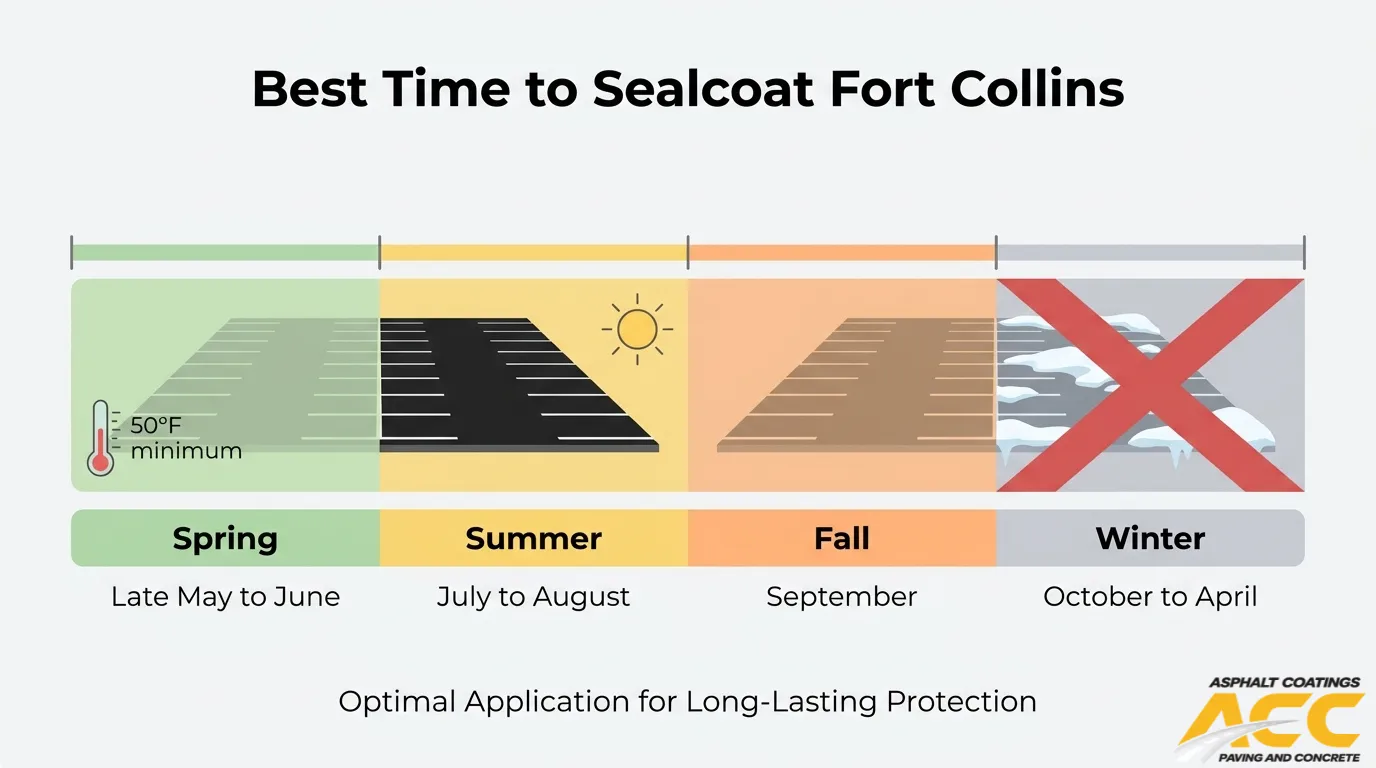
Best Time of Year to Sealcoat a Commercial Parking Lot in Fort Collins
July 29, 2026
The best time of year to sealcoat a commercial parking lot in Fort Collins is late spring through early fall, when daytime temperatures consistently exceed 50°F and dry conditions allow proper emulsion curing. Fort Collins’ cold semi-arid climate at 5,007 feet of elevation compresses this window compared to lower-altitude cities, making precise scheduling essential. This
Read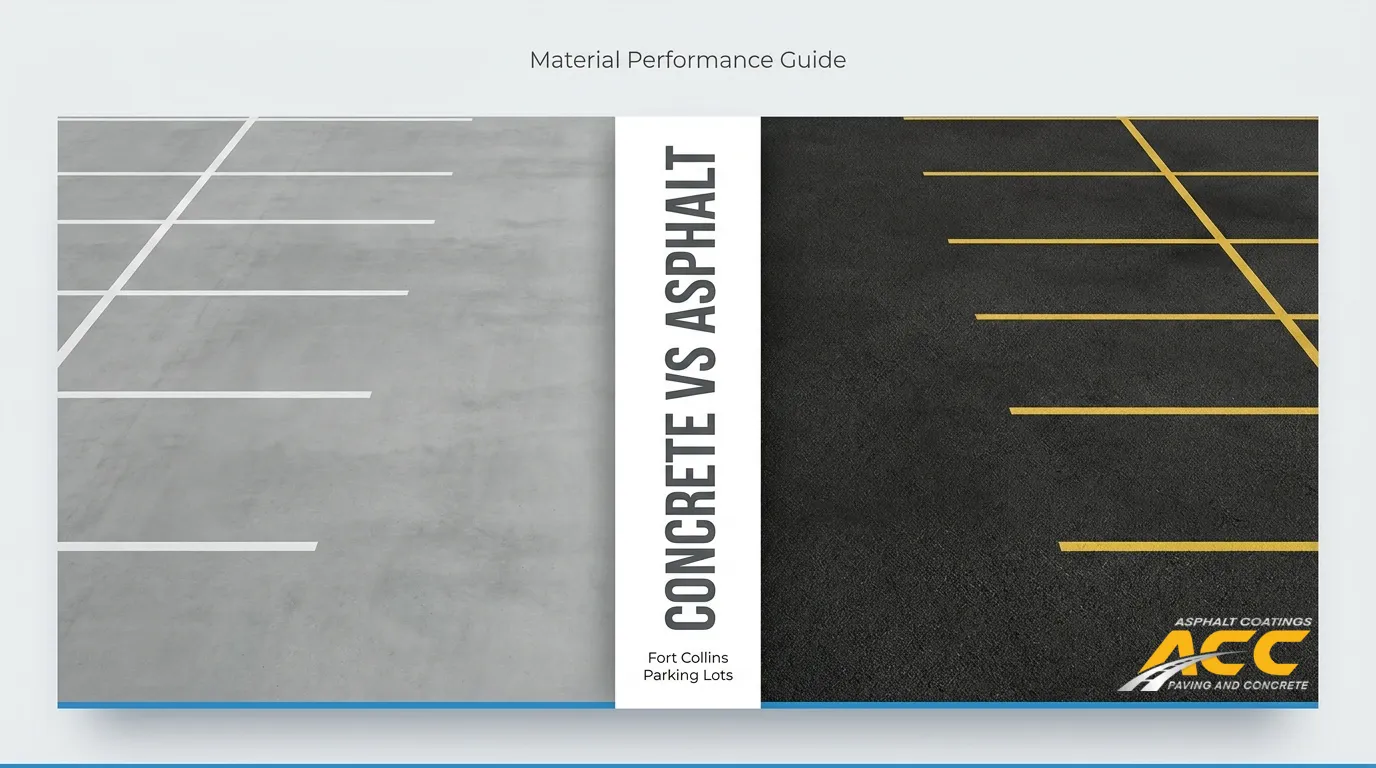
Concrete vs Asphalt: What Is Best for Commercial Parking Lots in Fort Collins?
July 29, 2026
Choosing between concrete and asphalt for a commercial parking lot in Fort Collins is a material performance decision shaped by local climate, traffic demands, and long-term budget goals. Each surface handles the region’s freeze-thaw cycles, UV exposure, and heavy vehicle loads differently. This guide covers climate and durability factors, installation and maintenance planning, lifecycle cost
Read