The best time of year to sealcoat a commercial parking lot in Fort Collins is late spring through early fall, when daytime temperatures consistently exceed 50°F and dry conditions allow proper emulsion curing. Fort Collins’ cold semi-arid climate at 5,007 feet of elevation compresses this window compared to lower-altitude cities, making precise scheduling essential.
This guide covers Fort Collins’ seasonal sealcoating windows, the temperature and weather thresholds that determine application success, how lot age and property type shape your timeline, and how to coordinate booking, preparation, and complementary maintenance tasks for a single efficient project.
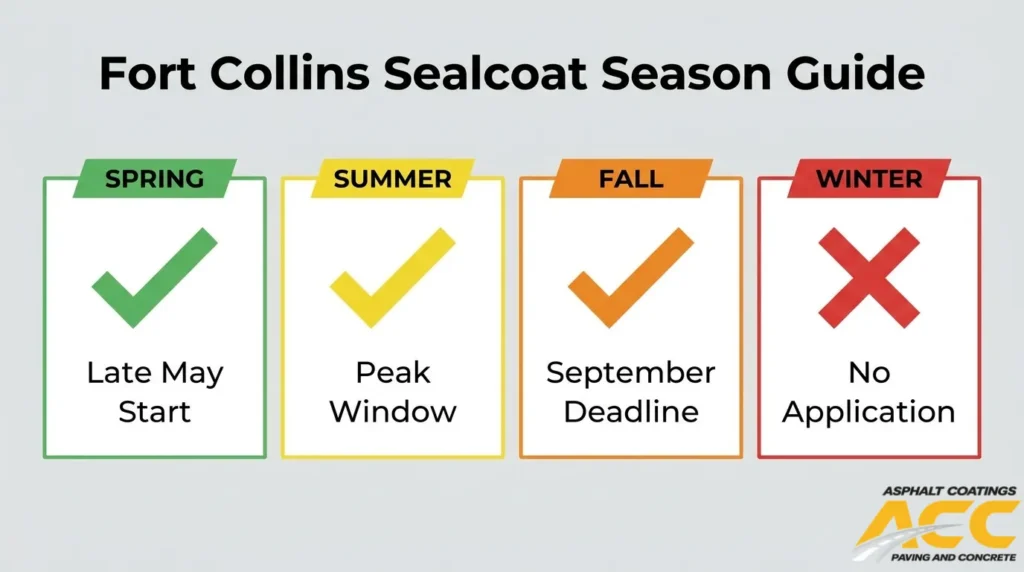
Fort Collins’ seasons create distinct opportunities. Late spring delivers rising warmth and longer daylight before summer storm patterns develop. Summer mornings offer peak heat and sunlight, though afternoon thunderstorms require early scheduling. Early fall remains viable through mid-September, while winter and early spring bring freezing temperatures and moisture that prevent proper curing entirely.
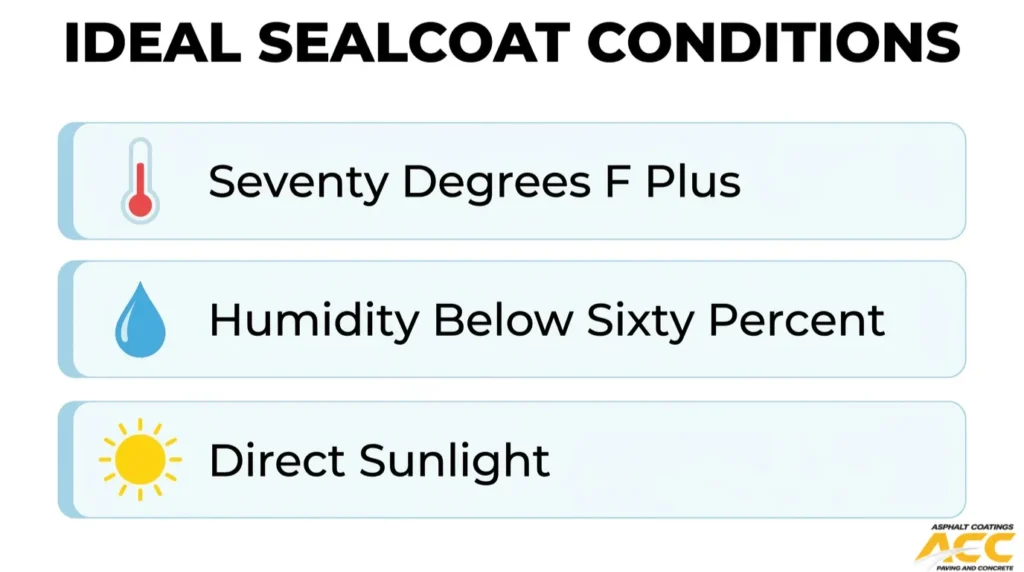
Sealcoat materials demand air temperatures above 50°F and rising, with ideal conditions exceeding 70°F in direct sunlight and relative humidity below 60%. Fort Collins’ semi-arid air generally supports fast curing, but monsoon moisture and overnight temperature drops at elevation can compromise adhesion if not accounted for.
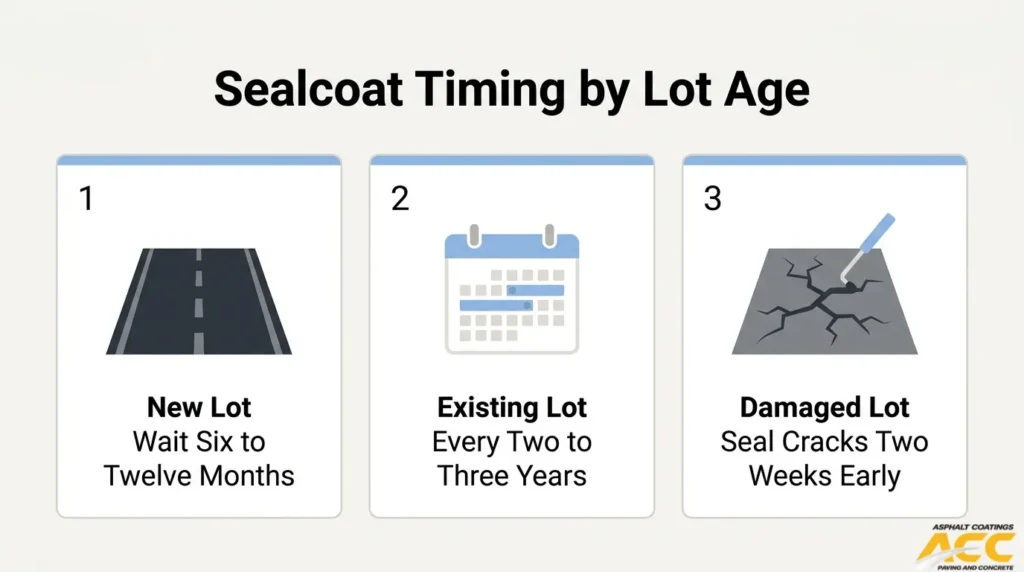
Lot condition directly affects timing. New pavement needs 6 to 12 months of curing before its first sealcoat, existing lots benefit from resealing every 2 to 3 years, and heavily cracked surfaces require crack sealing at least two weeks before application. Different property types, from shopping centers to apartment complexes to industrial facilities, each need phased scheduling around their unique traffic patterns.
Booking two to three months ahead secures preferred dates before contractor calendars fill in mid-spring, and sequencing crack sealing, sealcoating, and striping in the correct order prevents rework while keeping total lot closure time short.
Why Does Timing Matter So Much for Sealcoating in Fort Collins’ Climate?
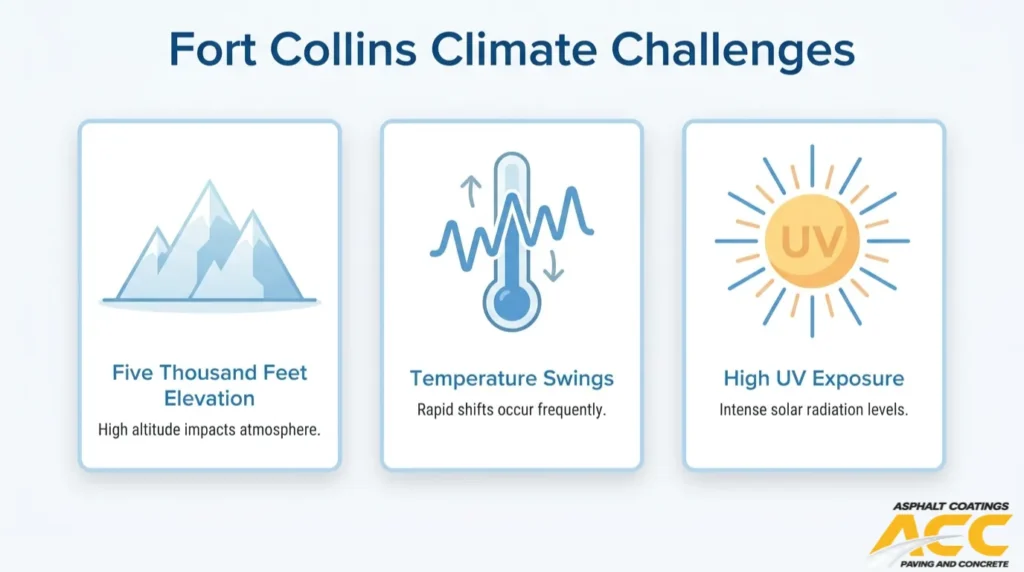
Timing matters so much for sealcoating in Fort Collins’ climate because the city’s elevation, temperature swings, and intense UV exposure create a narrow window where sealant cures properly and bonds to asphalt. Fort Collins sits at 5,007 feet with a cold semi-arid climate, according to the National Centers for Environmental Information. That combination produces rapid temperature drops, low humidity swings, and high-altitude ultraviolet radiation that accelerate asphalt deterioration year-round.
Sealcoat materials require specific heat and moisture conditions to form a durable, protective film. When applied outside those conditions, the coating can fail within months, leaving the pavement exposed to the very damage it was meant to prevent. A study published in MDPI’s Coatings Journal found that high-altitude areas encounter more than 120, and sometimes more than 200, freeze-thaw cycles per year. Each cycle forces moisture into pavement cracks, expands as ice, and widens the damage. Properly timed sealcoating seals those entry points before winter accelerates this destructive process.
Colorado’s climate is also shifting. The Colorado Climate Center reports that statewide annual average temperatures warmed by 2.3°F from 1980 to 2022, with fall temperatures increasing by 3.1°F over the same period. For commercial property managers, this warming trend slightly extends the viable sealcoating season into early fall, but it also intensifies UV degradation during summer months. Research from the National Center for Biotechnology Information shows that ultraviolet radiation exposure increases asphalt stiffness by 35 to 40% in unaged binder, making surfaces more brittle and crack-prone.
The financial stakes reinforce why timing cannot be an afterthought. The Colorado Asphalt Pavement Association, citing Colorado DOT data, determined that reconstructing a roadway in poor condition costs approximately 8 times more than maintaining it in good condition. For a commercial parking lot, missing the optimal sealcoating window by even a few weeks can mean the difference between a low-cost preventive treatment and an expensive structural repair the following spring.
Understanding how Fort Collins’ seasonal patterns interact with sealcoat chemistry is the foundation for scheduling any commercial project correctly.
How Do Fort Collins’ Seasons Affect When You Should Sealcoat?
Fort Collins’ seasons affect when you should sealcoat by creating distinct windows of opportunity based on temperature, moisture, and daylight hours. Late spring through early fall offers the most reliable conditions, while winter and early spring pose serious risks.
Why Is Late Spring Often the Best Time to Sealcoat in Fort Collins?
Late spring is often the best time to sealcoat in Fort Collins because rising daytime temperatures, longer daylight hours, and lower precipitation levels create ideal curing conditions. By mid-May, consistent warmth allows sealant to bond properly and harden before afternoon storms become frequent.
According to the National Centers for Environmental Information, Fort Collins sits at an elevation of 5,007 feet with a cold semi-arid climate. That classification means spring warmth arrives gradually, so scheduling in late May or early June avoids the lingering cold snaps that can compromise a fresh seal. For commercial property managers, this window also precedes peak summer traffic, reducing disruption to tenants and customers.
When During Summer Is It Ideal to Schedule Sealcoating in Fort Collins?
Sealcoating during summer in Fort Collins is ideal in the early morning hours of June through mid-August, before afternoon thunderstorms develop. Colorado’s Front Range follows a predictable monsoonal pattern where mornings are clear and dry while convective storms build by early afternoon.
Scheduling application for early morning gives the sealant several hours of direct sunlight and heat to cure. Contractors familiar with local weather patterns typically plan around this daily cycle, completing application before noon. While summer delivers the warmest sustained temperatures, the afternoon storm risk makes precise scheduling essential. Asphalt Coatings Company, with 39 years of Front Range experience, schedules commercial sealcoating projects around Colorado’s unique weather patterns to ensure optimal curing conditions and minimize weather-related delays. Booking early in the season provides more flexibility if a project needs rescheduling due to unexpected weather.
Is Early Fall Still a Good Time to Sealcoat a Commercial Lot in Fort Collins?
Early fall is still a good time to sealcoat a commercial lot in Fort Collins, provided the work is completed by mid-September when overnight temperatures remain reliably above 50°F. September often brings stable, dry weather with moderate daytime warmth that supports proper curing.
This window represents the last practical opportunity before winter. Delaying maintenance carries real financial consequences; the Colorado Asphalt Pavement Association reports that the Colorado DOT determined reconstructing a roadway in poor condition costs approximately eight times what maintaining it in good condition would have. For commercial property owners, sealcoating in early fall protects the surface through the harshest months ahead, making it one of the most cost-effective maintenance decisions of the year.
Why Are Winter and Early Spring Usually the Worst Times to Sealcoat?
Winter and early spring are usually the worst times to sealcoat because Fort Collins experiences freezing temperatures, snowfall, and moisture levels that prevent proper sealant curing. Sealcoat applied in cold, damp conditions will not adhere to the asphalt surface and often peels, cracks, or washes away entirely.
Overnight lows regularly drop well below freezing from November through March. Even brief exposure to sub-freezing temperatures during the curing window can ruin an application. Early spring poses its own risks; fluctuating temperatures and snowmelt leave pavement wet and cold despite occasional warm afternoons. Attempting to sealcoat during these months wastes material and labor while leaving the surface unprotected.
Understanding these seasonal boundaries helps commercial property managers plan sealcoating around the conditions that actually determine success.
What Temperature and Weather Conditions Are Best for Sealcoating in Fort Collins?
The best temperature and weather conditions for sealcoating in Fort Collins require warm, dry air and stable forecasts. According to the Texas Department of Transportation, seal coats must be placed when air temperature is above 50°F and rising, and may not be applied when air temperature is below 60°F and falling. The sections below cover ideal daytime and nighttime temperatures, humidity effects along the Front Range, and how precipitation and wind disrupt the process.
What Daytime and Nighttime Temperatures Are Ideal for Sealcoating?
The ideal daytime temperature for sealcoating is above 70°F with direct sunlight and relative humidity below 60%, according to the Pavement Coatings Technology Council. Nighttime temperatures matter just as much because sealant continues curing after application crews leave. If overnight lows drop below 50°F, the emulsion can fail to coalesce properly, leaving a soft, tacky surface vulnerable to tire scuffing.
In Fort Collins, late spring and summer afternoons regularly exceed 70°F, but overnight temperatures can still dip sharply at elevation. Scheduling application early enough in the day gives the coating several hours of warmth and sunlight before evening cooling begins. For commercial properties along the Front Range, Asphalt Coatings Company coordinates sealcoating timing with crack sealing and striping services using in-house crews, ensuring all maintenance tasks align with Fort Collins’ optimal temperature windows.
How Do Humidity Levels Along the Front Range Impact Sealcoating Cure Times?
Humidity levels along the Front Range impact sealcoating cure times by slowing or accelerating water evaporation from the emulsion. Fort Collins’ semi-arid climate generally keeps relative humidity low, which is favorable for faster curing. Under recommended conditions, typical cure time ranges from two to three hours.
When monsoon moisture pushes humidity above 60%, that window stretches considerably. Higher moisture in the air prevents the water in the sealcoat from evaporating at a consistent rate, resulting in uneven film formation. For commercial lots that need to reopen quickly, monitoring humidity forecasts is just as critical as checking temperature. Low-humidity mornings often provide the most reliable cure conditions during summer months.
Why Is Rain, Snow, or Wind a Problem When Scheduling Sealcoating?
Rain, snow, or wind is a problem when scheduling sealcoating because each condition compromises the coating’s ability to bond and cure. Rain within 24 hours of application washes uncured emulsion off the pavement, creating bare spots and environmental runoff. Snow introduces both moisture and rapid temperature drops that halt the curing process entirely.
Wind above 15 mph carries dust and debris into the wet surface, degrading adhesion and finish quality. Strong gusts also cause uneven spray patterns during application, leaving thin spots that wear prematurely. Checking extended forecasts for a dry, calm window of at least 48 hours before and after application is the most reliable way to protect the investment.
Understanding these weather thresholds helps property managers evaluate whether their lot’s current condition can wait for ideal conditions or needs immediate attention.
How Does the Age and Condition of Your Commercial Parking Lot Affect the Best Timing?
The age and condition of a commercial parking lot affect the best timing by determining how urgently sealcoating is needed and how much prep work the season must accommodate. Key factors include new pavement curing, reseal frequency, and late-season feasibility for damaged surfaces.
When Should a Newly Paved Commercial Lot in Fort Collins First Be Sealcoated?
A newly paved commercial lot in Fort Collins should first be sealcoated approximately 6 to 12 months after installation. Fresh asphalt needs time for lighter oils to evaporate and the binder to fully cure before a sealer can properly adhere. Applying sealcoat too soon traps volatile compounds and prevents proper bonding, which leads to peeling and premature failure.
For lots paved in late summer or fall, this curing window typically pushes the first sealcoat application into the following late spring or early summer. That timing aligns well with Fort Collins’ warm, dry conditions. Scheduling the first application during this window gives the new surface maximum protection heading into its second winter.
How Often Should an Existing Commercial Parking Lot Be Resealcoated Here?
An existing commercial parking lot should be resealcoated every 2 to 3 years in Fort Collins. Colorado’s high-altitude UV exposure and seasonal temperature swings accelerate surface oxidation faster than in lower-elevation regions. According to NCBI research, UV radiation exposure increases asphalt stiffness by 35 to 40% in unaged mixtures, which makes consistent resealing intervals critical for maintaining flexibility.
Lots with heavier traffic, such as shopping centers or distribution warehouses, may need resealing closer to the 2-year mark. Lower-traffic office parks can often extend to 3 years. Scheduling each cycle during late spring or early summer ensures optimal curing conditions and keeps protection in place before the next freeze-thaw season.
When Is It Too Late in the Season to Sealcoat a Heavily Cracked or Oxidized Lot?
It is too late in the season to sealcoat a heavily cracked or oxidized lot once daytime highs consistently fall below 50°F or overnight temperatures approach freezing, which typically occurs in Fort Collins by mid-to-late October. Damaged surfaces require additional preparation time that compresses the available application window.
Heavily cracked lots need crack sealing before sealcoating, and that repair must cure for a minimum of two weeks before any surface treatment can be applied, according to AsphaltPro. When combined with Fort Collins’ shortening fall days and cooling temperatures, this two-week curing requirement means crack sealing must be completed no later than early October for the sealcoat to follow in time. Preventive maintenance typically costs three times less than reactive repairs, so property managers facing late-season deadlines should weigh early action against the compounding cost of waiting until the following spring.
Understanding how lot age and condition shape your timeline makes it easier to coordinate sealcoating with property-specific scheduling needs.
How Should Different Commercial Properties in Fort Collins Plan Sealcoating Timing?
Different commercial properties in Fort Collins should plan sealcoating timing around their unique traffic patterns, tenant schedules, and operational demands. The subsections below cover strategies for shopping centers, residential communities, and industrial or office facilities.
When Should Shopping Centers Schedule Sealcoating to Minimize Disruption?
Shopping centers should schedule sealcoating during their lowest-traffic windows, typically midweek mornings in late spring or early summer before peak retail season begins. Dividing the lot into sections and completing one at a time keeps a predictable share of parking open throughout the project. This phased approach lets customers access stores continuously while each zone cures. Coordinating with anchor tenants on delivery schedules prevents conflicts at loading areas. For centers with seasonal sales events, locking in a sealcoating date at least 60 days before the busy period avoids last-minute weather delays that could push work into high-revenue weeks.
How Can Apartment and HOA Parking Lots Time Sealcoating Around Residents?
Apartment and HOA parking lots can time sealcoating around residents by scheduling work in phases that rotate available parking across the property. Providing written notice at least two weeks in advance gives residents time to arrange alternate parking. Assigning temporary overflow areas, such as nearby visitor lots or shared community spaces, reduces friction during each phase. Late spring and early fall work well because mild Fort Collins temperatures shorten cure times to just a few hours, minimizing the window residents are displaced. Since sealcoat typically cures within two to three hours under recommended conditions, completing sections in the morning often restores access by afternoon.
How Should Industrial and Office Facilities Time Sealcoating Around Operations?
Industrial and office facilities should time sealcoating around operations by targeting weekends, holiday closures, or scheduled plant shutdowns when vehicle and foot traffic drops significantly. Warehouse and distribution properties benefit from coordinating with shipping schedules so loading docks remain accessible during active freight windows. Office parks with standard weekday hours can phase work across Saturday and Sunday mornings when parking demand is minimal. Preventive maintenance like sealcoating typically costs three times less than reactive repairs, so aligning the project with a planned operational pause protects both the budget and the pavement.
Understanding property-specific scheduling strategies makes it easier to book the project well ahead of Fort Collins’ busiest contractor season.
How Far in Advance Should You Book a Sealcoating Project in Fort Collins?
You should book a sealcoating project in Fort Collins at least two to three months before your target application date. Below, learn when contractor schedules fill up and how early planning prevents weather delays.
When Do Sealcoating Contractors’ Schedules Typically Fill Up Each Year?
Sealcoating contractors’ schedules typically fill up between late March and early May each year. Because Fort Collins’ viable sealcoating window is relatively short, concentrated mainly from late May through early October, commercial property managers compete for the same limited slots. Contractors who handle crack sealing, striping, and sealcoating as bundled projects book even faster, since coordinating multiple services requires longer scheduling blocks. By mid-spring, the most experienced crews often have their summer calendars committed. Waiting until June or July to call frequently pushes your project into early fall, where the margin for error narrows as nighttime temperatures begin dropping. Reaching out in late winter or early spring secures better date flexibility.
How Can Planning Ahead Help You Avoid Weather-Related Delays?
Planning ahead helps you avoid weather-related delays by building buffer time into your project schedule. Sealcoat materials require air temperatures above 50°F and rising, with ideal conditions exceeding 70°F, direct sunlight, and relative humidity below 60%, according to the Pavement Coatings Technology Council. Fort Collins’ afternoon thunderstorms in summer and early cold snaps in fall can force last-minute rescheduling. When you book early, your contractor can identify a primary date and a backup window, so a single rain event does not push the job weeks out. Properties that schedule reactively often lose their spot entirely if weather disrupts the original date during peak season.
With your booking timeline set, knowing which warning signs call for sealcoating keeps your schedule proactive.
What Signs Show Your Commercial Parking Lot Should Be Sealcoated Soon?
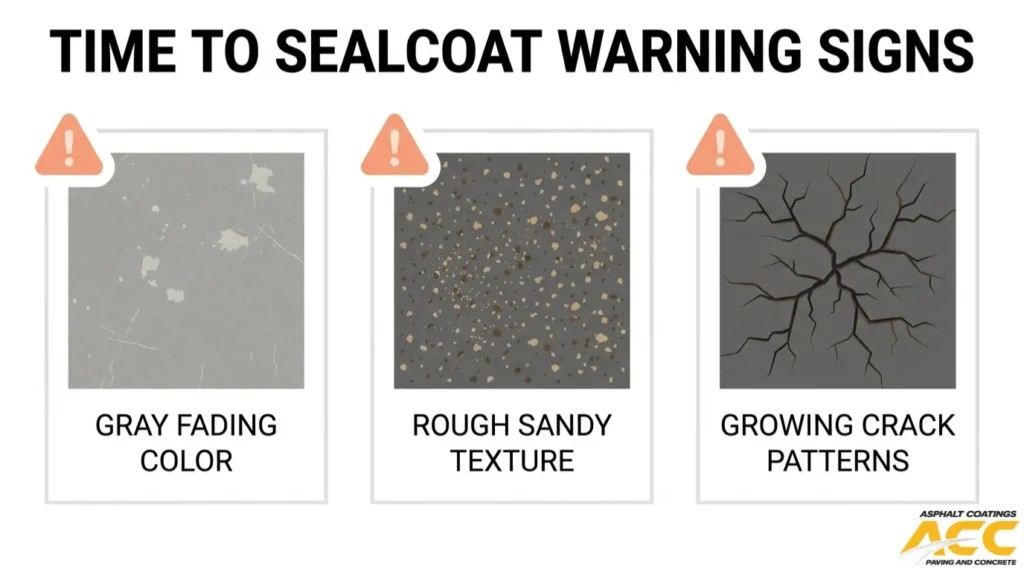
The signs your commercial parking lot should be sealcoated soon include visible fading, surface oxidation, and expanding cracks. These visual indicators reveal UV damage and binder deterioration that worsen rapidly without protection.
How Do Fading, Oxidation, and Surface Wear Signal It Is Time to Sealcoat?
Fading, oxidation, and surface wear signal it is time to sealcoat when your parking lot shifts from deep black to a dull, brittle gray. This color change means UV radiation has broken down the asphalt binder, leaving aggregate exposed and vulnerable. According to a study published through the National Center for Biotechnology Information, exposure to ultraviolet radiation increases asphalt stiffness by 35 to 40% in unaged binder. That level of stiffness makes the surface far more prone to cracking under traffic loads. Additional wear indicators include:
- Loose aggregate or small stones scattering across the surface.
- A rough, sandy texture where the top layer has eroded.
- Visible loss of the original smooth finish in high-traffic lanes.
Once oxidation becomes visible, the pavement is already losing structural integrity. Acting at this stage, rather than waiting for full deterioration, is one of the most cost-effective decisions a property manager can make.
When Do Growing Cracks Indicate You Should Sealcoat Before Next Winter?
Growing cracks indicate you should sealcoat before next winter when they begin branching, widening, or forming interconnected patterns across the surface. Hairline cracks under a quarter inch are early warnings; once they expand, water infiltrates the subbase and freeze-thaw cycles accelerate the damage exponentially. Preventive maintenance typically costs three times less than reactive repairs, according to Pave It Forward LLC, making early intervention far more economical than waiting. Key crack patterns that demand immediate attention include:
- Linear cracks lengthening toward drain areas or curb lines.
- Alligator cracking, where interconnected fractures resemble reptile skin.
- Edge cracking along lot perimeters where drainage concentrates moisture.
If these patterns are present heading into fall, scheduling sealcoating before winter arrives protects the lot from months of moisture penetration and freeze-thaw stress. Understanding these warning signs helps determine the best timing for your sealcoating project.
How Does Proper Sealcoating Timing Help Your Lot Survive Freeze–Thaw Cycles?
Proper sealcoating timing helps your lot survive freeze–thaw cycles by sealing the surface before moisture can infiltrate cracks and expand during winter temperature swings. The subsections below cover how pre-winter sealcoating protects pavement and what happens when you delay.
How Does Sealcoating Before Winter Protect Against Freeze–Thaw Damage?
Sealcoating before winter protects against freeze–thaw damage by creating a waterproof barrier that prevents moisture from seeping into micro-cracks. When water enters unsealed pavement and freezes, it expands by roughly 9%, widening cracks with each cycle. A study published in MDPI’s Coatings Journal found that high-altitude areas experience more than 120, and sometimes over 200, freeze–thaw cycles per year. Fort Collins sits at over 5,000 feet, making this threat particularly relevant for commercial lots along the Front Range. A fully cured sealcoat applied in late spring or summer blocks water penetration at the surface, keeping the asphalt binder intact through months of repeated freezing and thawing.
Why Is It Risky to Delay Sealcoating Through Another Fort Collins Winter?
It is risky to delay sealcoating through another Fort Collins winter because every unprotected freeze–thaw cycle accelerates pavement deterioration. Unsealed cracks absorb snowmelt during the day, then freeze overnight as temperatures drop below freezing. This repeated expansion fractures the asphalt matrix from within, turning hairline cracks into potholes within a single season. Reactive repairs after winter damage cost significantly more than preventive sealcoating, and once subsurface damage sets in, simple surface treatments may no longer suffice. For commercial property managers, each skipped season compounds maintenance costs and liability exposure.
Coordinating sealcoating with other maintenance tasks maximizes the value of your seasonal window.
How Can You Coordinate Sealcoating Timing With Other Parking Lot Maintenance?
You can coordinate sealcoating timing with other parking lot maintenance by sequencing crack sealing, striping, and ADA markings in the correct order around the sealcoat application. Proper scheduling prevents rework and ensures compliance.
When Should Crack Sealing Be Done Relative to Sealcoating?
Crack sealing should be done before sealcoating, with enough lead time for full cure. Applying sealcoat over uncured crack sealant causes adhesion failure and traps moisture beneath the surface. According to AsphaltPro, the crack seal must cure for a minimum of two weeks before any treatment can be placed overtop. This means crack sealing needs to be scheduled at least 14 days prior to your sealcoating date. For commercial lots with extensive cracking, starting crack repairs three to four weeks early provides a safer buffer against weather delays that could compress the cure window.
How Should Striping and ADA Markings Be Scheduled Around Sealcoating?
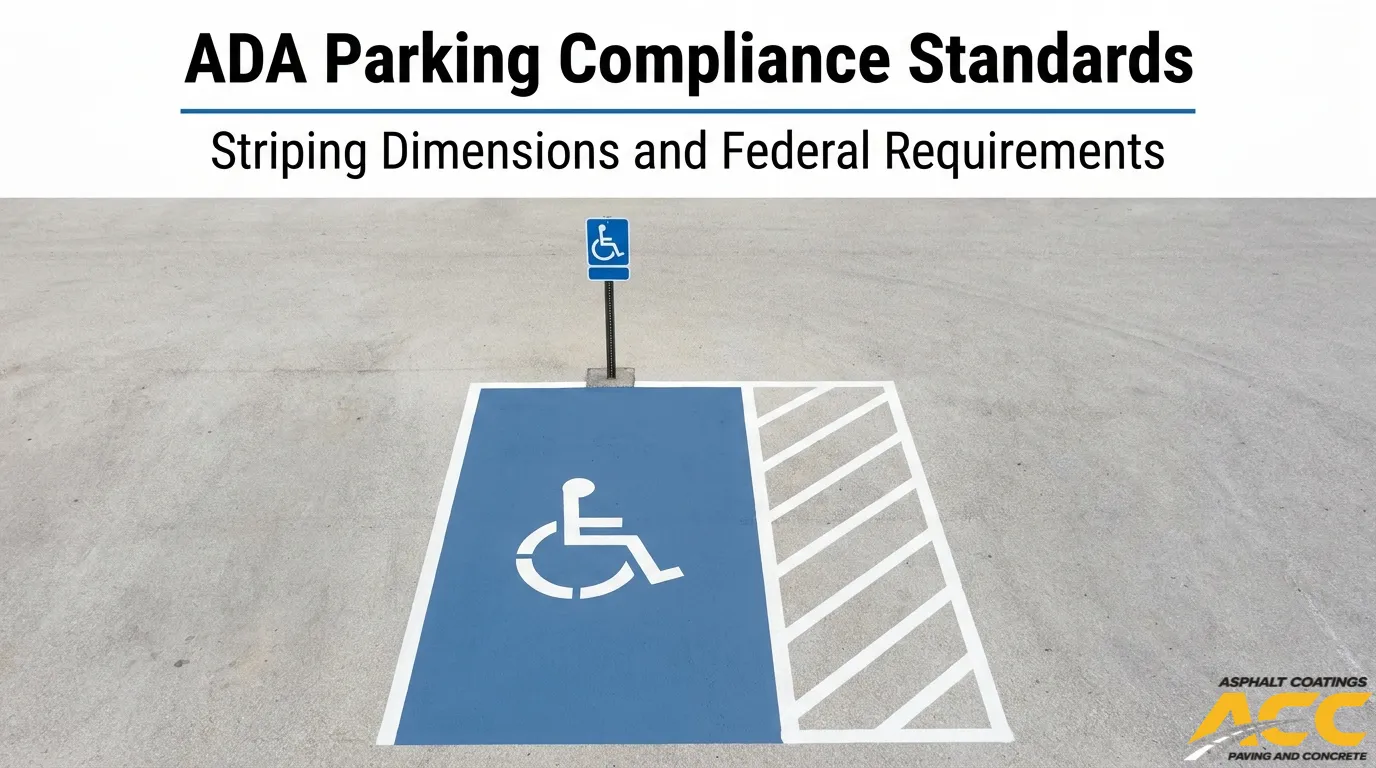
Striping and ADA markings should be scheduled after sealcoating is fully cured. Fresh sealcoat must harden completely before paint adheres properly; applying striping too early causes peeling and poor visibility. Most contractors recommend waiting 24 to 48 hours after sealcoat application before restriping. ADA-compliant markings require particular attention during this process. The Americans with Disabilities Act specifies that each accessible parking space shall be 96 inches wide minimum, marked to define the width, with a maximum slope of 1:48 in all directions. Restriping immediately after sealcoating is the ideal time to verify these measurements and correct any pre-existing violations. Bundling all line work into a single mobilization after the sealcoat cures keeps costs lower and reduces total lot closure time.
With maintenance tasks properly sequenced, preparing your property for the project itself becomes the next priority.
How Should You Prepare Your Commercial Property for Sealcoating at the Chosen Time?
You should prepare your commercial property for sealcoating by communicating early with all stakeholders and creating a phased traffic plan. The following subsections cover notification timelines and traffic control strategies.
When Should You Notify Tenants, Customers, and Vendors About Sealcoating?
You should notify tenants, customers, and vendors at least two to three weeks before sealcoating begins. This lead time allows businesses to adjust delivery schedules, inform their own customers, and plan for temporary parking changes.
Effective notification should include:
- The exact dates and estimated hours of work for each phase.
- Which parking areas or access points will be closed during each stage.
- Designated alternative parking locations and temporary pedestrian routes.
- A point of contact for questions or scheduling conflicts.
Post physical signage at lot entrances and key building access points at least one week prior. For multi-tenant properties, a brief coordination meeting helps surface conflicts before work begins. Since sealcoat typically cures within two to three hours under recommended conditions, setting clear reentry expectations prevents premature traffic on fresh surfaces.
How Can You Plan Traffic Control and Phasing Around Sealcoating Dates?
You can plan traffic control and phasing by dividing the lot into sections and completing one at a time, keeping a predictable share of parking open throughout. This phased approach minimizes business disruption while giving each section adequate cure time.
Key phasing steps include:
- Mapping the lot into zones based on traffic volume and building access priority.
- Scheduling high-traffic zones during off-peak hours or weekends.
- Placing barricades, cones, and directional signage to route vehicles safely around active work areas.
- Assigning a designated fire lane and ADA-accessible route that remains open at every phase.
For larger commercial properties, staggering work across two or three days often strikes the best balance between operational continuity and cure quality. Coordinating phasing details with your contractor well before the scheduled date ensures a smooth process from preparation through completion.
How Should You Approach Sealcoating Timing in Fort Collins With a Local Contractor?
You should approach sealcoating timing in Fort Collins by partnering with a contractor who understands local climate patterns and can align your project with optimal weather windows. The following sections cover how Asphalt Coatings Company supports that planning and the key takeaways from this guide.
How Can Asphalt Coatings Company Help You Plan the Best Sealcoating Window?
Asphalt Coatings Company helps you plan the best sealcoating window by combining 39 years of Front Range experience with site-specific scheduling. Experienced contractors with in-house crews can evaluate your lot’s condition, monitor Fort Collins weather patterns, and coordinate crack sealing, sealcoating, and striping into one efficient timeline. Because every commercial property faces different traffic demands and maintenance histories, working with a contractor who approaches projects as a long-term partner rather than a one-time vendor is essential. Property managers, shopping center operators, and industrial facility owners across the Front Range should reach out to local contractors early to secure a late spring or summer application window before schedules fill up for the season.
What Are the Key Takeaways About the Best Time of Year to Sealcoat a Commercial Parking Lot in Fort Collins?
The key takeaways about the best time of year to sealcoat a commercial parking lot in Fort Collins center on three factors: temperature, seasonal timing, and advance planning.
- Late spring through early fall offers the most reliable sealcoating conditions, with daytime temperatures consistently above 50°F and lower rain probability.
- Ideal application requires air temperatures exceeding 70°F, direct sunlight, and relative humidity below 60%.
- Fort Collins’ cold semi-arid climate at 5,007 feet of elevation shortens the usable season compared to lower-altitude cities.
- Crack sealing should be completed at least two weeks before sealcoating to allow proper cure time.
- Booking early in the season prevents weather-related delays and scheduling conflicts during peak demand.
Preventive maintenance, including properly timed sealcoating, typically costs three times less than reactive repairs. Prioritizing the right window protects your investment against freeze-thaw damage and UV degradation before another Colorado winter arrives.