
What Does Colorado Springs’ MS4 Stormwater Permit Mean for Your Next Repaving Project?
June 23, 2026
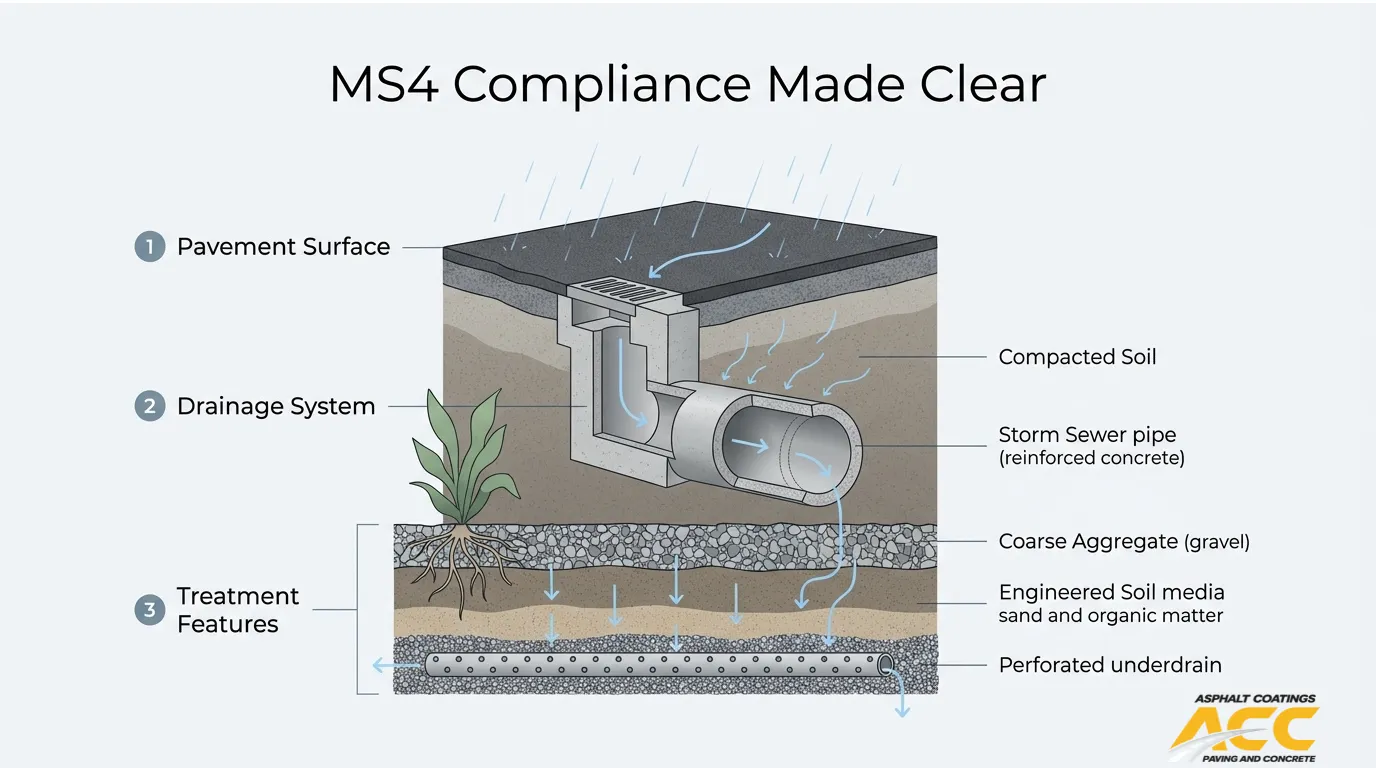
Colorado Springs’ MS4 stormwater permit is a regulatory authorization governing how stormwater runoff is managed and discharged through the city’s Municipal Separate Storm Sewer System, and it directly shapes the scope, cost, and compliance requirements of commercial repaving projects. This guide covers the MS4 permit framework and its triggers for repaving, construction-phase and post-construction BMP
Read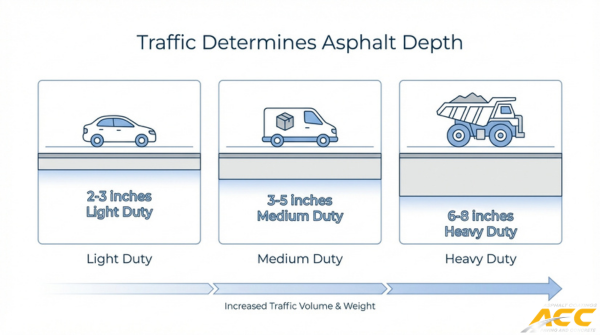
How Traffic Type Dictates Asphalt Thickness and Mix Design
April 6, 2026
Traffic type dictates asphalt thickness and mix design by determining the structural depth, binder grade, and aggregate properties a pavement needs to support its actual vehicle loads without premature failure. Every specification, from a 2-inch parking lot surface to an 8-inch industrial lane, traces back to the weight, frequency, and behavior of traffic on that
Read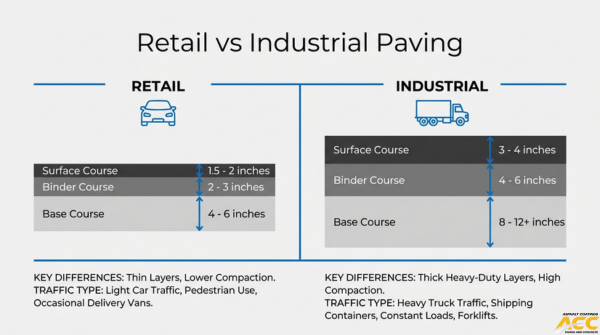
Asphalt Paving Differences for Retail vs Industrial Properties
April 6, 2026
Asphalt paving for retail properties differs from industrial properties in structural design, material selection, and maintenance strategy because each property type faces distinct traffic loads, environmental exposures, and regulatory requirements. This guide covers traffic demands and load profiles, asphalt thickness and mix design, subbase and drainage engineering, striping and layout standards, maintenance scheduling, freeze-thaw performance,
Read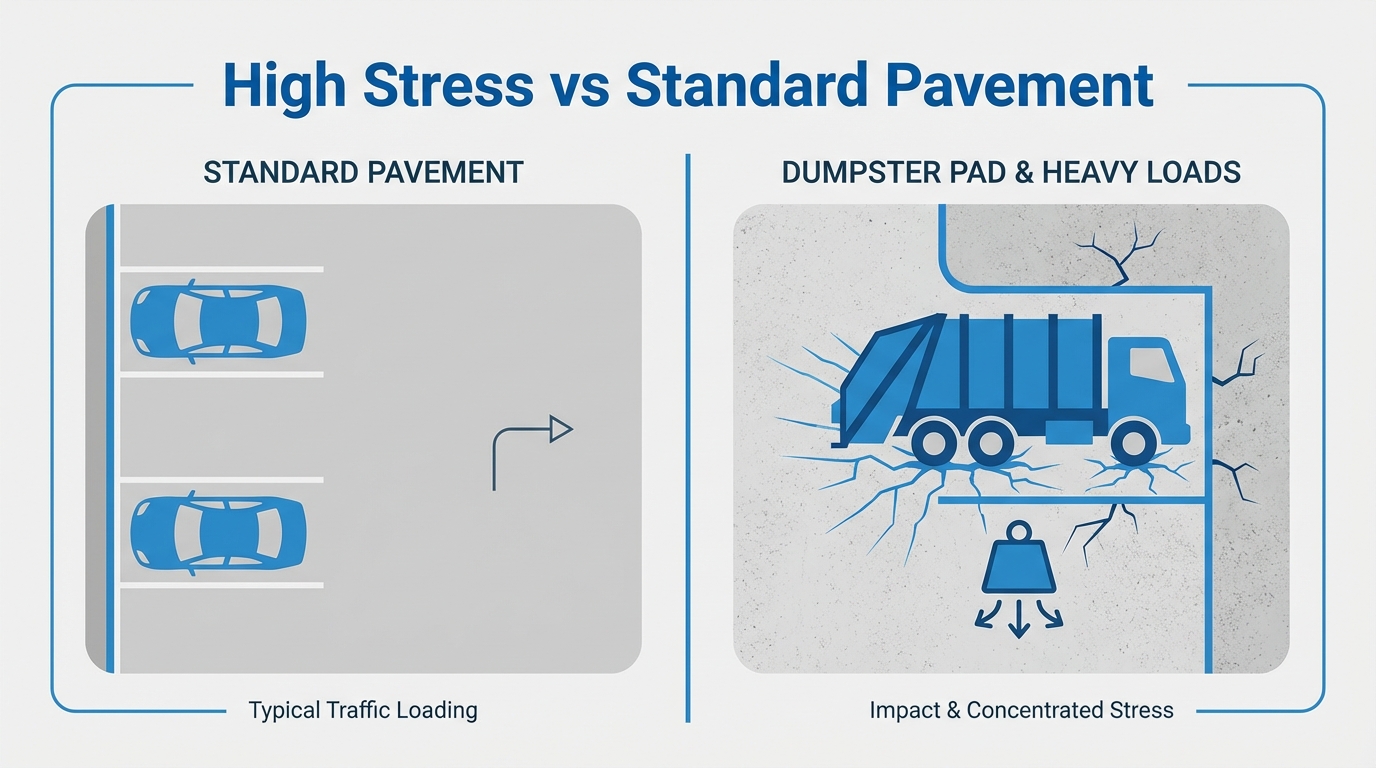
Why Dumpster Pads and Fire Lanes Fail Faster Than Parking Areas
April 6, 2026
Dumpster pads and fire lanes are high-stress pavement zones that deteriorate faster than standard parking areas because they endure concentrated heavy loads, chemical exposure, and extreme mechanical forces that conventional parking lot designs were never engineered to handle. We cover what makes these zones structurally different from parking lots, the specific forces that destroy them,
Read