
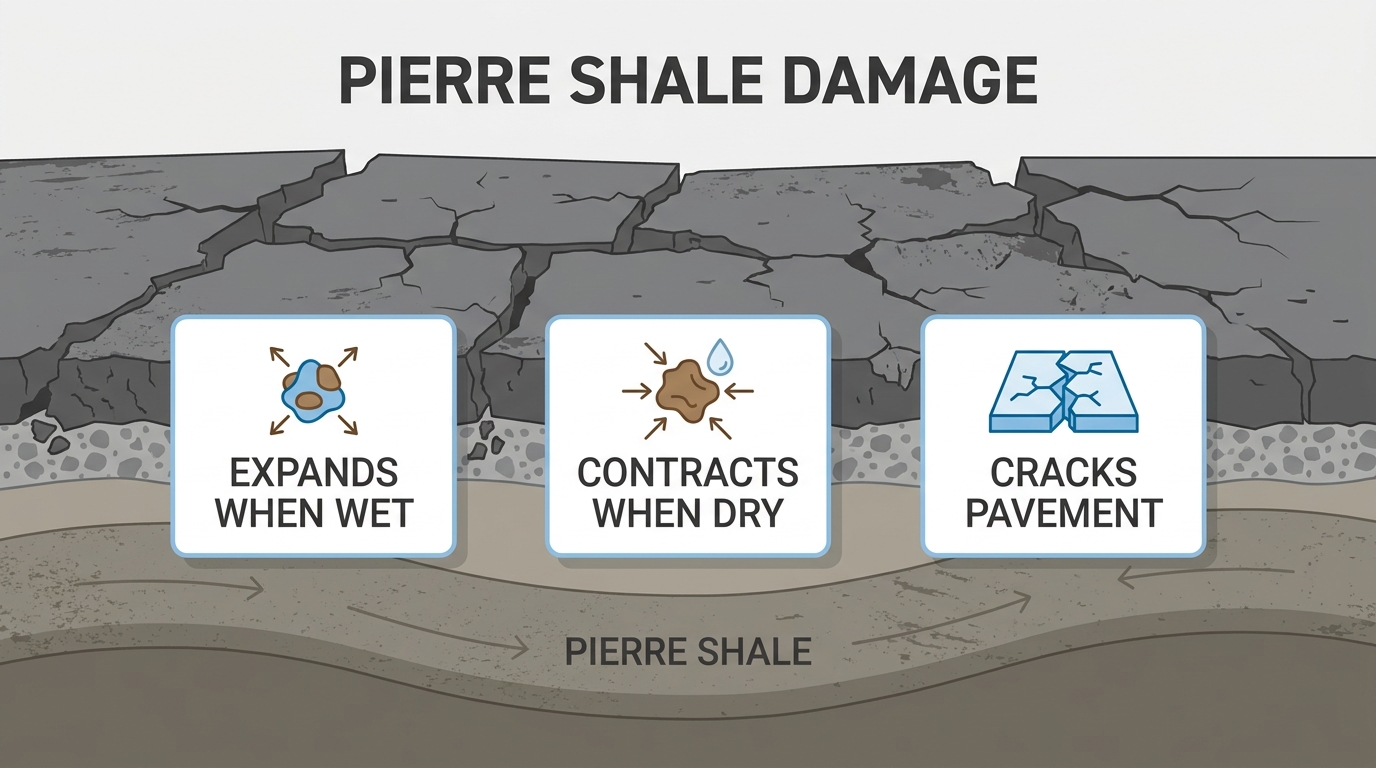
Why Do Expansive Pierre Shale Soils Crack Denver Commercial Pavements?
June 23, 2026
Pierre Shale is a Late Cretaceous marine shale formation rich in smectite and montmorillonite clay minerals that swell when wet and shrink when dry, generating a relentless swell-shrink cycle beneath Denver commercial pavements. This cycle is the primary reason parking lots, loading areas, and access roads across the metro area develop cracking, heaving, and settlement
Read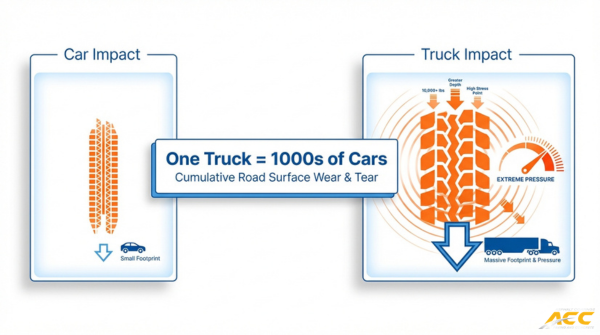
Designing Asphalt for Heavy Truck and Delivery Traffic
April 6, 2026
Asphalt designed for heavy truck and delivery traffic is a pavement system engineered with specialized mix designs, increased structural thickness, and reinforced subgrade preparation to withstand axle loads that are exponentially greater than those from passenger vehicles. This guide covers load mechanics and why trucks demand different pavement engineering, mix designs and thickness standards for
Read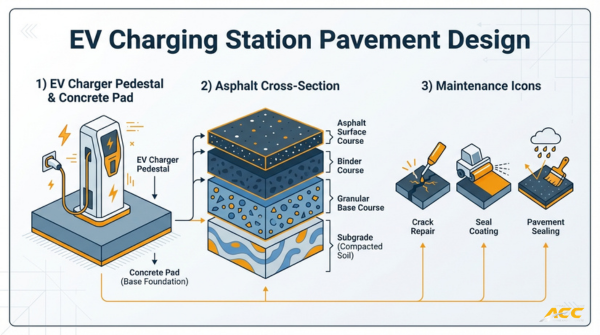
How EV Charging Stations Impact Asphalt Design and Maintenance
April 6, 2026
EV charging stations impact asphalt design and maintenance by introducing heavier vehicle loads, prolonged static stress, thermal cycling from equipment, and chemical exposure that standard parking lot pavement sections are not engineered to handle. This guide covers the unique demands EVs place on pavement, the design specifications charging areas require, common damage patterns at charging
Read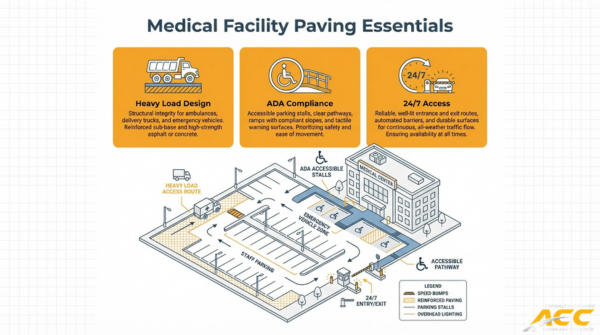
Asphalt Paving Considerations for Medical and High-Traffic Facilities
April 6, 2026
Asphalt paving for medical and high-traffic facilities is a specialized discipline that balances heavy structural demands, strict regulatory compliance, and uninterrupted facility operations. We built this guide around pavement engineering and design, ADA compliance and parking layout, drainage and climate resilience, phased construction logistics, and long-term maintenance planning. Pavement engineering for these facilities starts with
Read