
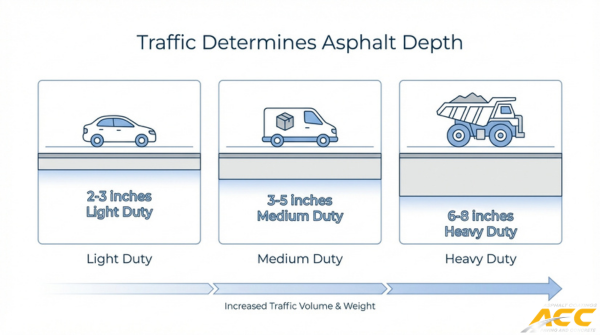
How Traffic Type Dictates Asphalt Thickness and Mix Design
April 6, 2026
Traffic type dictates asphalt thickness and mix design by determining the structural depth, binder grade, and aggregate properties a pavement needs to support its actual vehicle loads without premature failure. Every specification, from a 2-inch parking lot surface to an 8-inch industrial lane, traces back to the weight, frequency, and behavior of traffic on that
Read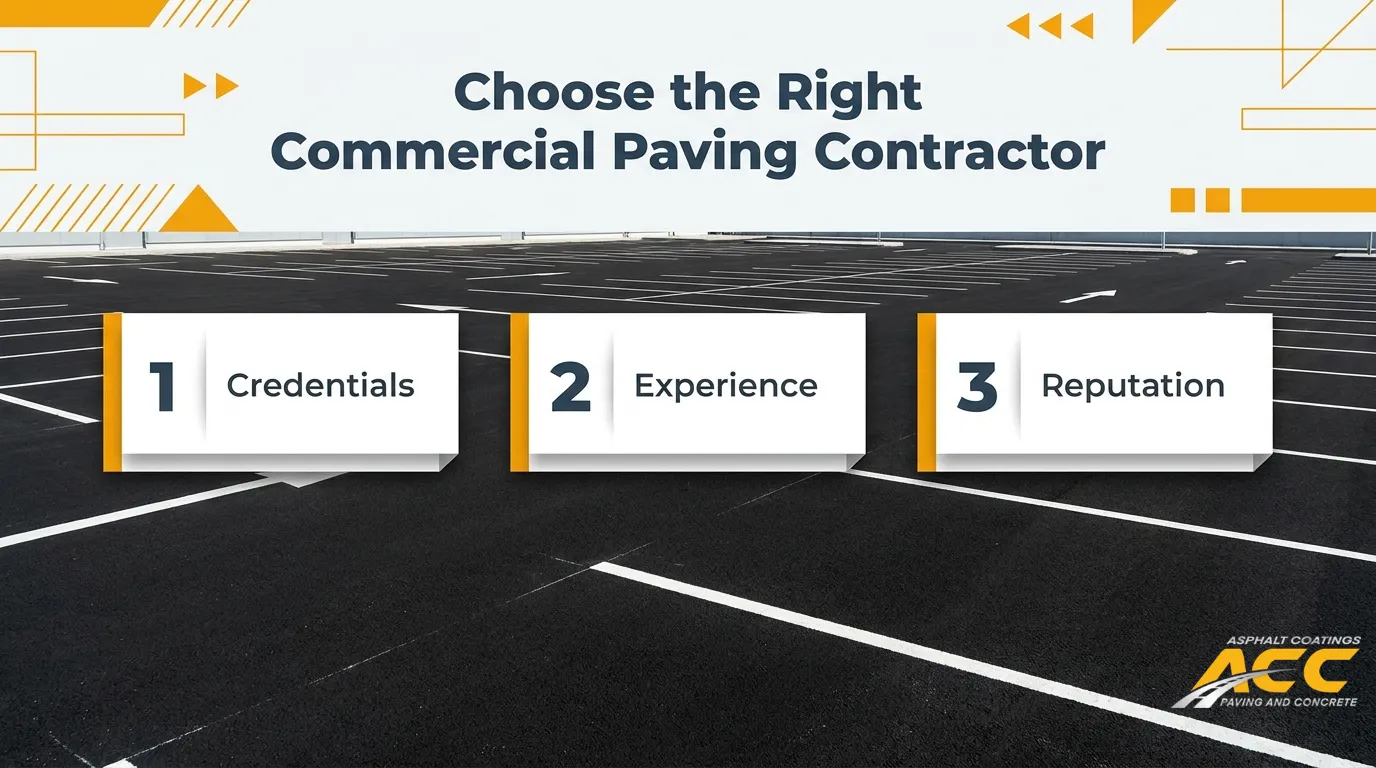
How Do You Choose a Commercial Paving Contractor?
July 22, 2026
Choosing a commercial paving contractor is a decision that determines whether your pavement lasts decades or deteriorates within a few years. The wrong selection leads to cost overruns, premature failure, and reactive repairs that far exceed the original project budget. This guide covers credentials and licensing verification, experience and project-specific expertise, bid process evaluation, reputation
Read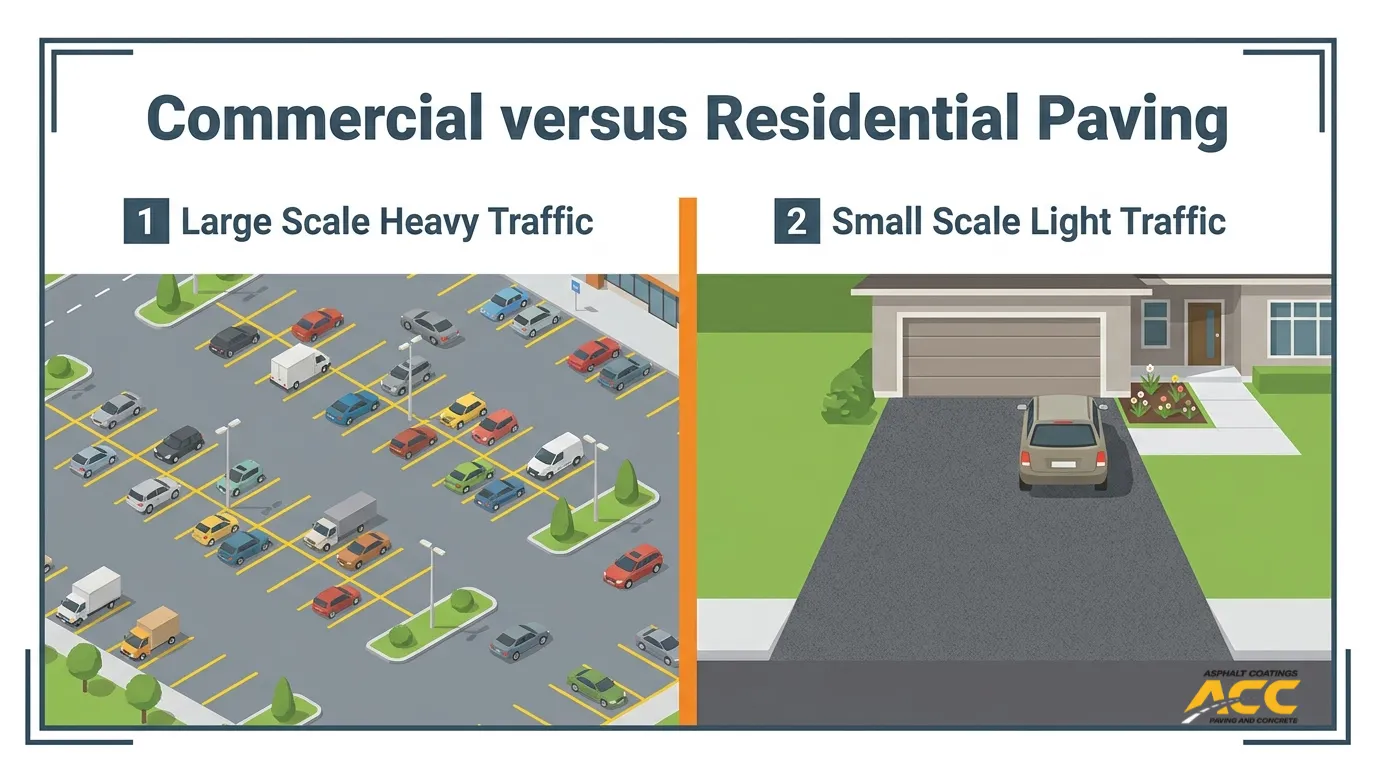
What Are the Key Differences Between Commercial and Residential Paving?
July 22, 2026
Commercial and residential paving are two distinct categories of asphalt construction separated by project scale, material specifications, regulatory requirements, and long-term maintenance demands. This guide covers scope and traffic load differences, material and mix design specifications, the paving process from site prep through drainage, cost comparisons, regulatory compliance, maintenance schedules, contractor selection, durability, and Colorado
Read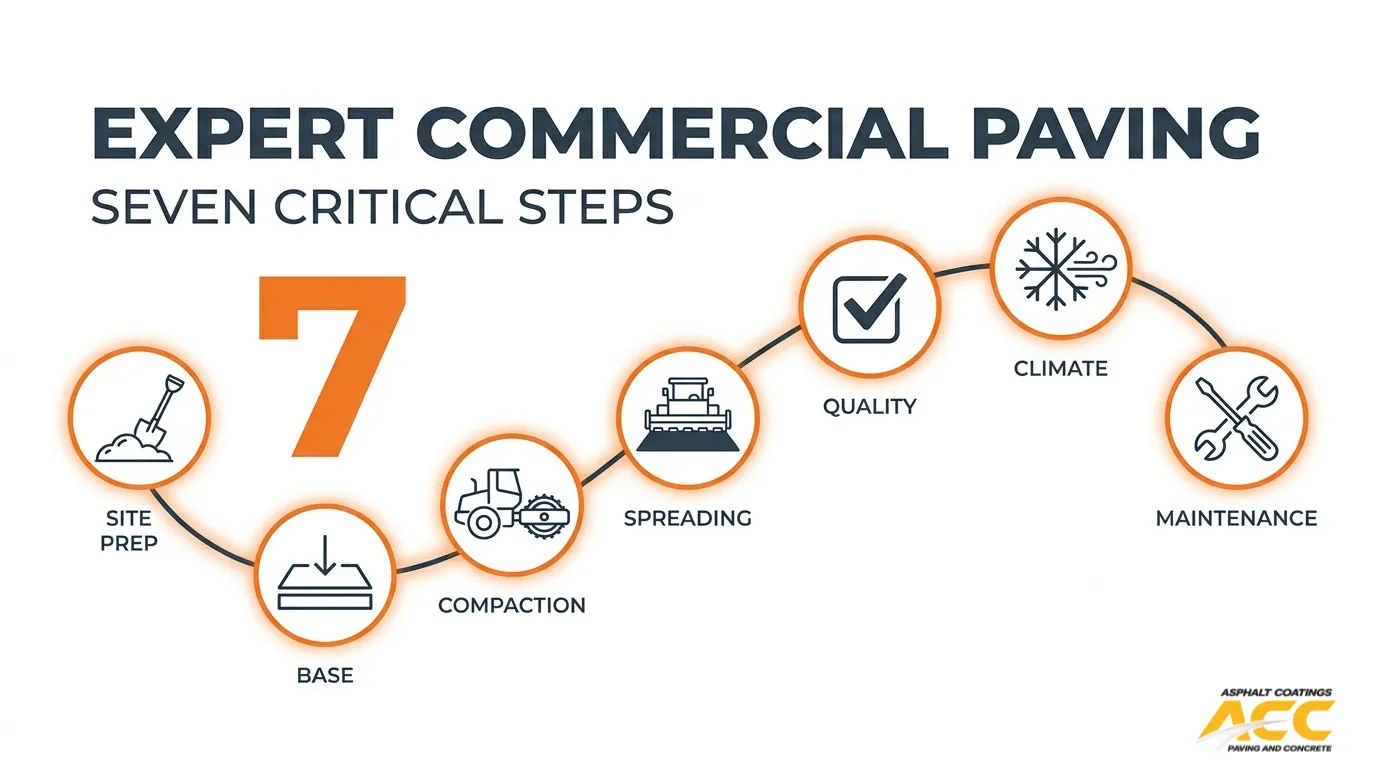
What Are the 7 Steps to Expert Commercial Asphalt Paving Installation?
July 22, 2026
Commercial asphalt paving installation is a sequential, seven-phase process where each layer and procedure builds directly on the one before it. Skipping or rushing any single step compromises every layer above it. This guide covers pre-construction planning, site preparation and demolition, subgrade and base layer engineering, binder and surface course placement, post-installation quality assurance, freeze-thaw
Read