
How Does Quality Sealcoating in Fort Collins Extend Pavement Life?
July 30, 2026
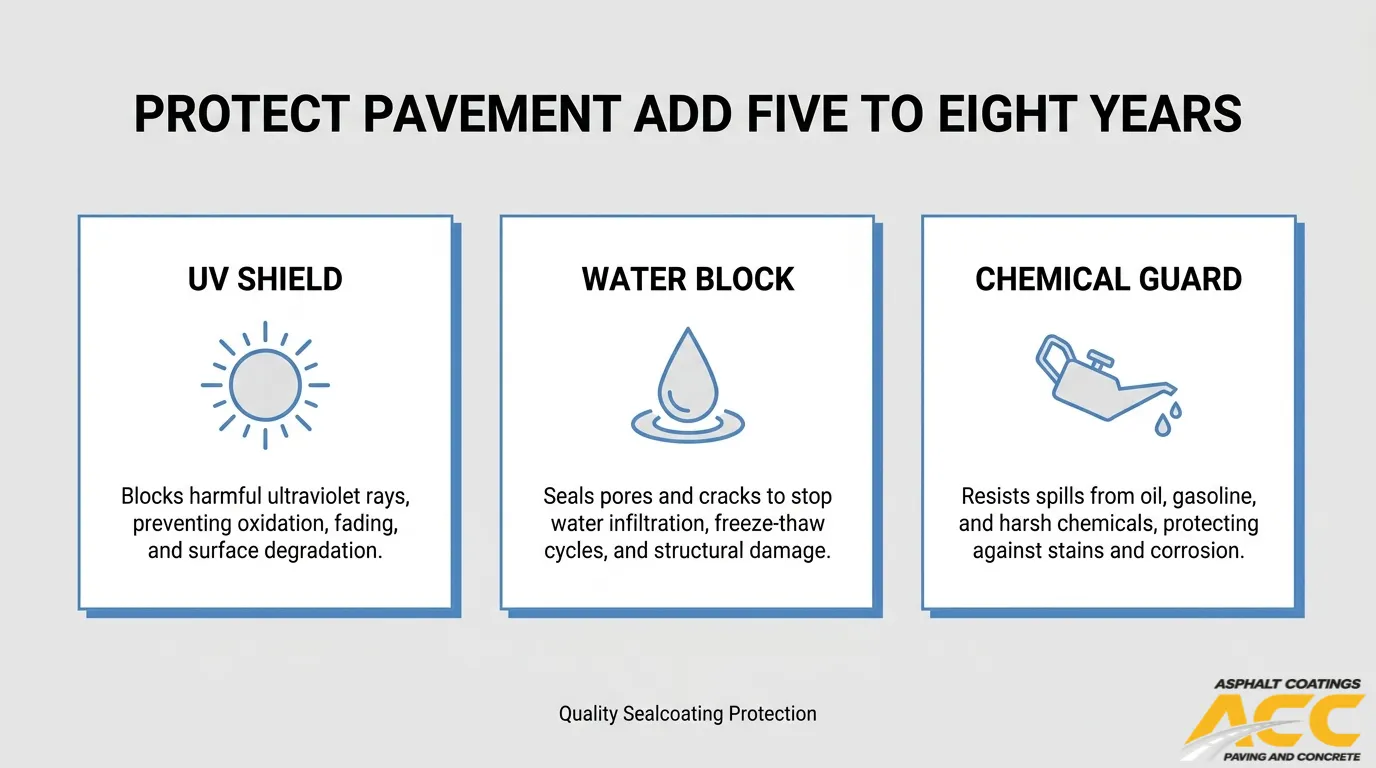
Quality sealcoating in Fort Collins is a preventive asphalt treatment that shields pavement from UV radiation, water infiltration, and chemical damage, adding five to eight years of service life to protected surfaces. This guide covers Fort Collins climate challenges and their effect on asphalt, sealcoating protection mechanisms and scheduling, surface preparation and material selection, long-term
Read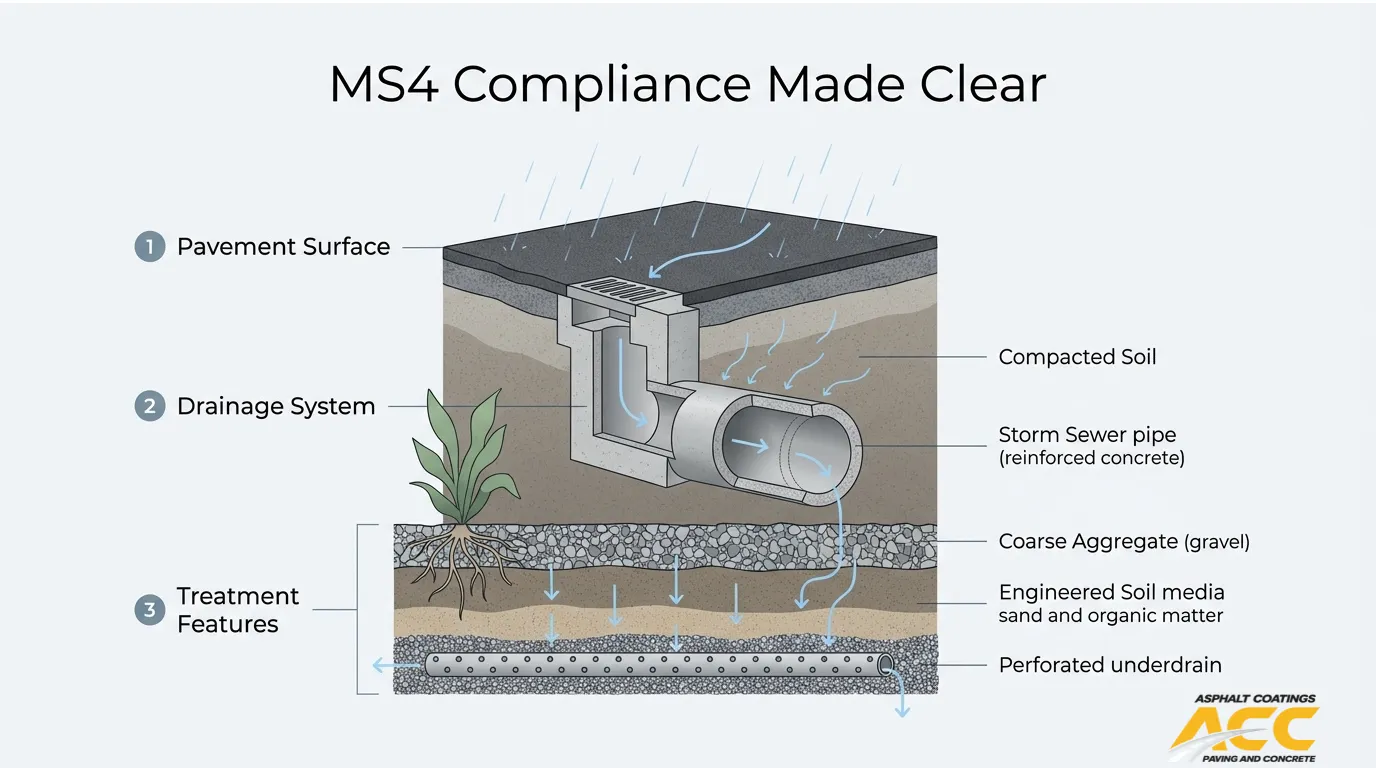
What Does Colorado Springs’ MS4 Stormwater Permit Mean for Your Next Repaving Project?
June 23, 2026
Colorado Springs’ MS4 stormwater permit is a regulatory authorization governing how stormwater runoff is managed and discharged through the city’s Municipal Separate Storm Sewer System, and it directly shapes the scope, cost, and compliance requirements of commercial repaving projects. This guide covers the MS4 permit framework and its triggers for repaving, construction-phase and post-construction BMP
Read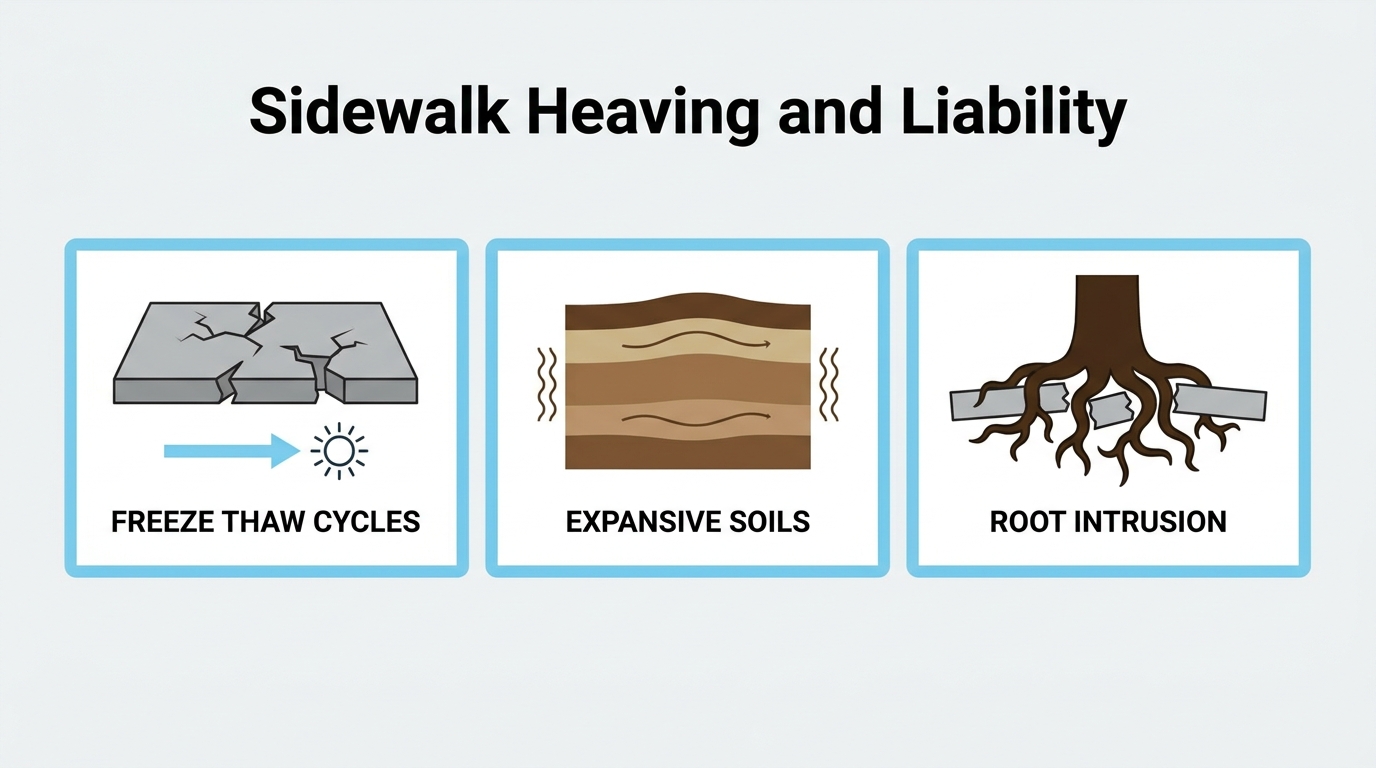
Why Do Colorado Springs Sidewalks Heave and Create Trip-Hazard Liability?
June 23, 2026
Trip-hazard liability in Colorado Springs is the legal and financial exposure property owners face when heaved, cracked, or uneven sidewalks cause pedestrian injuries. Colorado Springs City Code 3.4.103 makes every owner and occupant of real property primarily liable in tort for injuries on abutting public sidewalks, setting a strict local standard that goes beyond default
Read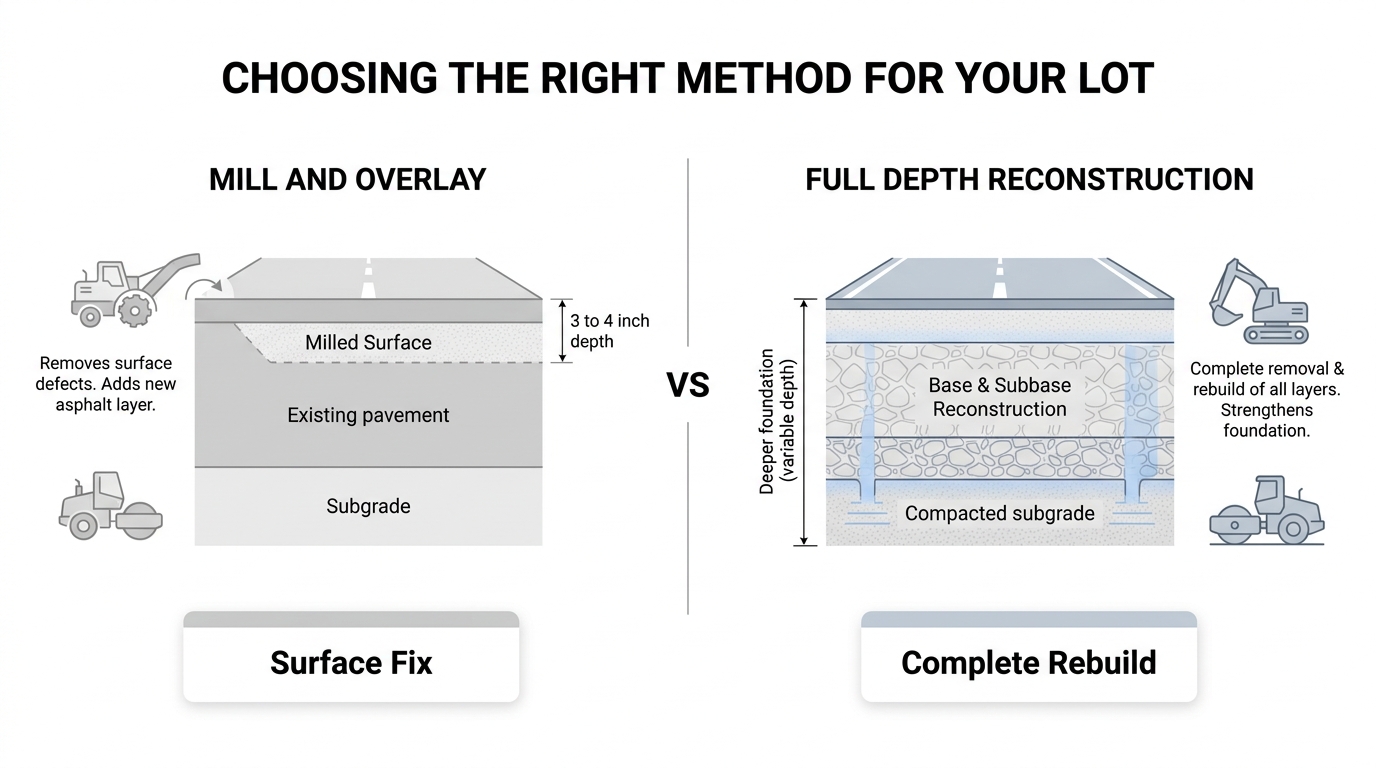
What Should You Choose Between Mill-and-Overlay and Full-Depth Reconstruction for Aging Colorado Springs Industrial Lots?
June 23, 2026
Mill-and-overlay is a pavement rehabilitation method that removes deteriorated surface asphalt and replaces it with fresh hot-mix asphalt, while full-depth reconstruction removes the entire pavement section and rebuilds from the subgrade up. Choosing the right method for an aging Colorado Springs industrial lot depends on structural condition, soil stability, climate exposure, and long-term cost. This
Read