
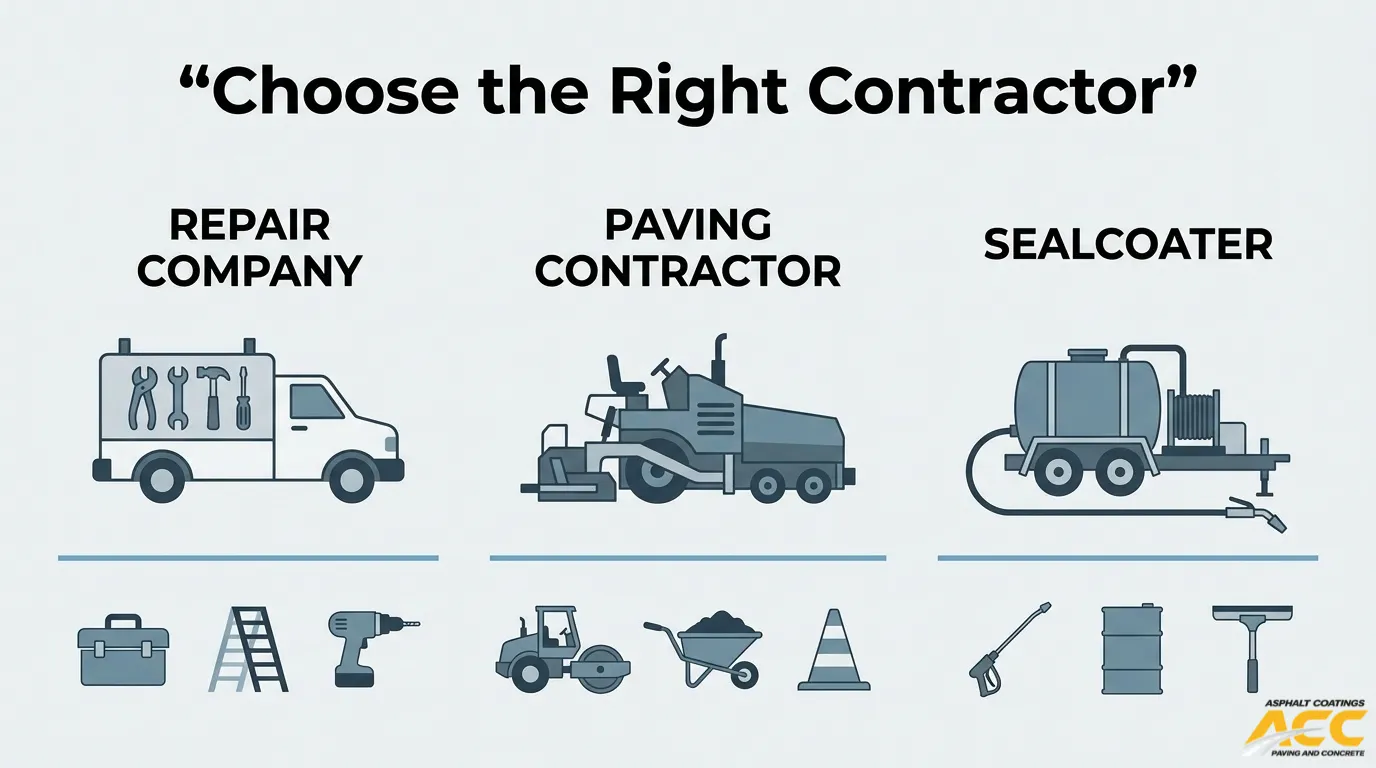
Parking Lot Repair Company vs. Paving Contractor vs. Sealcoater: Who Should You Call for Each Parking Lot Problem?
October 9, 2026
A parking lot repair company, a paving contractor, and a sealcoater are three distinct contractor types, each built to solve a different category of asphalt damage. Calling the wrong one wastes budget and leaves the actual problem unresolved. This guide covers contractor distinctions and licensing, problem-to-contractor matching, when to call each specialist, crack and joint
Read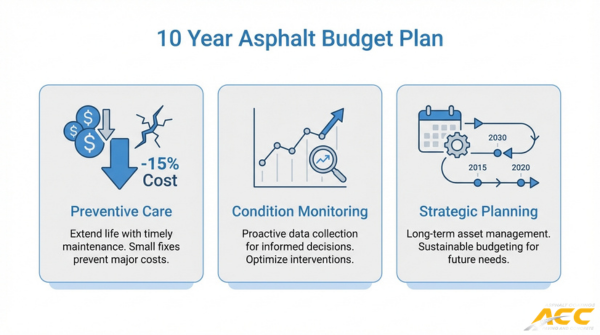
Planning Asphalt Maintenance Budgets for the Next 10 Years
April 6, 2026
Planning asphalt maintenance budgets for the next 10 years is the process of aligning scheduled pavement treatments with annual financial allocations across a full decade, so every dollar targets the right repair at the right time. This guide covers the financial case for proactive maintenance, activity-specific cost benchmarks and scheduling, condition assessment methodology, budget structure
Read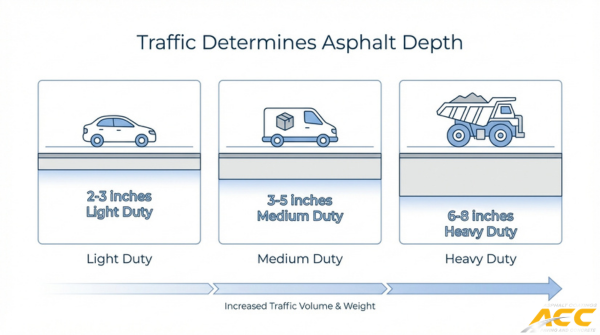
How Traffic Type Dictates Asphalt Thickness and Mix Design
April 6, 2026
Traffic type dictates asphalt thickness and mix design by determining the structural depth, binder grade, and aggregate properties a pavement needs to support its actual vehicle loads without premature failure. Every specification, from a 2-inch parking lot surface to an 8-inch industrial lane, traces back to the weight, frequency, and behavior of traffic on that
Read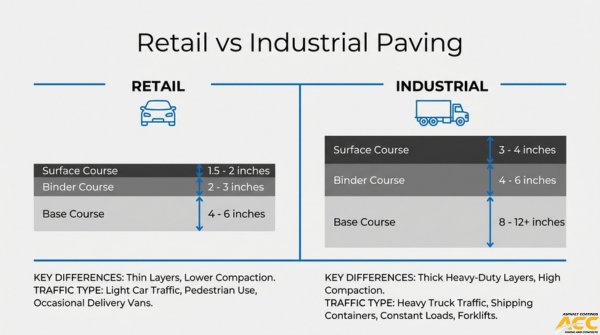
Asphalt Paving Differences for Retail vs Industrial Properties
April 6, 2026
Asphalt paving for retail properties differs from industrial properties in structural design, material selection, and maintenance strategy because each property type faces distinct traffic loads, environmental exposures, and regulatory requirements. This guide covers traffic demands and load profiles, asphalt thickness and mix design, subbase and drainage engineering, striping and layout standards, maintenance scheduling, freeze-thaw performance,
Read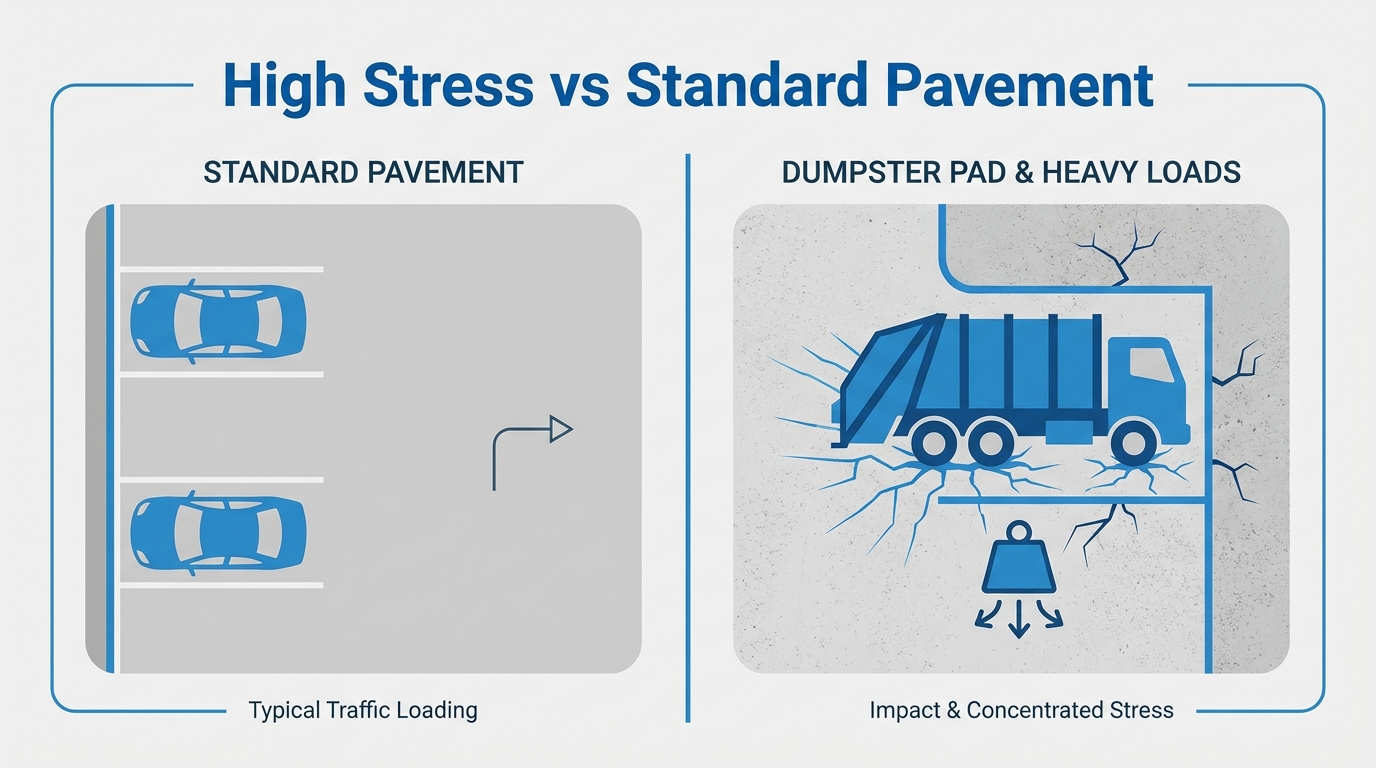
Why Dumpster Pads and Fire Lanes Fail Faster Than Parking Areas
April 6, 2026
Dumpster pads and fire lanes are high-stress pavement zones that deteriorate faster than standard parking areas because they endure concentrated heavy loads, chemical exposure, and extreme mechanical forces that conventional parking lot designs were never engineered to handle. We cover what makes these zones structurally different from parking lots, the specific forces that destroy them,
Read
How to Compare Asphalt Paving Quotes Without Getting Burned
March 4, 2026
Comparing asphalt paving quotes is the process of evaluating competing bids across material specifications, pricing structures, contractor qualifications, and contract terms to identify the best value for a durable pavement installation. This guide covers quote evaluation fundamentals, hidden fees and exclusions, contractor experience and credentials, communication and transparency during quoting, reference verification, and choosing comprehensive
Read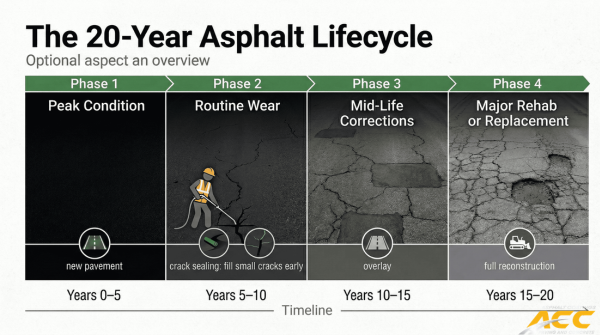
The 20-Year Lifecycle of a Commercial Asphalt Parking Lot
March 4, 2026
The 20-year lifecycle of a commercial asphalt parking lot is the predictable progression of pavement condition from initial installation through eventual reconstruction, shaped by material quality, environmental exposure, and maintenance decisions at every stage. This guide covers the distinct phases of pavement aging, the maintenance strategies that extend useful life, the environmental factors that accelerate
Read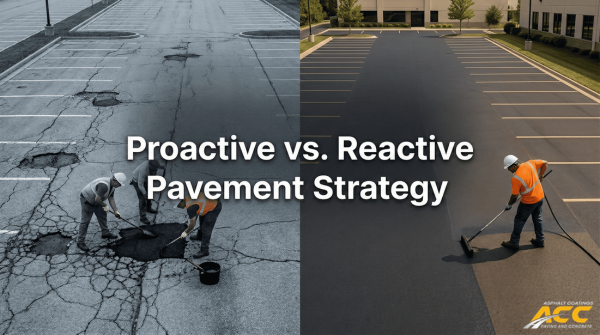
How to Build a Long-Term Pavement Management Plan
March 4, 2026
A long-term pavement management plan is a data-driven strategy for maintaining and preserving pavement assets through scheduled inspections, preventive treatments, and budgeted repairs rather than reactive fixes. It shifts spending toward early interventions that extend surface life and reduce total cost of ownership. This guide covers pavement condition assessment, environmental and traffic factors that drive
Read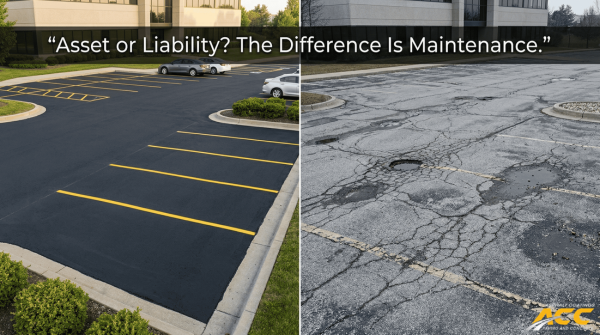
When Asphalt Stops Being an Asset and Becomes a Liability
March 4, 2026
Asphalt pavement is a functional asset that protects property value, ensures safe access, and supports daily operations; yet every asphalt surface has a tipping point where accumulated damage turns that asset into a financial and legal burden. This guide covers the deterioration factors that push pavement past that tipping point, the property value and cost
Read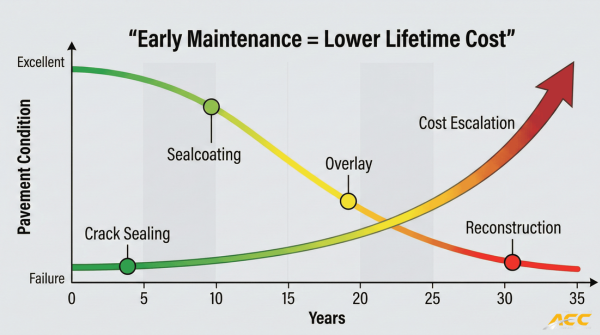
Asphalt as an Asset: Maintenance vs Replacement Cost Over Time
March 4, 2026
Asphalt pavement is a depreciating asset whose total cost of ownership depends on when and how you intervene during its lifecycle. Proactive maintenance preserves structural integrity at a fraction of reconstruction costs, while deferred action accelerates deterioration and multiplies expenses. This guide covers the factors that determine pavement lifespan, the true costs of maintenance over
Read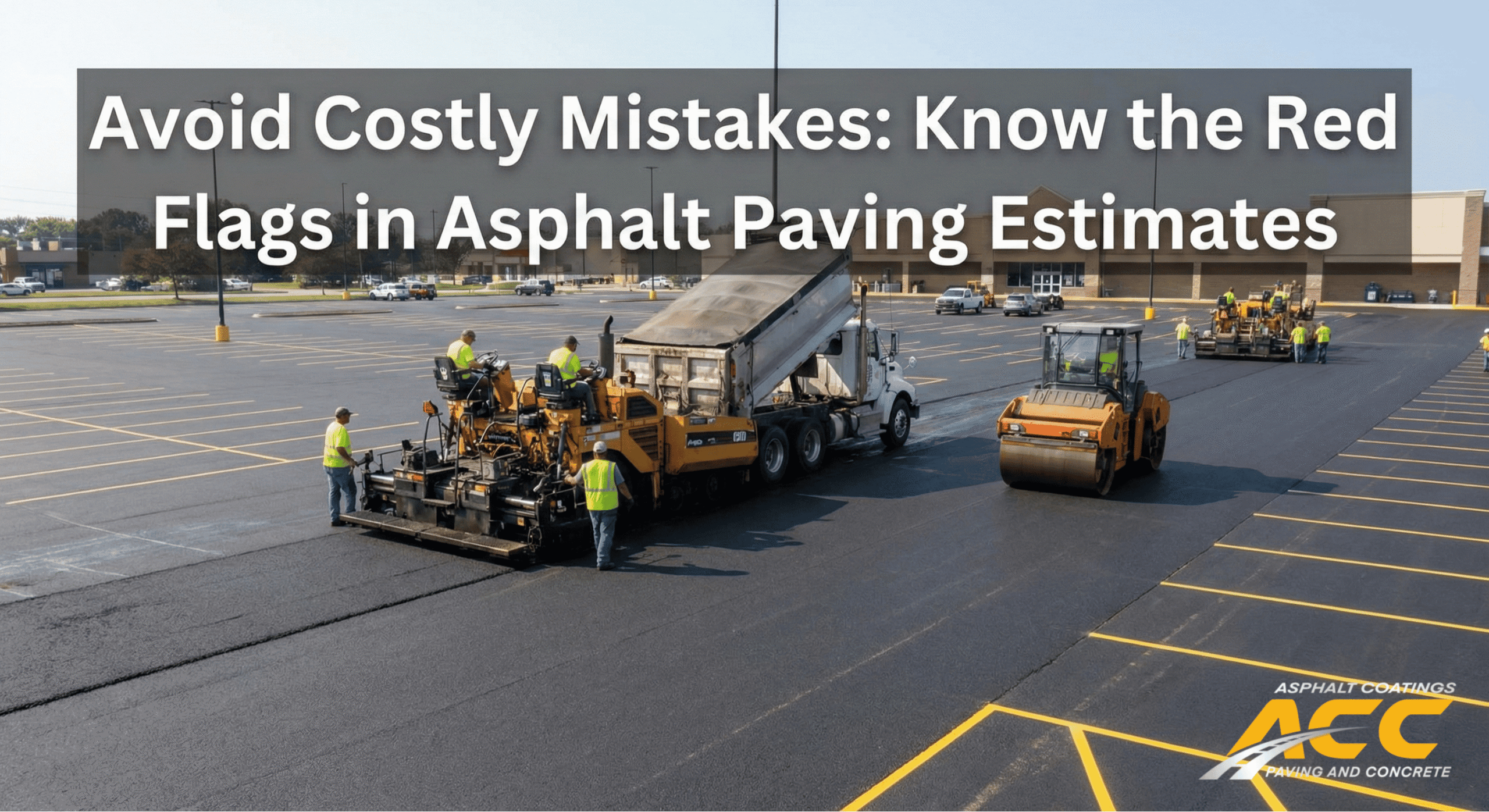
Common Red Flags in Commercial Asphalt Paving Estimates
January 29, 2026
When we’re evaluating commercial asphalt paving estimates, we understand the stakes are high—with projects typically ranging from $20,000 to $210,000, even small oversights can lead to significant financial losses. If you’re concerned about falling victim to contractor fraud or selecting an unreliable paving company, you’re in the right place. We’ll guide you through the critical
Read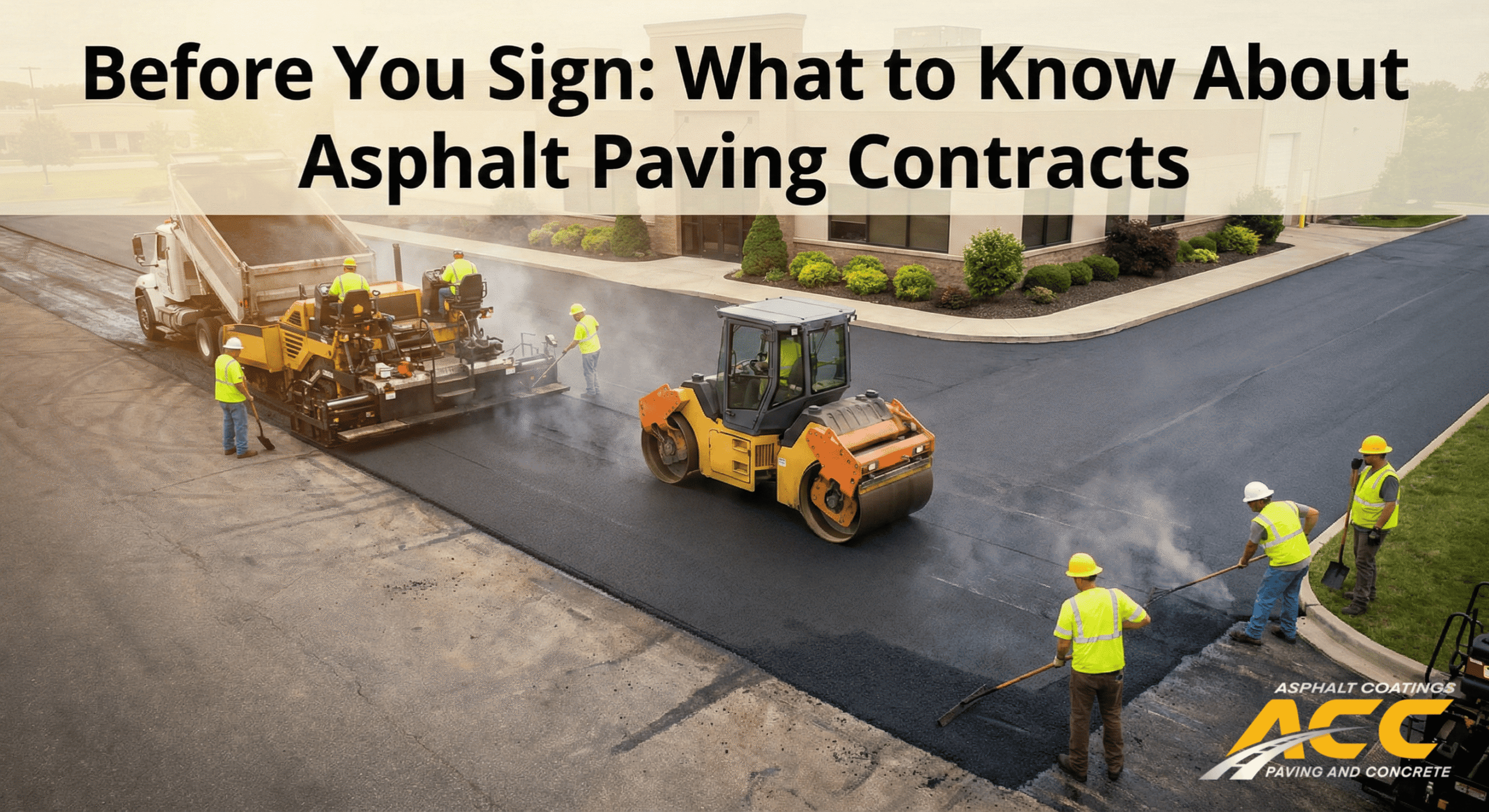
Questions to Ask Before Signing an Asphalt Paving Contract
January 29, 2026
Signing an asphalt paving contract without asking the right questions is like driving on a damaged road—you’re headed for problems. If you’re planning an asphalt paving project and feeling uncertain about what to ask contractors before committing, we understand your concern. We’re here to guide you through the essential questions that protect your investment and
Read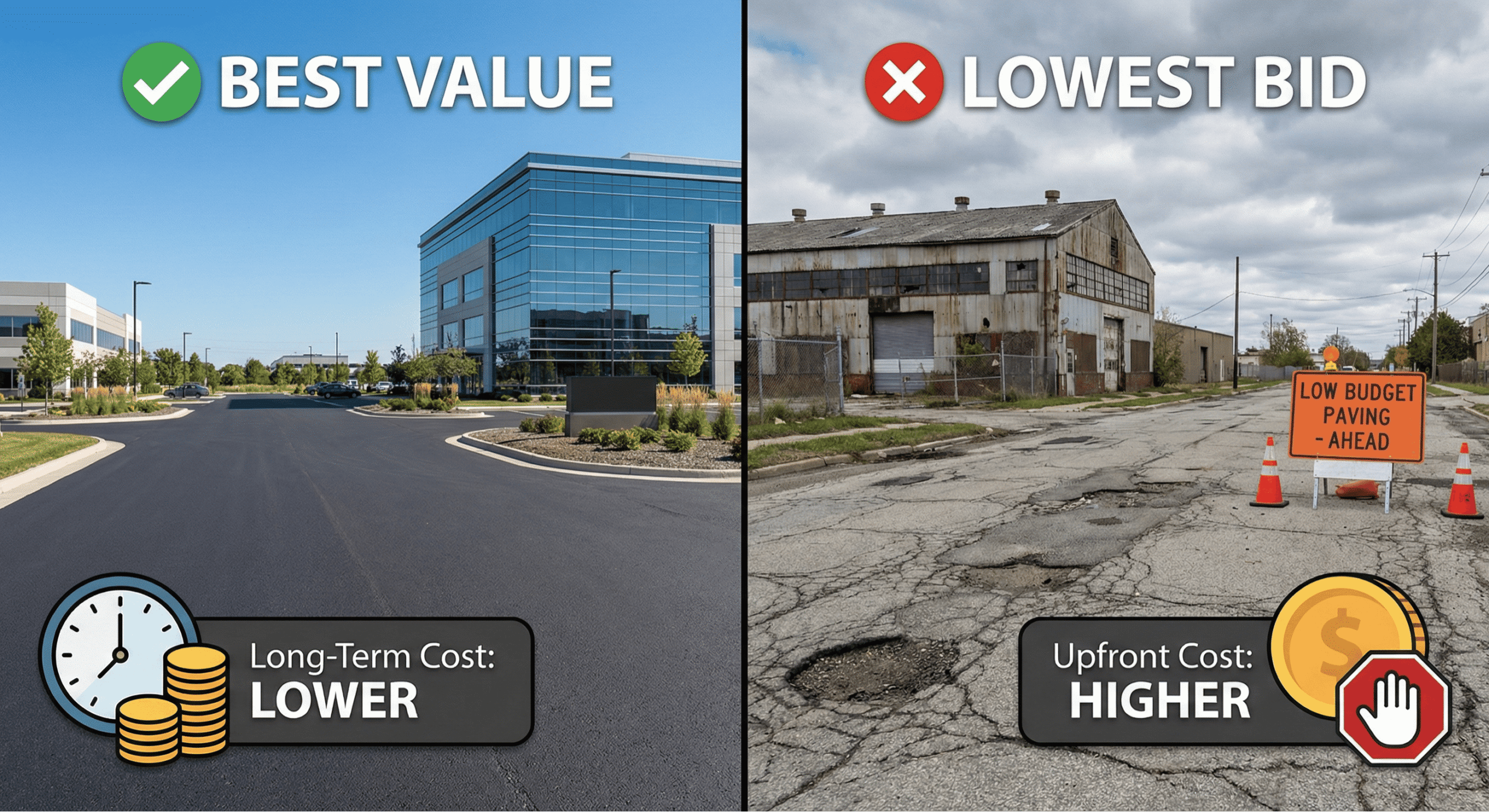
Lowest Bid vs Best Value: Choosing the Right Asphalt Contractor
January 29, 2026
Deciding between the lowest bid and best value when choosing an asphalt contractor means weighing short-term price savings against long-term project performance, budget control, and pavement durability. We understand that property owners face this dilemma with every paving project, wondering whether saving money upfront might cost more in the long run. We’re here to help
Read