Pikes Peak region tourism traffic wears down hotel and resort parking lots through a combination of massive visitor volume, heavy vehicle loads, high-altitude UV exposure, and destructive freeze-thaw cycles that compound seasonal damage faster than most commercial properties ever experience. With 25.6 million visitors arriving annually and 11.2 million staying overnight, Colorado Springs hospitality lots endure pavement stress that standard maintenance schedules are not built to handle.
This guide covers the regional factors driving parking lot stress, the specific types of pavement damage tourism traffic creates, how Colorado Springs’ climate accelerates that deterioration, which lot zones fail first, the guest experience and liability consequences of neglect, and the preventive maintenance strategies that protect hotel investments.
The Pikes Peak region’s year-round tourism creates relentless load cycles; summer alone accounts for 31% of annual visitation, concentrating peak vehicle traffic during the months when heat and UV radiation also soften asphalt binder. Heavy shuttle buses and tour coaches multiply that impact exponentially, since doubling a vehicle’s axle load produces roughly 16 times the pavement wear.
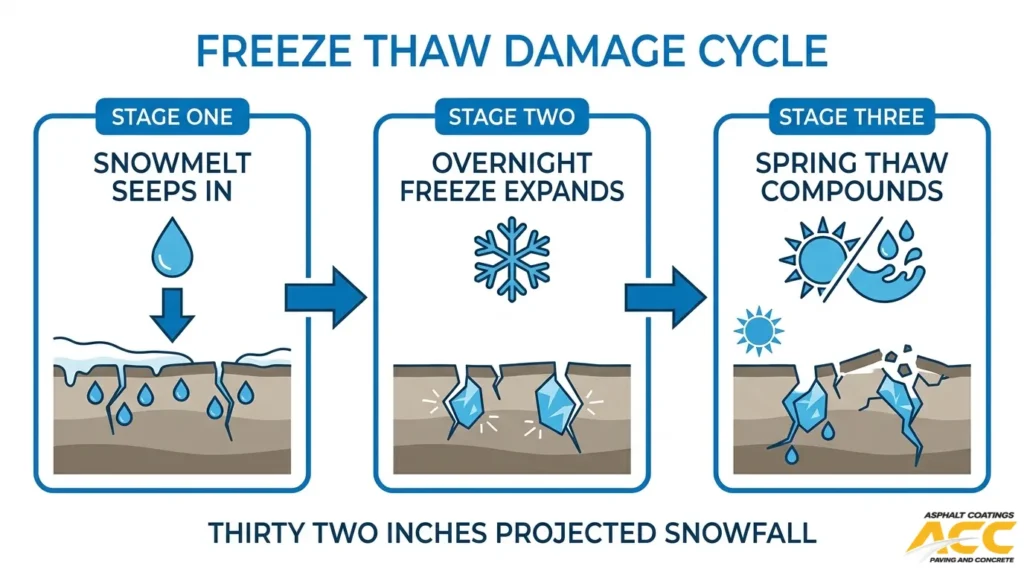
Tourism traffic opens surface cracks that Colorado Springs’ freeze-thaw cycles then exploit. Snowmelt seeps into fissures, expands overnight, and widens damage with each repetition across a winter season projected to bring over 32 inches of snow. Spring thaw saturates weakened subgrades just as visitor volume surges again.
Valet zones, bus loading pads, and high-turnover drive aisles deteriorate fastest, carrying the highest premises liability risk. Neglected surfaces also erode guest perception and ADA compliance for the 23% of overnight visitors requiring accessibility services.
Routine sealcoating, pre-winter crack sealing, proper drainage design, and strategic repair scheduling give hospitality properties a clear path to extend lot life well beyond 25 years at a fraction of full replacement cost.
Why Does the Pikes Peak Region Generate So Much Parking Lot Stress?
The Pikes Peak region generates so much parking lot stress because it combines massive year-round visitor volume, heavy tourism vehicles, and a concentrated peak season that overwhelms hotel and resort pavement. The sections below cover annual visitor counts, vehicle types that cause the most damage, and seasonal timing.
How Many Visitors Does the Pikes Peak Region Attract Each Year?
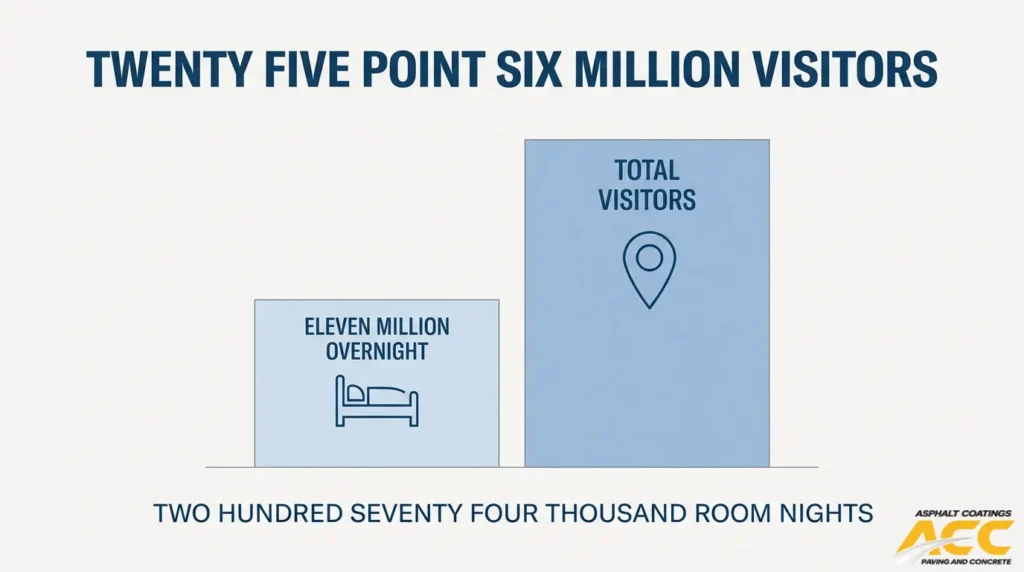
The Pikes Peak region attracts over 25 million visitors each year. According to Visit Colorado Springs, the region welcomed 25.6 million total visitors in 2025, a 0.3% increase over 2024, with 11.2 million tourists staying overnight, representing a 1.6% increase in overnight stays.
Downtown Colorado Springs alone saw occupied room nights nearly reach 274,000 in 2025, breaking records for the third consecutive year. Each overnight guest translates to multiple vehicle entries, exits, and idle periods on hotel parking surfaces. That cumulative load, repeated millions of times annually, places Colorado Springs hospitality properties under pavement stress that most commercial lots never experience.
What Types of Tourism Vehicles Cause the Most Pavement Damage?
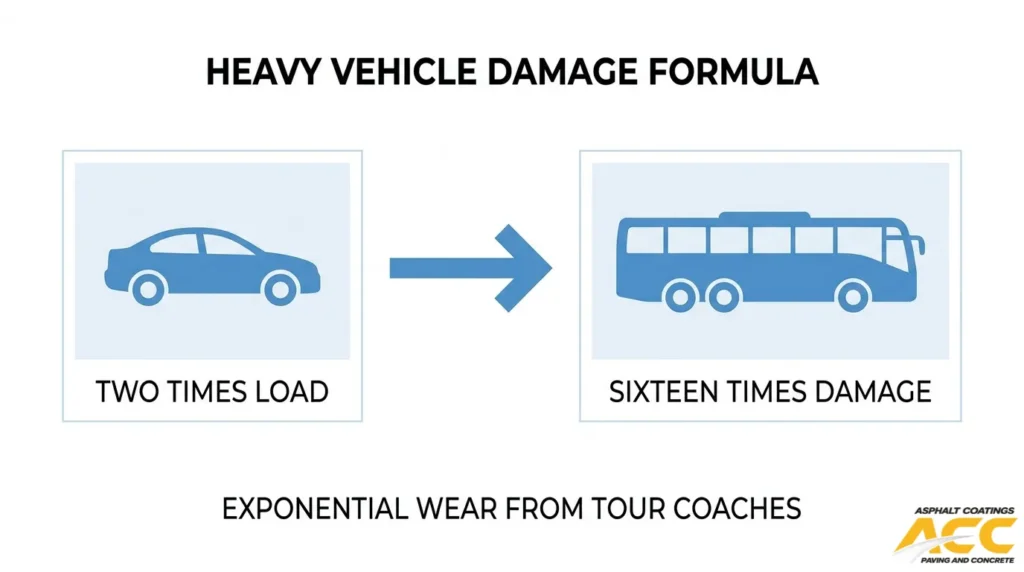
The types of tourism vehicles that cause the most pavement damage are shuttle buses, tour coaches, and large recreational vehicles. According to the U.S. Department of Transportation, a vehicle with twice the axle load causes roughly 16 times the road damage, which means a single fully loaded tour bus inflicts exponentially more wear than a standard passenger car.
Hotel and resort lots in the Pikes Peak region regularly accommodate these heavy vehicles at drop-off zones, valet lanes, and loading areas. Concentrated weight from idling coaches creates localized stress that accelerates fatigue cracking and asphalt shifting. For properties hosting group tourism, the pavement impact of one bus arrival can equal dozens of sedan visits.
When Is Peak Tourism Season Hardest on Colorado Springs Parking Lots?
Peak tourism season is hardest on Colorado Springs parking lots during summer, when 31% of all annual visitation occurs. According to Longwoods International data reported by Visit Colorado Springs, 2025 seasonality showed summer visitation rising to 31%, with spring drawing 26%, fall at 23%, and winter at 21%.
Summer concentrates the heaviest traffic volume into the months when UV exposure and heat also soften asphalt binder. Colorado Springs sits at over 6,000 feet of elevation, where intense solar radiation compounds the mechanical stress of peak-season vehicle loads. Spring follows closely behind, combining high visitor volume with freeze-thaw moisture damage from the preceding winter.
Understanding the scale and seasonal rhythm of this tourism traffic clarifies exactly what types of pavement damage hotel lots face next.
What Kinds of Pavement Damage Does Heavy Tourism Traffic Cause?
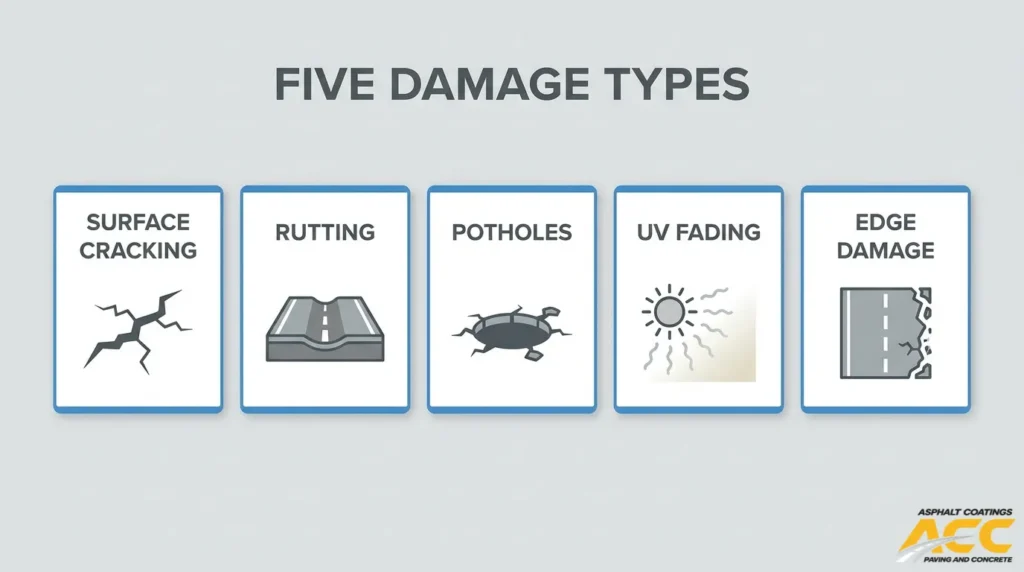
Heavy tourism traffic causes several distinct types of pavement damage, including surface cracking, rutting, pothole formation, UV-related fading, and edge deterioration. Each failure mode develops differently depending on vehicle weight, traffic patterns, and Colorado Springs’ climate.
Surface Cracking From Repeated Braking and Turning
Surface cracking from repeated braking and turning develops when concentrated stress cycles weaken the asphalt binder at high-friction contact points. Hotel entrance lanes, parking aisle intersections, and guest drop-off zones absorb thousands of daily stop-and-go movements during peak tourism season. According to Strataglobal, fatigue cracking (also known as alligator cracking) is caused by repeated stress cycles from heavy vehicle loads that weaken the asphalt until it fractures. Turning movements compound this effect by applying lateral shear forces that separate aggregate from the binder. Once the first interconnected cracks appear, moisture infiltrates rapidly and accelerates subsurface breakdown. For properties managing high guest turnover, even a single summer season of heavy traffic can initiate cracking patterns that worsen exponentially if left unaddressed.
Rutting From Heavy Shuttle Buses and Tour Coaches
Rutting from heavy shuttle buses and tour coaches occurs when concentrated axle loads compress and permanently deform the asphalt surface layer. According to the U.S. Department of Transportation, a vehicle with twice the axle load causes roughly 16 times the road damage, which means a single loaded tour coach inflicts exponentially more wear than a standard passenger vehicle. Shuttle lanes and bus staging areas are especially vulnerable because vehicles follow identical wheel paths repeatedly. Over time, this creates visible depressions that collect standing water, further softening the subgrade. The combination of heavy loads and repetitive routing makes hotel bus zones some of the fastest-deteriorating areas in any resort parking lot.
Pothole Formation From Combined Traffic and Moisture Intrusion
Pothole formation from combined traffic and moisture intrusion results when water enters existing cracks and weakens the pavement’s structural layers from within. Colorado Springs’ La Niña-influenced winters bring mixed precipitation and wet snow, which according to Base Mountain Sports increases moisture intrusion in pavement at lower elevations. Once trapped moisture freezes, it expands and displaces aggregate beneath the surface. Continued traffic loading over these weakened spots causes the surface to collapse inward, forming potholes. In tourism-heavy lots, the cycle accelerates because high vehicle counts prevent adequate drying time between storms. Potholes left unrepaired grow quickly, creating tripping hazards and vehicle damage risks for hotel guests.
Fading and Aggregate Loss From UV Exposure at High Altitude
Fading and aggregate loss from UV exposure at high altitude is an often-underestimated form of pavement degradation in the Pikes Peak region. According to Vanguard Skin Specialists, high-altitude ultraviolet radiation increases by 6 to 10 percent for every thousand feet of elevation, accelerating oxidation and degradation of asphalt surfaces in areas like Colorado Springs. This UV bombardment breaks down the asphalt binder, causing the surface to dry, become brittle, and shed aggregate particles. The result is a gray, rough-textured lot that looks neglected and provides less tire traction. For hospitality properties competing on curb appeal, oxidation damage silently degrades both aesthetics and surface integrity year-round, not just during peak season.
Edge Deterioration From Overflow and Improper Parking
Edge deterioration from overflow and improper parking happens when vehicles regularly drive or park on unsupported pavement edges that lack adequate curbing or base material. During peak tourism periods, overflow parking forces guests onto lot perimeters never engineered for repeated loading. Without lateral support, the asphalt edge crumbles progressively under tire weight. According to Genco Injury Attorneys, pavement edge drop-offs and uneven surfaces in parking lots are primary factors in premises liability claims, with approximately 2,000 to 3,000 such claims filed statewide in Colorado each year. Properties that neglect edge maintenance face both costly structural repairs and significant legal exposure, making proper curbing and overflow management essential.
Understanding these damage types helps property managers identify the right preventive strategy before seasonal freeze-thaw cycles compound the problem.
How Do Colorado Springs Freeze-Thaw Cycles Accelerate Tourism Wear?
Colorado Springs freeze-thaw cycles accelerate tourism wear by forcing water into traffic-damaged pavement, expanding it overnight, then repeating the process hundreds of times each winter. The subsections below cover snowmelt infiltration, overnight refreezing expansion, and spring thaw compounding.
How Does Snowmelt Seep Into Cracks Created by Daily Traffic?
Snowmelt seeps into cracks created by daily traffic through surface fractures that heavy tourism vehicles open during peak visitation. Constant braking, turning, and loading stress from shuttle buses and rental cars creates hairline fissures in asphalt surfaces. When daytime temperatures climb above freezing, accumulated snow liquefies and gravity pulls meltwater directly into these openings.
Colorado’s 2025-2026 La Niña pattern intensifies this problem. According to Base Mountain Sports, La Niña conditions produce warmer snow cycles at lower elevations, resulting in more mixed precipitation and wet snow that increases moisture intrusion in pavement. This pattern of weather-driven moisture intrusion can be compounded by other severe weather events, such as the significant hail damage often experienced in Colorado Springs. Hotel parking lots see this effect magnified because tourism traffic prevents snow from settling undisturbed; vehicles compact slush into every available crack.
Why Does Overnight Refreezing Expand Existing Pavement Damage?
Overnight refreezing expands existing pavement damage because water trapped inside cracks increases in volume by approximately 9% when it freezes. This hydraulic pressure pushes crack walls apart from within, widening fissures that were originally caused by heavy vehicle stress. Each freeze cycle leaves the crack slightly larger than before.
For the 2025-2026 winter season, Colorado Springs is projected to receive approximately 32.5 inches of snow, according to KOAA News5. That volume translates to dozens of freeze-thaw repetitions between November and March. In a hotel parking lot handling constant guest arrivals, the combination of daily traffic reopening cracks and nightly freezing expanding them creates a destructive feedback loop that standard-climate lots never experience.
How Does Spring Thaw Season Compound a Full Winter of Stress?
Spring thaw season compounds a full winter of stress by saturating weakened pavement with prolonged moisture infiltration just as tourism traffic ramps up. A 2025 Colorado State University study found that spring freeze-thaw cycles cause wind and soil erosion, which compounds winter pavement stress by allowing moisture to penetrate surface cracks during the thaw. Subgrade soils soften beneath already-compromised asphalt, reducing the structural support the pavement relies on.
Spring accounts for 26% of annual Pikes Peak Region visitation, meaning parking lots face surging vehicle loads on their most vulnerable surfaces. For hospitality properties, this timing mismatch between peak structural weakness and rising traffic demand makes spring the most damaging season overall.
Identifying where this damage concentrates helps properties prioritize repairs in the zones that fail first.
Which Hotel and Resort Parking Lot Areas Deteriorate Fastest?
The hotel and resort parking lot areas that deteriorate fastest are guest drop-off zones, shuttle loading pads, high-turnover drive aisles, and service access points. Each zone faces unique stressors that accelerate breakdown well ahead of standard parking stalls.
How Quickly Do Guest Drop-Off and Valet Zones Break Down?
Guest drop-off and valet zones break down faster than any other parking lot area because they concentrate repetitive braking, acceleration, and tight turning in a confined footprint. Every arriving and departing vehicle applies shear stress to the same narrow strip of asphalt, often dozens of times per hour during peak check-in periods.
This constant start-stop cycle generates surface scuffing, micro-cracking, and early aggregate loss. Valet operations compound the problem when attendants execute sharp, low-speed turns that twist tires against the pavement. For Colorado Springs resort properties handling 11.2 million overnight visitors annually across the Pikes Peak Region, these zones rarely get a rest period long enough to schedule repairs without disrupting operations. Prioritizing thicker asphalt sections and more frequent sealcoating in drop-off lanes is one of the most cost-effective strategies for extending surface life.
Why Do Shuttle and Bus Loading Areas Fail Before Other Zones?
Shuttle and bus loading areas fail before other zones because heavy-vehicle axle loads inflict exponentially greater pavement damage than passenger cars. According to the U.S. Department of Transportation, a vehicle with twice the axle load causes roughly 16 times the road damage, making tour coaches and airport shuttles the single most destructive traffic type on hotel lots.
This concentrated stress produces specific failure patterns:
- Fatigue cracking (alligator cracking) develops as repeated heavy loads weaken the asphalt binder until fractures appear.
- Asphalt shifting and wave creation occur where buses idle or brake, pushing the pavement beyond its structural capacity.
- Subgrade depression forms under fixed loading points where buses stop in the same position daily.
Standard parking lot pavement sections are rarely engineered for these loads, which is why bus pads often need dedicated structural design with reinforced base layers.
What Happens to Drive Aisles Near High-Turnover Entrances?
Drive aisles near high-turnover entrances experience accelerated wear from the sheer volume and concentration of vehicle movements funneled through a single corridor. Every guest entering or exiting the property passes through these aisles, creating continuous load cycles that standard interior lanes never see.
Turning movements at aisle intersections apply lateral force that scours the surface, while frequent braking at speed bumps or stop signs generates localized stress points. When combined with Colorado Springs’ high-altitude UV exposure, which increases 6 to 10 percent per thousand feet of elevation according to Vanguard Skin Specialists, the asphalt oxidizes and becomes brittle faster. Brittle pavement under heavy turning traffic cracks sooner. These entrance corridors should be inspected more frequently than interior parking rows, since they serve as the property’s first impression for every arriving guest.
How Does Dumpster Pad and Service Access Traffic Add Wear?
Dumpster pad and service access traffic adds wear through a combination of heavy static loads, concentrated turning, and chemical exposure that standard parking areas never endure. Waste haulers apply intense point loads when setting down and lifting full dumpsters, while delivery trucks execute tight maneuvers on pavement designed for lighter vehicles.
Grease, food waste, and cleaning chemicals that spill near dumpster pads soften the asphalt binder, accelerating surface breakdown. Service access routes also handle early-morning and late-night traffic when temperatures are lowest, meaning tires roll over cold, stiff pavement that is more susceptible to cracking. These back-of-house zones often receive the least maintenance attention despite needing the most, creating hidden liability exposure where uneven surfaces and pavement drop-offs develop unnoticed.
Understanding which zones fail first allows property managers to target preventive maintenance where it delivers the greatest return.
How Does Parking Lot Deterioration Affect Guest Experience?
Parking lot deterioration affects guest experience by creating negative first impressions, reducing accessibility, and signaling poor property management before visitors ever reach the front desk. The impacts span comfort, safety, and brand perception.
A guest’s judgment of a hotel or resort begins the moment their vehicle enters the lot. Cracked surfaces, faded striping, and uneven pavement communicate neglect, regardless of how well-maintained the lobby or rooms may be. For properties in the Pikes Peak region hosting portions of 25.6 million annual visitors, that first impression scales across thousands of daily arrivals.
Potholes and rutted surfaces jar vehicles, damage luggage wheels, and create trip hazards for guests walking to entrances. These physical discomforts are compounded at night when poor visibility makes damaged pavement harder to navigate. Families with strollers, elderly travelers, and guests with rolling suitcases are disproportionately affected by uneven surfaces in drive aisles and drop-off zones.
Accessibility represents a particularly critical concern. According to Visit Colorado Springs, approximately 23% of overnight visitors to the Pikes Peak Region in 2025 required accessibility services, with 55% of those guests reporting a mobility disability. When parking surfaces settle unevenly or ADA-compliant slopes degrade beyond the required 1:48 maximum gradient, wheelchair users and guests with mobility aids face genuine barriers to safe access. Faded accessible parking markings only worsen the problem by making designated spaces difficult to identify.
The guest experience impacts extend beyond physical inconvenience into brand perception. Deteriorated parking lots generate:
- Negative online reviews mentioning “rough parking lot” or “poor upkeep.”
- Reduced repeat bookings from guests who associate the property with neglect.
- Lower perceived value, making guests question whether room rates match the overall quality.
- Guest complaints at check-in, increasing front desk workload and staff stress.
In a competitive hospitality market where Downtown Colorado Springs occupied room nights nearly reached 274,000 in 2025, properties with visibly neglected lots risk losing guests to better-maintained competitors. For most hotel and resort operators, the parking lot is the single largest piece of visible infrastructure a guest interacts with, yet it often receives the least maintenance attention. Prioritizing surface condition directly protects the revenue that tourism traffic generates.
Understanding how deterioration shapes guest perception makes the safety and liability consequences even more urgent to address.
What Are the Safety and Liability Risks of Neglected Resort Lots?
The safety and liability risks of neglected resort lots include trip-and-fall injuries from uneven surfaces, premises liability lawsuits, and ADA compliance violations. These risks carry serious financial and legal consequences for hospitality properties in the Pikes Peak region.
Neglected parking lots create hazards that extend well beyond cosmetic concerns. Potholes, pavement edge drop-offs, and faded striping expose hotels and resorts to guest injuries, legal claims, and regulatory penalties. For properties welcoming millions of tourists annually, the combination of high foot traffic and deteriorated surfaces makes proactive maintenance a legal necessity, not just an operational preference.
According to Genco Injury Attorneys, pavement edge drop-offs and uneven surfaces in parking lots are primary factors in premises liability claims, with approximately 2,000 to 3,000 such claims filed statewide in Colorado each year. Resort properties that defer maintenance effectively accept this risk with every guest arrival.
Colorado law gives injured parties a two-year statute of limitations for filing premises liability claims from slip-and-fall incidents in parking lots. That window means a single pothole or heaved slab can generate litigation long after the damage first appeared.
ADA compliance adds another layer of exposure. Accessible parking spaces must maintain a slope no steeper than 1:48, approximately 2.08%, in all directions. When freeze-thaw cycles and heavy tourism traffic shift pavement grades beyond this threshold, properties fall out of compliance. With approximately 23% of overnight visitors to the Pikes Peak Region requiring accessibility services in 2025, and 55% of those guests reporting a mobility disability, non-compliant surfaces affect a significant portion of the guest population.
The financial calculus is straightforward: the cost of a single premises liability settlement typically dwarfs years of preventive maintenance spending. Properties that document regular inspections, timely repairs, and ADA-compliant conditions build a defensible record that demonstrates reasonable care. Those that neglect visible hazards invite both injury and liability.
For Colorado Springs resort properties, this risk profile intensifies during peak tourism months when lot traffic, weather damage, and guest density all converge. Budgeting for proactive pavement maintenance addresses these compounding risks before they become claims.
How Can Hotels Budget for Tourism-Driven Pavement Maintenance?
Hotels can budget for tourism-driven pavement maintenance by comparing the cost of routine preventive care against the far higher expense of full replacement. Sealcoating, crack sealing, and scheduled repairs each carry predictable per-square-foot costs that properties can plan around annually.
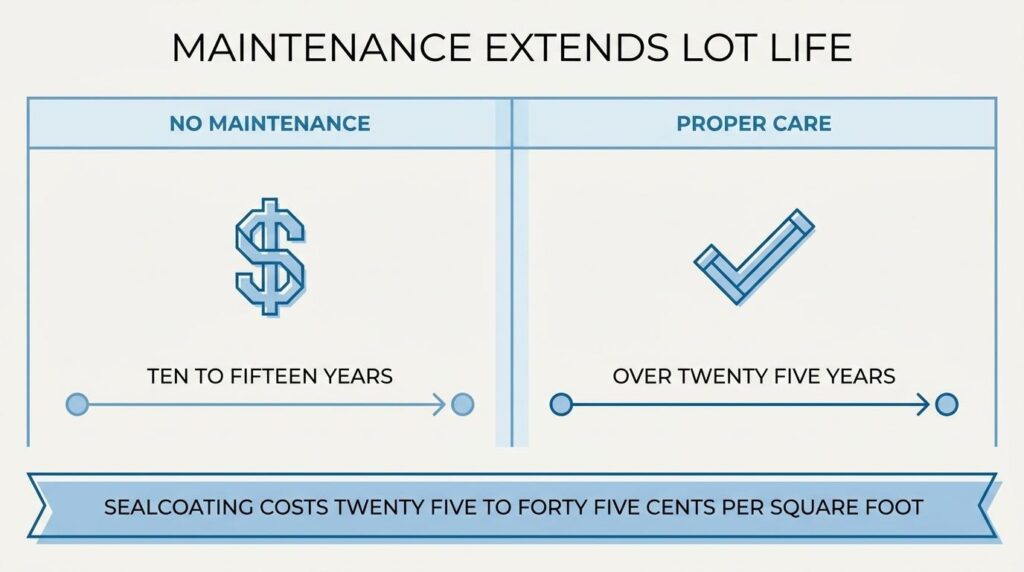
A $40,000 parking lot that receives no maintenance lasts only 10 to 15 years in Colorado Springs, according to Clear Choice Paving & Koncrete. That same lot on a proper maintenance cycle can last over 25 years, effectively doubling its service life while spreading costs across smaller, manageable line items rather than a single capital expense.
Preventive maintenance costs are well-documented for 2026 budgeting purposes. Professional asphalt sealcoating for commercial parking lots ranges between $0.25 and $0.45 per square foot, delivering two to three times the durability of DIY applications. Standard single-coat sealcoating for a 5,000-square-foot commercial lot falls between $1,000 and $1,500. Crack sealing runs approximately $5,500 per lane mile. These figures give hotel property managers concrete numbers to build annual maintenance budgets around.
For Pikes Peak Region hotels handling 25.6 million annual visitors, the math strongly favors prevention. Scheduling sealcoating every two to three years and crack sealing before each winter season keeps cumulative costs far below the threshold of full-depth repair or overlay. Properties that defer maintenance often face compounding damage from freeze-thaw cycles, heavy shuttle traffic, and UV oxidation, all of which accelerate deterioration exponentially once the surface seal is compromised.
The most cost-effective budgeting approach allocates a fixed annual percentage of the lot’s replacement value toward preventive services. Hotels that treat pavement maintenance as an operating expense rather than a deferred capital project protect both their infrastructure and their guest experience.
With a budget framework in place, the next step is understanding which preventive measures deliver the greatest return.
What Preventive Measures Extend a Tourism-Heavy Parking Lot’s Life?
Preventive measures that extend a tourism-heavy parking lot’s life include routine sealcoating, crack sealing before winter, proper drainage design, and timely striping refreshes. Each targets a specific failure mode common in Colorado Springs hospitality properties.
How Does Routine Sealcoating Protect Against Traffic and UV Damage?
Routine sealcoating protects against traffic and UV damage by applying a protective barrier over the asphalt binder, slowing oxidation and resisting surface wear from constant vehicle movement. Colorado Springs sits above 6,000 feet, where UV radiation intensifies significantly compared to lower elevations. Without this barrier, the asphalt binder dries out, becomes brittle, and sheds aggregate under daily guest traffic.
According to 2026 pricing data from Foothills Paving, professional asphalt sealcoating for commercial parking lots, including retail center asphalt maintenance, costs between $0.25 and $0.45 per square foot and provides two to three times the durability of DIY applications. For tourism-heavy lots experiencing year-round vehicle cycles, professional-grade sealcoat applied every two to three years is one of the highest-return preventive investments a hotel property can make.
Why Is Crack Sealing Before Winter Critical in Colorado Springs?
Crack sealing before winter is critical in Colorado Springs because unsealed cracks allow snowmelt to penetrate the asphalt base, where it freezes, expands, and widens the damage with each overnight temperature drop. The 2025-2026 winter season is projected to bring approximately 32.5 inches of snow, according to KOAA News5, with La Niña patterns producing wet, mixed precipitation that increases moisture intrusion.
Sealing cracks in late summer or early fall, before the first freeze, blocks this moisture pathway at its source. The cost is modest relative to the alternative: untreated cracks compound into potholes and base failures that require full-depth repairs. For properties managing heavy tourism turnover, scheduling crack sealing during the shoulder season between summer peak and first snowfall is the most practical timing strategy.
How Does Proper Drainage Design Reduce Freeze-Thaw Deterioration?
Proper drainage design reduces freeze-thaw deterioration by directing water away from the pavement surface and subgrade before it can pool, infiltrate cracks, and expand during freezing cycles. Standing water is the single most destructive element in Colorado Springs parking lot failure.
Effective drainage elements include:
- Crown slopes that direct runoff toward perimeter drains.
- Catch basins positioned at natural low points to prevent ponding.
- Channel drains across wide drive aisles where sheet flow collects.
- Subgrade grading that prevents water from saturating the base layer.
When drainage fails in tourism lots, the combination of heavy daily traffic and trapped moisture accelerates base erosion far faster than either factor alone. Properties that invest in drainage corrections during initial construction, or retrofit them during major repairs, avoid the compounding deterioration that leads to premature full-depth replacement.
When Should Striping and ADA Markings Be Refreshed for Compliance?
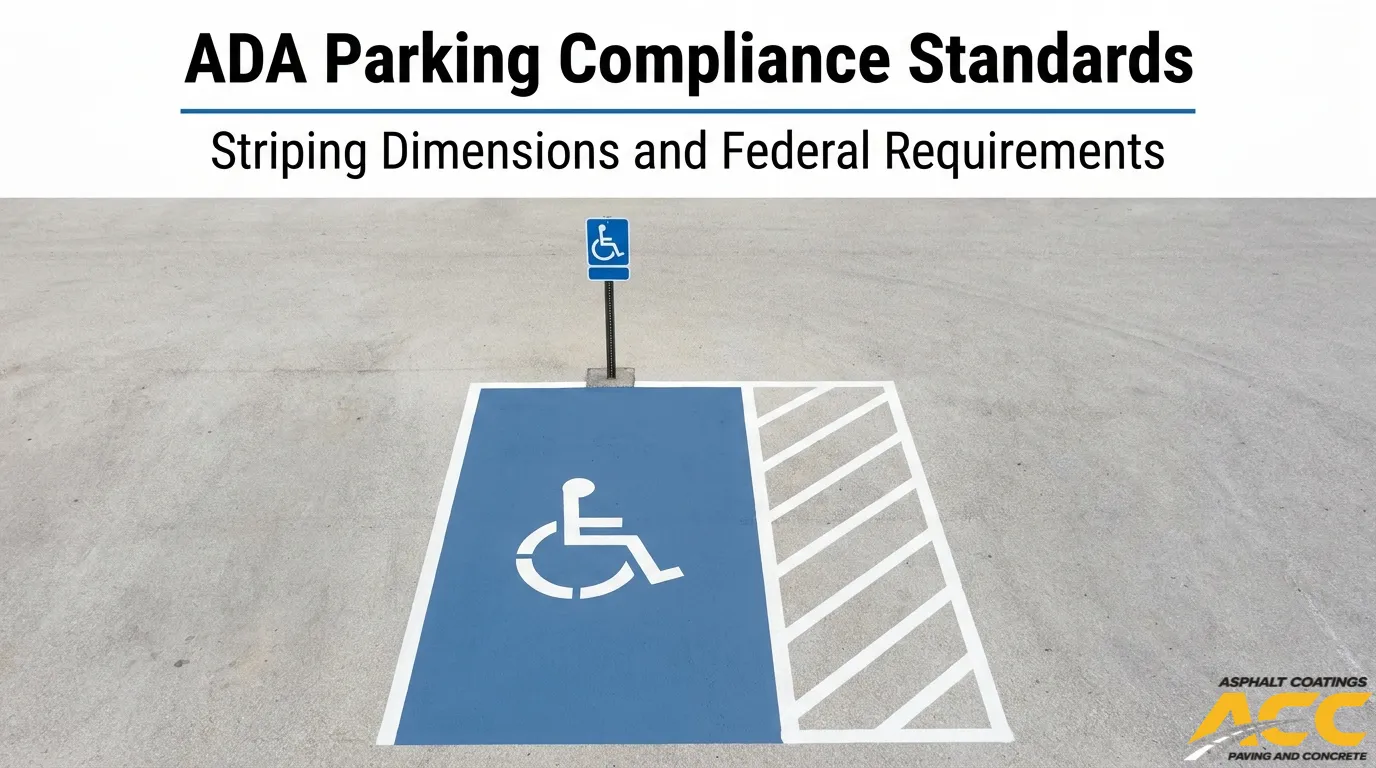
Striping and ADA markings should be refreshed whenever they become visibly faded, after any sealcoating application, or at minimum annually for high-traffic tourism properties. Heavy guest turnover, shuttle movements, and snowplow abrasion wear markings down faster than in standard commercial lots.
According to 2025 data from Visit Colorado Springs, approximately 23% of overnight visitors to the Pikes Peak region required accessibility services, with 55% reporting a mobility disability. Faded or missing ADA markings create both compliance violations and real safety hazards for this significant guest population. ADA-compliant accessible spaces must maintain slopes no steeper than 1:48 in all directions, and worn markings make it difficult to identify these designated areas.
Proactive striping schedules, timed after spring sealcoating or before peak summer tourism, keep properties compliant and reduce premises liability exposure.
With preventive strategies in place, the next step is planning repair timelines around tourism seasons.
How Should Hospitality Properties Plan Parking Lot Repairs in the Pikes Peak Region?
Hospitality properties in the Pikes Peak Region should plan parking lot repairs by partnering with contractors who understand Colorado’s climate-specific damage patterns. The following sections cover how specialized services protect hotel investments and summarize the key takeaways from tourism-driven pavement wear.
Can Asphalt Maintenance and Sealcoating Services Designed for Colorado’s Climate Help Hotels Protect Their Investment?
Yes, asphalt maintenance and sealcoating services designed for Colorado’s climate can help hotels protect their investment significantly. A $40,000 parking lot receiving no maintenance lasts only 10 to 15 years in Colorado Springs, whereas the same lot on a proper maintenance cycle can last over 25 years, according to Clear Choice Paving & Koncrete. That difference represents tens of thousands in deferred replacement costs.
Professional asphalt maintenance companies serving Colorado’s Front Range understand that proper sealcoating, crack sealing, and preventive repairs can extend parking lot life significantly beyond typical timelines.
- Sealcoating to counter high-altitude UV oxidation and traffic wear
- Crack sealing with CDOT-approved materials before winter moisture intrusion
- Asphalt repair and patching for high-deterioration zones like valet areas and bus pads
- ADA-compliant concrete work to maintain accessible parking slopes
- Parking lot striping and marking for guest safety and compliance
Contractors with extensive Colorado-specific experience design maintenance plans around freeze-thaw cycles, seasonal tourism surges, and heavy vehicle loading to deliver optimal results for hospitality properties.
What Are the Key Takeaways About How Pikes Peak Region Tourism Traffic Wears Down Hotel and Resort Parking Lots?
The key takeaways about how Pikes Peak Region tourism traffic wears down hotel and resort parking lots center on volume, vehicle weight, climate, and proactive maintenance timing.
- The Pikes Peak Region welcomed 25.6 million visitors in 2025, with 11.2 million staying overnight, sustaining year-round parking lot stress across all four seasons.
- Heavy tourism vehicles like shuttle buses and tour coaches cause exponentially more damage than passenger cars; doubling axle load produces roughly 16 times the pavement wear.
- Colorado Springs’ high altitude intensifies UV degradation, while annual freeze-thaw cycles drive moisture into traffic-created cracks, accelerating pothole formation and structural failure.
- High-turnover zones, including valet areas, bus loading pads, and drive aisles, deteriorate fastest and carry the highest premises liability risk.
- Routine sealcoating and crack sealing before winter are the most cost-effective strategies to extend pavement life well beyond 25 years.
For hospitality properties competing for guests in a record-breaking tourism market, parking lot condition is not a background detail. It shapes first impressions, controls liability exposure, and directly influences whether visitors feel safe and welcome from the moment they arrive.