Asphalt maintenance for high-turnover retail centers along Academy Boulevard is a structured program of preventive treatments, severity-based repairs, and long-term planning designed to protect pavement under Colorado Springs’ uniquely harsh conditions.
This guide covers Academy Boulevard’s environmental and traffic stressors, common pavement distresses in retail lots, severity-based repair prioritization, seasonal scheduling, the revenue impact of lot condition, preventive strategies, and multi-year maintenance planning.
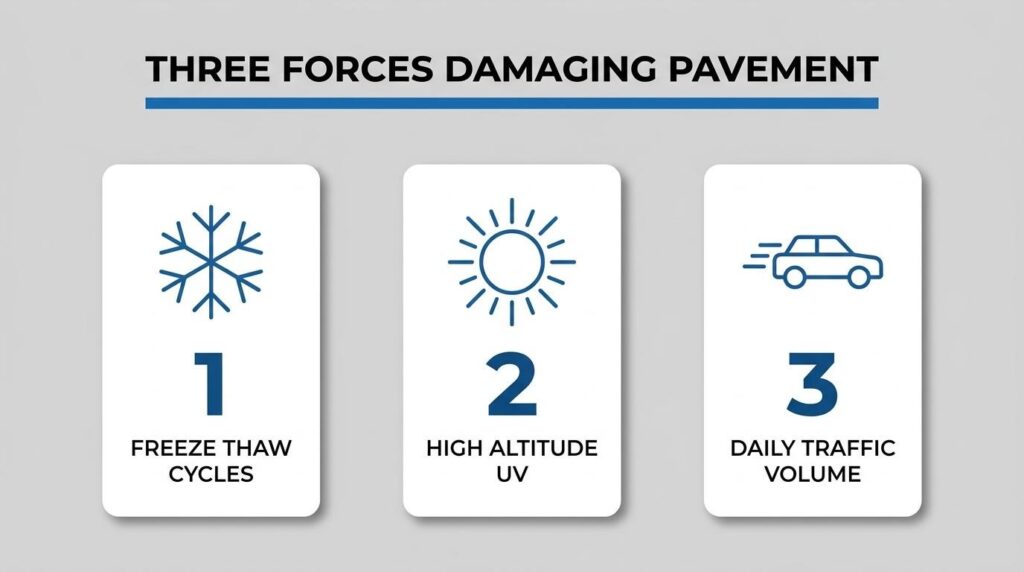
Colorado Springs combines freeze-thaw cycles that weaken asphalt binder, UV exposure up to 36 percent higher than sea level that accelerates oxidation, and approximately 47,600 vehicles per day along North Academy Boulevard. Together, these forces compress pavement lifespans well beyond what standard maintenance intervals assume.
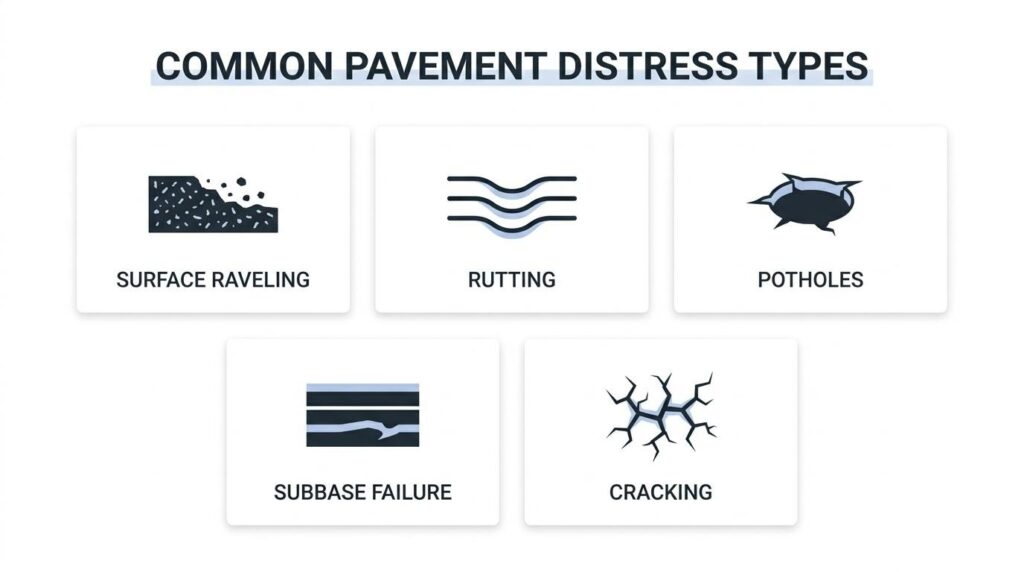
High-turnover retail lots develop specific distress patterns, including surface raveling from stop-and-go traffic, rutting at entrances and exits, potholes from moisture infiltration, subbase failures under delivery trucks, and cracking in drive-through lanes. Each distress type ties directly to the traffic and climate conditions unique to this corridor.
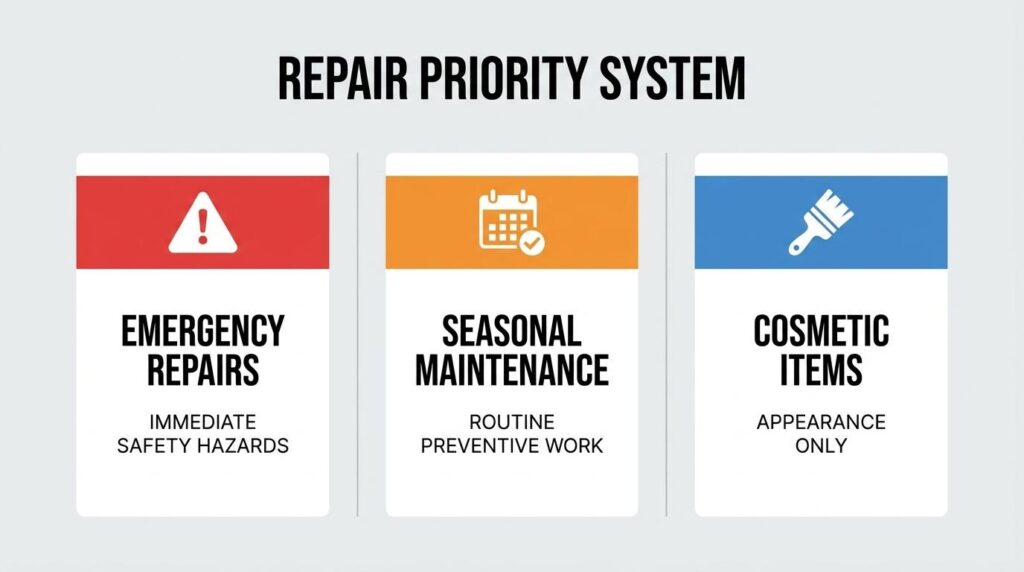
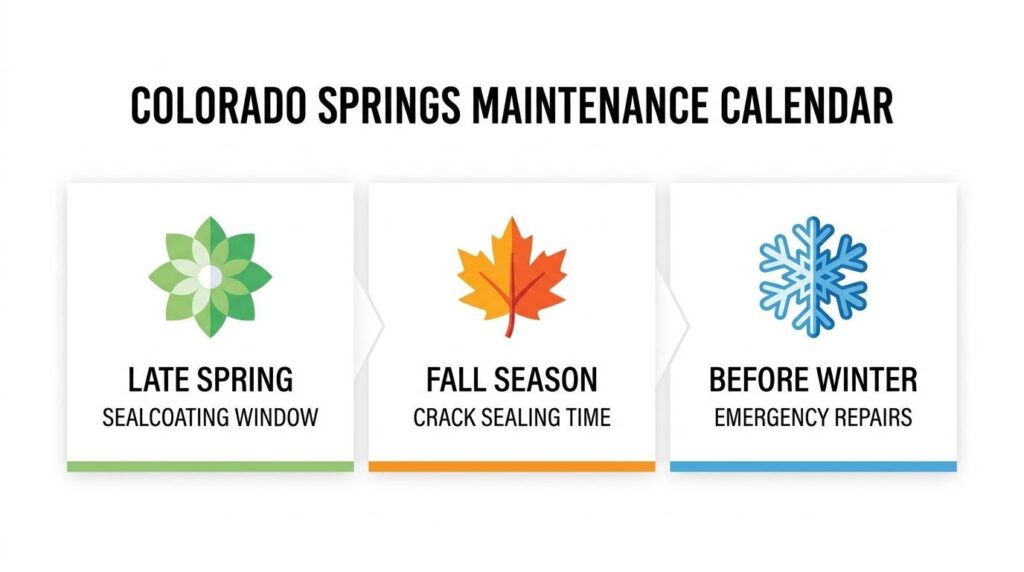
Property managers benefit from categorizing repairs into emergency hazards, routine seasonal treatments, and cosmetic items. Late spring is the optimal sealcoating window, fall favors crack sealing, and pre-winter emergency patching prevents costly structural failures.
Parking lot condition shapes customer behavior and tenant retention. Degraded surfaces push shoppers to competing centers, increase slip-and-fall liability, and escalate long-term costs when preventive work is deferred.
A multi-year pavement management plan built on PCI scoring, separated annual and capital budgets, and clear resurfacing triggers keeps maintenance costs predictable while extending pavement life across Academy Boulevard’s busiest retail properties.
Why Does Academy Boulevard Demand Special Asphalt Maintenance Strategies?
Academy Boulevard demands special asphalt maintenance strategies because Colorado Springs combines freeze-thaw cycles, intense high-altitude UV radiation, and exceptionally heavy retail traffic. The following sections break down each environmental and operational factor.
How Do Freeze-Thaw Cycles in Colorado Springs Accelerate Pavement Damage?
Freeze-thaw cycles in Colorado Springs accelerate pavement damage by repeatedly expanding and contracting moisture trapped within the asphalt structure. Water seeps into micro-cracks during warmer hours, then freezes overnight, generating internal pressure that widens those cracks with each cycle.
According to Tensar Corporation, freeze-thaw cycles cause direct damage to the binder in asphalt, leading to a reduction in stiffness and compressive strength of the pavement. Once the binder weakens, surface raveling accelerates the development of fatigue cracking and pothole formation. For high-turnover retail lots along Academy Boulevard, this progression happens faster because constant vehicle movement forces water deeper into compromised pavement. Proactive crack sealing before winter is one of the most effective ways to interrupt this cycle before minor distress becomes structural failure.
What Role Does High-Altitude UV Exposure Play in Asphalt Deterioration?
High-altitude UV exposure plays a significant role in asphalt deterioration by oxidizing the liquid binder that holds aggregate together. Colorado Springs sits at approximately 6,000 feet, where UV exposure is 36 percent higher than at sea level, according to Vanguard Skin Specialists. This intensified radiation dries out and hardens asphalt binder faster than in lower-elevation cities, causing surfaces to become brittle and crack prematurely.
Because of this accelerated oxidation, most asphalt surfaces in Colorado should be sealcoated every two to three years, with timing adjusted for sun exposure and traffic volume. Retail parking lots along Academy Boulevard face both factors simultaneously, making consistent sealcoating schedules essential rather than optional.
How Does Heavy Daily Traffic Volume Along Academy Boulevard Stress Retail Parking Lots?
Heavy daily traffic volume along Academy Boulevard stresses retail parking lots through relentless surface wear, concentrated turning movements, and delivery vehicle loading. According to Mile High CRE, North Academy Boulevard averages approximately 47,600 vehicles per day, making it one of Colorado’s most heavily trafficked retail corridors.
That volume alone creates significant pavement fatigue. Delivery trucks compound the problem considerably; pavement damage is proportional to the fourth power of axle weight, meaning a single 9-ton truck inflicts over 3,000 times the damage of a standard car. Property management firms active in the Academy Boulevard area, such as Dorman Real Estate Management and ProAdvantage Property Management, face constant pressure to keep lot surfaces safe and inviting. Well-maintained parking lots contribute directly to customer retention, while degraded surfaces can drive shoppers to competing centers.
Understanding these combined stressors clarifies why preventive maintenance schedules matter for every retail property along this corridor.
What Asphalt Damage Do High-Turnover Retail Centers Experience Most Often?
High-turnover retail centers experience surface raveling, rutting, potholes, subbase failures, and cracking most often. Each distress type stems from specific traffic patterns common along corridors like Academy Boulevard.
How Does Constant Stop-and-Go Traffic Cause Surface Raveling?
Constant stop-and-go traffic causes surface raveling by loosening aggregate particles from the asphalt binder through repeated tire scuffing, braking forces, and turning movements. Every deceleration into a parking space and acceleration back onto the drive aisle generates horizontal shear stress that strips fine aggregate from the pavement surface.
Once the top layer begins losing material, the exposed binder oxidizes faster under Colorado Springs’ elevated UV conditions. According to a study published in ScienceDirect, raveling in asphalt pavement surfaces accelerates the development of major distresses, including fatigue cracking and pothole formation. Retail lots with constant circulation traffic are especially vulnerable because vehicles rarely maintain steady speeds, compounding this wear pattern across thousands of daily movements.
Why Do Retail Center Entrance and Exit Points Develop Rutting Faster?
Retail center entrance and exit points develop rutting faster because these zones concentrate the heaviest, most repetitive wheel loads into narrow corridors. Every vehicle entering or leaving the lot tracks the same path, compressing identical pavement sections thousands of times daily.
This channelized loading pushes the asphalt mix beyond its designed load-distribution capacity. Hot summer temperatures soften the binder, making the surface more susceptible to permanent deformation under slow-moving or idling vehicles. Turning movements at these points also create lateral forces that displace the asphalt mix sideways. For retail centers along Academy Boulevard, where approximately 47,600 vehicles pass daily, entrance and exit lanes absorb a disproportionate share of that volume in concentrated strips barely a few feet wide.
What Causes Potholes to Form Quickly in Busy Shopping Center Lots?
Potholes form quickly in busy shopping center lots because high traffic volumes rapidly exploit any existing surface weakness. The process begins when moisture infiltrates small cracks or raveled areas, reaching the base layer beneath the asphalt surface.
In Colorado Springs, freeze-thaw cycles then expand that trapped water, breaking apart the surrounding pavement structure from below. According to Tensar Corporation, freeze-thaw cycles cause damage to the binder in asphalt, leading to a reduction in stiffness and compressive strength. When vehicles repeatedly roll over these weakened spots, chunks of pavement dislodge. Busy lots accelerate this timeline dramatically because damaged areas receive hundreds of additional load impacts each day before repairs can be scheduled.
How Do Delivery Trucks and Heavy Vehicles Create Subbase Failures?
Delivery trucks and heavy vehicles create subbase failures by transmitting forces that exceed the pavement’s structural design capacity. Pavement damage follows the fourth-power law: a fully loaded delivery truck with 9-ton axles can cause over 3,000 times the road damage of a standard 1-ton passenger car.
Retail centers receive frequent deliveries at loading docks, rear service lanes, and fire lanes where heavy vehicles idle, turn, and maneuver repeatedly. These concentrated loads compress the aggregate base and subgrade soil, eventually causing settlement and depressions that the surface layer cannot bridge. When the subbase fails, the asphalt above loses its structural support, leading to alligator cracking and large-scale pavement collapse that requires full-depth reconstruction rather than simple surface repair.
Why Are Drive-Through Lanes Especially Prone to Cracking?
Drive-through lanes are especially prone to cracking because they combine narrow, channelized traffic paths with constant idling loads and repetitive thermal stress. Vehicles follow a single track repeatedly, concentrating wheel loads on the same pavement strip throughout every operating hour.
Idling vehicles transfer sustained engine heat into the surface below, accelerating binder oxidation in those localized areas. Combined with Colorado Springs’ freeze-thaw cycling, this thermal volatility creates contraction cracks that propagate through the pavement. The narrow geometry of drive-through lanes also limits drainage options, so water pools along edges and seeps into joints. For property managers, this makes drive-through lanes one of the first areas to show fatigue cracking, often requiring targeted repairs well before the surrounding parking surface.
With a clear picture of these common distresses, the next step is prioritizing which repairs demand immediate attention.
How Should Property Managers Prioritize Asphalt Repairs by Severity?
Property managers should prioritize asphalt repairs by severity using a three-tier system: emergency hazards, routine seasonal maintenance, and cosmetic concerns. The following subsections break down which distresses fall into each category.
Which Distresses Require Emergency Repair to Prevent Liability?
The distresses that require emergency repair to prevent liability are those posing immediate safety hazards to pedestrians and vehicles. These include:
- Deep potholes in travel lanes and pedestrian paths that can cause trips, falls, or vehicle damage.
- Large, uneven pavement sections where grade differences exceed half an inch, creating tripping hazards.
- Collapsed or undermined areas near storm drains, utility covers, or building entrances.
- Severely deteriorated ADA-accessible routes and parking spaces that block compliant access.
In Colorado, individuals typically have two years from an accident to file a premises liability claim related to slip-and-fall incidents, according to Colorado’s premises liability statute. For high-turnover retail centers along Academy Boulevard, where thousands of customers walk these surfaces daily, even a 24-hour delay in addressing these hazards compounds legal exposure significantly.
Which Issues Can Be Scheduled for Routine Seasonal Maintenance?
The issues that can be scheduled for routine seasonal maintenance are moderate distresses that worsen gradually rather than posing immediate danger. Crack sealing is often performed during spring or fall when weather conditions are more favorable, specifically avoiding extreme temperatures.
Routine seasonal maintenance items include:
- Linear and block cracking that has not yet reached full depth.
- Minor surface raveling where aggregate loss is visible but the subbase remains intact.
- Faded or worn pavement markings affecting traffic flow and ADA compliance.
- Sealcoating application to protect against UV oxidation and moisture intrusion.
- Drainage adjustments where minor ponding occurs after rain.
Scheduling these treatments within Colorado’s optimal windows, typically late spring and early fall, prevents them from escalating into emergency-tier problems over winter. For property managers overseeing retail lots on Academy Boulevard, building these tasks into a seasonal calendar is far more cost-effective than reacting after freeze-thaw cycles drive the damage deeper.
What Cosmetic Concerns Can Wait Without Risking Structural Damage?
Cosmetic concerns that can wait without risking structural damage include surface-level imperfections that affect appearance but not pavement integrity. These are:
- Minor color fading or oxidation across open-lot areas with low foot traffic.
- Hairline surface cracks under one-quarter inch wide with no depth penetration.
- Small aggregate pop-outs that do not connect to broader raveling patterns.
- Slight staining from oil or fluid drips in individual parking stalls.
While these blemishes do not threaten structural performance, they still influence customer perception. Property managers should address cosmetic issues during the next scheduled maintenance cycle rather than mobilizing a separate crew. Bundling cosmetic repairs with routine sealcoating or restriping keeps costs low while maintaining the polished appearance that Academy Boulevard retail tenants expect.
Understanding repair priority tiers makes it easier to plan when each treatment should happen throughout the year.
When Is the Best Time to Schedule Asphalt Maintenance in Colorado Springs?
The best time to schedule asphalt maintenance in Colorado Springs depends on the service type and seasonal conditions. Late spring suits sealcoating, fall favors crack sealing, and emergency repairs should precede winter freeze.
Why Is Late Spring the Ideal Window for Sealcoating on Academy Boulevard?
Late spring is the ideal window for sealcoating on Academy Boulevard because consistent warm temperatures and dry conditions allow sealant to cure properly. Sealcoat requires ambient temperatures above 50°F and at least 24 hours without rain to bond effectively to the asphalt surface.
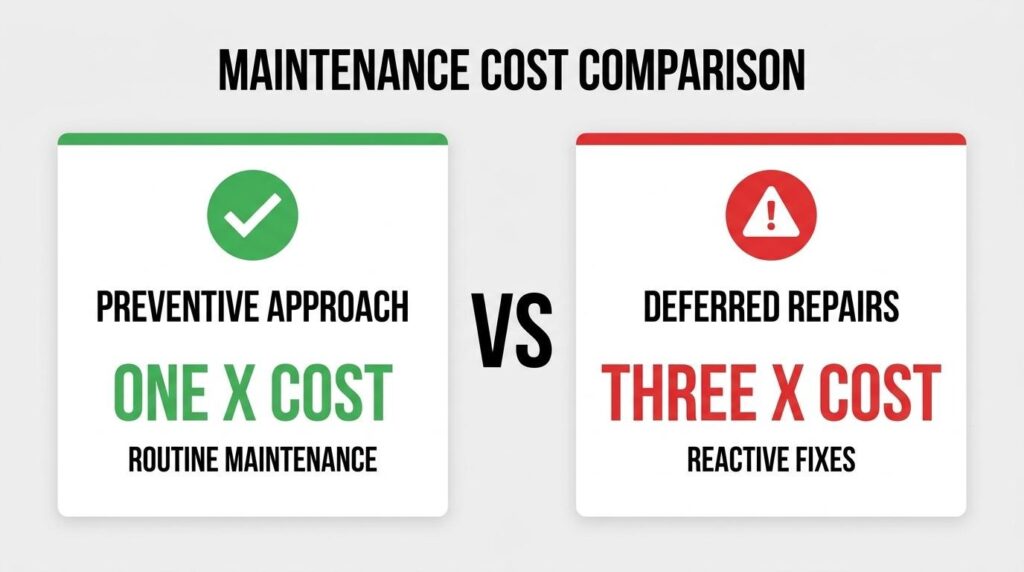
Colorado Springs typically reaches these stable conditions by mid-May, giving property managers a reliable application window before summer traffic peaks. For high-turnover retail centers along Academy Boulevard, scheduling sealcoating during late spring also minimizes disruption; mild weather means faster cure times and shorter lane closures. Since preventive maintenance typically costs three times less than reactive repairs, timing this service correctly maximizes both pavement protection and budget efficiency. Waiting until midsummer risks afternoon thunderstorms that can compromise fresh sealant.
How Does Colorado’s Fall Weather Affect Crack Sealing Timelines?
Colorado’s fall weather affects crack sealing timelines by creating a narrow but favorable window before temperatures drop below workable thresholds. According to Lightfield Enterprises, crack sealing is often performed during spring or fall when conditions are more favorable, specifically avoiding extreme temperatures.
In Colorado Springs, the optimal fall window typically runs from mid-September through late October. During this period, cracks are at moderate width, which allows hot-pour sealant to achieve proper adhesion and flexibility. Key factors that shape fall crack sealing schedules include:
- Daytime temperatures must remain above 40°F for material application.
- Early snowfall can shorten the window by two to three weeks in some years.
- Overnight lows below freezing reduce sealant bonding if applied late in the day.
With combined sealcoating, crack sealing, and striping services costing between $0.65 and $0.90 per square foot, completing this work in fall protects against costly winter damage.
What Emergency Repairs Should Be Done Before Winter Freeze Sets In?
Emergency repairs that should be done before winter freeze sets in include pothole patching, deep crack filling, and base failure stabilization in high-liability zones. These distresses worsen dramatically once freeze-thaw cycles begin, as water infiltration expands within the pavement structure and accelerates deterioration.
For retail centers along Academy Boulevard, property managers should prioritize:
- Potholes deeper than two inches, which pose immediate trip-and-fall risk for shoppers.
- Alligator cracking near entrances and ADA-accessible routes, where structural failure can progress rapidly.
- Standing water areas caused by drainage failures, where ice formation creates slip hazards.
Completing these repairs before the first hard freeze, typically by early November in Colorado Springs, prevents minor issues from escalating into full-depth reconstruction needs. For property managers balancing tight budgets, this pre-winter approach is far more cost-effective than emergency patching mid-season.
With seasonal timing established, the next consideration is how parking lot condition directly impacts retail tenant retention and revenue.
How Does Parking Lot Maintenance Affect Retail Tenant Retention and Revenue?
Parking lot maintenance affects retail tenant retention and revenue by shaping customer first impressions, limiting liability exposure, and controlling long-term property costs. The following sections cover customer perception, slip-and-fall liability risk, and the financial consequences of deferred maintenance.
How Do Customers Perceive Businesses Based on Parking Lot Condition?
Customers perceive businesses based on parking lot condition as a direct reflection of the business itself. Cracked surfaces, faded striping, and potholes signal neglect before a shopper even reaches the front door. According to a Proline study, 40% of drivers have avoided businesses entirely due to poor parking conditions or a lack of clear directional signage.
That loss compounds across every tenant in a retail center. When customers choose a competitor’s plaza simply because it looks better maintained, vacancy risk climbs and lease renewal negotiations become harder. For high-turnover centers along Academy Boulevard, where tenants depend on impulse foot traffic, a well-maintained lot is not cosmetic; it is a revenue-protection strategy.
Can Poor Pavement Conditions Increase Slip-and-Fall Liability Claims?
Yes, poor pavement conditions can increase slip-and-fall liability claims significantly. Uneven surfaces, crumbling edges, and water-filled potholes create hazards that expose property owners to premises liability lawsuits. Under Colorado law, individuals typically have two years from the date of an accident to file a premises liability claim, according to Chalat Law’s analysis of Colorado slip-and-fall cases.
Colorado’s premises liability statute categorizes injured parties as trespassers, licensees, or invitees. Retail shoppers qualify as invitees, which means property owners owe them the highest duty of care. Neglected pavement that causes a fall can result in costly litigation, settlement payouts, and increased insurance premiums. Proactive crack repair and surface maintenance are far less expensive than a single injury claim.
How Does Deferred Maintenance Raise Long-Term Costs for Retail Owners?
Deferred maintenance raises long-term costs for retail owners by allowing minor, inexpensive problems to escalate into major structural failures. Preventive maintenance typically costs three times less than reactive repairs for asphalt surfaces, according to a cost-benefit analysis by Pave It Forward LLC.
The cost gap widens at every stage of neglect:
- Crack sealing costs $0.50 to $3 per linear foot when addressed early.
- Sealcoating and striping services run $0.65 to $0.90 per square foot on a routine schedule.
- Full reconstruction, required once deterioration reaches the subbase, costs many times more than years of preventive treatments combined.
For retail owners managing properties along Academy Boulevard, a proactive maintenance cycle protects both pavement integrity and tenant confidence in the property’s long-term viability. Understanding these financial stakes makes choosing the right preventive strategies the logical next step.
What Preventive Maintenance Strategies Extend Pavement Life at Retail Centers?
Preventive maintenance strategies that extend pavement life at retail centers include sealcoating, crack sealing, drainage optimization, and restriping. A pavement management plan serves as a strategic roadmap that ensures parking lot longevity, extending well beyond a simple maintenance schedule.
How Often Should High-Traffic Retail Lots Be Sealcoated?
High-traffic hotel parking areas should be sealcoated every one to two years. Commercial parking lots experience significantly more wear than residential driveways, which typically need treatment only every two to three years. The higher frequency accounts for constant vehicle turning, braking, and fluid exposure that breaks down the asphalt binder faster.
Along Academy Boulevard, elevated UV exposure compounds this wear by oxidizing the surface between applications. Property managers should schedule sealcoating during late spring or early fall when Colorado temperatures remain consistently above 50°F for proper curing. Lots showing visible color fading from black to gray, or surface aggregate loosening, need treatment regardless of schedule. For retail centers prioritizing curb appeal and structural protection, a strict one-to-two-year cycle prevents the kind of accelerated deterioration that leads to costly overlays.
Why Is Crack Sealing Before Winter Critical Along the Front Range?
Crack sealing before winter is critical along the Front Range because unsealed cracks allow moisture to penetrate the subbase before freeze-thaw cycles begin. Water trapped beneath the surface expands when it freezes, widening existing cracks and creating new ones. Each cycle compounds the damage, turning hairline cracks into alligator cracking or potholes by spring.
According to Pave It Forward LLC, crack sealing costs range from $0.50 to $3 per linear foot, representing a significant saving compared to major reconstruction projects. For retail centers along Academy Boulevard, fall is the optimal window; temperatures are moderate enough for sealant adhesion, yet early enough to protect pavement before Colorado’s harshest months. Delaying this work even one season can escalate a minor repair into a structural failure.
How Does Proper Drainage Design Prevent Water Damage in Retail Lots?
Proper drainage design prevents water damage in retail lots by directing stormwater away from the pavement surface and subbase before it can infiltrate and weaken the structure. Standing water is the single greatest threat to asphalt longevity in any parking lot.
Effective drainage relies on several key elements:
- Correct slope grading channels water toward catch basins and away from high-traffic lanes.
- Functional catch basins and storm drains prevent pooling at low points near entrances and drive-through areas.
- Maintained curb and gutter systems contain runoff and direct it off the lot surface.
- Clear inlet grates free of debris ensure water exits the lot during heavy rain events.
When drainage fails, water saturates the aggregate base and softens the subgrade, leading to rutting, depressions, and eventual base failure. For Colorado Springs retail centers, spring snowmelt creates especially high volumes that overwhelm neglected systems.
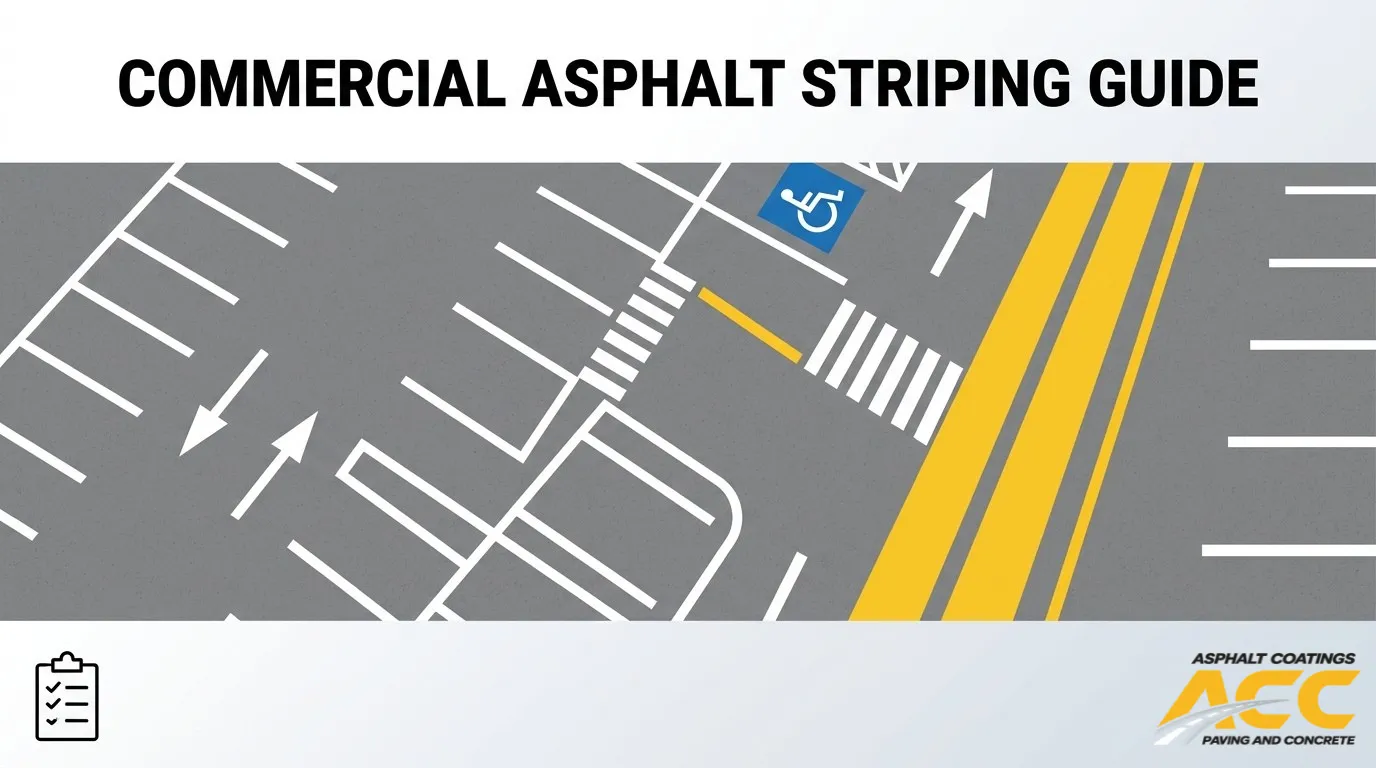
When Should Retail Centers Restripe for ADA Compliance and Traffic Flow?
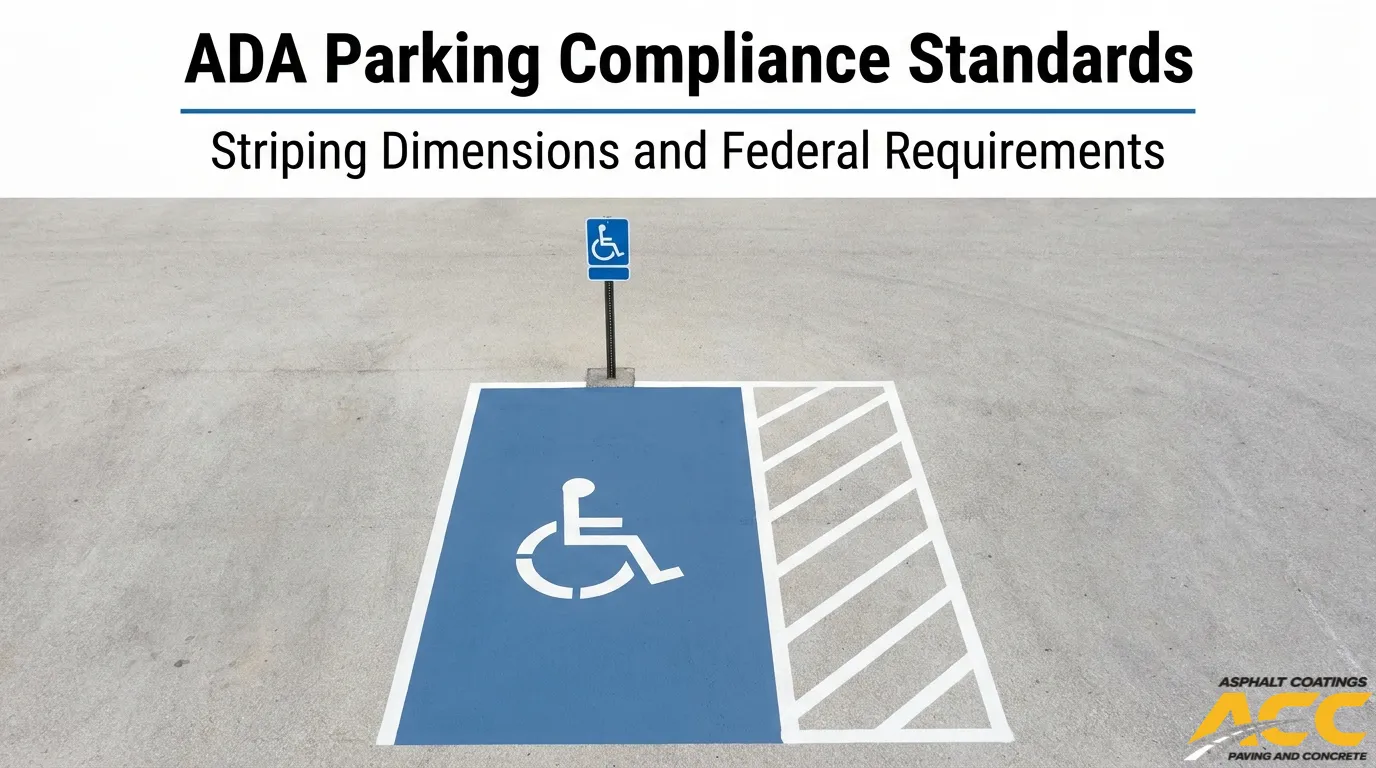
Retail centers should restripe for ADA compliance and traffic flow whenever markings become faded, after sealcoating, or at minimum annually. Standard ADA parking spots must be at least 8 feet wide with a 5-foot access aisle marked with diagonal lines. A lot with 400 total spaces requires eight accessible spaces, including two van-accessible stalls.
Faded striping creates confusion, increases fender-bender risk, and exposes property owners to ADA violation penalties. In Colorado, high UV exposure at elevation accelerates paint degradation faster than in lower-altitude markets. Restriping immediately after sealcoating is essential because the fresh sealant covers all existing markings completely. Beyond compliance, clear directional arrows and lane markings improve traffic flow during peak retail hours, reducing congestion in high-turnover lots.
With these preventive strategies in place, a structured multi-year plan keeps maintenance on track.
How Do You Build a Multi-Year Asphalt Maintenance Plan for a Retail Center?
You build a multi-year asphalt maintenance plan for a retail center by combining condition assessments, phased budgeting, and clear resurfacing triggers. The following sections cover what a pavement assessment should include, how to separate annual maintenance from capital overlays, and when resurfacing becomes the smarter investment.
What Should a Pavement Condition Assessment Include?
A pavement condition assessment should include a systematic visual survey using the Pavement Condition Index (PCI), a numerical index ranging from 0 to 100 that indicates the general condition of a pavement section. According to the Federal Highway Administration, pavement condition rating protocols should clearly define distress types, severity levels, and rating methods.
A thorough assessment for a retail center parking lot should document:
- Surface distresses such as cracking, raveling, and pothole formation.
- Severity classifications for each distress type (low, medium, high).
- Drainage functionality and standing water locations.
- ADA-compliant access aisle and ramp conditions.
- Striping visibility and traffic flow markings.
Targeting a PCI score between 71 and 85 is generally considered the most cost-effective range for commercial pavement management. Scores in this satisfactory range keep repair costs manageable while preventing the accelerated deterioration that occurs once pavement drops below 55. For high-turnover lots along Academy Boulevard, annual reassessment is essential because heavy daily traffic compresses the timeline between PCI thresholds.
How Do You Budget for Annual Maintenance Versus Capital Overlays?
You budget for annual maintenance versus capital overlays by separating recurring preventive costs from major rehabilitation expenditures into distinct line items. According to Pave It Forward LLC, preventive maintenance typically costs three times less than reactive repairs for asphalt surfaces.
Annual maintenance budgets should cover:
- Crack sealing for active pavement areas.
- Sealcoating application on high-wear zones.
- Pothole patching and localized repairs.
- Striping refresh and ADA marking updates.
Capital overlay budgets, planned on five-to-ten-year cycles, should reserve funds for mill-and-pave projects, full-depth patching, and subbase reconstruction. Property managers who blend both budget categories into one fund often defer preventive work when capital needs arise. Keeping them separate ensures routine preservation never competes with large-scale rehabilitation for the same dollars.
What Triggers the Decision to Resurface Instead of Continuing Repairs?
The decision to resurface instead of continuing repairs is triggered when cumulative repair costs approach 40 to 50 percent of a full overlay’s price, or when the PCI score drops below 55 consistently across large sections. At that threshold, patching and sealing no longer restore structural integrity; they simply delay inevitable failure.
Several additional triggers signal resurfacing is necessary:
- Widespread alligator cracking covering more than 25 percent of the lot surface.
- Recurring potholes in the same locations after multiple patches.
- Subbase failures causing visible settling or rutting.
- Drainage problems that persist despite grading repairs.
For retail centers where customer perception directly affects revenue, waiting too long turns a planned capital project into an emergency. Proactive resurfacing, timed before the lot becomes visibly distressed, minimizes tenant disruption and avoids the premium costs associated with rushed mobilization.
With a structured plan in place, the next step is partnering with a contractor who understands Academy Boulevard’s unique demands.
How Can Asphalt Coatings Company Help Maintain Academy Boulevard Retail Centers?
Asphalt Coatings Company helps maintain Academy Boulevard retail centers through commercial sealcoating, crack sealing, paving, and ADA-compliant striping services tailored to high-traffic environments. The sections below cover protective maintenance services and key takeaways.
Can Commercial Sealcoating and Paving Services Protect High-Traffic Retail Parking Lots?
Yes, commercial sealcoating and paving services can protect high-traffic retail parking lots by sealing the surface against UV degradation, water infiltration, chemical damage from vehicle fluids, and hail damage. Commercial parking lots may require sealcoating every one to two years due to heavier traffic, compared to the two-to-three-year cycle typical for residential driveways. Annual crack sealing is recommended for active areas within commercial lots, with full sealcoating applied every two to three years.
Asphalt Coatings Company delivers these services with in-house crews using CDOT-approved materials for crack sealing, designed for Colorado Springs conditions. With 39 years of Front Range experience since 1986, Asphalt Coatings Company understands the compounding effects of elevation, freeze-thaw cycles, and constant retail turnover on Academy Boulevard parking surfaces. For property managers overseeing high-volume lots, this combination of frequent sealcoating and annual crack repair is the most reliable way to prevent small distresses from escalating into costly structural failures.
What Are the Key Takeaways About Asphalt Maintenance for High-Turnover Retail Centers Along Academy Boulevard?
The key takeaways about asphalt maintenance for high-turnover retail centers along Academy Boulevard are:
- Freeze-thaw cycles and high-altitude UV exposure in Colorado Springs accelerate pavement deterioration faster than in lower-elevation markets.
- Academy Boulevard’s heavy daily traffic demands more aggressive maintenance intervals than standard commercial lots.
- Proactive sealcoating and crack sealing cost significantly less than reactive reconstruction.
- ADA compliance, proper drainage, and clear striping directly affect tenant retention and liability exposure.
- Property managers working with firms such as CDOT, the City of Colorado Springs, and Pikes Peak Area Council of Governments should align maintenance schedules with local infrastructure planning.
Asphalt Coatings Company partners with retail property managers, shopping center owners, and commercial property management firms to build multi-year maintenance plans that protect pavement investments along Academy Boulevard.