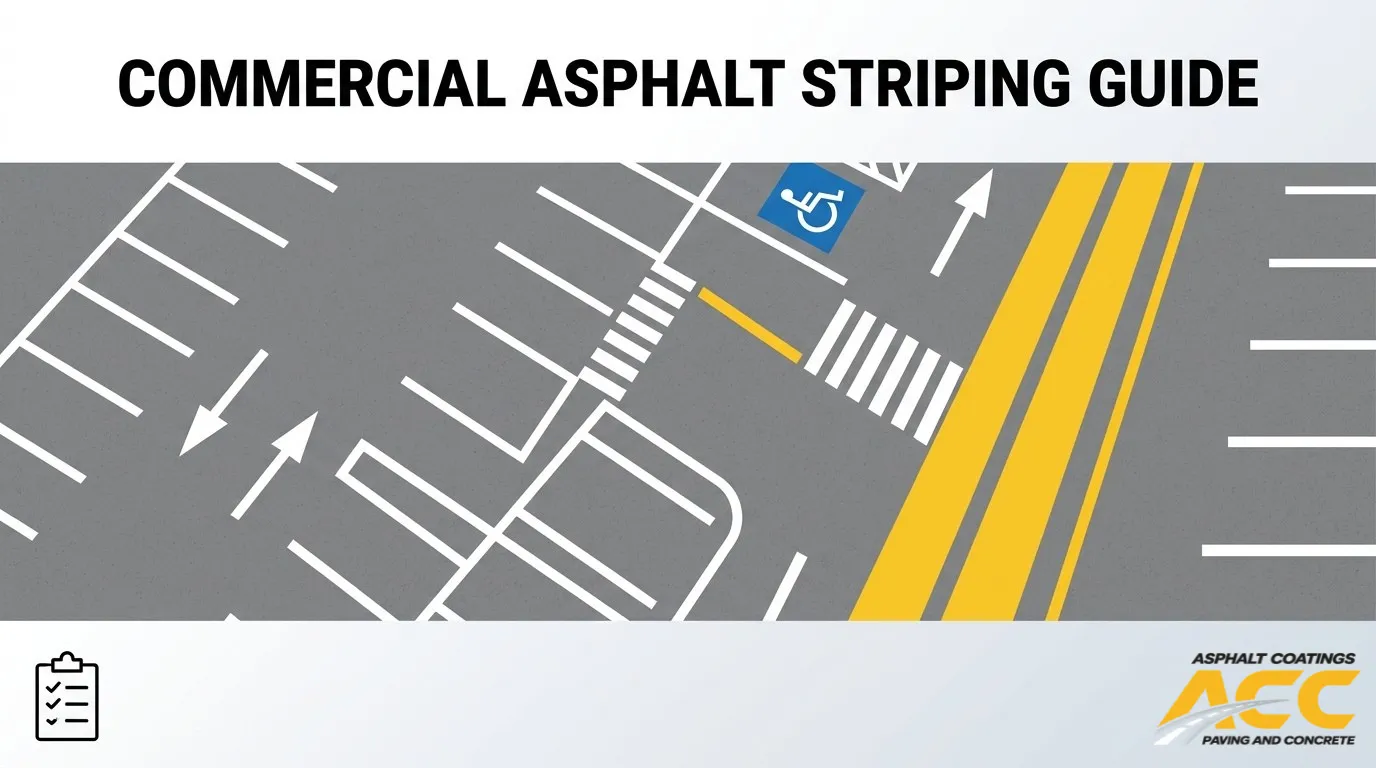
Repurposing and restriping excess parking after Denver’s parking-minimum repeal is the process of redesigning oversized lots to match actual demand, converting surplus stalls into higher-value uses, and updating all markings to meet current code. With Denver eliminating all minimum parking ratios citywide as of August 11, 2025, property managers now have the freedom to right-size their lots without seeking variances or special exceptions.
This guide covers Denver’s new parking policy and the oversupply it reveals, practical repurposing strategies for unused stalls, the technical and compliance requirements of restriping, project costs and permitting rules, and the climate and property value factors that shape these decisions.
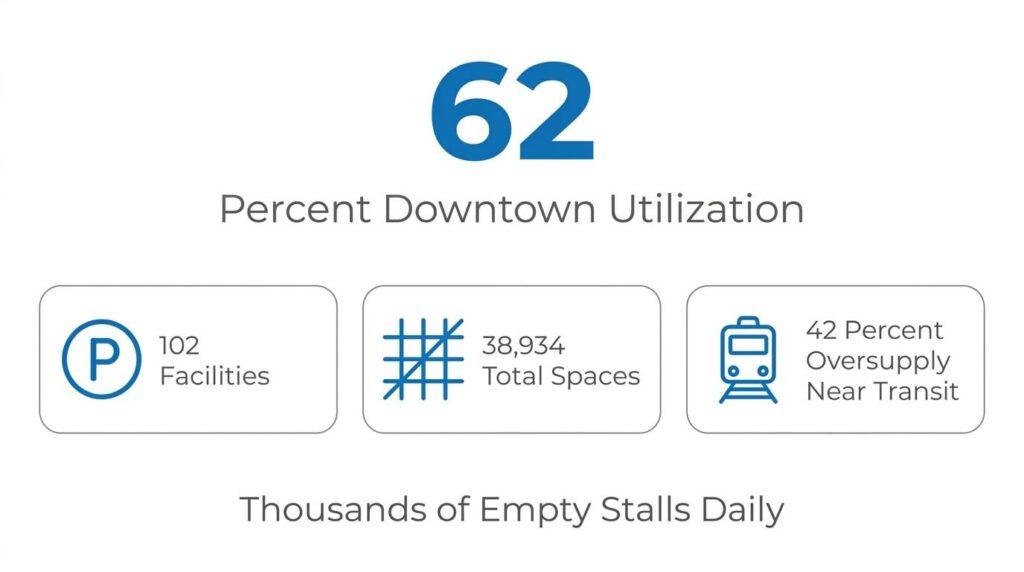
Denver’s parking-minimum repeal removed all required parking ratios from the zoning code, going beyond Colorado’s 2024 state law that only targeted transit corridors. Downtown utilization sits at just 62 percent of total capacity, and properties near transit stations provide 42 percent more parking than residents use at peak demand. This surplus creates immediate repurposing opportunities.
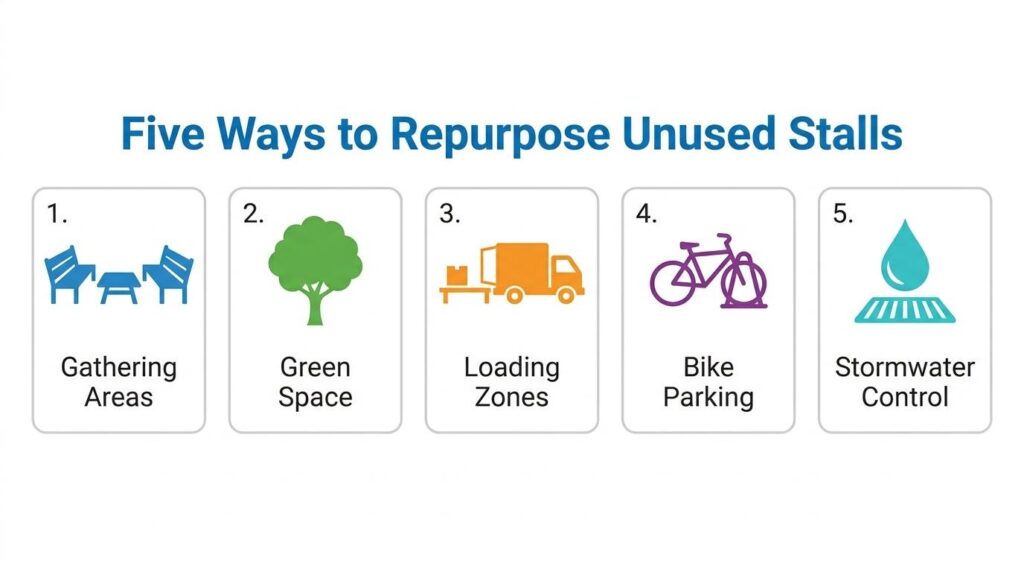
Property owners can convert freed stalls into outdoor gathering areas, green infrastructure, bike parking, dedicated loading zones, or stormwater management features. Denver’s zoning code explicitly permits converting formerly required spaces into outdoor gathering areas, giving a clear legal pathway for activation.
Restriping for fewer spaces requires recalculating ADA-accessible ratios, preserving fire lane access, and redesigning traffic flow around repurposed zones. Costs for basic striping range from $300 to $1,500 for small to mid-sized Denver lots, while green space conversions involve demolition, grading, and drainage work that escalates the budget significantly.
Colorado’s freeze-thaw cycles demand surface assessment before any repurposing work begins, and seasonal timing between May and September ensures markings cure properly. Converting surplus asphalt into walkable, activated space is strongly associated with higher property values and lower vacancy rates in commercial real estate.
What Is Denver’s Parking-Minimum Repeal?
Denver’s parking-minimum repeal is a citywide policy change that eliminates all required parking ratios from the Denver Zoning Code. Starting August 11, 2025, new buildings and changes to existing buildings in Denver no longer have to include a minimum number of car parking spaces. Denver City Council passed two parking-related ordinances on a 9-3 vote on August 4, 2025, according to The Denver Post. This legislation eliminated all minimum parking requirements citywide, going beyond Colorado’s 2024 state law (HB24-1304), which only applied to transit corridors.
The repeal means developers, property managers, and building owners can now decide how much parking their projects actually need rather than meeting arbitrary zoning ratios. For existing commercial properties, the change opens a practical question: what should you do with parking spaces that are no longer mandated by code? Across Denver, many lots already sit partially empty, and this policy shift gives property owners the freedom to repurpose, restripe, or reconfigure that underutilized asphalt for higher-value uses.
Understanding what this repeal covers, and what it does not, is the first step toward making informed decisions about your parking lot.
Why Does Denver’s Parking-Minimum Repeal Create Excess Parking?
Denver’s parking-minimum repeal creates excess parking because decades of mandated ratios forced developers to build far more spaces than drivers actually use. The gap between required supply and real demand leaves thousands of stalls sitting empty across the city.
How Did Mandatory Parking Ratios Overbuild Supply?
Mandatory parking ratios overbuilt supply by requiring fixed numbers of stalls per unit of building area, regardless of actual demand. Denver’s zoning code tied parking construction to square footage and land use type, not occupancy patterns or transit access. Developers had no legal option to build fewer spaces, even in neighborhoods where residents walked, biked, or took transit. An analysis by the Regional Transportation District found that 86 properties near Denver transit stations provide 42 percent more parking on average than residents use at peak demand. This structural mismatch accumulated over decades, embedding surplus capacity into nearly every commercial and multifamily site across the city.
How Much Parking Sits Underutilized in Denver Today?
A significant share of Denver’s total parking capacity sits underutilized today. In 2025, downtown Denver parking counts showed a 62 percent utilization rate, representing a seven percentage point drop from the prior year, according to ArcGIS StoryMaps data. A 2021 survey identified 102 parking facilities containing 38,934 spaces, contributing to what city officials describe as an overabundance of underutilized asphalt. These numbers confirm that thousands of stalls remain empty on any given day. For commercial property managers, that idle pavement represents wasted square footage, ongoing maintenance costs, and a missed opportunity to add functional value to the site.
What Do Other Cities Show About Post-Repeal Parking Trends?
Other cities show that parking construction drops measurably after minimum requirements are removed. According to a 2020 study published in the Journal of the American Planning Association, 47 percent of major developments in Buffalo, New York included fewer parking spaces than previously permissible within two years of the city’s 2017 repeal. Minneapolis saw similar shifts; the share of carless households in new transit-adjacent developments increased, and eliminating structured parking reduced housing production costs by up to $50,000 per space. These precedents suggest Denver property owners will face growing inventories of surplus stalls as new projects opt for leaner parking designs, making proactive repurposing and restriping a practical next step.
What Are the Best Ways to Repurpose Excess Parking Lot Space?
The best ways to repurpose excess parking lot space include converting stalls into outdoor gathering areas, adding green infrastructure, creating dedicated loading zones, installing bike parking, and building stormwater management features. Each approach is covered below.
How Can You Convert Excess Parking Into Outdoor Gathering Areas?
You can convert excess parking into outdoor gathering areas by redesigning unused stalls for patios, seating zones, or community plazas. Section 11.10.14 of the Denver Zoning Code specifically allows the conversion of formerly required parking spaces into outdoor gathering areas, giving property owners a clear legal pathway.
Other cities demonstrate the model’s viability. Cincinnati has invested millions of dollars into permanent “streateries,” establishing outdoor dining spaces on former curbside parking areas. For Denver commercial properties, the conversion typically involves:
- Removing or restriping existing stall markings
- Installing bollards or planters to separate pedestrian areas from vehicle traffic
- Adding surface treatments, seating, and lighting
This is one of the fastest ways to generate tenant value from underused asphalt.
How Can You Add Green Infrastructure to Unused Parking Areas?
You can add green infrastructure to unused parking areas by replacing or overlaying asphalt sections with bioswales, rain gardens, tree canopy islands, or permeable paving. These installations reduce the urban heat island effect while managing runoff, a persistent concern across Denver’s impervious commercial surfaces.
Common green infrastructure options for parking lots include:
- Bioswales along lot perimeters to filter and slow stormwater
- Tree islands placed within former parking rows to provide shade
- Permeable pavers or porous asphalt installed over decommissioned stalls
Green retrofits often require coordination with Denver’s stormwater management requirements, so working with a paving contractor experienced in grading and drainage is essential.
How Can You Create Dedicated Loading or Delivery Zones?
You can create dedicated loading or delivery zones by restriping surplus parking stalls with designated markings, signage, and adequate turning radii for delivery vehicles. As e-commerce and last-mile delivery volumes grow, many Denver commercial properties lack sufficient curbside or off-street loading capacity.
Converting two to four excess stalls into a loading zone typically involves:
- Widening the striped area to accommodate box trucks or vans
- Adding “Loading Only” signage with posted time restrictions
- Ensuring the zone does not obstruct fire lanes or accessible routes
Dedicated loading zones reduce double-parking conflicts, protect traffic flow for remaining lot users, and can be implemented with a straightforward restriping project.
How Can You Repurpose Excess Stalls for Bike Parking or Micromobility?
You can repurpose excess stalls for bike parking or micromobility by converting one or two vehicle spaces into secure bicycle racks, e-bike charging stations, or designated scooter corrals. A single standard parking stall accommodates roughly eight to twelve bicycle parking spots, dramatically increasing capacity per square foot.
Effective micromobility conversions include:
- Inverted-U bike racks bolted to the existing asphalt surface
- Covered bike shelters for weather protection in Denver’s variable climate
- Striped micromobility corrals with signage to prevent scooter clutter
These installations support Denver’s multimodal transportation goals while offering tenants and visitors practical alternatives to driving. The conversion cost is minimal compared to structural changes, making it one of the most accessible repurposing strategies.
How Can You Use Surplus Parking for Stormwater Management?
You can use surplus parking for stormwater management by integrating detention areas, permeable surfaces, or underground infiltration systems into decommissioned parking sections. Denver’s semi-arid climate produces intense, short-duration storms that overwhelm traditional lot drainage.
Stormwater management strategies for surplus parking include:
- Surface detention basins graded into former parking areas to temporarily hold runoff
- Porous asphalt overlays that allow water to infiltrate through the pavement structure
- French drains or underground storage chambers beneath removed stall sections
These features reduce the volume and velocity of runoff leaving the property, helping meet Denver’s municipal stormwater requirements. For property managers balancing compliance with cost, stormwater retrofits often qualify for city incentive programs that offset installation expenses.
With repurposing strategies identified, the next step is understanding what restriping involves when reducing stalls.
What Does Restriping a Parking Lot Involve After Reducing Stalls?
Restriping a parking lot after reducing stalls involves redesigning the layout, updating ADA-compliant markings, adjusting fire lane designations, and optimizing traffic flow for the smaller footprint. Each step carries specific code requirements.
How Do You Design a New Striping Layout for Fewer Spaces?
You design a new striping layout for fewer spaces by conducting a site survey, mapping retained stalls, and allocating freed areas for their intended reuse. The process starts with measuring existing pavement dimensions, then plotting revised stall positions to maintain standard widths and aisle clearances.
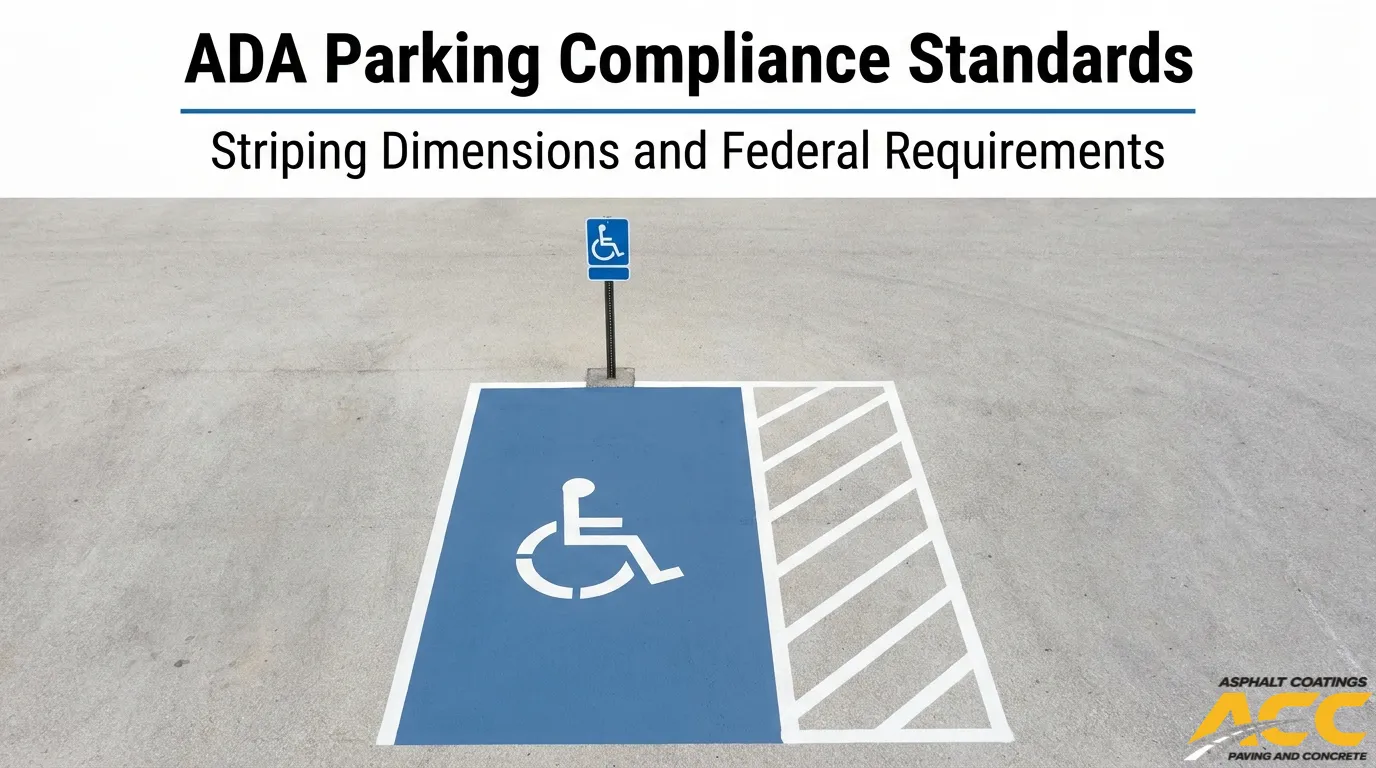
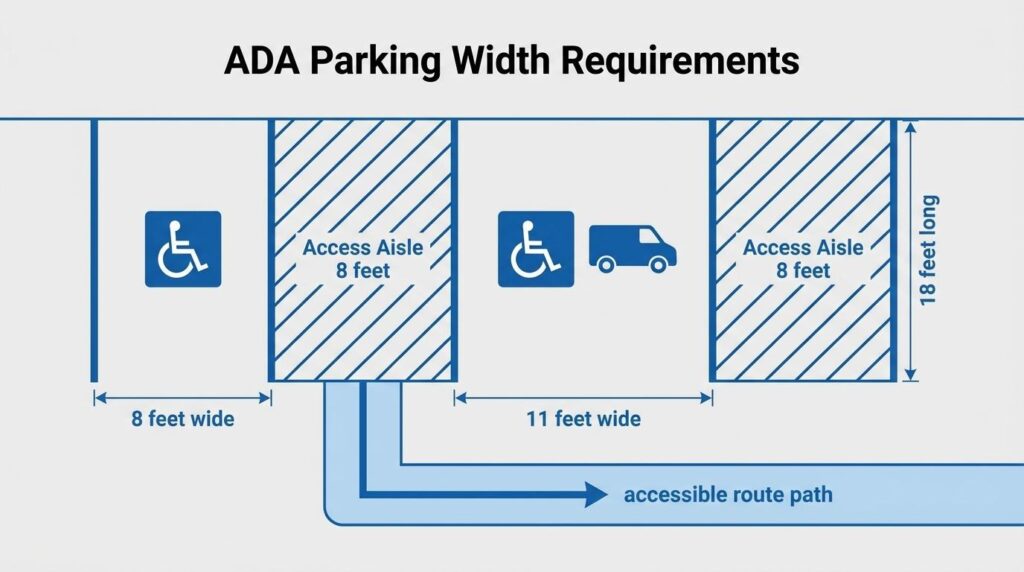
Accessible parking ratios must be recalculated based on the new total count. Under the ADA Standards for Accessible Design, at least one of every six accessible spaces must be van-accessible, providing an additional 3 feet of width for ramp deployment. Failing to adjust this ratio during layout design is one of the most common oversights when Denver property managers downsize lots. Once stall counts, accessible spaces, and repurposed zones are plotted, the layout should be reviewed against Denver’s Division 10.4 parking design standards before any paint is applied.
What ADA Compliance Changes Apply When You Restripe?
ADA compliance changes that apply when you restripe include recalculating the required number of accessible spaces, verifying access aisle widths, and updating pavement markings to current federal standards.
Key ADA restriping requirements include:
- Accessible space count must match the updated total stall count using the ADA ratio table.
- Van-accessible stalls require a minimum width of 11 feet, or 8 feet when paired with an 8-foot access aisle.
- Access aisles must connect to an accessible route leading to the building entrance without requiring travel behind parked vehicles.
- Signage height and placement must comply with current ADA Standards for Accessible Design.
For any Denver lot reduction project, treating ADA layout as the first constraint, not an afterthought, prevents costly rework.
How Do You Adjust Fire Lane and Emergency Access Markings?
You adjust fire lane and emergency access markings by verifying that all required fire lanes remain unobstructed after stalls are removed and that curb paint, signage, and hatching reflect the revised layout. According to UT Dallas Facilities Management guidelines, fire lanes are required by code when any portion of a building’s first-story exterior wall sits more than 150 feet from a fire department vehicle access point.
When stalls are eliminated, the freed pavement sometimes encroaches on existing fire lane boundaries. Restriping must preserve mandated lane widths, turning radii, and “No Parking” markings. Repurposed zones near building perimeters should be evaluated to confirm they do not block emergency apparatus staging areas. Coordinating with Denver Fire Department review before final striping avoids code violations.
What Traffic Flow Patterns Work Best in a Downsized Lot?
The traffic flow patterns that work best in a downsized lot prioritize one-way circulation loops, clearly marked pedestrian paths, and defined entry/exit points that reduce conflict between vehicles and foot traffic.
Effective patterns for reduced-stall lots include:
- One-way aisles with angled parking, which require narrower drive lanes and improve directional clarity.
- Dedicated pedestrian corridors separating foot traffic from vehicle movement, especially near repurposed gathering or green space zones.
- Consolidated entry and exit points that simplify wayfinding and reduce the number of decision points for drivers.
- Speed control features such as painted crosswalks and directional arrows placed at shorter intervals than in a full-capacity lot.
Smaller lots benefit from simpler circulation because fewer stalls mean shorter sight lines. Designing flow around the repurposed zones, rather than treating them as leftover space, produces a lot that functions efficiently at its new capacity.
With the layout, compliance, and flow finalized, the next step is understanding what these restriping changes cost in Denver.
How Much Does It Cost to Restripe and Repurpose a Denver Parking Lot?
The cost to restripe and repurpose a Denver parking lot ranges from a few hundred dollars for basic line work to significantly more for green space conversions. Costs depend on lot size, material choices, and repurposing scope.
How Much Does Restriping Cost for a Small Commercial Lot?
Restriping a small commercial lot in Denver typically costs between $300 and $1,500, with standard stall lines priced at $4 to $5 each. According to Denver Snow & Pavement Services, the cost per linear foot for parking lot striping in 2026 falls between $0.20 and $0.45 for standard water-based paint. Lot condition, layout complexity, and the number of ADA-compliant spaces all influence the final price. Properties with heavy wear from Colorado’s freeze-thaw cycles may need surface prep before new paint adheres properly, which adds to the baseline cost. For most small commercial lots under 50 stalls, budgeting toward the lower end of that range is reasonable if the existing surface is in good condition.
How Much Does Restriping Cost for a Large Retail Center Lot?
Restriping a large retail center lot in Denver costs substantially more than a small commercial property, often exceeding $1,500 depending on total stall count and layout requirements. Large lots require more linear footage of paint, additional directional arrows, fire lane markings, and a higher ratio of ADA-accessible spaces. Thermoplastic markings, which last longer than standard water-based paint, increase upfront cost but reduce reapplication frequency. Phased striping is common for retail centers that cannot shut down entirely during the project. For properties repurposing a significant portion of their lot after Denver’s parking-minimum repeal, the layout redesign itself can be as involved as the striping work.
What Additional Costs Come With Converting Asphalt to Green Space?
The additional costs that come with converting asphalt to green space include demolition, grading, soil amendment, drainage infrastructure, and landscaping installation. These costs escalate quickly beyond basic restriping. A 2021 survey found that Denver has 102 parking facilities totaling 38,934 spaces, much of which officials describe as underutilized asphalt, so conversion demand is growing.
Key cost factors for green space conversion include:
- Asphalt removal and disposal fees, typically calculated per square foot.
- Soil remediation and grading to support vegetation.
- Permeable paving or bioswale installation for stormwater management.
- ADA-compliant pathways, since the 2010 ADA Standards require van-accessible spaces with a minimum 11-foot stall width or 8-foot width paired with an 8-foot access aisle for any remaining parking.
- Ongoing maintenance costs for landscaping and irrigation systems.
Despite higher upfront investment, green space conversion can offset long-term expenses. In Minneapolis, eliminating parking mandates reduced housing production costs by up to $50,000 per structured parking space. For Denver property managers weighing these decisions, partnering with an experienced contractor ensures accurate commercial paving cost projections from the start.
What Denver Zoning and Permit Rules Apply to Parking Lot Changes?
Denver zoning and permit rules for parking lot changes center on the city’s updated zoning code and the permit type your project triggers. Key considerations include the eliminated parking minimums, Division 10.4 design standards, and tenant finish permit requirements.
Starting August 11, 2025, new buildings and changes to existing buildings in Denver no longer have to include a minimum number of car parking spaces, as the city removed all parking ratios from its zoning codes citywide. This means property owners can now reduce stall counts without seeking a variance or special exception. However, removing the minimum requirement does not eliminate other regulatory obligations.
Division 10.4 of the Denver Zoning Code consolidates all parking rules, including design standards for how parking and loading areas should look and work, into one place. Any lot modification, whether restriping for fewer spaces or converting asphalt to green infrastructure, must still comply with these design standards covering dimensions, access aisles, landscaping buffers, and loading zones.
Restriping alone does not typically require a standalone striping permit in Denver. Parking lot restriping is frequently included in tenant finish permits in the Denver metro area, where restriping and landscaping appear as primary components of the permit scope. If your project involves only paint and markings with no structural changes, it may fall under routine maintenance. Once you alter drainage, add structures, or change the site’s use, a broader site development permit applies.
According to Councilman Chris Hinds, a co-sponsor of the repeal legislation, Denver city staff previously spent more than 650 hours every year working on complicated parking rules and regulations. The streamlined code should reduce administrative friction for property managers planning lot conversions, though confirming your specific permit pathway with Denver Community Planning and Development before work begins remains essential.
For property managers navigating these updated regulations, working with a contractor experienced in Denver’s code requirements helps avoid costly rework and permitting delays.
How Do Colorado’s Freeze-Thaw Cycles Affect Repurposing Projects?
Colorado’s freeze-thaw cycles damage asphalt by allowing moisture infiltration that expands during freezing, creating cracks, surface spalling, and reduced compressive strength. This degradation directly impacts the timeline, material choices, and preparation required for any parking lot repurposing or restriping project.
According to Tensar, freeze-thaw cycles allow moisture to penetrate asphalt, causing it to expand when frozen and leading to cracks, surface spalling, and a reduction in compressive strength. For property managers planning lot conversions after Denver’s parking-minimum repeal, this means existing pavement may already be compromised before repurposing work begins. Sections earmarked for green infrastructure, outdoor gathering areas, or new striping layouts need thorough assessment for subsurface damage first.
Cracked or spalled surfaces cannot hold fresh striping or support new installations without repair. Sealcoating and crack sealing before conversion protect the remaining pavement from further moisture intrusion. Ignoring freeze-thaw damage during a repurposing project risks premature failure of new markings and any surface modifications built on weakened asphalt. Scheduling repurposing work after spring thaw, when damage is most visible, allows contractors to address deterioration before committing to layout changes.
Understanding seasonal timing for these projects is equally important for long-term results.
When Is the Best Season to Restripe a Parking Lot in Denver?
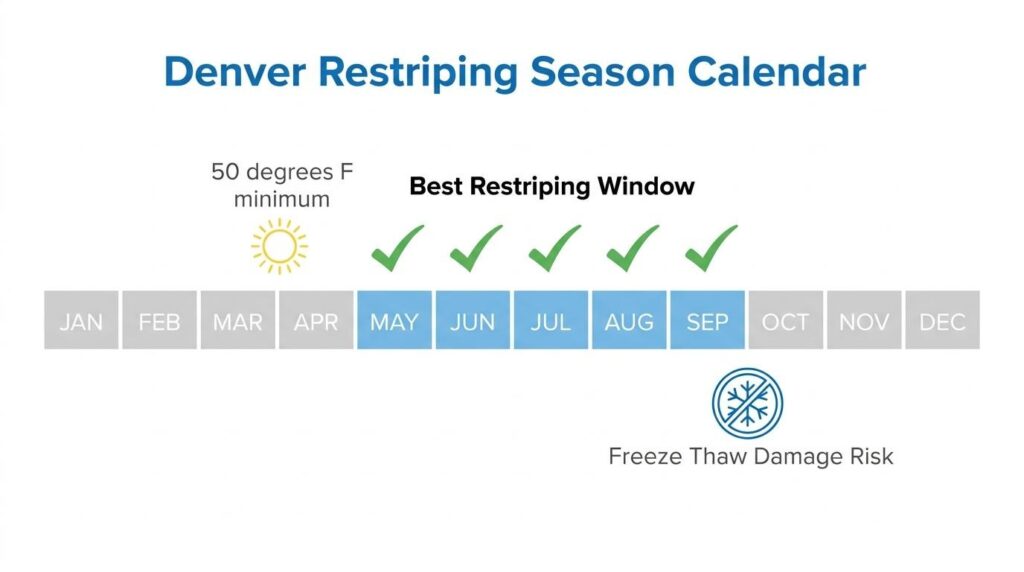
The best season to restripe a parking lot in Denver is late spring through early fall, typically May through September. Denver’s climate demands careful timing due to temperature and moisture constraints.
Striping paint requires dry pavement and ambient temperatures above 50°F for proper adhesion and curing. Denver’s freeze-thaw cycles, which allow moisture to penetrate asphalt and cause cracks and surface spalling, make winter and early spring unreliable for durable line work. According to Walk the Line Striping, properly applied thermoplastic pavement markings can last 4 to 7 years, whereas standard water-based traffic paint typically requires reapplication every 12 to 24 months.
Scheduling restriping during Denver’s warmest, driest months ensures markings bond correctly to the surface and cure without interference from overnight freezes or afternoon rain. For property managers planning post-repeal lot reconfigurations, this seasonal window also aligns well with broader repurposing projects that benefit from stable weather conditions.
With seasonal timing established, understanding how repurposed parking affects property value helps justify the investment.
How Does Repurposing Excess Parking Affect Property Value in Denver?
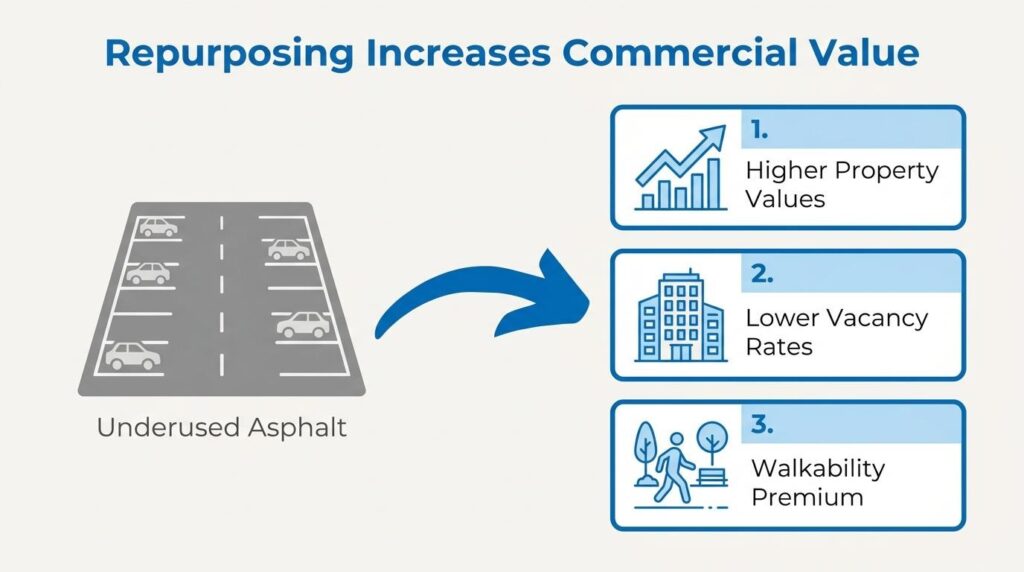
Repurposing excess parking positively affects property value in Denver by increasing walkability, reducing vacancy rates, and attracting higher investment returns to commercial real estate.
When underutilized asphalt gives way to outdoor gathering areas, green infrastructure, or pedestrian-friendly amenities, the surrounding area becomes more walkable. According to a report by the National Association of City Transportation Officials, walkability is strongly associated with higher housing values in nearly all U.S. metropolitan areas, with walkable retail often earning a “walkability premium” in commercial real estate investments. Properties in highly walkable areas can also earn higher investment returns and experience lower vacancy rates compared to auto-oriented properties.
For Denver property owners sitting on half-empty lots, this creates a compelling financial case. Converting surplus stalls into amenities that draw foot traffic does more than improve aesthetics; it repositions the property within a higher-value market category. The savings from maintaining less pavement, combined with the revenue potential of activated space, make repurposing one of the most practical value-add strategies available after the parking-minimum repeal.
Understanding these value dynamics helps property managers plan lot updates alongside a qualified commercial paving partner.
How Should Denver Property Managers Plan Parking Lot Updates With a Commercial Paving Partner?
Denver property managers should plan parking lot updates with a commercial paving partner by assessing current utilization, identifying repurposing goals, and coordinating zoning compliance before construction begins. The sections below cover how Asphalt Coatings Company supports these projects and the key takeaways from this guide.
Can Asphalt Coatings Company Help With Restriping and Lot Repurposing?
Yes, Asphalt Coatings Company can help with restriping and lot repurposing. With 39 years of commercial paving experience across Colorado’s Front Range, Asphalt Coatings Company provides parking lot striping, ADA-compliant concrete work, and full parking lot construction and maintenance using in-house crews.
Asphalt Coatings Company serves property managers, shopping center managers, apartment complexes, and office parks throughout the Colorado Front Range, including Denver, Aurora, Colorado Springs, Fort Collins, Boulder, and surrounding communities. Colorado House Bill 24-1304, effective June 30, 2025, requires municipalities to stop enforcing minimum vehicle parking requirements for qualifying projects near transit, according to Denver Community Planning and Development. This regulatory shift makes experienced paving partners essential for navigating layout redesigns, code-compliant restriping, and green infrastructure conversions. Asphalt Coatings Company designs solutions specifically for Colorado’s freeze-thaw cycles and environmental challenges, ensuring repurposed lots maintain durability season after season.
What Are the Key Takeaways About Repurposing and Restriping Excess Parking After Denver’s Parking-Minimum Repeal?
The key takeaways about repurposing and restriping excess parking after Denver’s parking-minimum repeal center on acting strategically while the regulatory window is open. Cities that have already eliminated parking minimums demonstrate rapid adoption; according to a study published in the Journal of the American Planning Association, 47% of major developments in Buffalo, New York, included fewer parking spaces than previously permissible within two years of repealing minimums in 2017.
The most important lessons from this guide include:
- Denver’s citywide elimination of parking minimums allows property managers to right-size lots without zoning barriers.
- Repurposing excess stalls into outdoor gathering areas, green infrastructure, or loading zones adds functional value and supports walkability, which is strongly associated with higher property values in commercial real estate.
- Restriping requires careful attention to ADA ratios, fire lane access, and updated traffic flow patterns.
- Colorado’s freeze-thaw cycles demand durable materials and proper seasonal timing for any paving or striping project.
- Permit requirements vary by scope; restriping is often bundled into tenant finish or site development permits rather than standalone approvals.
Property managers who pair data-driven lot assessments with a qualified commercial paving partner position their properties for long-term value in Denver’s evolving landscape.