Commercial asphalt paving cost in Colorado Springs ranges from $4 to $10 per square foot, with final pricing shaped by project size, local site conditions, material selection, and seasonal timing.
This guide covers per-square-foot pricing by project scale, Colorado Springs-specific cost factors, project scope and material options, pavement thickness requirements, seasonal pricing dynamics, site preparation and bid-line add-ons, and budgeting strategies for local commercial properties.
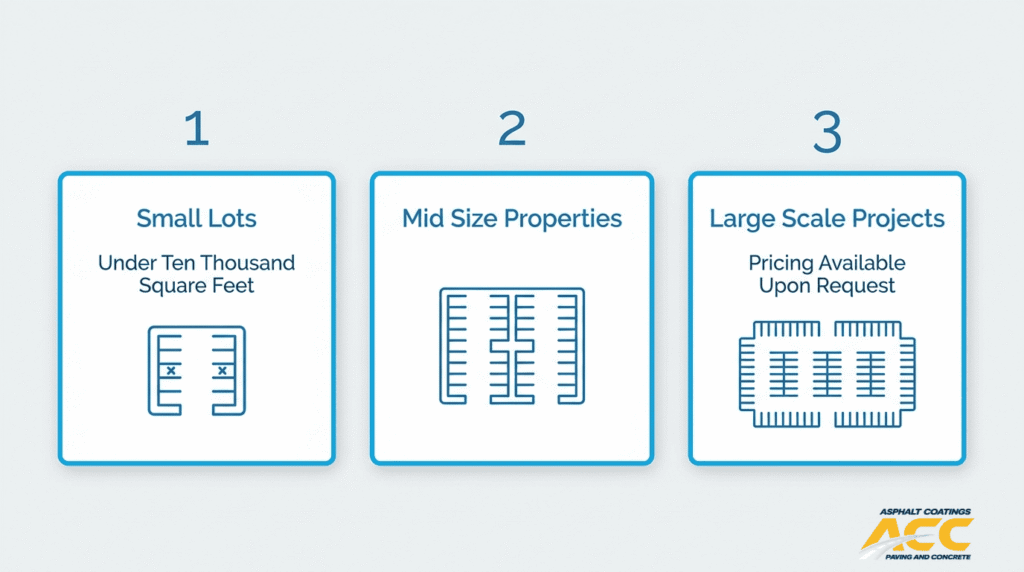
Per-square-foot rates shift significantly based on lot size. Small lots under 10,000 square feet sit at the higher end of the range due to mobilization costs, while large-scale projects exceeding 50,000 square feet benefit from volume efficiencies that push rates closer to $4 per square foot.
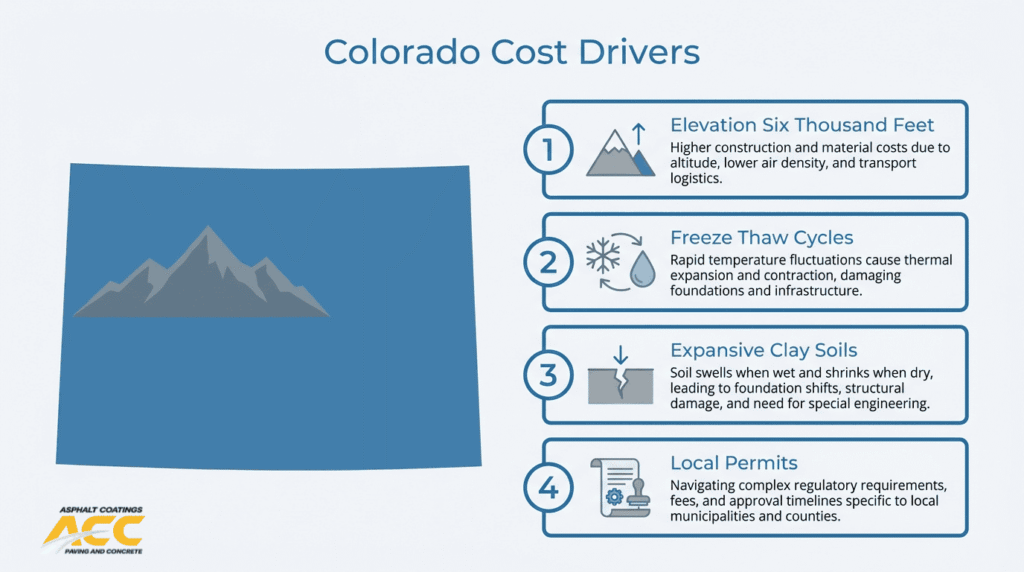
Colorado Springs elevation, freeze-thaw cycling, and expansive clay soils along the Front Range create cost pressures that national averages miss entirely. Thicker base layers, performance-graded binders, and proper subgrade stabilization are standard requirements here, not optional upgrades.
Choosing between full-depth installation, overlays, and mill-and-pave rehabilitation changes both upfront cost and long-term pavement life. Hot-mix, warm-mix, and recycled asphalt each carry distinct price points and performance trade-offs that should match the expected traffic load.
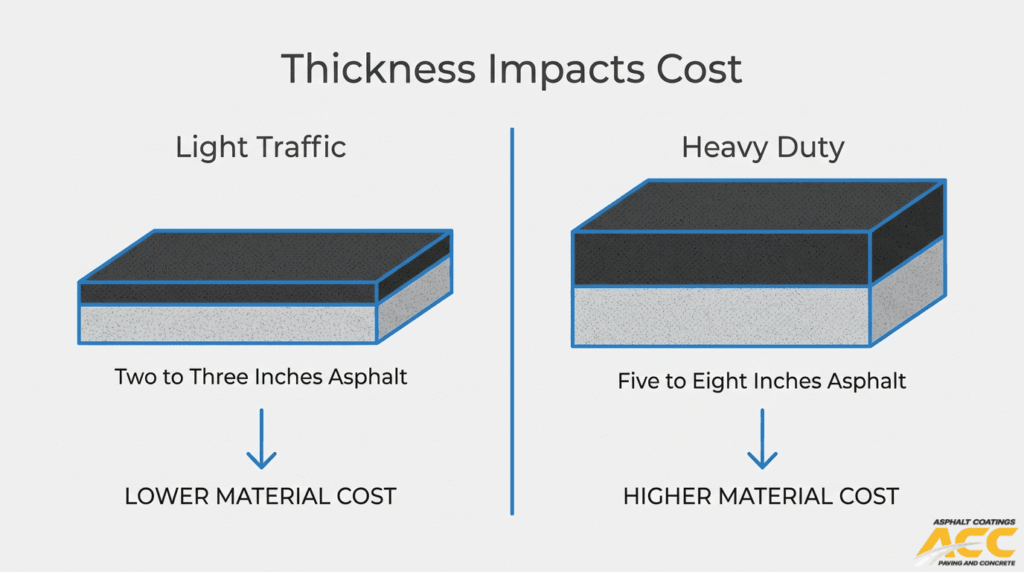
Pavement thickness for light-traffic lots starts at 2 to 3 inches of asphalt, while heavy-duty industrial applications require 5 to 8 inches or more. That depth difference can more than double the per-square-foot cost.
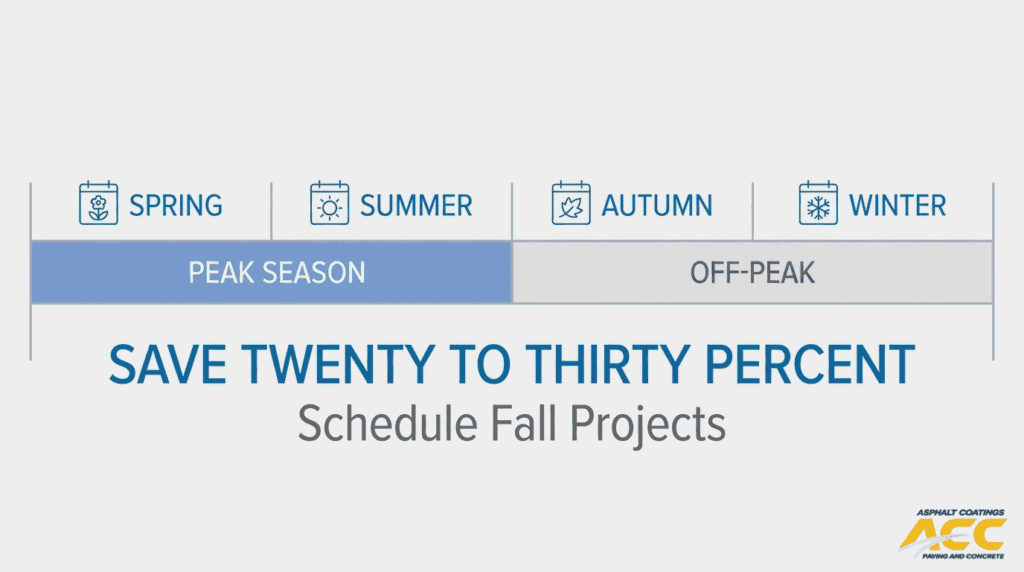
Scheduling during off-peak fall months can reduce costs by 20 to 30 percent compared to peak spring demand. Site preparation (demolition, base work, drainage) and finish items like striping, ADA concrete, and sealcoating add meaningful line items that belong in every realistic commercial paving budget.
What Is the Average Cost Per Square Foot for Commercial Paving?
The average cost per square foot for commercial paving ranges from $4 to $10, depending on project features and product selection. Small lots, mid-size properties, and large-scale projects each carry distinct pricing dynamics.
What Does a Small Commercial Parking Lot Cost to Pave?
A small commercial parking lot costs toward the higher end of the $4 to $10 per square foot range. Projects under 10,000 square feet lack the economies of scale that reduce per-unit pricing, so mobilization, equipment setup, and material minimums represent a larger share of the total bid.
Despite the higher upfront rate, choosing the right pavement design pays off over decades. CDOT’s Life-Cycle Cost Analysis framework uses a 40-year analysis period to compare the long-term economic viability of different pavement strategies. For a small lot owner in Colorado Springs, investing in proper base preparation and adequate thickness now avoids costly reconstruction later. Small projects benefit most from planning that accounts for the full ownership timeline rather than just installation price.
What Does a Mid-Size Commercial Parking Lot Cost to Pave?
A mid-size commercial parking lot costs approximately $5 to $8 per square foot in Colorado Springs. Projects between 10,000 and 50,000 square feet hit a pricing sweet spot where mobilization costs spread across enough area to lower the per-square-foot rate, while the project remains manageable without heavy infrastructure coordination.
At this scale, site-specific variables start carrying more weight. Subgrade conditions, drainage requirements, and pavement thickness adjustments for expected traffic loads all influence where a project falls within that range. Most retail centers, office parks, and apartment complexes in the Colorado Springs market fall into this mid-size category, making accurate site evaluation essential before comparing bids.
What Does a Large-Scale Commercial Lot or Road Cost to Pave?
A large-scale commercial lot or road costs $4 to $7 per square foot in most Colorado Springs scenarios. Volume purchasing, continuous equipment operation, and efficient crew deployment drive per-square-foot rates down significantly on projects exceeding 50,000 square feet.
However, large projects carry additional regulatory costs. According to El Paso County Public Works, a Road Impact Fee of $421.46 per trip applies to new developments in unincorporated areas, with general commercial uses assessed at $5,498 per 1,000 square feet. These fees can add meaningful cost beyond the paving itself. The long-term upside is favorable: well-maintained asphalt pavement never requires full structural replacement and can last indefinitely, keeping life-cycle costs low across the property’s lifespan.
Understanding per-square-foot pricing by project size sets the baseline, but local conditions in Colorado Springs shift those numbers considerably.
What Local Pricing Factors Affect Commercial Paving Costs?
Local pricing factors that affect commercial paving costs in Colorado Springs include elevation and climate demands, freeze-thaw cycle damage, subgrade soil conditions, site accessibility challenges, and local permitting requirements. Each factor directly influences material specifications, labor hours, and overall project budgets.
How Do Colorado Springs Elevation and Climate Impact Cost?
Colorado Springs elevation and climate impact cost by requiring specialized materials and tighter installation windows. At roughly 6,035 feet, the city’s intense UV exposure accelerates asphalt oxidation, often necessitating higher-grade binder formulations that carry a premium. Thinner air also affects compaction equipment performance, sometimes requiring additional roller passes to achieve target density.
Temperature swings compound these challenges. CDOT specifications require hot mix asphalt placement only when surface and air temperatures equal or exceed 60°F, according to the Colorado Department of Transportation’s 2023 construction specifications. This narrows the viable paving season considerably at altitude, concentrating contractor demand into fewer months and pushing labor rates upward. For most commercial property managers in Colorado Springs, factoring in altitude-driven material upgrades early prevents costly mid-project change orders.
How Do Freeze-Thaw Cycles Increase Material Requirements?
Freeze-thaw cycles increase material requirements by forcing contractors to specify thicker base layers, more durable binder grades, and enhanced drainage systems. Colorado Springs experiences over 100 freeze-thaw transitions annually, and each cycle drives moisture into pavement cracks where it expands upon freezing. This repeated stress fractures inadequately designed surfaces within just a few seasons.
To counteract this, commercial pavements here typically need:
- Performance-graded binders rated for extreme temperature swings.
- Thicker aggregate base courses to distribute frost heave forces.
- Proper subsurface drainage to prevent water retention beneath the asphalt mat.
Each of these additions increases upfront material and labor costs compared to projects in milder climates. Investing in freeze-thaw-resistant design, however, significantly reduces long-term maintenance expenses.
How Does Subgrade Soil Condition Along the Front Range Affect Price?
Subgrade soil condition along the Front Range affects price by dictating how much stabilization work the site requires before paving begins. According to the Colorado Geological Survey, expansive clay soils in Colorado can expand up to 20% by volume when wet, exerting pressures up to 30,000 pounds per square foot on pavement structures. This geological reality makes subgrade preparation one of the most variable cost factors in commercial paving.
Sites with high clay content often require:
- Soil removal and replacement with engineered fill.
- Lime or cement stabilization treatments.
- Thicker aggregate base sections to buffer pavement from soil movement.
Skipping proper subgrade evaluation is one of the most common mistakes in commercial paving. A geotechnical report before bidding eliminates costly surprises during construction.
How Does Site Accessibility and Grading Change the Estimate?
Site accessibility and grading change the estimate by adding labor hours, equipment mobilization costs, and earthwork volumes that vary dramatically between projects. Tight urban lots in downtown Colorado Springs may require smaller equipment, flagging crews, and phased construction to maintain tenant access, all of which increase per-square-foot pricing.
Grading complexity also plays a significant role. ADA guidelines require specific slope ratios, such as a maximum 1:12 running slope for ramps, according to the Access Board. Achieving compliant grades on sloped Colorado terrain often demands more cut-and-fill work than comparable projects on flat ground. Sites requiring extensive earthwork before a single ton of asphalt arrives can see preparation costs rival the paving itself.
How Do Local Permitting and Code Compliance Add to Cost?
Local permitting and code compliance add to cost through application fees, plan review timelines, and mandated design standards specific to El Paso County and the Pikes Peak region. In unincorporated El Paso County, a Road Impact Fee for general commercial uses is assessed at $5,498 per 1,000 square feet, according to El Paso County Public Works.
Additional cost factors from local compliance include:
- Building permit fees through the Pikes Peak Regional Building Department.
- Stormwater management plan requirements.
- Fire lane width and access specifications.
- Required inspections at multiple construction stages.
These regulatory costs are non-negotiable and should appear as dedicated line items in every commercial paving bid. Experienced contractors familiar with Colorado Springs jurisdictional requirements help streamline approvals and avoid project delays.
With local pricing variables accounted for, the scope of work itself further shapes the final per-square-foot price.
How Does Project Scope Change the Price Per Square Foot?
Project scope changes the price per square foot based on whether the work involves new construction, an overlay, or milling and repaving. Each approach requires different material volumes, labor intensity, and preparation steps.
What Does New Full-Depth Asphalt Installation Cost?
New full-depth asphalt installation costs the most per square foot because it requires building the entire pavement structure from scratch. The process includes subgrade preparation, aggregate base compaction, and multiple lifts of hot-mix asphalt. For commercial projects in Colorado Springs, full-depth installations typically fall in the higher range of commercial pricing, often between $4 and $10 per square foot depending on thickness, site conditions, and accessibility.
The higher cost reflects the labor and materials needed to establish a stable foundation. However, full-depth construction also delivers the longest service life when properly designed for the expected traffic load. For property managers planning a new parking lot or access road, this approach eliminates uncertainty about the condition of underlying layers.
What Does an Asphalt Overlay Cost Compared to Full Replacement?
An asphalt overlay costs significantly less than full replacement because it adds a new surface layer over the existing pavement rather than removing and rebuilding the entire structure. Overlays typically reduce material and labor requirements by 40–60% compared to full-depth work, making them a practical option when the existing base remains structurally sound.
Not every lot qualifies for an overlay. Extensive cracking, base failure, or drainage problems usually require full replacement instead. According to TruTec, warm-mix asphalt typically costs between $100 and $155 per ton and allows paving at lower temperatures of 150°F to 250°F, which can extend the overlay season in Colorado Springs by a few critical weeks. For most commercial properties with moderate surface deterioration, overlays represent the best balance of cost savings and pavement performance.
What Does Milling and Repaving an Existing Lot Cost?
Milling and repaving an existing lot costs more than a simple overlay but less than full-depth replacement. Milling removes a specified depth of damaged asphalt using rotary cutting equipment, creating a clean bonding surface for the new layer. This middle-ground approach addresses surface failures while preserving the intact base structure below.
The milling process adds equipment and disposal costs that a standard overlay avoids. Despite the added step, milling produces a better result on lots with rutting, shoving, or uneven surfaces because it restores proper grade and drainage slope before new material is placed. For commercial properties dealing with localized pavement distress rather than structural failure, milling and repaving often delivers the most cost-effective rehabilitation.
Understanding how scope affects pricing helps clarify which material choices further influence the final bid.
How Do Asphalt Material Choices Influence the Final Price?
Asphalt material choices influence the final price through differences in production temperature, raw material sourcing, and performance characteristics. The three most common options for commercial projects are hot-mix asphalt, warm-mix asphalt, and recycled asphalt.
What Does Hot-Mix Asphalt Cost for Commercial Projects?
Hot-mix asphalt costs between $110 and $155 per ton at the plant gate in Colorado as of April 2026, according to Asphapro. HMA is the industry standard for commercial paving because it provides the highest density and durability when compacted at temperatures above 300°F. Delivery distance, mix design specifications, and polymer-modified binder upgrades all push the per-ton price toward the higher end. For most commercial parking lots and access roads in Colorado Springs, HMA remains the most reliable choice because its proven track record under freeze-thaw cycling reduces long-term maintenance costs.
What Does Warm-Mix Asphalt Cost for Commercial Projects?
Warm-mix asphalt costs between $100 and $155 per ton, placing it in a similar range to HMA. WMA achieves workable consistency at 150°F to 250°F, well below hot-mix production temperatures. That lower heat requirement reduces fuel consumption at the plant and extends the usable paving window into cooler shoulder months. In Colorado Springs, where CDOT temperature minimums can shorten the traditional season, warm-mix technology offers a practical advantage. The trade-off is that WMA may not achieve the same peak compaction density as HMA in heavy-traffic applications, so mix design selection should match the expected load profile.
What Does Recycled Asphalt Cost for Commercial Projects?
Recycled asphalt costs significantly less than virgin mixes, typically ranging from $7 to $15 per ton for reclaimed asphalt pavement (RAP) millings when purchased in bulk. RAP works well for temporary staging areas, low-traffic access roads, and base layers beneath a fresh HMA surface course. However, recycled material alone rarely meets the structural or binding specifications required for high-traffic commercial lots. Most contractors blend RAP at 15% to 30% into new hot-mix designs, which lowers material costs without sacrificing performance. For projects where budget is the primary constraint, a RAP base with an HMA wearing course balances cost savings against long-term durability.
Understanding material costs sets the stage for the next major price driver: pavement thickness requirements.
How Does Pavement Thickness Affect Commercial Paving Cost?
Pavement thickness affects commercial paving cost by directly increasing material volume and labor per square foot. Thicker sections require more asphalt tonnage, heavier compaction equipment, and often a more robust aggregate base. Light-traffic and heavy-traffic lots differ significantly in required depth.
What Thickness Do Light-Traffic Commercial Lots Require?
Light-traffic commercial lots require 2 to 3 inches of asphalt over a compacted aggregate base, typically 6 to 8 inches thick. These thinner pavement sections suit properties with primarily passenger vehicle traffic, such as office parks, medical centers, and retail storefronts.
Because less material is placed per square foot, thinner sections keep costs closer to the lower end of commercial pricing ranges. However, skimping on thickness to save money upfront is one of the most common budgeting mistakes in commercial paving. Even a half-inch reduction below the engineered specification can dramatically shorten pavement life in Colorado Springs, where freeze-thaw cycling punishes under-built surfaces relentlessly.
What Thickness Do Heavy-Traffic or Industrial Lots Require?
Heavy-traffic or industrial lots require substantially greater pavement depth to handle repeated high axle loads. According to Asphalt Contractors Inc., recommended asphalt thickness for heavy-duty industrial zones or semi-truck lanes ranges from 5 to 8 inches or more to support high axle loads.
Facilities that demand these thicker sections include:
- Commercial distribution warehouses with daily semi-truck traffic.
- Shopping center service roads handling delivery vehicles.
- Industrial complexes with heavy equipment movement.
- Fire lanes engineered for emergency vehicle weight ratings.
The aggregate base beneath heavy-duty asphalt also increases, often reaching 10 to 12 inches of compacted material. This combined depth can more than double the per-square-foot cost compared to light-traffic specifications. For properties expecting mixed traffic patterns, investing in the correct engineered thickness protects against premature cracking and costly full-depth repairs.
With thickness requirements established, seasonal timing offers another lever for managing project costs.
How Does the Time of Year Affect Paving Prices Here?
The time of year affects paving prices in Colorado Springs primarily through demand cycles and weather constraints. Peak season drives costs up, while off-peak and shoulder months offer potential savings.
What Are Paving Costs During Peak Season in Colorado Springs?
Paving costs during peak season in Colorado Springs are at their highest point of the year. Spring and early summer represent the busiest window, as property managers rush to schedule projects once temperatures consistently meet CDOT’s minimum placement thresholds. Contractor schedules fill quickly, reducing scheduling flexibility and eliminating competitive pricing leverage.
According to Legacy Paving, asphalt paving costs can be 20–30% lower during fall compared to the peak spring season when demand is highest. That spread means a $100,000 parking lot project could carry $20,000–$30,000 in seasonal premium simply due to timing. For commercial property managers planning non-urgent work, avoiding this window is one of the easiest ways to reduce total project cost.
What Are Paving Costs During Off-Peak or Shoulder Months?
Paving costs during off-peak or shoulder months are typically the lowest of the year in Colorado Springs. Late summer through mid-fall represents the sweet spot: temperatures still meet minimum placement requirements, but the spring rush has subsided and contractor availability opens up.
During these months, paving companies are more willing to negotiate on pricing and accommodate flexible scheduling. Shoulder-season projects also benefit from more predictable weather patterns compared to spring’s unpredictable storms. The key constraint is timing the project before overnight temperatures drop too low for proper asphalt compaction, which generally limits the window to September and October along the Front Range.
Understanding seasonal pricing helps property managers plan strategically for site preparation decisions.
What Site Preparation Costs Should You Expect Before Paving?
Site preparation costs before paving typically include demolition, base work, and drainage. These expenses can add significantly to a commercial paving budget depending on existing conditions. The sections below break down each major line item.
What Does Demolition and Removal of Old Pavement Cost?
Demolition and removal of old pavement costs between $1 and $3 per square foot for most commercial projects in Colorado Springs. The final price depends on pavement thickness, material type, and disposal requirements. Concrete removal runs higher than asphalt because it requires heavier equipment and produces more waste by weight.
Factors that influence demolition costs include:
- Existing pavement thickness, where thicker sections demand more sawcutting and breakout labor.
- Presence of rebar or wire mesh in concrete, which slows removal and increases disposal fees.
- Haul distance to the nearest recycling facility or landfill.
- Site access constraints that limit equipment size or require additional traffic control.
Recycling old asphalt through milling can offset some removal costs, since reclaimed asphalt pavement has reuse value as aggregate. For properties with layered overlays built up over decades, removal budgets should account for multiple lifts of material.
What Does Base and Subbase Preparation Cost?
Base and subbase preparation costs range from $1.50 to $4 per square foot depending on soil conditions and required depth. This line item covers grading, compaction, and aggregate placement that form the structural foundation beneath the asphalt surface.
Colorado Springs sits on highly variable subgrade soils. According to the Colorado Geological Survey, expansive clay soils in Colorado can expand up to 20% by volume when wet, exerting pressures up to 30,000 pounds per square foot on pavement structures. Sites with these conditions require deeper aggregate bases, geotextile fabric, or lime stabilization, all of which increase preparation costs substantially.
Proper compaction testing and subgrade evaluation before paving protects against premature failure. Skipping thorough base preparation is one of the most costly mistakes in commercial paving, because surface repairs cannot fix a compromised foundation underneath.
What Does Drainage Installation or Grading Cost?
Drainage installation or grading costs typically add $2 to $5 per square foot to a commercial paving project, varying with site complexity and stormwater requirements. Proper drainage prevents water from pooling on asphalt surfaces, which accelerates deterioration through freeze-thaw cycling at Colorado Springs’ elevation.
Common drainage components and their cost drivers include:
- Surface grading to achieve minimum slope requirements for sheet flow.
- Storm drain inlets and catch basins, which require excavation and pipe connections.
- French drains or subsurface channels for sites with high water tables.
- Detention or retention features mandated by local stormwater permits.
Sites with significant elevation changes or poor natural drainage often need more extensive earthwork, pushing grading costs toward the higher end. Investing in correct drainage design during site preparation prevents expensive water damage repairs within the first few years of a pavement’s service life.
With site preparation costs accounted for, additional line items further shape a commercial paving bid.
What Additional Line Items Increase a Commercial Paving Bid?
Additional line items that increase a commercial paving bid include striping, ADA-compliant concrete work, and sealcoating. Each adds cost but serves a distinct functional or regulatory purpose.
What Does Striping and Pavement Marking Add to the Project?
Striping and pavement marking add $0.20 to $0.75 per linear foot to a commercial paving project, depending on paint type, layout complexity, and lot size. Fire lanes, directional arrows, handicap symbols, and stall delineation each require separate material and labor passes.
Thermoplastic markings cost more upfront than latex paint but last significantly longer under Colorado Springs’ intense UV exposure and snowplow abrasion. For most commercial lots, thermoplastic pays for itself within two to three repainting cycles. A 200-stall parking lot can easily add $3,000 to $8,000 in striping costs to the overall bid.
Asphalt Coatings Company handles parking lot striping and marking with in-house paving crews alongside paving work, eliminating coordination delays and providing property managers with a single point of contact from grading through final markings.
What Does ADA-Compliant Concrete Work Add to the Project?
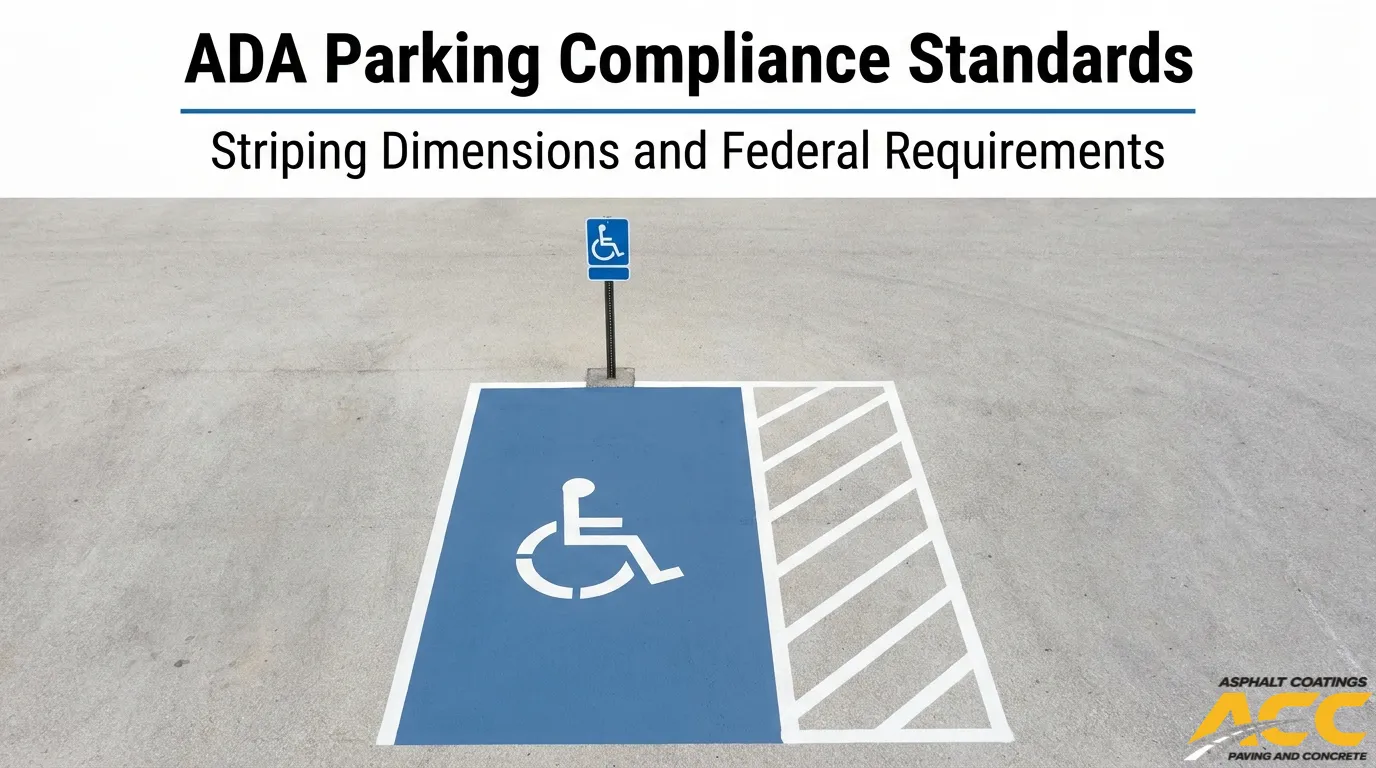
ADA-compliant concrete work adds $1,500 to $10,000 or more per project, depending on the number of ramps, curb cuts, and accessible pathways required. According to the Access Board, ADA guidelines require specific slope ratios, such as a maximum 1:12 running slope for ramps, to ensure accessible transitions between parking areas and sidewalks.
Detectable warning surfaces, proper landing dimensions, and compliant signage each carry separate material and installation costs. Non-compliance risks costly retrofits and legal liability, so building these items into the original bid is far more economical than addressing them after the fact.
What Does Sealcoating After Installation Add to the Project?
Sealcoating after installation adds $0.15 to $0.30 per square foot to a commercial paving bid. This protective layer shields fresh asphalt from UV degradation, water infiltration, and chemical spills from vehicle fluids.
Most contractors recommend applying the first sealcoat 90 days after paving, once the asphalt has fully cured. For a 50,000-square-foot commercial lot, that translates to roughly $7,500 to $15,000 as a standalone line item. Bundling sealcoating into the initial paving contract often reduces mobilization costs. Skipping this step is one of the most common budgeting mistakes in commercial paving, since early sealcoating can extend pavement life by several years.
With these line items accounted for, the next step is knowing how to evaluate competing bids side by side.
How Can You Compare Commercial Paving Bids Accurately?
You can compare commercial paving bids accurately by breaking each proposal into standardized categories and evaluating scope, materials, and site preparation on equal terms. The following criteria ensure an apples-to-apples comparison.
Key elements to evaluate across every bid include:
- Scope of work detail. Each bid should itemize demolition, grading, base preparation, asphalt installation, striping, and ADA concrete work as separate line items rather than a single lump sum.
- Material specifications. Confirm the asphalt mix type (hot-mix, warm-mix, or recycled), tonnage estimates, and specified compacted thickness so you can verify consistency between contractors.
- Subgrade and drainage provisions. Bids that skip soil stabilization or drainage grading may appear cheaper upfront but create costly failures within a few years, especially on Colorado’s expansive clay soils.
- Permit and compliance costs. Verify whether the bid includes Pikes Peak Regional Building Department permit fees, ADA-compliant slope work, and any applicable El Paso County impact fees, or if those are excluded as owner responsibilities.
- Warranty terms. Compare the duration, coverage limits, and exclusions for both materials and workmanship across proposals.
- Project timeline and mobilization. A bid promising a significantly shorter timeline may cut corners on cure times or compaction passes; look for realistic scheduling that accounts for CDOT temperature requirements.
The lowest bid rarely represents the best value for commercial paving. Contractors who underspecify thickness, omit base preparation, or exclude permit costs can appear 20-30% cheaper on paper while delivering a pavement that fails years ahead of schedule. Evaluating total installed cost alongside lifecycle durability gives property managers a clearer picture of long-term return.
With bid evaluation criteria established, the next step is setting a realistic project budget.
How Should You Budget for Commercial Paving in Colorado Springs?
You should budget for commercial paving in Colorado Springs by combining per-square-foot cost estimates with allowances for site prep, materials, permits, and seasonal timing. The sections below cover how Asphalt Coatings Company can help and the key takeaways to guide your planning.
Can Asphalt Coatings Company Help With Your Commercial Project?
Yes, Asphalt Coatings Company can help with your commercial project. Since 1986, Asphalt Coatings Company has served Colorado’s Front Range with in-house crews specializing in asphalt paving, mill and pave services, sealcoating, striping, crack sealing, subgrade preparation, and ADA-compliant concrete work.. Asphalt Coatings Company operates a Colorado Springs office at 4740 Forge Rd STE 110B, giving local property managers and facility owners direct access to experienced estimators who understand Front Range soil conditions, elevation challenges, and municipal permitting. Rather than subcontracting, Asphalt Coatings Company manages every phase from grading through final striping, keeping timelines predictable and budgets transparent. For most commercial property owners, this single-source approach eliminates the coordination headaches that inflate costs on multi-vendor projects.
What Are the Key Takeaways About Commercial Paving Costs?
The key takeaways about commercial paving costs center on five budget-shaping factors:
- Per-square-foot pricing varies widely. Small lots, material choices, and pavement thickness all shift costs, so flat-rate estimates rarely tell the full story.
- Colorado-specific conditions add cost. Freeze-thaw cycles, expansive clay soils, and elevation-driven UV exposure demand thicker bases and higher-grade mixes that generic national averages do not account for.
- Project scope determines value. Overlays, mill-and-pave, and full-depth installations each carry different price points and lifespans; matching scope to actual pavement condition avoids overspending.
- Seasonal timing creates savings. Scheduling during off-peak fall months can meaningfully reduce costs compared to peak spring demand.
- Site prep and add-ons matter. Demolition, drainage, striping, sealcoating, and ADA compliance are line items that belong in every realistic budget, not afterthoughts.
Getting multiple detailed bids, verifying scope alignment, and partnering with a contractor who understands Colorado Springs conditions remain the most reliable path to an accurate, defensible budget.