The best months to schedule commercial paving in Colorado Springs are May through September, when sustained warm temperatures and stable ground conditions meet the strict thresholds required for proper asphalt compaction and curing.
This guide covers Colorado Springs’ unique climate challenges, ideal temperature requirements for asphalt installation, the specific monthly paving windows, monsoon season scheduling, risks of off-season paving, advance booking strategy, and non-weather factors that shape your project timeline.
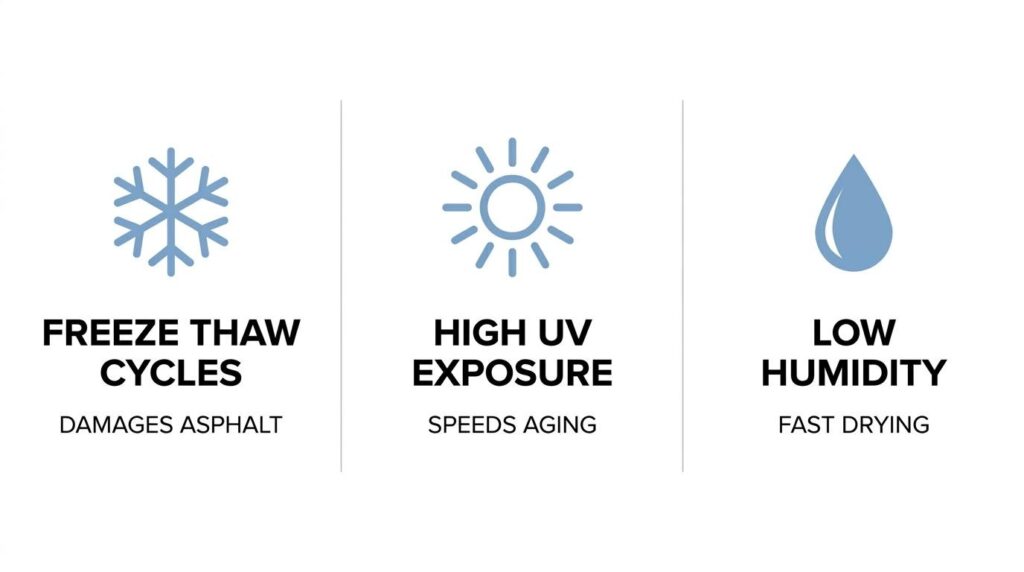
Colorado Springs sits at 6,035 feet elevation, where freeze-thaw cycles, intense UV radiation, and low afternoon humidity (36–38% in spring) combine to create a narrower installation window than most Front Range cities. These conditions accelerate asphalt aging and demand precise timing to protect fresh pavement during curing.
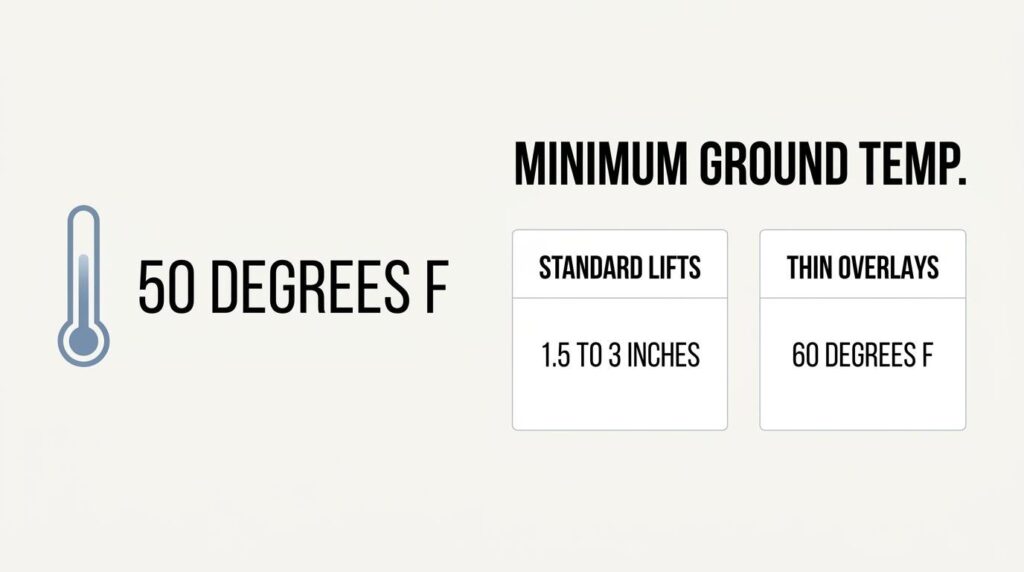
Successful commercial asphalt compaction requires ground surface temperatures of at least 50°F for standard lifts and 60°F for thin overlays. Even a 1% increase in air voids from poor compaction can reduce pavement life by 10%, making temperature compliance the single most important quality control factor.
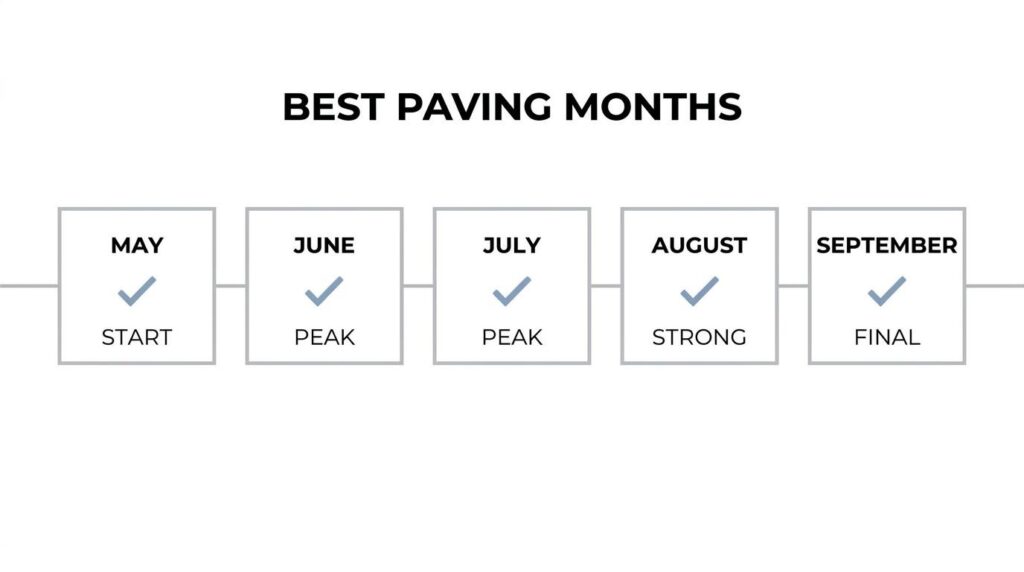
May offers the earliest reliable start as freeze risk subsides, while June and July deliver peak conditions with the highest sustained temperatures and longest daylight hours. August remains strong despite afternoon monsoon storms, and September closes the window before the mean first freeze date of October 2nd.
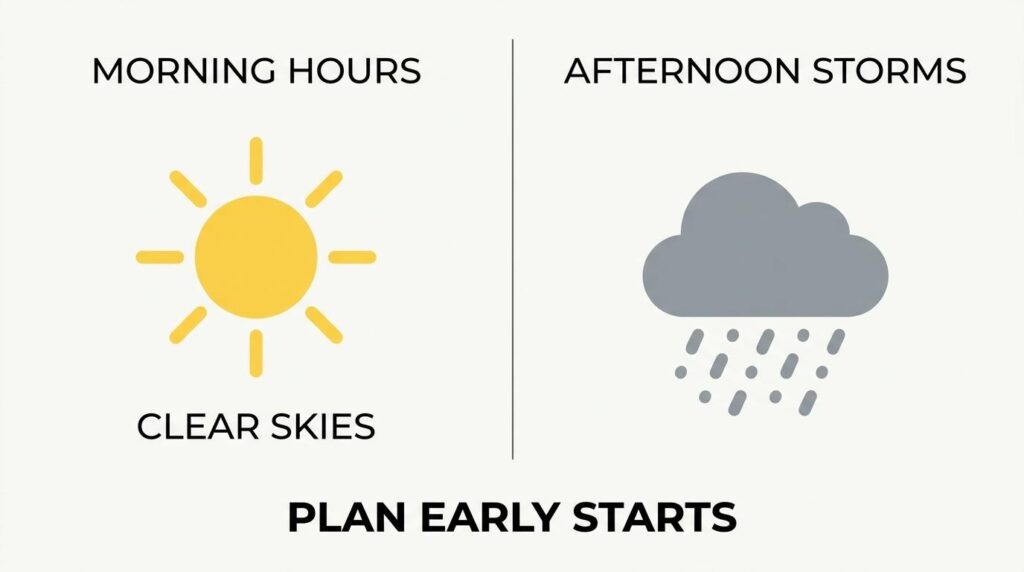
Near-daily afternoon thunderstorms from mid-July through early September force crews to shift operations to early morning starts, compressing productive hours but still allowing quality installations when schedules are managed properly.
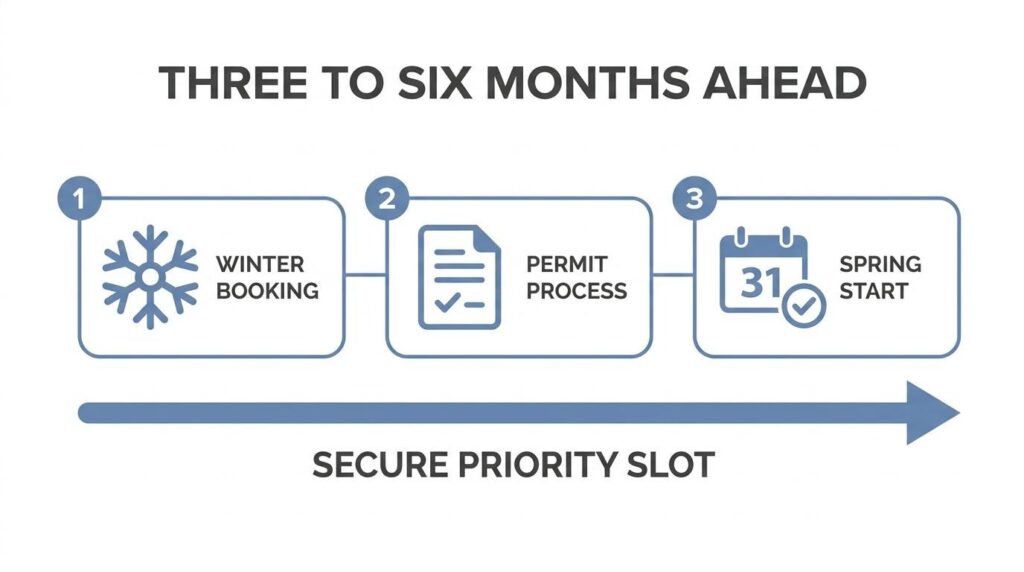
Booking three to six months ahead, ideally during winter, secures priority positioning before peak-season demand fills contractor schedules. Municipal permits, tenant traffic phasing, and seasonal material supply cycles all require advance coordination alongside weather planning to keep commercial projects on track.
Why Does Colorado Springs’ Climate Affect Commercial Paving Schedules?
Colorado Springs’ climate affects commercial paving schedules because freeze-thaw cycles, intense UV radiation, and low humidity create narrow windows for proper asphalt installation. The subsections below cover how each factor shapes timing decisions.
How Do Freeze-Thaw Cycles Impact Asphalt Installation Timing?
Freeze-thaw cycles impact asphalt installation timing by threatening freshly placed pavement with internal cracking before it fully cures. A freeze-thaw cycle occurs when temperatures fluctuate above 32°F, drop below freezing, then rise again, causing water inside pavement cracks to expand and contract repeatedly. In Colorado Springs, these swings happen frequently during spring and fall shoulder seasons, making those months unpredictable for new installations.
According to Elite Surface Infrastructure, “extreme freeze-thaw cycles, heavy snowfall, and high-altitude UV exposure” in Colorado directly affect asphalt longevity and demand regional expertise. Scheduling paving during sustained warm periods avoids subjecting fresh asphalt to this destructive cycle before the binder has fully hardened.
How Does High-Altitude UV Exposure Influence Paving Performance?
High-altitude UV exposure influences paving performance by accelerating oxidation and surface degradation of asphalt binder. Colorado Springs sits at approximately 6,035 feet above sea level, where thinner atmosphere filters less ultraviolet radiation. This intensified UV causes fresh asphalt surfaces to develop contraction wrinkles and lose flexibility faster than at lower elevations.
For scheduling purposes, this means timing and material selection go hand in hand. Paving during optimal months allows contractors to apply UV-resistant sealcoats shortly after installation, while temperatures still support proper adhesion. Ignoring UV exposure during project planning often shortens pavement life significantly, particularly on south-facing commercial lots.
What Role Does Colorado Springs’ Low Humidity Play in Curing?
Colorado Springs’ low humidity plays a critical role in curing by accelerating moisture evaporation from freshly placed asphalt. Climate data from CityRating.com shows afternoon relative humidity in Colorado Springs drops to 36–38% during spring months, well below national averages. This dry air speeds the volatilization of lighter asphalt compounds during the curing process.
While faster surface drying can be beneficial, excessively rapid moisture loss risks uneven curing and surface cracking if installation timing is poorly managed. Contractors must balance this low humidity against wind conditions and temperature to ensure the binder sets uniformly throughout the full pavement depth.
Understanding these three climate factors helps property managers select the right paving window, which the following sections define by specific months and temperature thresholds.
What Are the Ideal Temperature Ranges for Commercial Asphalt Paving?
The ideal temperature ranges for commercial asphalt paving depend on both ground surface conditions and ambient air temperature. The following subsections cover minimum ground temperature for compaction, minimum air temperature requirements, and why hot mix asphalt demands warmer conditions.
What Is the Minimum Ground Temperature for Asphalt Compaction?
The minimum ground temperature for asphalt compaction is 50°F for standard commercial lifts between 1.5 and 3 inches thick. Thinner overlays below 1.5 inches require a surface temperature of at least 60°F, according to CDOT specifications. The Pikes Peak Region Asphalt Paving Specifications reinforce this threshold, adding that surfaces must be free of standing water, frozen subgrade, and snow or ice.
Ground temperature matters because it directly affects how quickly the hot mix cools after placement. Compaction of HMA requires mix temperatures in the range of 125 to 145°C to maintain binder fluidity and allow aggregate particles to settle into a dense configuration. Intermediate rolling should be completed before the mix drops to 175°F.
The consequences of inadequate compaction are severe. Even a 1% increase in air voids can lead to a 10% reduction in pavement life through premature fatigue cracking or rutting. For Colorado Springs commercial properties, verifying ground temperature before each pour is not optional; it is the single most cost-effective quality control step a contractor can take.
What Is the Minimum Ambient Air Temperature for Paving?
The minimum ambient air temperature for paving is 50°F for lifts between 1.5 and 3 inches, and 60°F for lifts under 1.5 inches. These thresholds apply to both air and surface readings at the time of placement.
Cold ambient air accelerates heat loss from the asphalt mat, narrowing the compaction window. Wind compounds this effect by stripping heat from the surface even faster. When air temperatures hover near the minimum, crews must work quickly and may need to adjust roller patterns to achieve target density before the mix stiffens. In Colorado Springs, where morning temperatures in shoulder months can sit well below these thresholds, scheduling paving operations for midday often provides the safest margin.
Why Do Hot Mix Asphalt Projects Require Warmer Conditions?
Hot mix asphalt projects require warmer conditions because HMA relies on elevated temperatures to keep the asphalt binder fluid enough for proper compaction and bonding. The binder reaches its equiviscous compaction temperature at a kinematic viscosity of 280 ±30 mm²/s; below that viscosity range, aggregate particles resist repositioning and the mix cannot achieve target density.
Cold temperatures, excessive wind, or moisture on the base can prevent proper compaction and bonding, as C.A.S.E Construction Co. notes, leading to premature pavement distress. Commercial projects in Colorado Springs often disturb one or more acres, triggering El Paso County’s Construction Activity Permit requirement with its six-month validity window. This makes scheduling within warm-weather months not just a quality concern but a permitting and logistical necessity.
Understanding these temperature thresholds helps property managers align project timelines with Colorado Springs’ monsoon patterns and seasonal weather shifts.
Which Months Offer the Best Paving Conditions in Colorado Springs?
The best paving conditions in Colorado Springs fall between May and September. Each month within this window offers distinct advantages for commercial asphalt installation.
Why Is May an Optimal Month to Begin Commercial Paving?
May is an optimal month to begin commercial paving because rising daytime temperatures consistently meet CDOT’s minimum air temperature thresholds while freeze risk has largely subsided. Ground surfaces have had weeks to thaw and dry after spring snowmelt, giving subgrades the stability hot mix asphalt demands. Scheduling a May start also positions projects ahead of peak-season contractor demand, which means greater crew availability and more flexible timelines. For property managers planning large-scale parking lot work, this early window often translates to better pricing and uninterrupted phasing before summer tenant traffic intensifies.
Why Are June and July Considered Peak Paving Season?
June and July are considered peak paving season because Colorado Springs experiences its highest sustained temperatures and longest daylight hours during these months. According to the Pikes Peak Region Asphalt Paving Specifications, asphalt must be placed on surfaces free of standing water, frozen subgrade, and snow or ice, with a recommended minimum surface temperature of 50°F for course thicknesses between 1.5 and 3 inches. June and July far exceed these minimums, allowing hot mix asphalt to maintain workability longer during placement and compaction. Extended daylight also permits larger daily production volumes, which keeps multi-phase commercial projects on schedule.
Why Is August Still a Strong Month for Asphalt Installation?
August is still a strong month for asphalt installation because ambient temperatures remain well above paving minimums despite the onset of monsoon-pattern afternoon thunderstorms. Experienced crews work around these storms by starting pours early in the morning when skies are typically clear. Warm overnight temperatures also help freshly placed asphalt cure more evenly, reducing the risk of thermal cracking. For commercial projects that missed the June or July window, August provides a reliable alternative with enough warm days remaining to complete full installations before fall cooling begins.
Why Does September Mark the Final Reliable Paving Window?
September marks the final reliable paving window because daytime highs still support proper compaction, yet overnight temperatures begin approaching freezing by month’s end. The mean date of the first freeze in Colorado Springs is October 2nd, according to the National Weather Service, leaving a narrow margin after September for adequate curing. Projects started in September must be scoped carefully so that final lifts and compaction are completed before cold nights compromise binder adhesion. For most commercial properties, September represents the last practical opportunity to schedule quality asphalt work before winter.
With the best months identified, understanding which months to avoid helps protect your paving investment further.
Which Months Should You Avoid for Commercial Paving Projects?
The months you should avoid for commercial paving projects in Colorado Springs are November through February, with March and early April also presenting significant scheduling risks. Each period carries distinct challenges.
Why Is Paving Risky From November Through February?
Paving is risky from November through February because Colorado Springs experiences sustained freezing temperatures, frozen subgrade conditions, and frequent snow cover that prevent proper asphalt compaction and bonding. According to the National Weather Service, the mean date of the first freeze in Colorado Springs is October 2nd, meaning ground temperatures regularly drop well below the minimums required by CDOT specifications throughout winter.
Frozen subgrade cannot support proper compaction, and hot mix asphalt loses heat too rapidly in cold ambient air. The risks include:
- Premature cracking from inadequate compaction against frozen base layers.
- Poor binder adhesion when moisture from snow or ice contacts the hot mix.
- Scheduling shutdowns from unpredictable winter storms.
For most commercial property managers, attempting winter paving creates more long-term repair costs than the project saves in urgency.
Why Are March and Early April Unreliable for Scheduling?
March and early April are unreliable for scheduling because Colorado Springs’ transition season produces volatile temperature swings, residual ground frost, and inconsistent surface conditions. Climate normals show that average monthly high temperatures reach only 61.0°F in April, while afternoon relative humidity drops to 36–38% during March and April. These conditions create a narrow, unstable window where mornings may still fall below the 50°F surface temperature threshold required by Pikes Peak Region specifications.
Additional complications during this period include:
- Late-season snowstorms that halt site preparation without warning.
- Saturated subgrade from snowmelt that prevents proper base compaction.
- Rapid daily temperature drops at 6,035 feet elevation that shorten the workable paving window.
Booking a project for this period often leads to repeated delays, making May a far more reliable start date for commercial work in Colorado Springs.
Understanding which months to avoid helps clarify why proactive scheduling around monsoon season matters just as much.
How Does Colorado Springs’ Monsoon Season Affect Summer Paving?
Colorado Springs’ monsoon season affects summer paving by introducing near-daily afternoon thunderstorms that force schedule adjustments during peak installation months. The subsections below cover typical disruption timing and how contractors adapt daily operations.
When Does Afternoon Rain Typically Disrupt Paving Operations?
Afternoon rain typically disrupts paving operations from mid-July through early September, when the North American Monsoon brings thunderstorms that become an almost daily occurrence in late summer, according to the Colorado Climate Center. These storms usually build between 1:00 p.m. and 4:00 p.m., creating a predictable but narrow window of interruption.
Standing water on a freshly prepared subgrade or partially compacted surface compromises bonding and density. Because the monsoon pattern is concentrated in the afternoon, morning hours remain the most productive and reliable window for placement and compaction during this stretch of the season. Most commercial paving activity in Colorado Springs falls within the April-to-mid-October booking window, so monsoon disruptions overlap directly with peak demand months.
How Do Contractors Adjust Daily Schedules Around Storm Patterns?
Contractors adjust daily schedules around storm patterns by shifting operations to early-morning start times, often beginning at sunrise. Crews prioritize completing material placement and initial compaction before afternoon moisture arrives.
Key schedule adjustments include:
- Starting paving operations between 5:30 a.m. and 6:00 a.m. to maximize dry hours.
- Staging materials and equipment the evening before to eliminate morning setup delays.
- Breaking larger pours into smaller sections that can be fully compacted before storms build.
- Monitoring real-time radar to decide whether a second pour is feasible after midday.
This front-loaded scheduling approach is one reason experienced Colorado Springs contractors consistently deliver quality results even during monsoon months. Understanding seasonal storm behavior directly shapes how far ahead you should plan your project timeline.
What Happens If You Pave Outside the Recommended Months?
Paving outside the recommended months in Colorado Springs risks structural failures that shorten pavement life and increase repair costs. Cold temperatures and moisture are the two primary causes.
How Does Cold-Weather Paving Reduce Asphalt Longevity?
Cold-weather paving reduces asphalt longevity by causing the hot mix to cool too rapidly for proper compaction. When asphalt loses heat before rollers achieve target density, excess air voids become trapped in the mat. These voids allow water infiltration, which accelerates cracking through freeze-thaw cycling. At Colorado Springs’ 6,035-foot elevation, temperature drops are sharper and more sudden than at lower altitudes, narrowing the compaction window even further. Local material suppliers like Martin Marietta’s Hwy 85/87 plant produce hot mix designed for regional conditions, but even properly formulated mixes cannot compensate for inadequate ground and air temperatures during placement. For most commercial projects, the cost of premature failure far exceeds the savings from off-season scheduling.
How Does Moisture During Installation Lead to Premature Failure?
Moisture during installation leads to premature failure by preventing the asphalt binder from bonding to the aggregate base. Water trapped between layers creates a weak interface that separates under traffic loads. According to C.A.S.E Construction Co., “Cold temperatures, excessive wind, or moisture on the base can prevent proper compaction and bonding,” leading to premature pavement distress. Standing water on the subgrade also softens the foundation, causing uneven settling and rutting in high-traffic commercial areas like parking lots and loading zones. This is why experienced contractors in Colorado Springs prioritize dry base conditions over simply meeting a minimum temperature threshold.
Understanding these risks reinforces why scheduling within the recommended paving window matters most.
How Far in Advance Should You Schedule Commercial Paving?
You should schedule commercial paving three to six months before your target start date. Booking during winter and understanding peak-season demand both determine whether your project launches on time.
Why Does Booking in Winter Help Secure a Spring Start Date?
Booking in winter helps secure a spring start date because contractors finalize their seasonal queues before demand surges. Colorado Springs has a narrow reliable paving window; according to the National Weather Service, the mean date of the first freeze is October 2nd, while the latest recorded last freeze occurred as late as July 2nd, 1997. That variability makes early spring scheduling unpredictable unless your project is already under contract.
By signing during December or January, property managers lock in priority positioning before crews mobilize. Permit applications, site surveys, and material coordination can proceed through late winter so installation begins as soon as temperatures consistently meet CDOT minimums. Waiting until March often means competing with every other commercial property owner who delayed the same decision.
How Does Contractor Demand Affect Lead Times in Peak Season?
Contractor demand extends lead times significantly during peak season, often pushing new project starts back by several weeks. From May through September, most commercial paving crews in Colorado Springs operate at full capacity. Properties that request bids during this window frequently face scheduling gaps because equipment, crews, and plant production are already committed.
For property managers planning large-scale parking lot construction or mill-and-pave projects, this bottleneck can delay completion past the reliable fall window.Proactive scheduling, ideally initiated in winter, gives contractors the runway to coordinate materials, crews, and phasing around your operational needs rather than fitting your project into whatever opening remains.
With scheduling secured, other factors like permits and tenant traffic also shape the final project timeline.
What Factors Beyond Weather Influence Your Paving Timeline?
Factors beyond weather that influence your paving timeline include municipal permit processing, tenant and customer traffic patterns, and seasonal material supply availability. Each of these can shift your project start date or phasing strategy significantly.
How Do Municipal Permit Timelines Affect Project Scheduling?
Municipal permit timelines affect project scheduling by adding weeks or months before any physical work can begin. El Paso County Public Health requires a Construction Activity Permit for projects disturbing one or more acres of land, with each permit valid for a maximum of six months. This six-month window means permit approval must align with your target paving months; a permit secured too early in winter could expire before ideal conditions arrive in late spring. Colorado Springs also requires right-of-way and grading permits for projects affecting public infrastructure. Filing early, ideally during winter planning months, prevents permit delays from consuming your best paving weather.
How Does Tenant and Customer Traffic Impact Phasing Decisions?
Tenant and customer traffic impacts phasing decisions by dictating when and how sections of a commercial property can be closed for paving. Retail centers, medical offices, and apartment complexes cannot shut down entire parking areas simultaneously without revenue loss or safety concerns. Contractors typically phase commercial paving into sections, maintaining partial access throughout installation. High-traffic periods, such as holiday retail seasons or lease turnover months, often force projects into off-peak business windows. For properties like shopping centers or healthcare facilities, coordinating phasing with tenant schedules is just as critical as selecting the right temperature window.
How Do Material Supply Lead Times Shift Seasonally?
Material supply lead times shift seasonally because asphalt plants operate on production cycles tied to regional demand. Local plants in the Colorado Springs area, such as Martin Marietta’s Hwy 85/87 facility, ramp up production during peak season from May through September, when contractor demand is highest. During this window, material availability is generally strong, but popular mix designs may require advance ordering. In shoulder months like April and October, some plants reduce output or adjust batch schedules, which can extend delivery timelines by days or weeks. Locking in material orders early helps prevent supply bottlenecks from delaying your project.
With non-weather factors accounted for, partnering with a local contractor streamlines the entire process.
How Should You Plan Commercial Paving With a Colorado Springs Contractor?
You should plan commercial paving with a Colorado Springs contractor by aligning your project timeline with local climate data, securing bids well in advance, and partnering with a contractor who understands regional conditions. The following sections cover how local expertise and key scheduling takeaways streamline that process.
Can Asphalt Coatings Company’s Local Expertise Optimize Your Project Timeline?
Yes, Asphalt Coatings Company’s local expertise can optimize your project timeline. Since 1986, Asphalt Coatings Company has served Colorado’s Front Range with in-house crews specializing in commercial asphalt paving, commercial sealcoating, and concrete flatwork. That decades-long presence in Colorado Springs means familiarity with local asphalt plants, permit workflows, and the narrow paving windows dictated by elevation and weather. According to DownToBid, the average lead time to bid for asphalt paving contractors in Colorado Springs is approximately 25 days. Asphalt Coatings Company accounts for this by coordinating material sourcing, subgrade preparation, and phased scheduling early in the planning process. For commercial property managers seeking dependable execution within Colorado Springs’ climate constraints, that regional knowledge eliminates costly guesswork.
What Are the Key Takeaways About Scheduling Commercial Paving in Colorado Springs’ Climate?
The key takeaways about scheduling commercial paving in Colorado Springs’ climate center on temperature windows, humidity, and proactive planning, alongside managing commercial paving costs:
- Colorado Springs’ average highs reach 61.0°F in April and peak at 86.5°F in July, placing the reliable paving season between May and September.
- Afternoon relative humidity drops to 36–38% during March and April, accelerating moisture loss from fresh asphalt and demanding careful curing management.
- Freeze-thaw cycles, monsoon-season thunderstorms, and high-altitude UV exposure all compress the effective installation window.
- Booking during winter secures a spring start date before peak-season contractor demand limits availability.
- Municipal permits, tenant traffic phasing, and seasonal material supply shifts should be factored into your timeline alongside weather.
For most commercial properties, the single highest-impact scheduling decision is starting the planning process months before the target pave date, not weeks. Matching your project to Colorado Springs’ climate realities is the foundation of pavement that performs for years.