
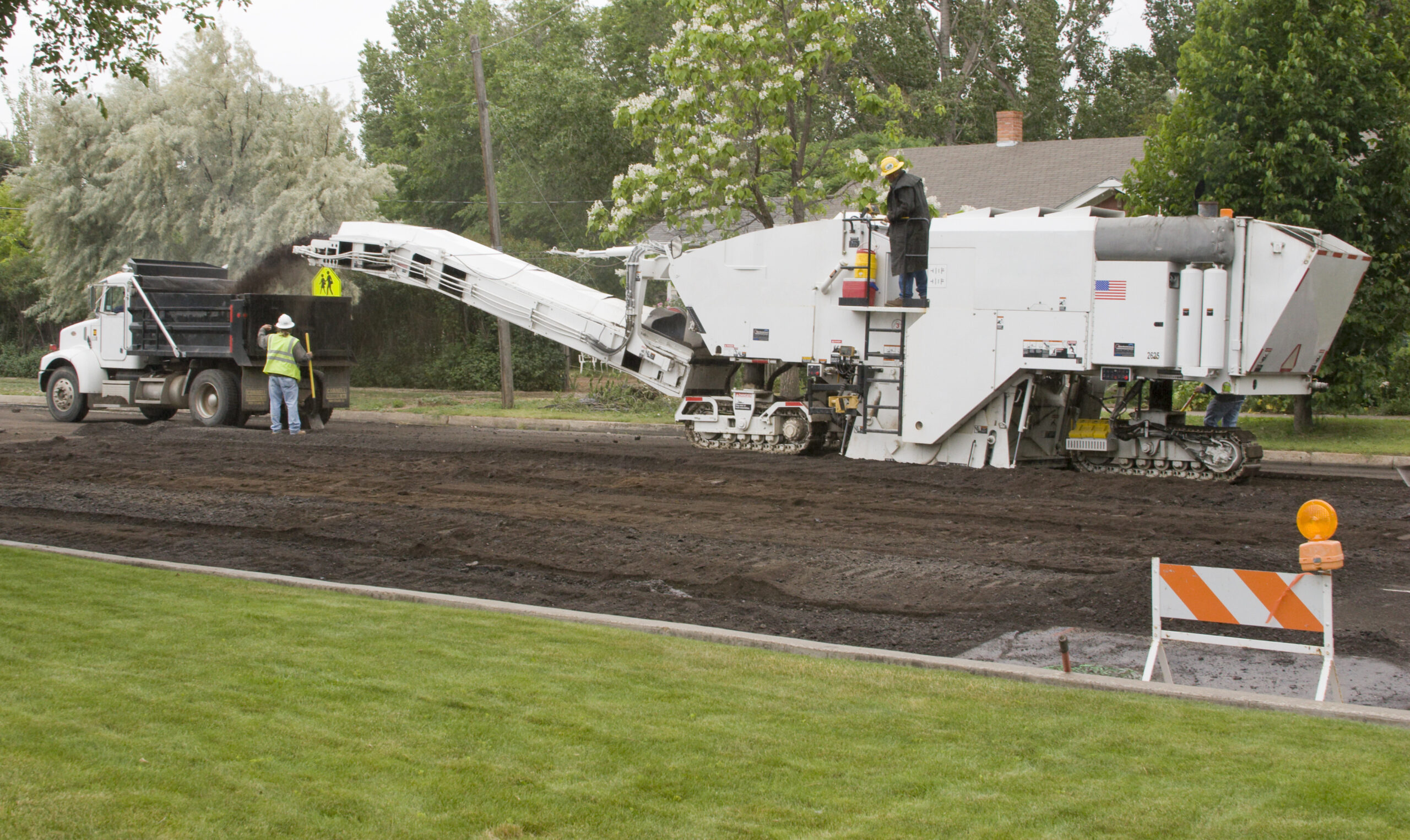
What Is Asphalt Milling and When Is It Needed?
April 9, 2025
Over time, asphalt surfaces degrade due to continuous vehicular load, environmental exposure, and oxidation. Surface distress, manifesting as alligator cracking, rutting, ravelling, and pothole formation, compromises both structural integrity and safety. When conventional patching fails to provide a sustainable solution, asphalt milling emerges as the most efficient method for surface rehabilitation. Asphalt milling, also known
Read
How Should You Handle Salt-Damaged Concrete Repair in Denver, CO?
July 29, 2026
Salt-damaged concrete repair in Denver is the process of restoring commercial concrete surfaces deteriorated by deicing chemicals and freeze-thaw cycling. Repair methods range from thin bonded overlays for minor scaling to full slab removal and replacement for structurally compromised sections. This guide covers how salt damage starts and progresses, repair methods and materials for every
Read
What Are the Top Concrete Issues in Denver and How Can Experts Fix Them?
July 29, 2026
Denver concrete faces a unique combination of threats: freeze-thaw cycling, expansive clay soils, intense UV exposure at altitude, and heavy deicer application that together accelerate deterioration far faster than in most U.S. cities. This guide covers climate-driven cracking and surface deterioration, drainage and grading failures, settlement and trip hazard risks, joint and sealant breakdown, appearance
Read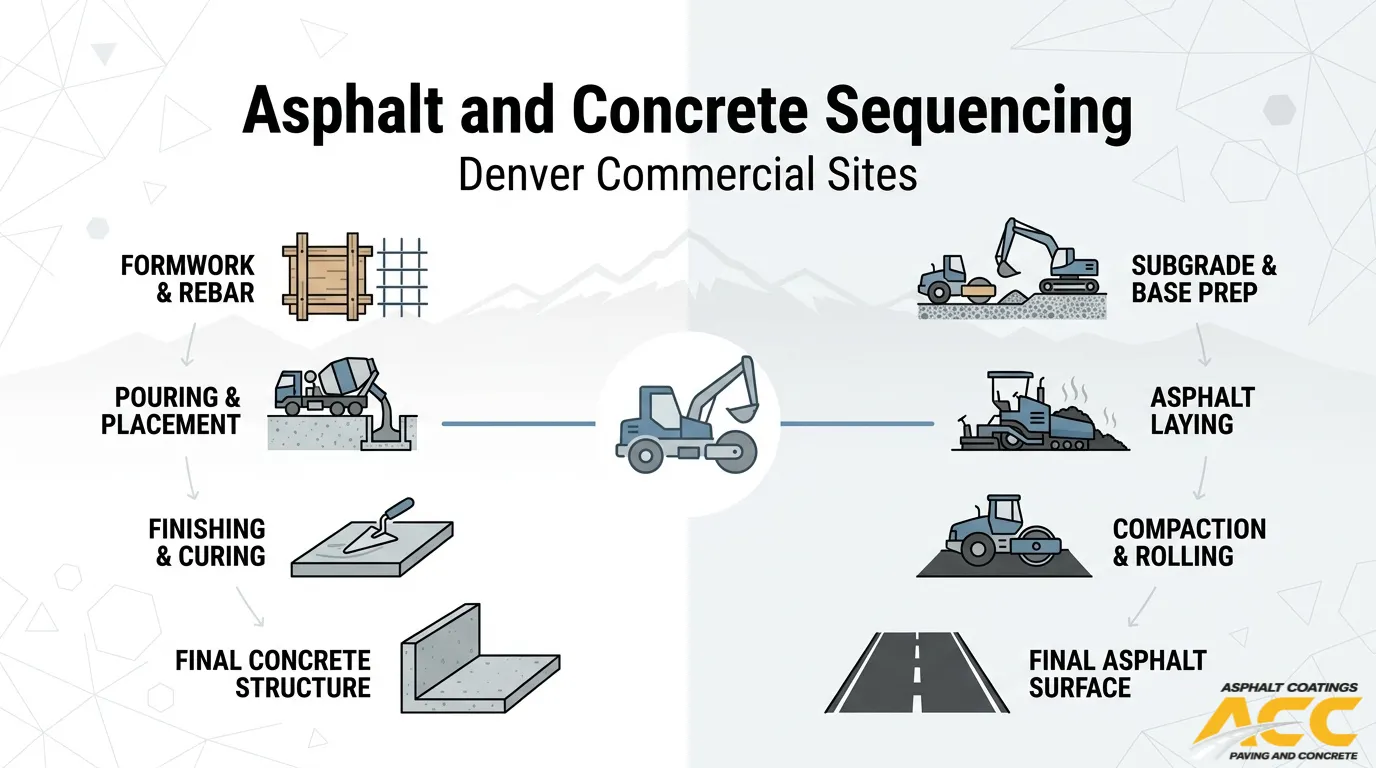
Denver Commercial Asphalt & Concrete Sequencing Guide
July 28, 2026
Sequencing asphalt and concrete work on a Denver commercial site with active tenants and ROW constraints is the process of ordering demolition, material placement, curing, and finishing activities so that each phase maintains safe tenant access, meets city permit requirements, and falls within viable temperature windows. Poor sequencing leads to rework, weather-driven cost premiums, and
Read