
Seasonal Maintenance Checklist for Concrete Sidewalks
September 7, 2025
Your property’s concrete sidewalks are one of its most visible and hardworking assets. Yet, they are often overlooked until a glaring crack, uneven joint, or winter damage creates an urgent hazard. In fact, a single trip hazard can quickly escalate into a serious liability; according to Bureau of Justice Statistics–based data as per Forbes, the
Read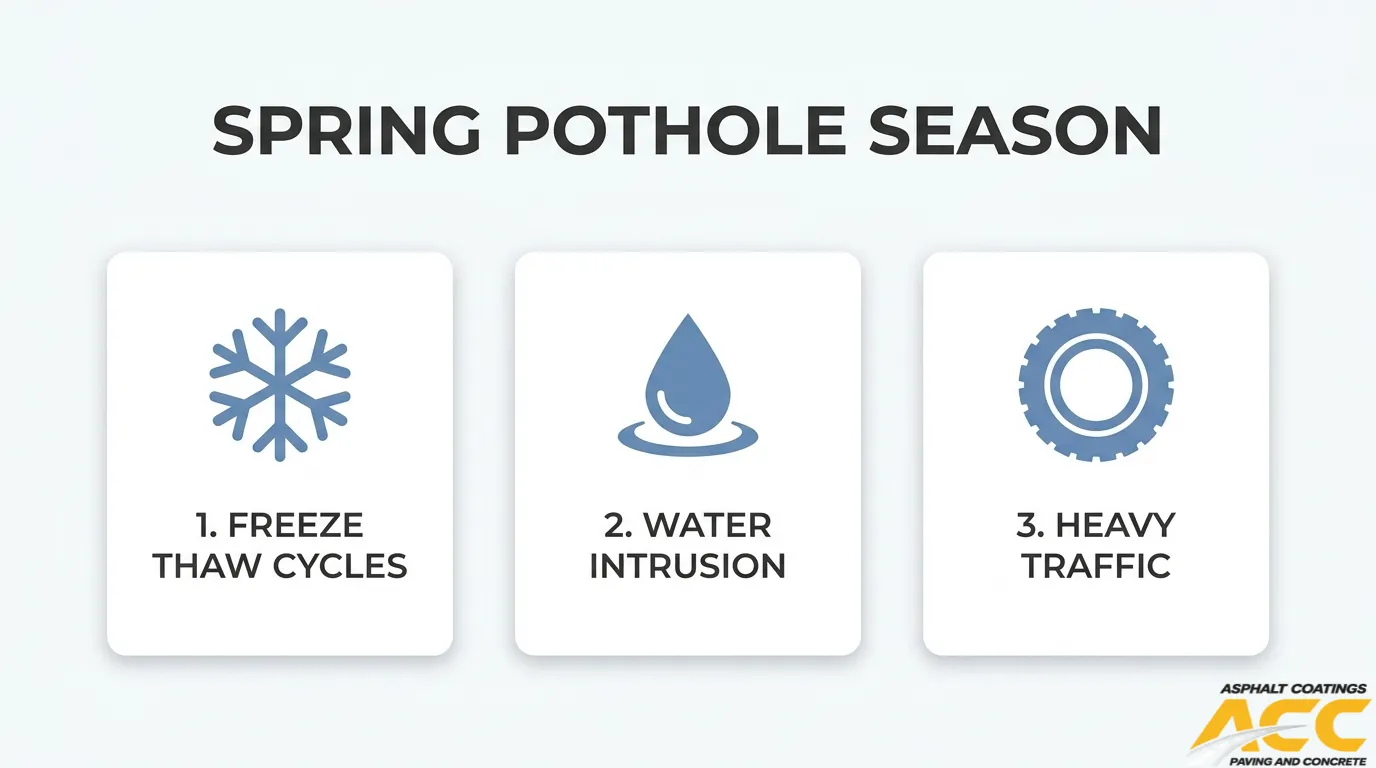
Why Does Denver’s Spring “Pothole Season” Wreck Commercial Pavement?
July 28, 2026
Denver’s spring pothole season is the period when freeze-thaw cycling, snowmelt infiltration, and heavy traffic converge to destroy commercial asphalt weakened by winter. Three elements drive every pothole: surface cracks, water, and repeated vehicle loads. This guide covers freeze-thaw mechanics and winter damage accumulation, spring failure patterns across different commercial property types, warning signs that
Read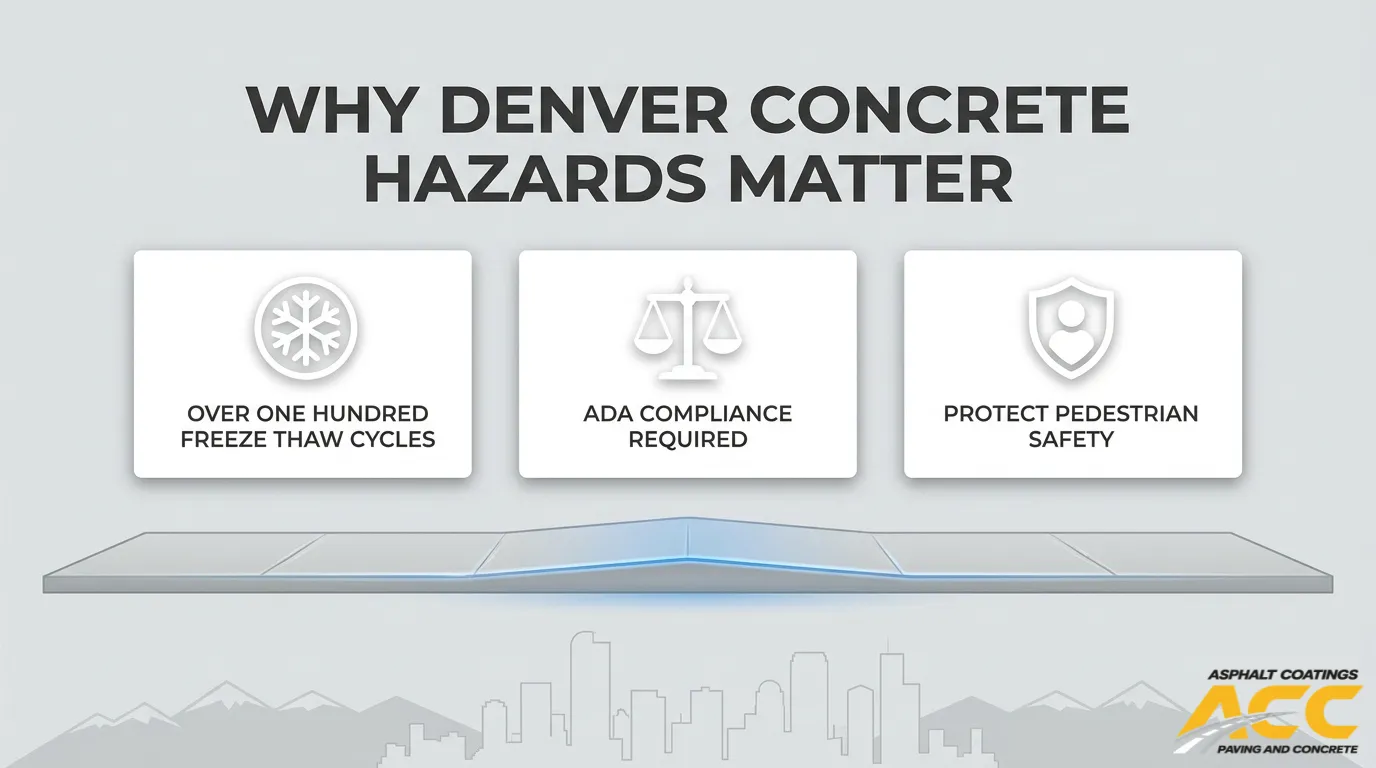
Why Is It So Important to Remove Concrete Trip Hazards in Denver?
July 28, 2026
A concrete trip hazard is any raised, sunken, cracked, or uneven concrete surface that creates a stumbling risk for pedestrians on commercial properties. Denver’s extreme climate accelerates this damage faster than most U.S. cities, making proactive removal essential for safety, compliance, and long-term property value. This guide covers hazard identification and climate-driven causes, pedestrian safety
Read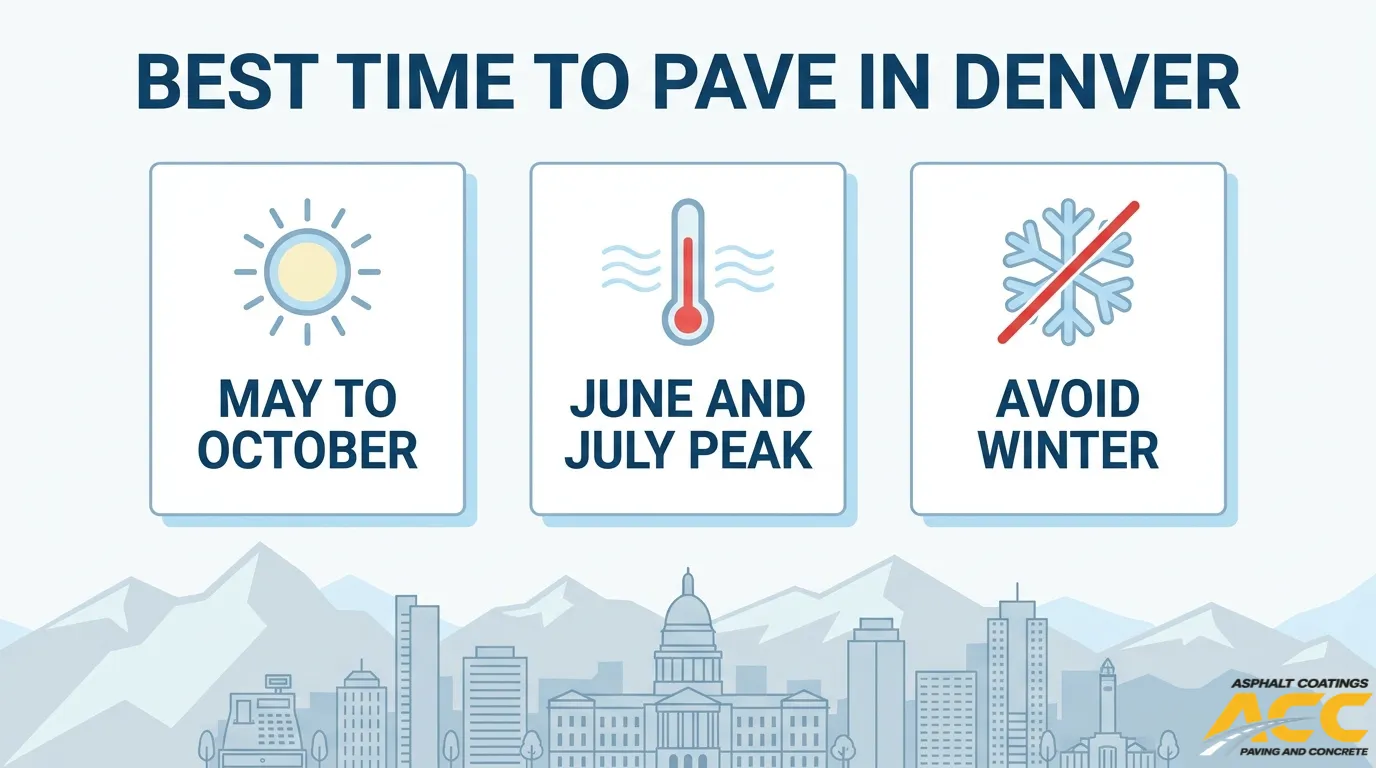
When Is the Best Time of Year to Pave Commercial Lots in the Denver Metro?
July 28, 2026
The best time of year to pave commercial lots in the Denver Metro is late spring through early fall, with June and July delivering peak conditions for compaction, curing, and long-term durability. Denver’s semi-arid climate at 5,280 feet elevation, more than 150 annual freeze-thaw cycles, and UV intensity 25% higher than sea level create a
Read