
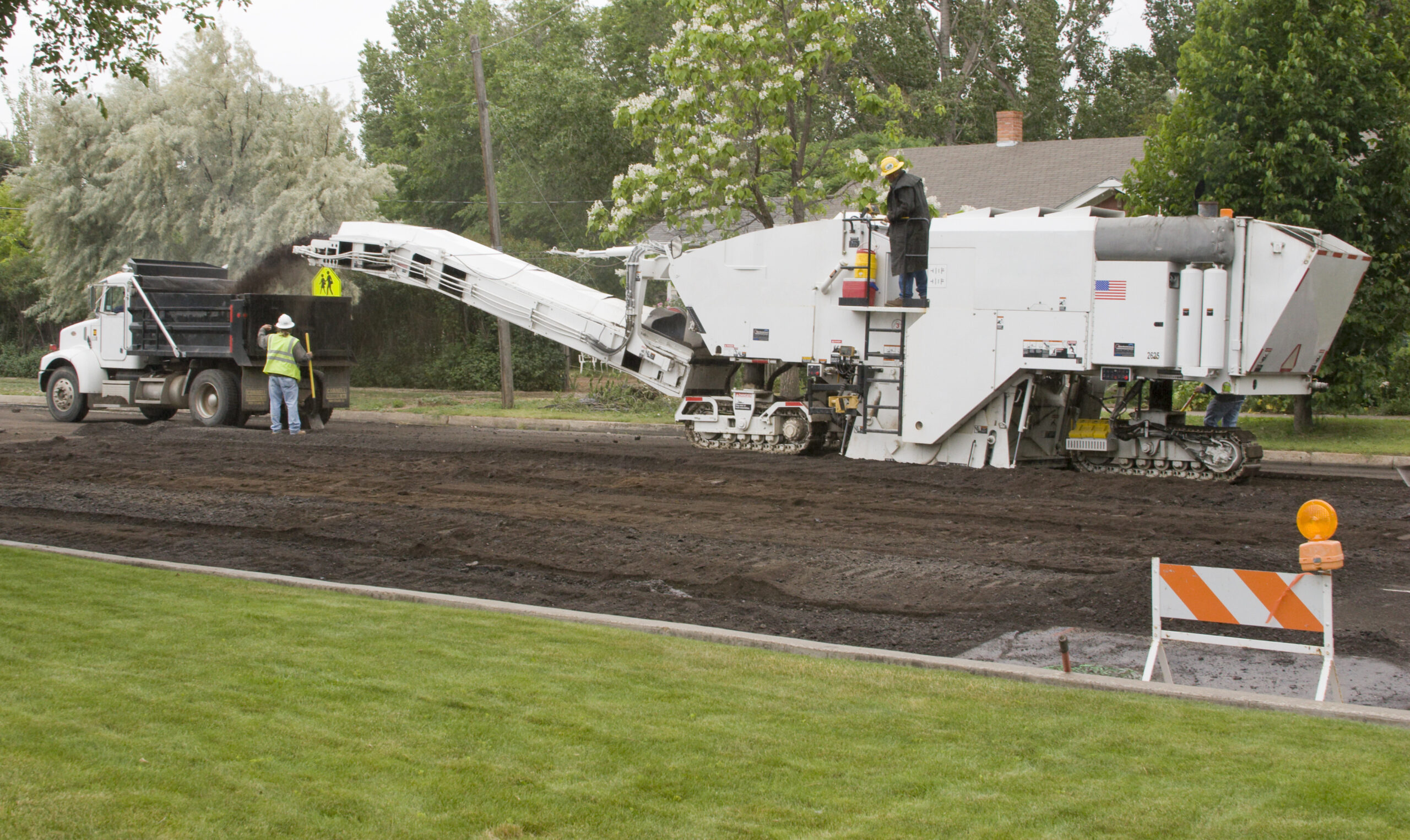
What Is Asphalt Milling and When Is It Needed?
April 9, 2025
Over time, asphalt surfaces degrade due to continuous vehicular load, environmental exposure, and oxidation. Surface distress, manifesting as alligator cracking, rutting, ravelling, and pothole formation, compromises both structural integrity and safety. When conventional patching fails to provide a sustainable solution, asphalt milling emerges as the most efficient method for surface rehabilitation. Asphalt milling, also known
Read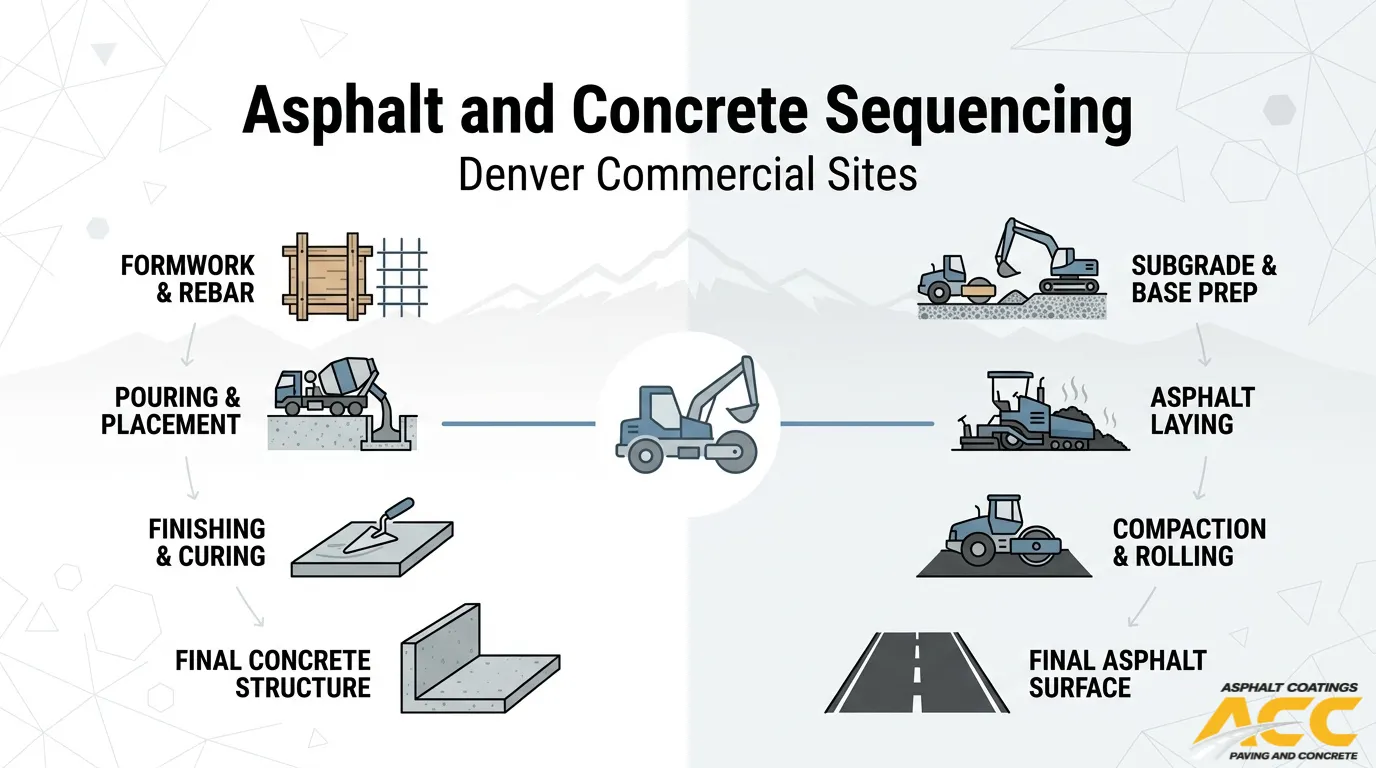
Denver Commercial Asphalt & Concrete Sequencing Guide
July 28, 2026
Sequencing asphalt and concrete work on a Denver commercial site with active tenants and ROW constraints is the process of ordering demolition, material placement, curing, and finishing activities so that each phase maintains safe tenant access, meets city permit requirements, and falls within viable temperature windows. Poor sequencing leads to rework, weather-driven cost premiums, and
Read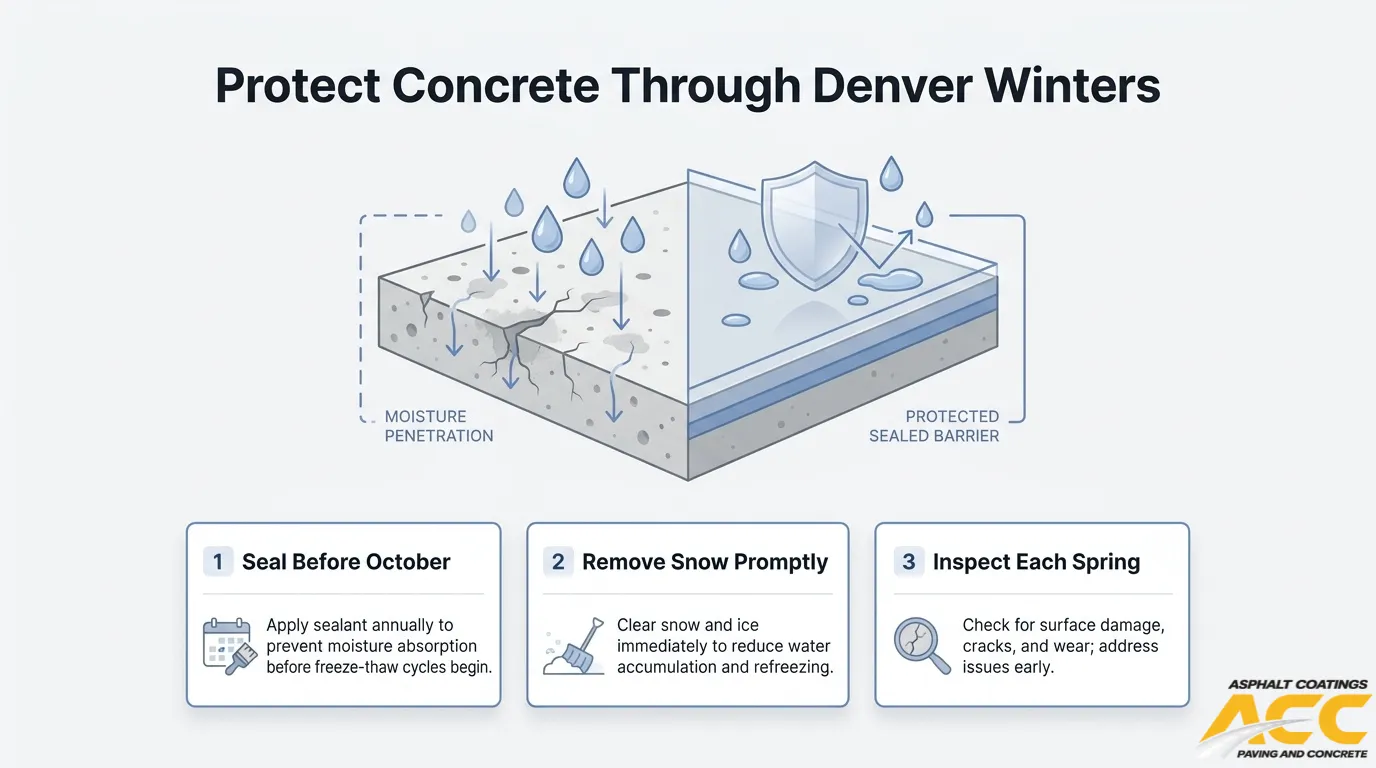
What Are the Top Concrete Care Tips for Denver Winters?
July 28, 2026
Concrete care for Denver winters is the process of inspecting, sealing, repairing, and maintaining concrete surfaces to withstand the city’s prolonged freeze-thaw season and heavy snowfall. Proactive winter care prevents moisture damage, reduces slip-and-fall liability, and extends the functional lifespan of commercial flatwork. This guide covers Denver’s unique climate pressures on concrete, pre-winter surface preparation,
Read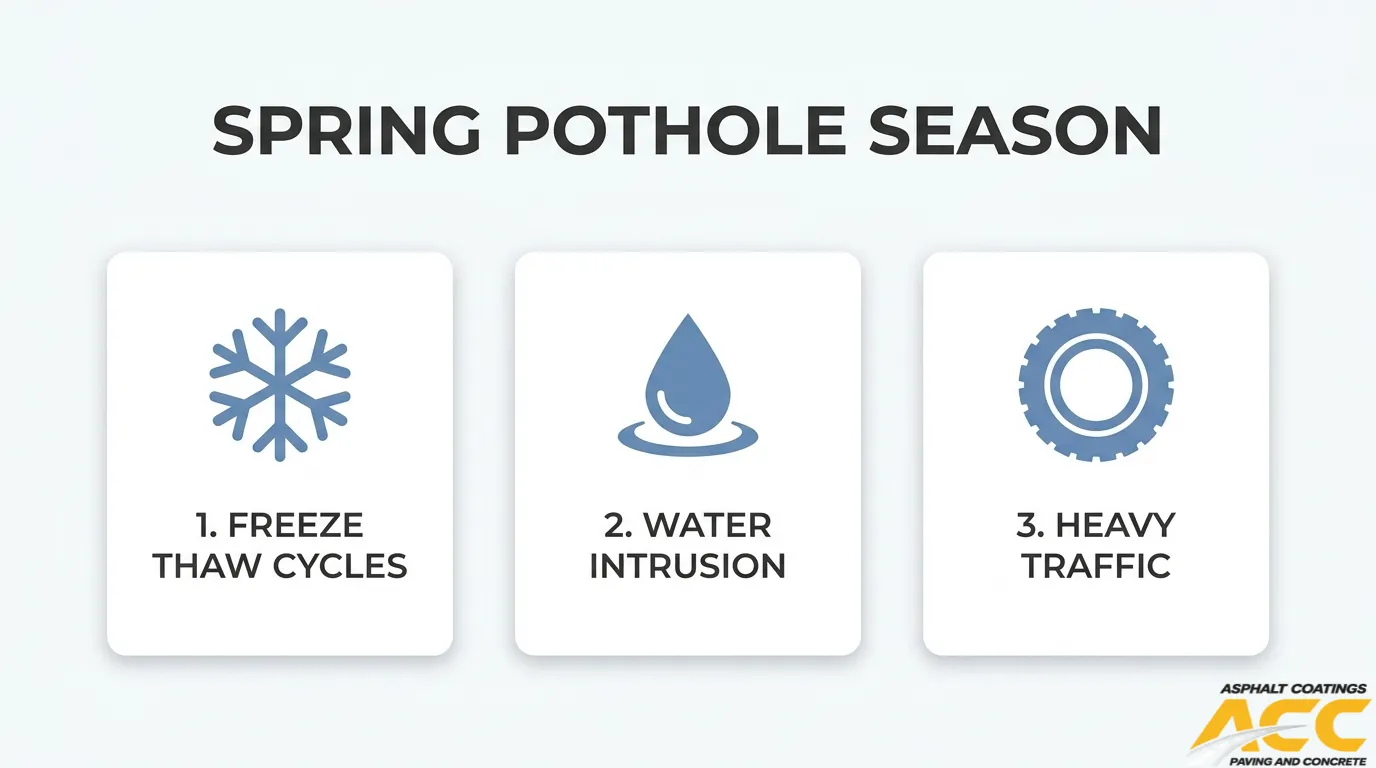
Why Does Denver’s Spring “Pothole Season” Wreck Commercial Pavement?
July 28, 2026
Denver’s spring pothole season is the period when freeze-thaw cycling, snowmelt infiltration, and heavy traffic converge to destroy commercial asphalt weakened by winter. Three elements drive every pothole: surface cracks, water, and repeated vehicle loads. This guide covers freeze-thaw mechanics and winter damage accumulation, spring failure patterns across different commercial property types, warning signs that
Read