
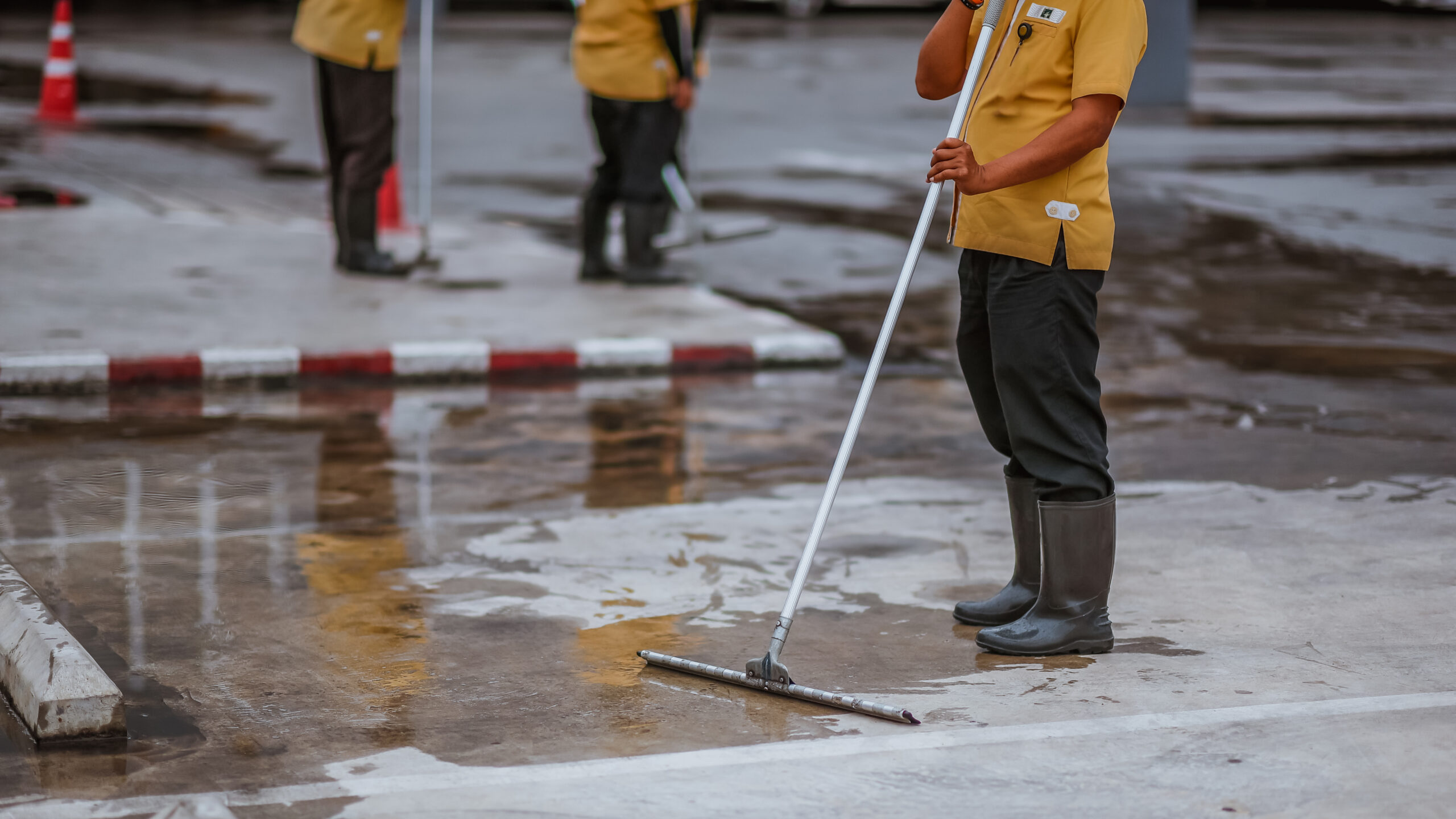
Parking Lot Maintenance Solutions: A Comprehensive Guide
September 6, 2025
Parking lot maintenance solutions such as striping, crack sealing, and sealcoating are vital for preserving safety, appearance, and structural durability. Preventive care offers a compelling return. Washington State Transport Center estimates that for every $1 spent on preventative pavement maintenance, between $4 and $10 is saved on rehabilitation, effectively extending pavement lifespan. This evidence highlights
Read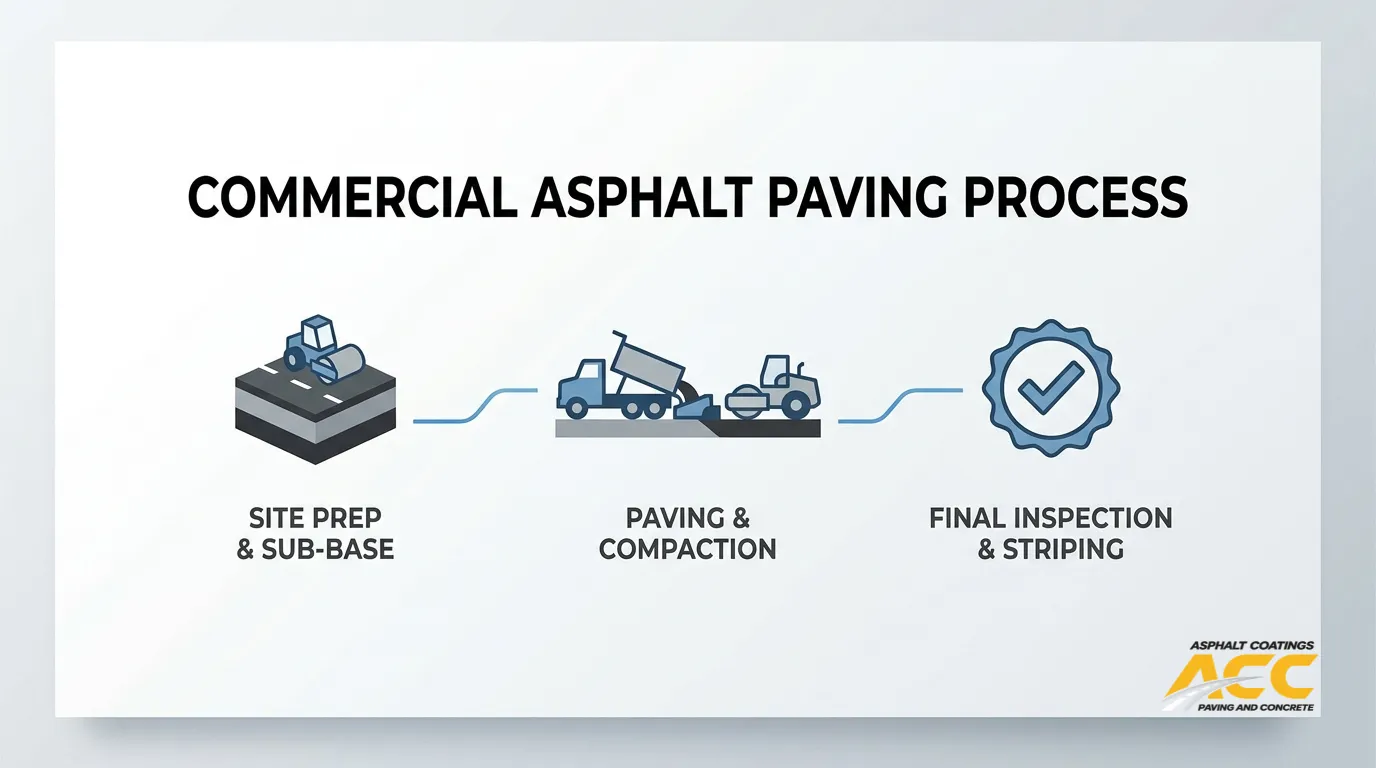
What Are the Commercial Asphalt Paving Process in Fort Collins, CO?
July 29, 2026
Commercial asphalt paving is a multi-phase construction process that transforms raw subgrade into a durable, code-compliant parking surface through coordinated evaluation, preparation, installation, and finishing operations. This guide covers climate and subgrade factors, installation and compaction methods, drainage and grading design, ADA compliance and striping, and long-term maintenance and project planning. Fort Collins’ cold semi-arid
Read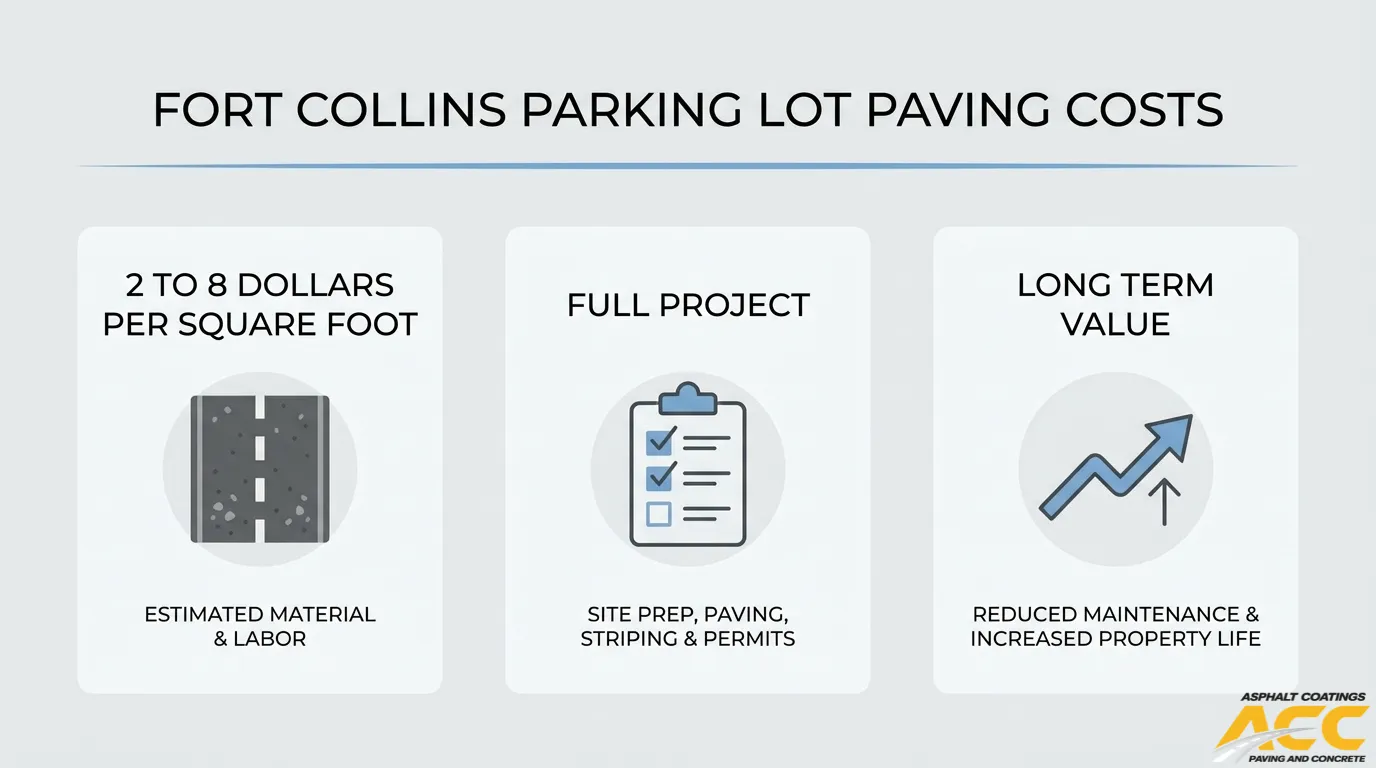
What Should You Expect to Pay for Commercial Parking Lot Paving in Fort Collins, CO?
July 29, 2026
Commercial parking lot paving cost in Fort Collins is the total investment required for asphalt installation, base preparation, drainage, striping, and ongoing maintenance on a commercial property. Most Fort Collins projects range from $2.54 to $8.00 per square foot depending on scope, with final pricing shaped by local soil conditions, freeze-thaw exposure, and lot size.
Read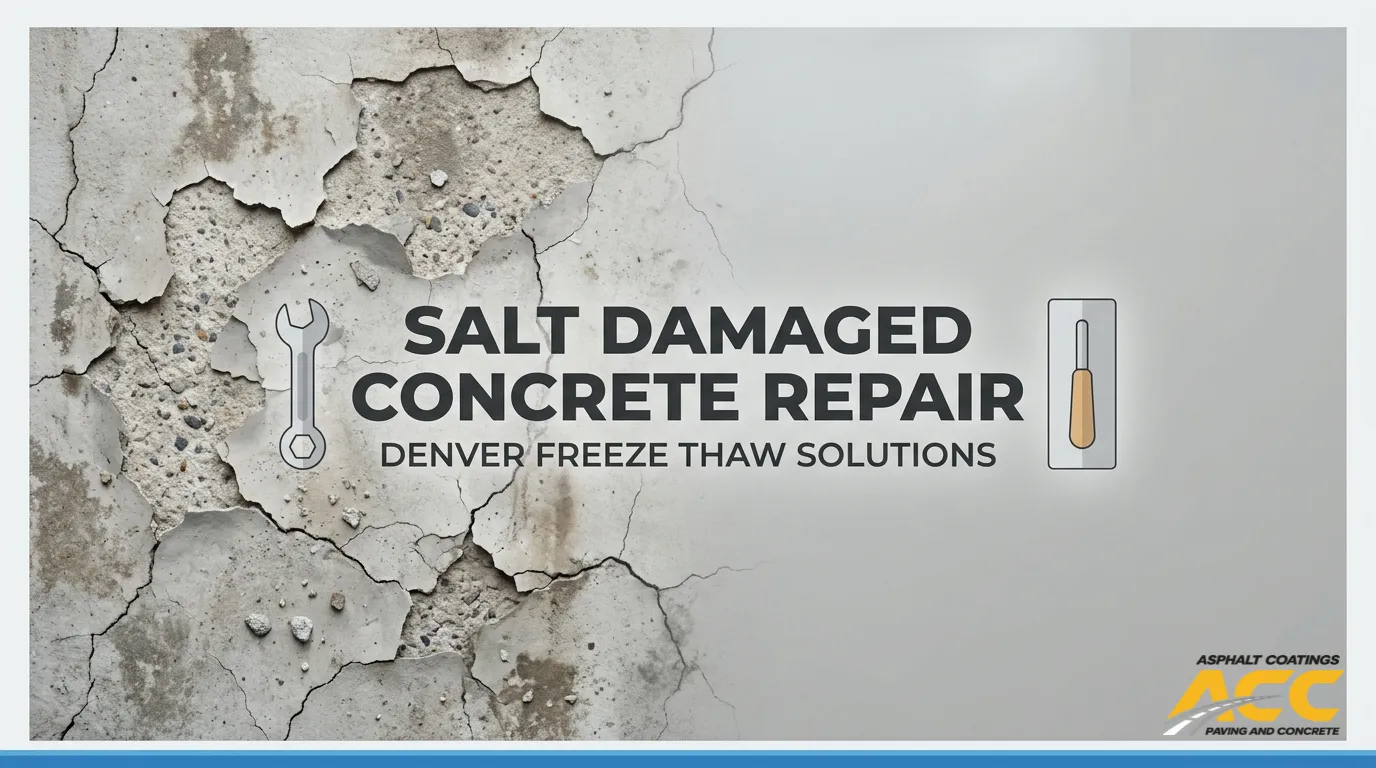
How Should You Handle Salt-Damaged Concrete Repair in Denver, CO?
July 29, 2026
Salt-damaged concrete repair in Denver is the process of restoring commercial concrete surfaces deteriorated by deicing chemicals and freeze-thaw cycling. Repair methods range from thin bonded overlays for minor scaling to full slab removal and replacement for structurally compromised sections. This guide covers how salt damage starts and progresses, repair methods and materials for every
Read