
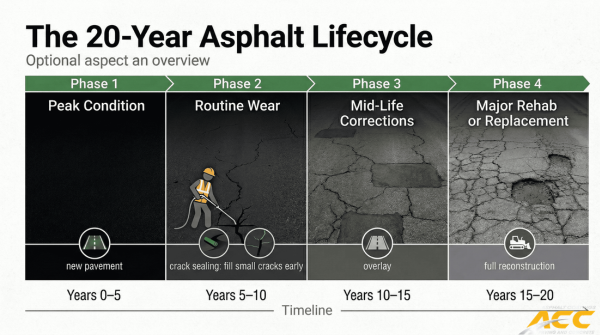
The 20-Year Lifecycle of a Commercial Asphalt Parking Lot
March 4, 2026
The 20-year lifecycle of a commercial asphalt parking lot is the predictable progression of pavement condition from initial installation through eventual reconstruction, shaped by material quality, environmental exposure, and maintenance decisions at every stage. This guide covers the distinct phases of pavement aging, the maintenance strategies that extend useful life, the environmental factors that accelerate
Read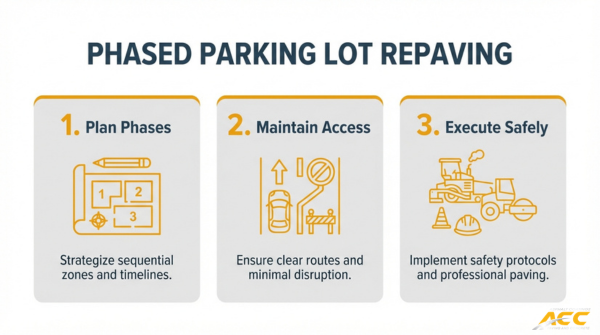
How to Repave a Parking Lot Without Shutting Down Your Business
April 6, 2026
Phased parking lot repaving is a project management approach that divides a commercial lot into sequential work zones, allowing each section to be paved while the rest stays open for customers, tenants, and daily traffic. This guide covers phased planning and seasonal scheduling, communication and parking management during construction, paving methods and project timelines, cost
Read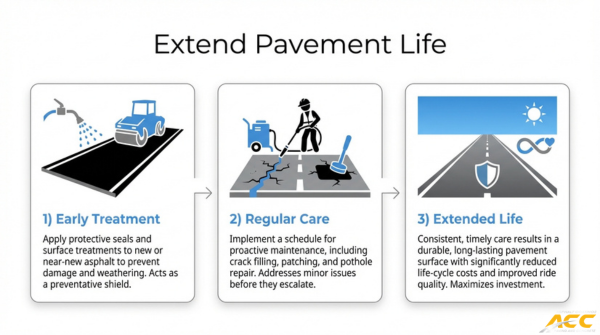
How Preventive Asphalt Maintenance Extends Pavement Lifespan
April 6, 2026
Preventive asphalt maintenance is a proactive strategy of applying scheduled treatments to pavement while it remains in good condition, rather than waiting for visible failures to trigger costly reconstruction. Every dollar spent on preservation can save several times that amount in future rehabilitation, making it one of the most cost-effective infrastructure investments available to commercial
Read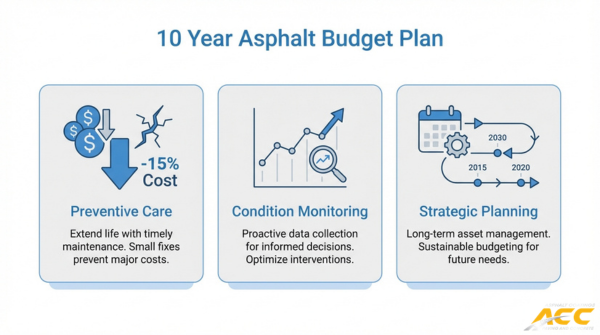
Planning Asphalt Maintenance Budgets for the Next 10 Years
April 6, 2026
Planning asphalt maintenance budgets for the next 10 years is the process of aligning scheduled pavement treatments with annual financial allocations across a full decade, so every dollar targets the right repair at the right time. This guide covers the financial case for proactive maintenance, activity-specific cost benchmarks and scheduling, condition assessment methodology, budget structure
Read