
Patching vs. Full-Depth Asphalt Repair: What Denver Property Managers Must Know
July 18, 2025
Asphalt patching vs. full-depth repair in Denver is a critical decision for property managers aiming to maintain safe and durable pavements. Denver’s unique climate, marked by frequent freeze-thaw cycles, accelerates pavement damage, leading to issues like potholes and alligator cracks. According to the Colorado Department of Transportation, these cycles contribute significantly to pothole formation, especially
Read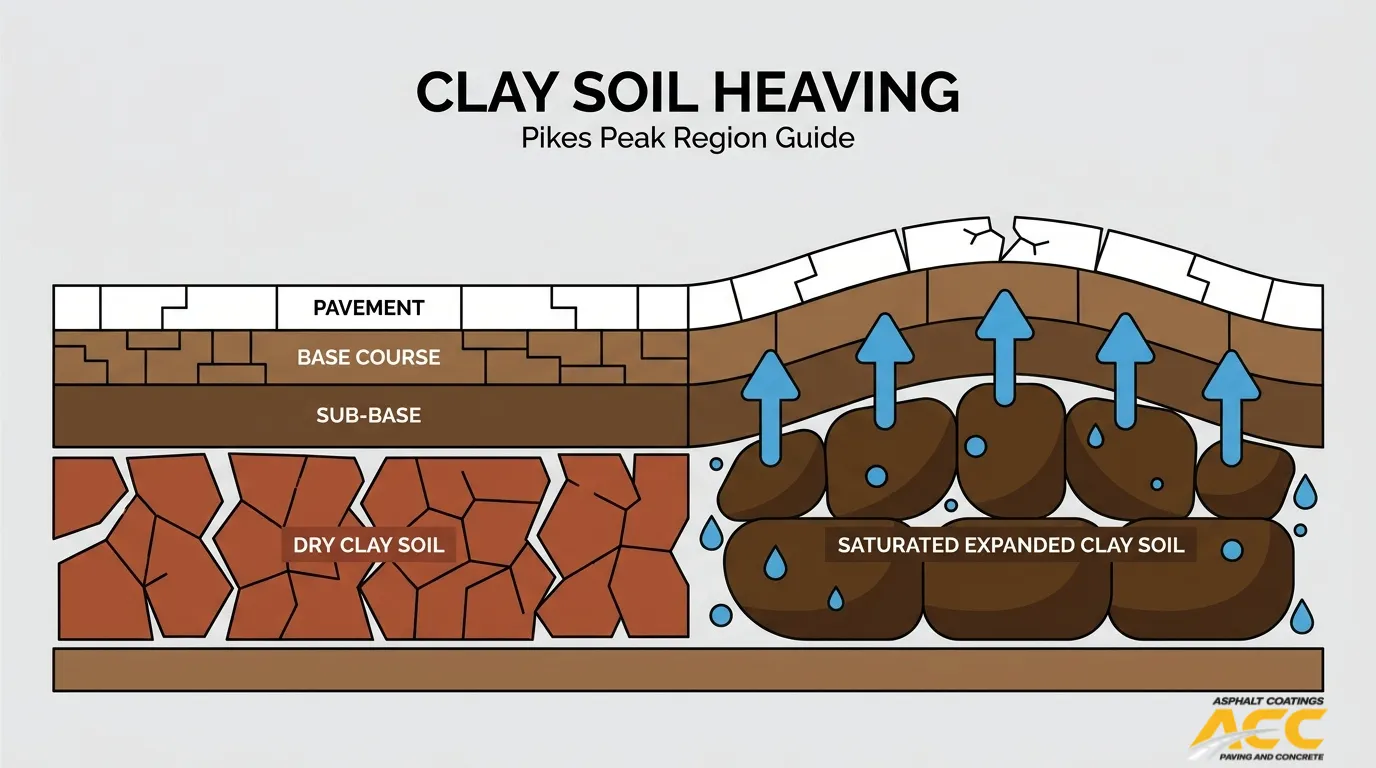
Why Do Expansive Clay Soils Cause Parking-Lot Heaving Across the Pikes Peak Region?
June 22, 2026
Expansive clay soil heaving in the Pikes Peak region is the upward displacement of parking-lot pavement caused by moisture-sensitive clay minerals in the subgrade that swell when wet and shrink when dry. The Pierre Shale and Dawson formations underlying much of Colorado Springs contain montmorillonite, smectite, and illite clays capable of generating forces that far
Read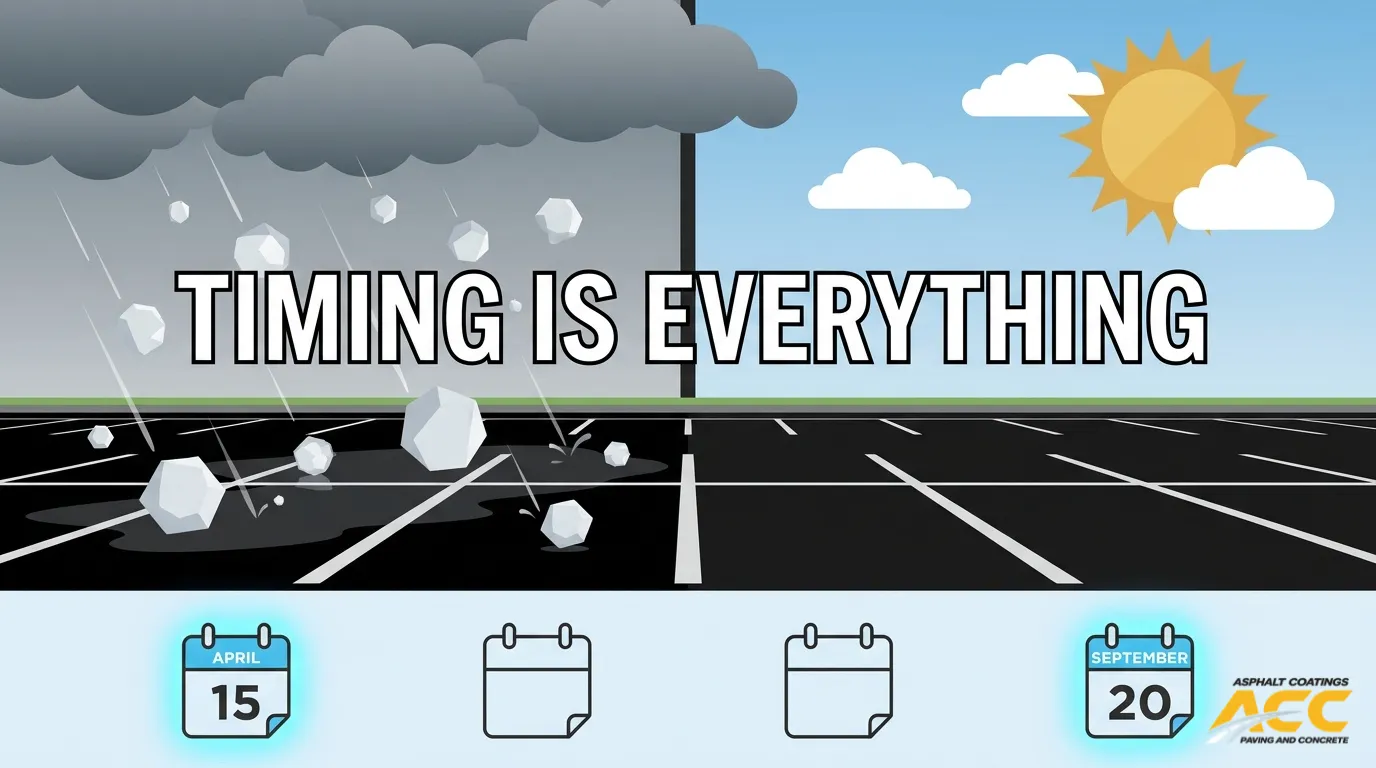
How Should You Schedule Commercial Sealcoating Around Colorado Springs’ Summer Hail Season?
June 22, 2026
Scheduling commercial sealcoating around Colorado Springs’ summer hail season means timing your project within narrow weather windows that fall before or after the region’s peak storm activity, which runs from mid-April through mid-September. This guide covers hail season timing and its threat to fresh sealcoat, pre-season and post-season scheduling windows, cure requirements and application-day conditions,
Read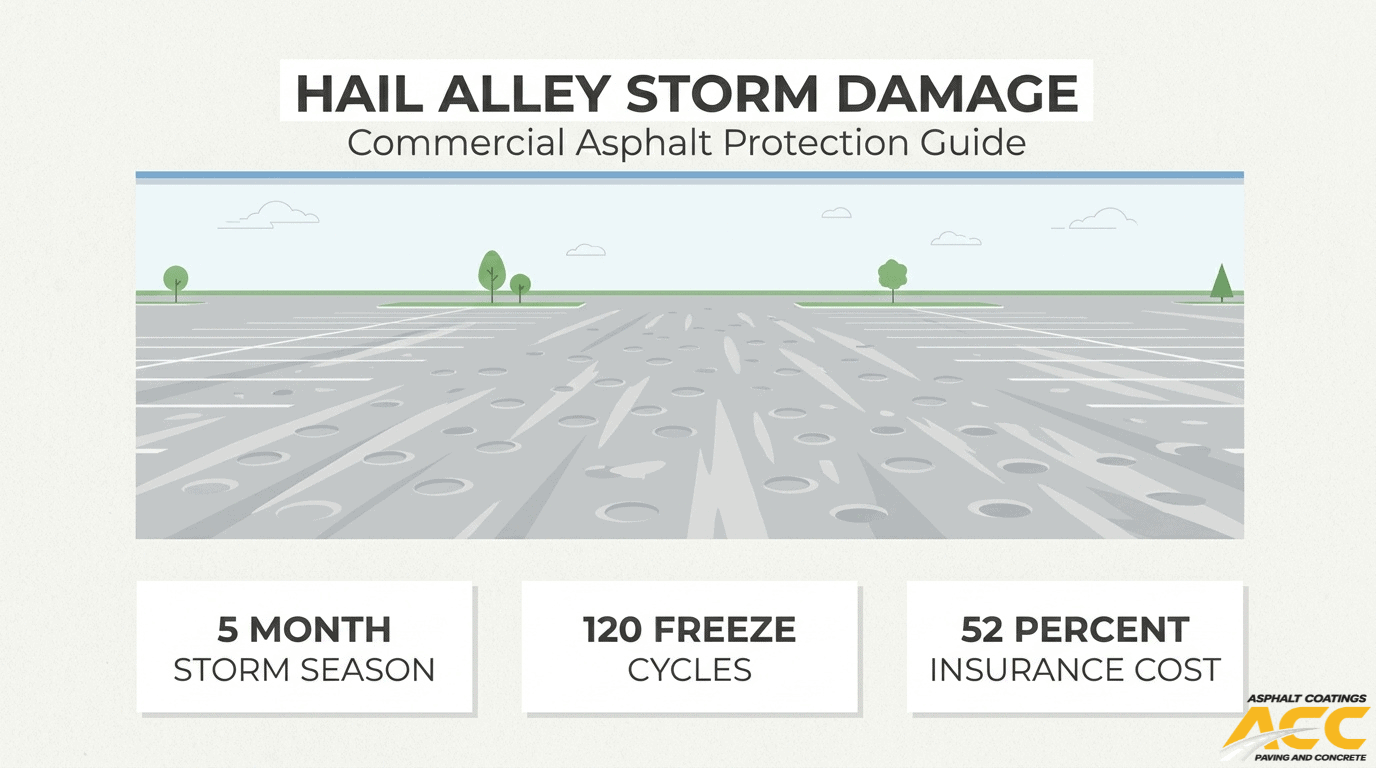
How Does Hail Alley Storm Season Damage Commercial Asphalt in Colorado Springs?
June 22, 2026
Hail Alley storm season damages commercial asphalt in Colorado Springs through direct impact fracturing, progressive binder erosion, and compounding weathering forces that exploit every crack hailstones leave behind. Colorado’s Front Range receives the highest frequency of large hail in North America, and the city’s five-month storm window concentrates repeated punishment on parking lots, access lanes,
Read