
Asphalt Tonnage Calculator
January 6, 2026
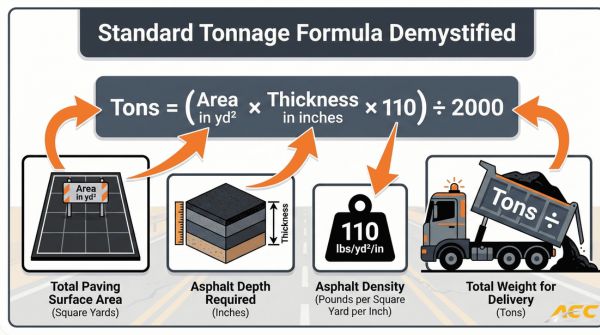
The standard formula to estimate asphalt tonage is: Tons = (Area in square yards × Thickness in inches × 110 pounds per square yard per inch) ÷ 2000, though this varies by region and mix type. Asphalt Tonnage Calculator Enter your pavement project dimensions—length, width, and compacted depth or thickness—to estimate the quantity of hot-mix
Read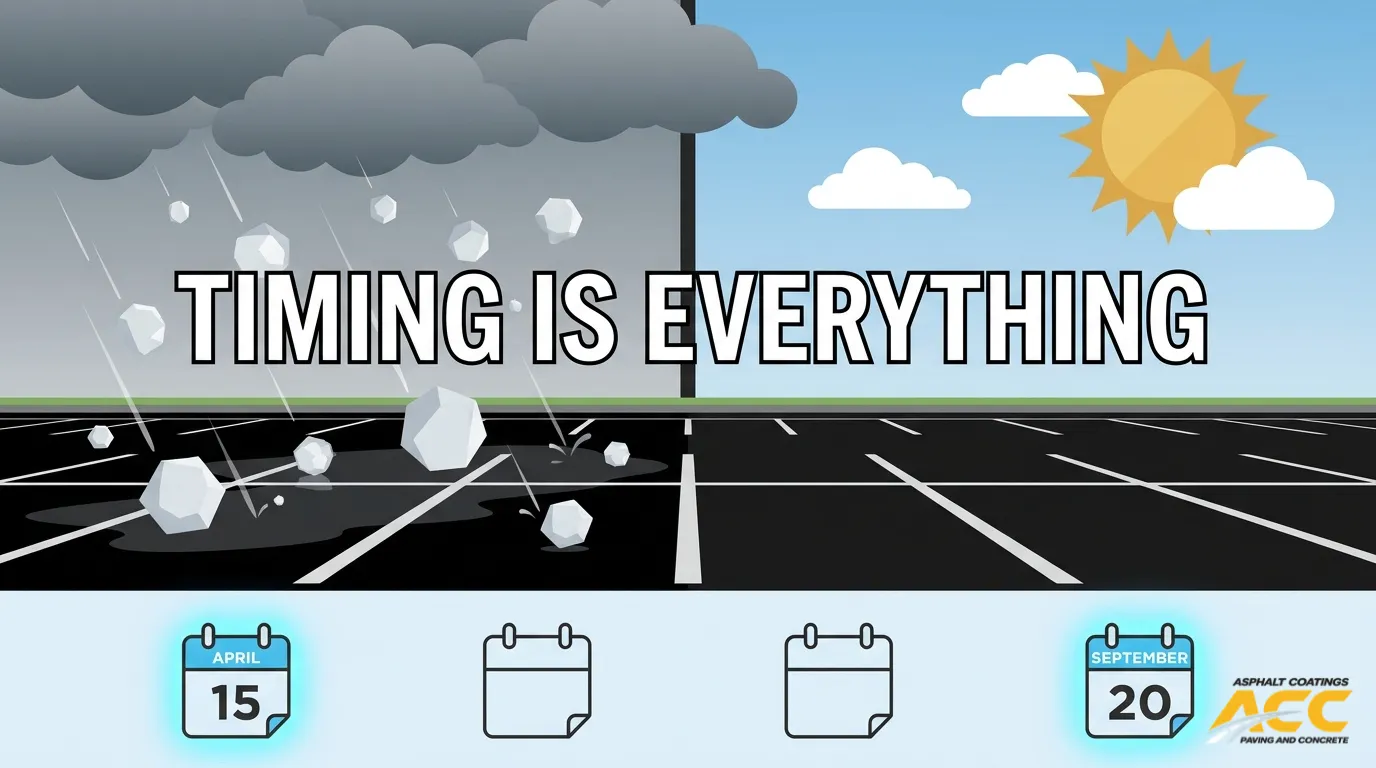
How Should You Schedule Commercial Sealcoating Around Colorado Springs’ Summer Hail Season?
June 22, 2026
Scheduling commercial sealcoating around Colorado Springs’ summer hail season means timing your project within narrow weather windows that fall before or after the region’s peak storm activity, which runs from mid-April through mid-September. This guide covers hail season timing and its threat to fresh sealcoat, pre-season and post-season scheduling windows, cure requirements and application-day conditions,
Read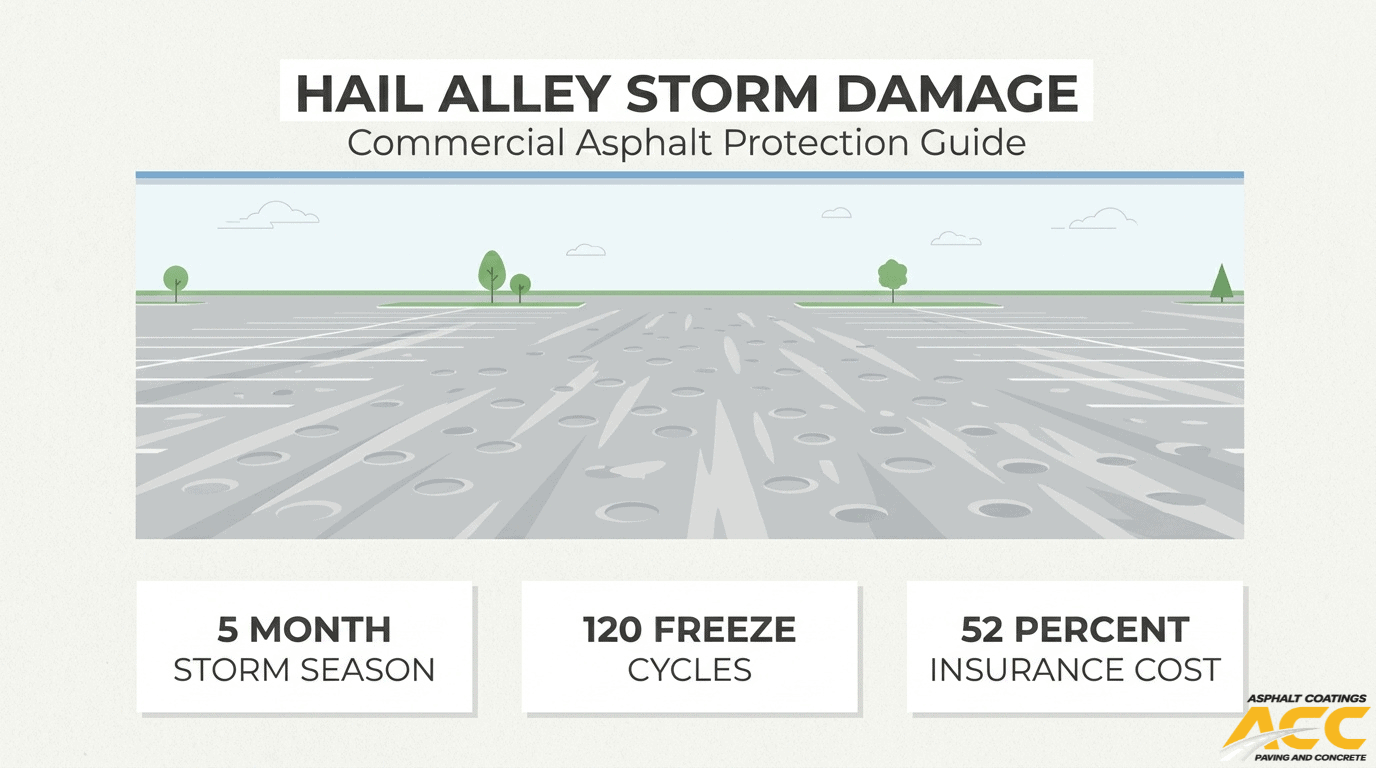
How Does Hail Alley Storm Season Damage Commercial Asphalt in Colorado Springs?
June 22, 2026
Hail Alley storm season damages commercial asphalt in Colorado Springs through direct impact fracturing, progressive binder erosion, and compounding weathering forces that exploit every crack hailstones leave behind. Colorado’s Front Range receives the highest frequency of large hail in North America, and the city’s five-month storm window concentrates repeated punishment on parking lots, access lanes,
Read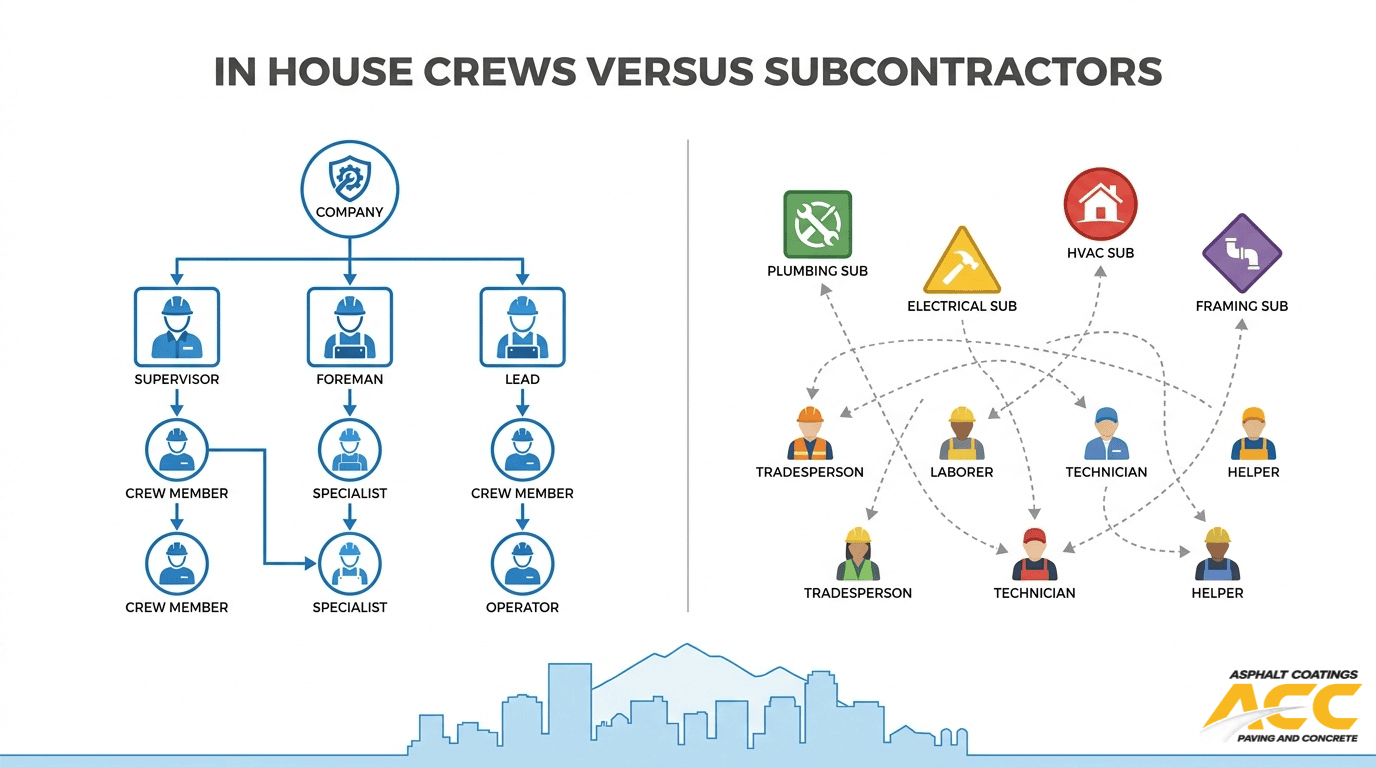
Why Do In-House Paving Crews Outperform Subcontractors on Colorado Springs Commercial Projects?
June 22, 2026
In-house paving crews outperform subcontractors on Colorado Springs commercial projects because direct employment gives one company unified control over quality, scheduling, cost, and accountability across every construction phase. This guide covers crew structure differences and their impact on commercial paving, quality control through direct supervision and equipment consistency, scheduling reliability during Colorado Springs’ compressed paving
Read