
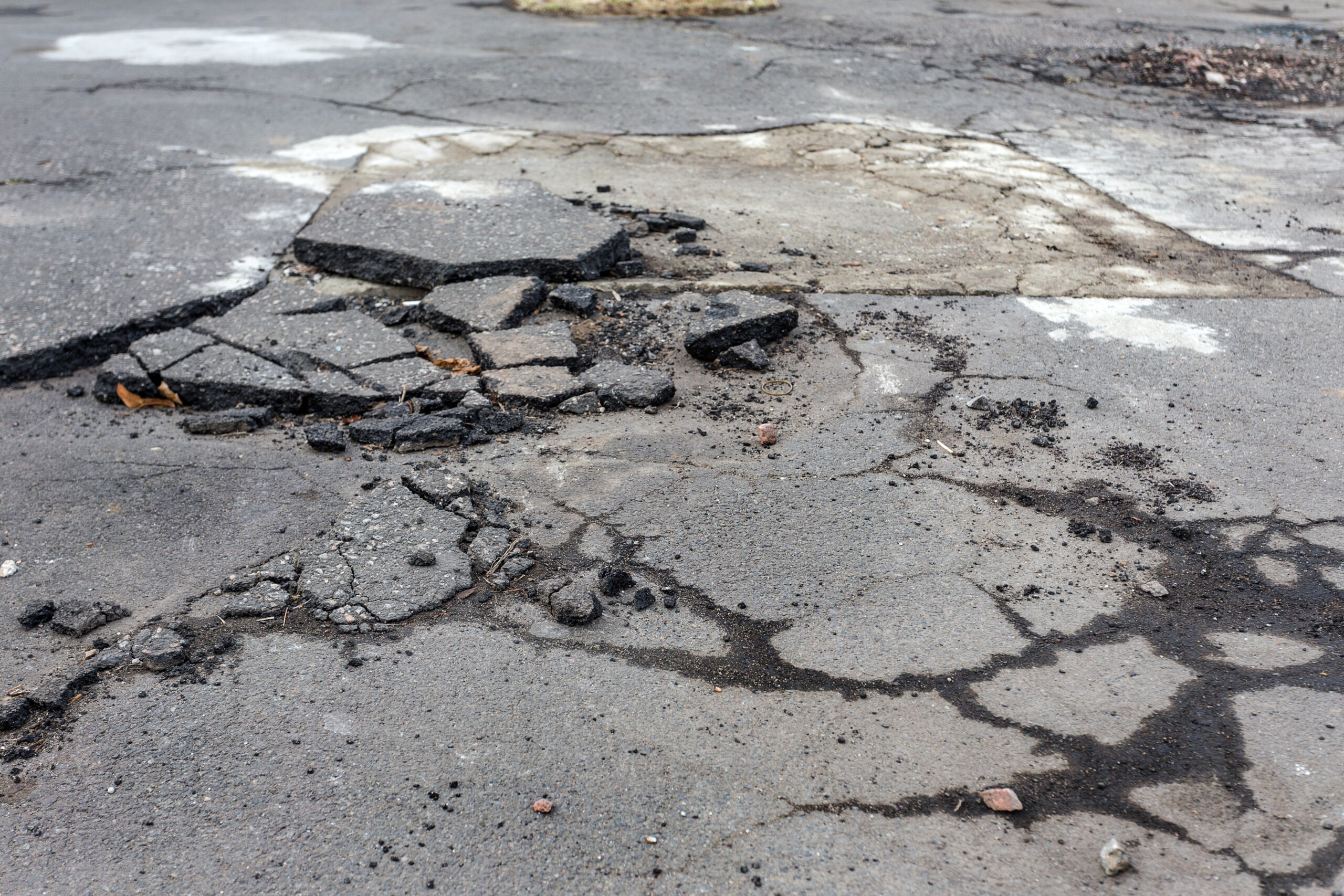
How Drainage Problems Lead to Pavement Failure
September 7, 2025
Drainage is one of the most critical factors in pavement performance. Even the highest-quality asphalt or concrete can fail prematurely if water is not adequately managed and controlled. When water seeps into cracks or remains on the surface, it weakens the pavement’s structure and accelerates deterioration. According to the Federal Highway Administration (FHWA), water infiltration
Read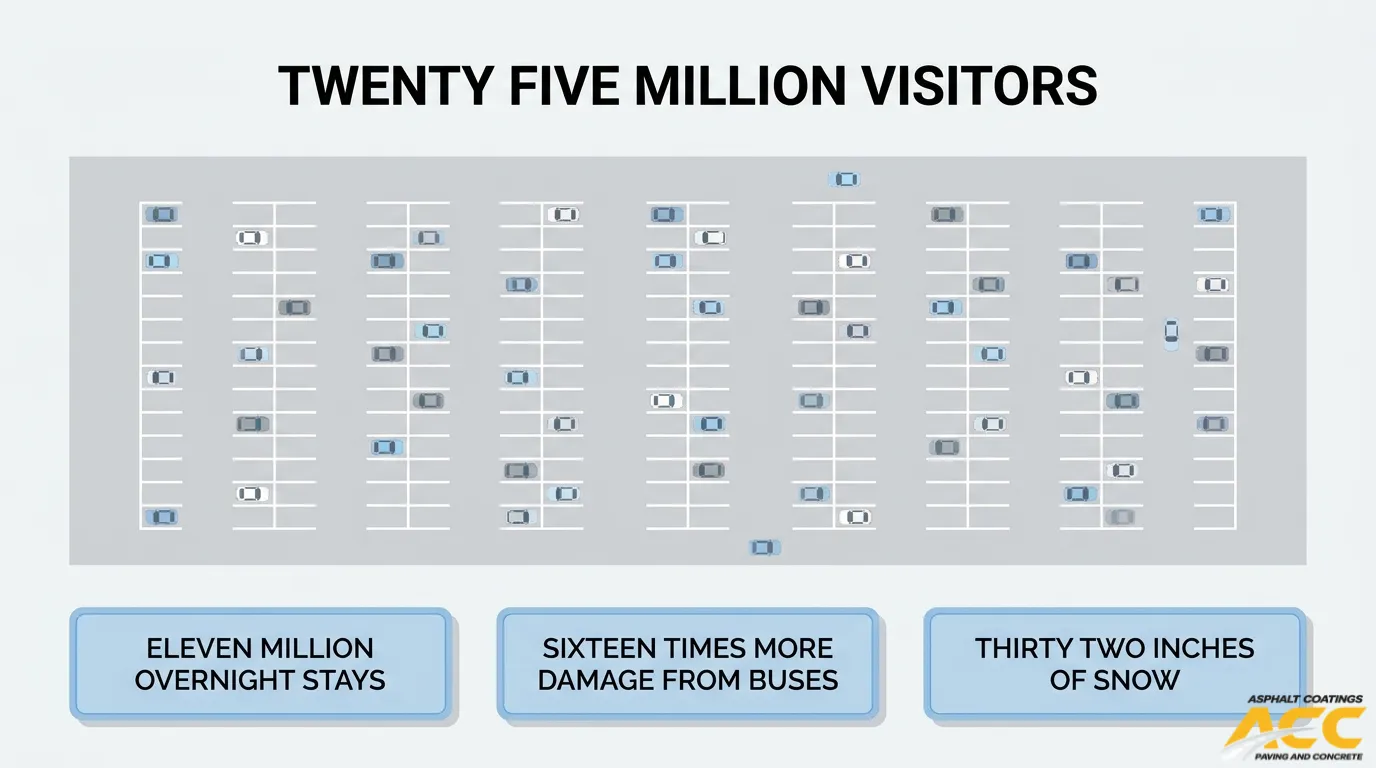
How Does Pikes Peak Region Tourism Traffic Wear Down Hotel and Resort Parking Lots?
June 25, 2026
Pikes Peak region tourism traffic wears down hotel and resort parking lots through a combination of massive visitor volume, heavy vehicle loads, high-altitude UV exposure, and destructive freeze-thaw cycles that compound seasonal damage faster than most commercial properties ever experience. With 25.6 million visitors arriving annually and 11.2 million staying overnight, Colorado Springs hospitality lots
Read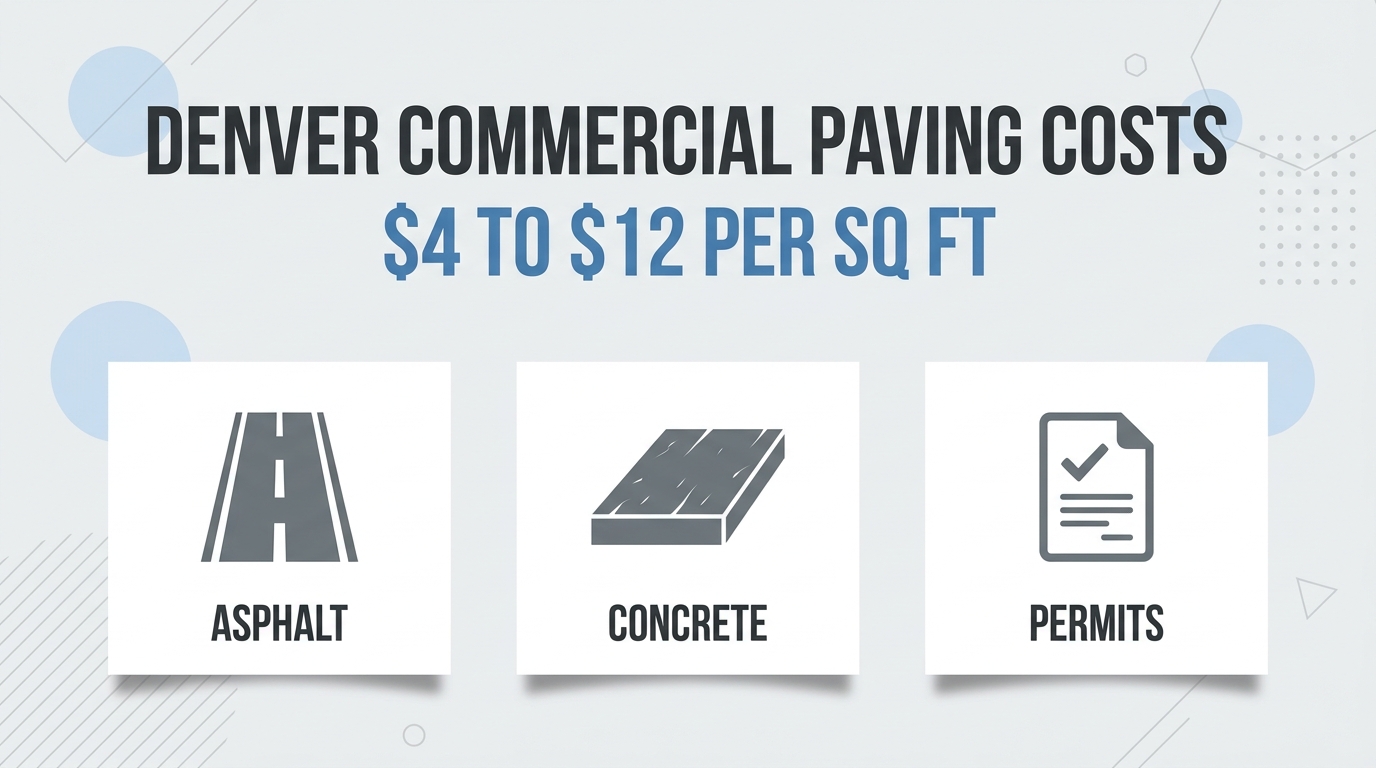
What Commercial Paving Costs in Denver (Local Pricing & Permit Factors)
June 25, 2026
Commercial paving cost in Denver is the total expense of installing or replacing asphalt or concrete surfaces on commercial properties, including base material, labor, permits, drainage, and ADA compliance. Asphalt ranges from $4.00 to $10.00 per square foot for new installations, while concrete slabs run $6.00 to $12.00 per square foot. This guide covers asphalt
Read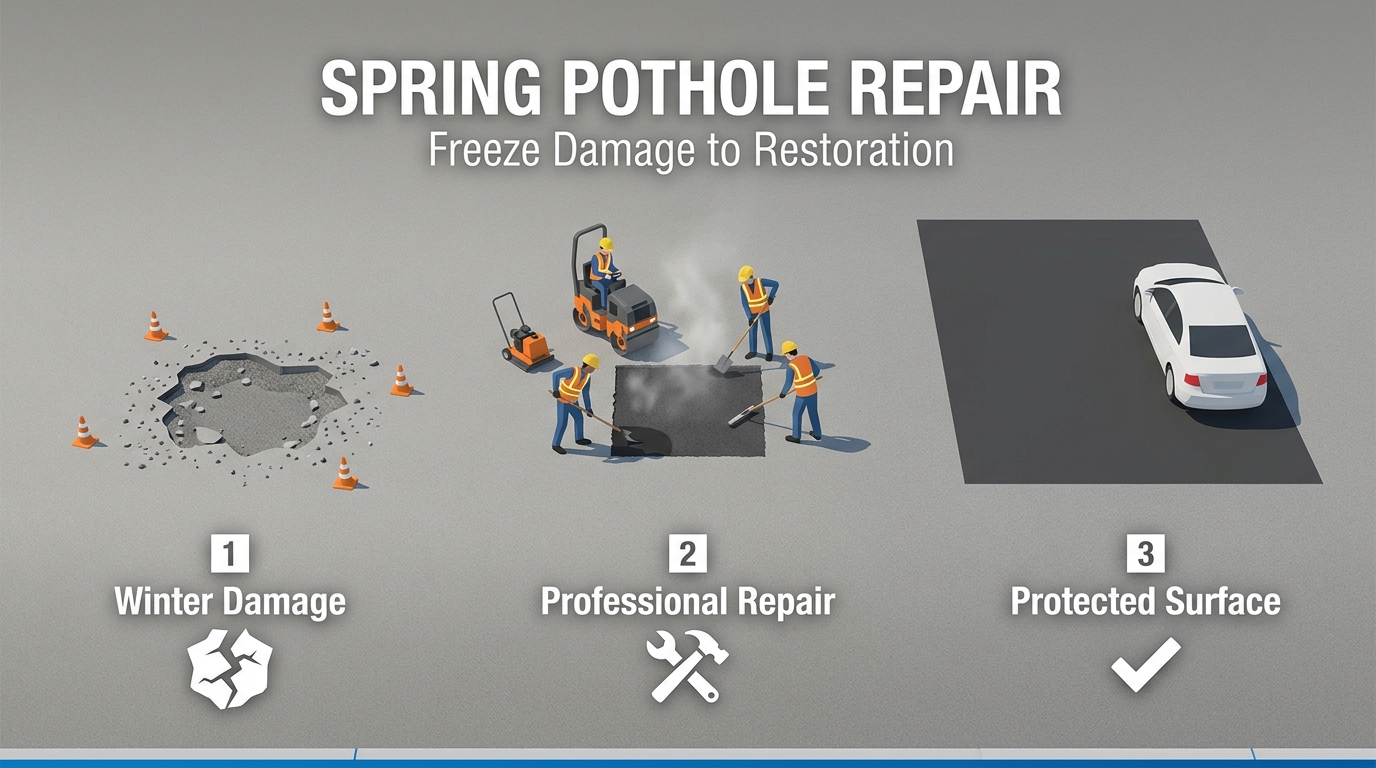
What Does Spring Pothole Repair Involve for Colorado Springs Commercial Lots After 150+ Freezing Nights?
June 25, 2026
Spring pothole repair for Colorado Springs commercial lots is the process of assessing, patching, and restoring asphalt pavement damaged by 150+ annual freezing nights at 6,035 feet elevation. It combines post-winter inspection, targeted repair methods, and preventive maintenance to protect commercial parking surfaces from recurring failure. This guide covers freeze-thaw damage mechanics, spring pavement assessment,
Read