
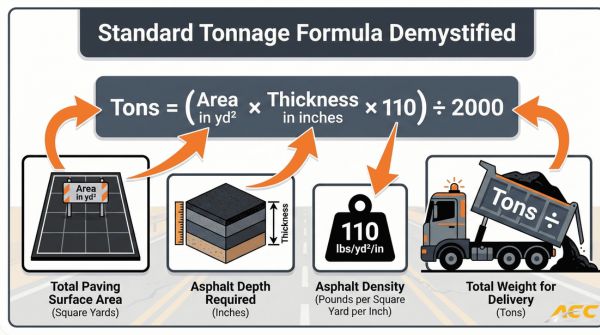
Asphalt Tonnage Calculator
January 6, 2026
The standard formula to estimate asphalt tonage is: Tons = (Area in square yards × Thickness in inches × 110 pounds per square yard per inch) ÷ 2000, though this varies by region and mix type. Asphalt Tonnage Calculator Enter your pavement project dimensions—length, width, and compacted depth or thickness—to estimate the quantity of hot-mix
Read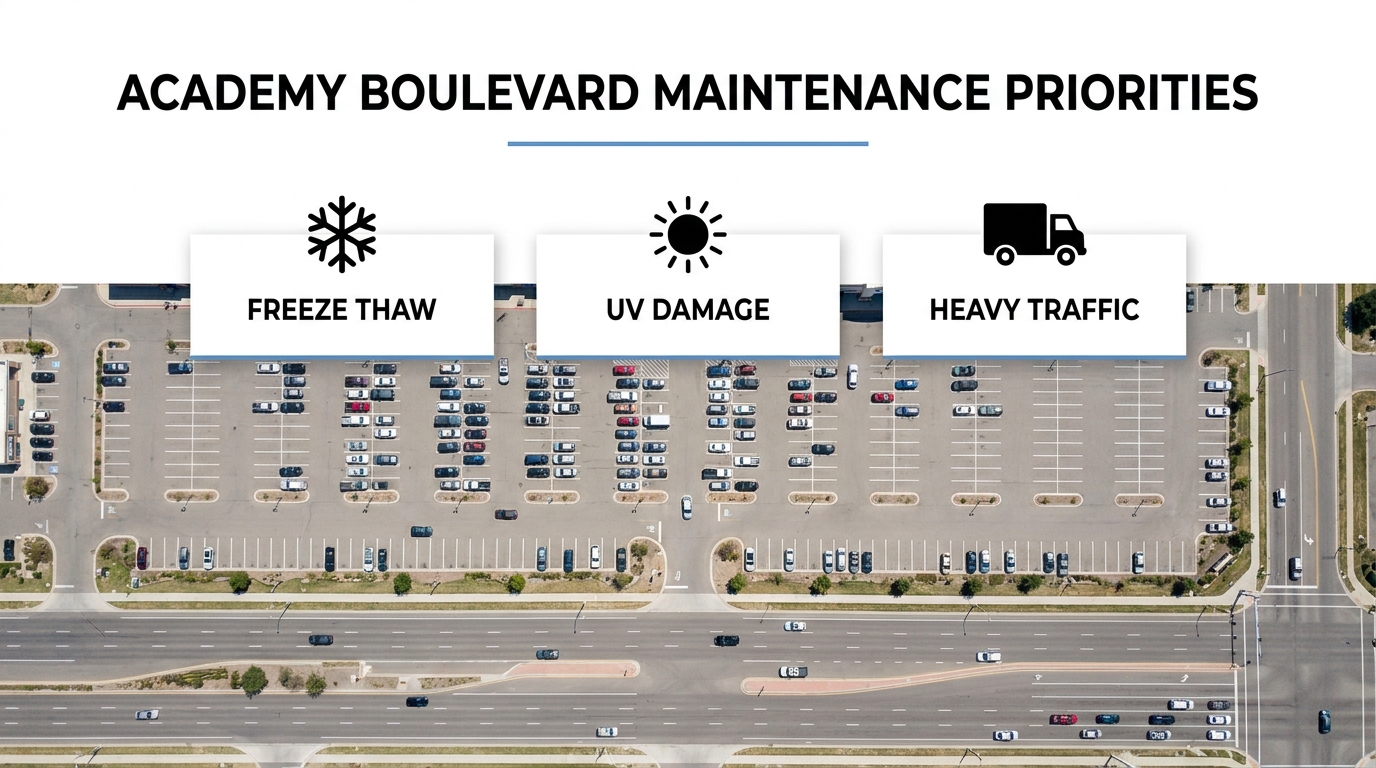
What Are the Asphalt Maintenance Priorities for High-Turnover Retail Centers Along Academy Boulevard?
June 23, 2026
Asphalt maintenance for high-turnover retail centers along Academy Boulevard is a structured program of preventive treatments, severity-based repairs, and long-term planning designed to protect pavement under Colorado Springs’ uniquely harsh conditions. This guide covers Academy Boulevard’s environmental and traffic stressors, common pavement distresses in retail lots, severity-based repair prioritization, seasonal scheduling, the revenue impact of
Read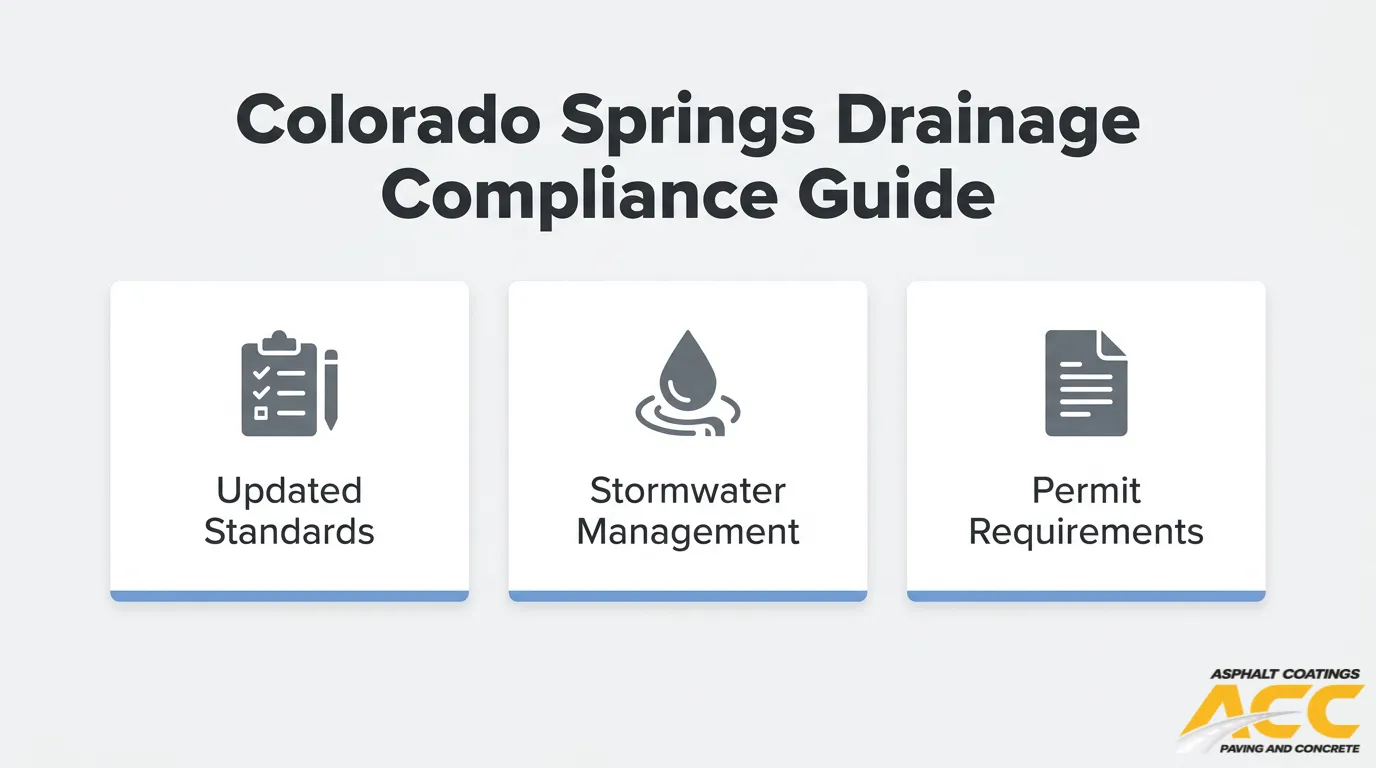
How Do You Navigate Colorado Springs’ Updated Drainage Criteria Manual for Commercial Paving?
June 22, 2026
Colorado Springs’ updated Drainage Criteria Manual (DCM) is the city’s consolidated regulatory document governing stormwater detention, water quality treatment, erosion control, and best management practices for all commercial development and redevelopment sites. It carries binding enforcement authority under the city’s MS4 Permit, Consent Decree, and Intergovernmental Agreement with Pueblo County. This guide covers the manual’s
Read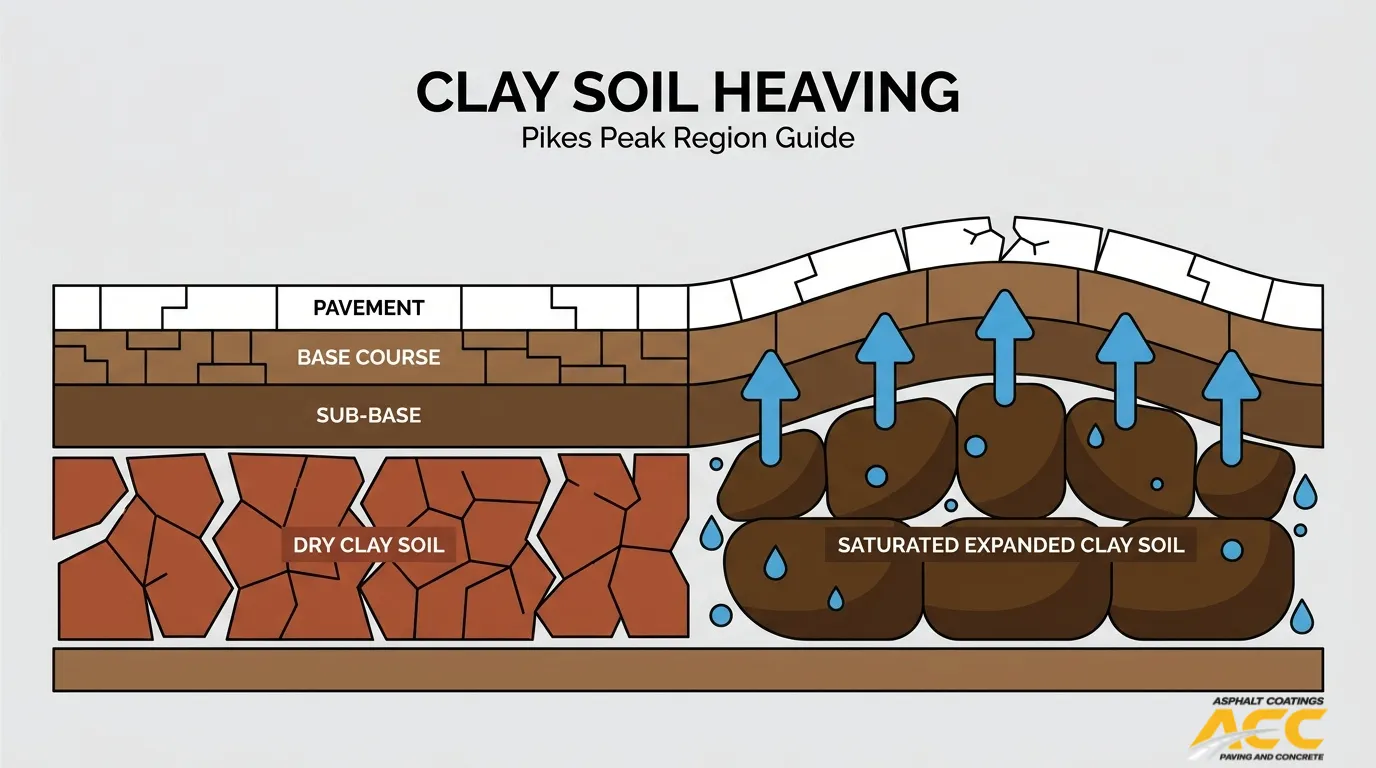
Why Do Expansive Clay Soils Cause Parking-Lot Heaving Across the Pikes Peak Region?
June 22, 2026
Expansive clay soil heaving in the Pikes Peak region is the upward displacement of parking-lot pavement caused by moisture-sensitive clay minerals in the subgrade that swell when wet and shrink when dry. The Pierre Shale and Dawson formations underlying much of Colorado Springs contain montmorillonite, smectite, and illite clays capable of generating forces that far
Read