A commercial parking lot showing cracks, potholes, or fading surfaces is a property actively losing value, safety, and customer trust. Catching these warning signs early is the difference between affordable maintenance and six-figure reconstruction.
This guide covers structural cracking and pothole formation, drainage and standing water failures, surface deterioration and marking wear, concrete infrastructure damage, behavioral warning signs from drivers and tenants, and how to prioritize and plan repairs.
Crack patterns range from hairline fractures that freeze-thaw cycles widen each winter to interconnected alligator cracking that signals base failure beneath the surface. Even a single small pothole means water has already infiltrated the subgrade, and multiple potholes compound into serious liability exposure across your property.
Standing water after storms reveals compromised grading, clogged drains, or settled base layers that healthy pavement prevents. Ponding near building entrances and ADA routes creates both slip hazards and federal compliance violations that demand prompt correction.
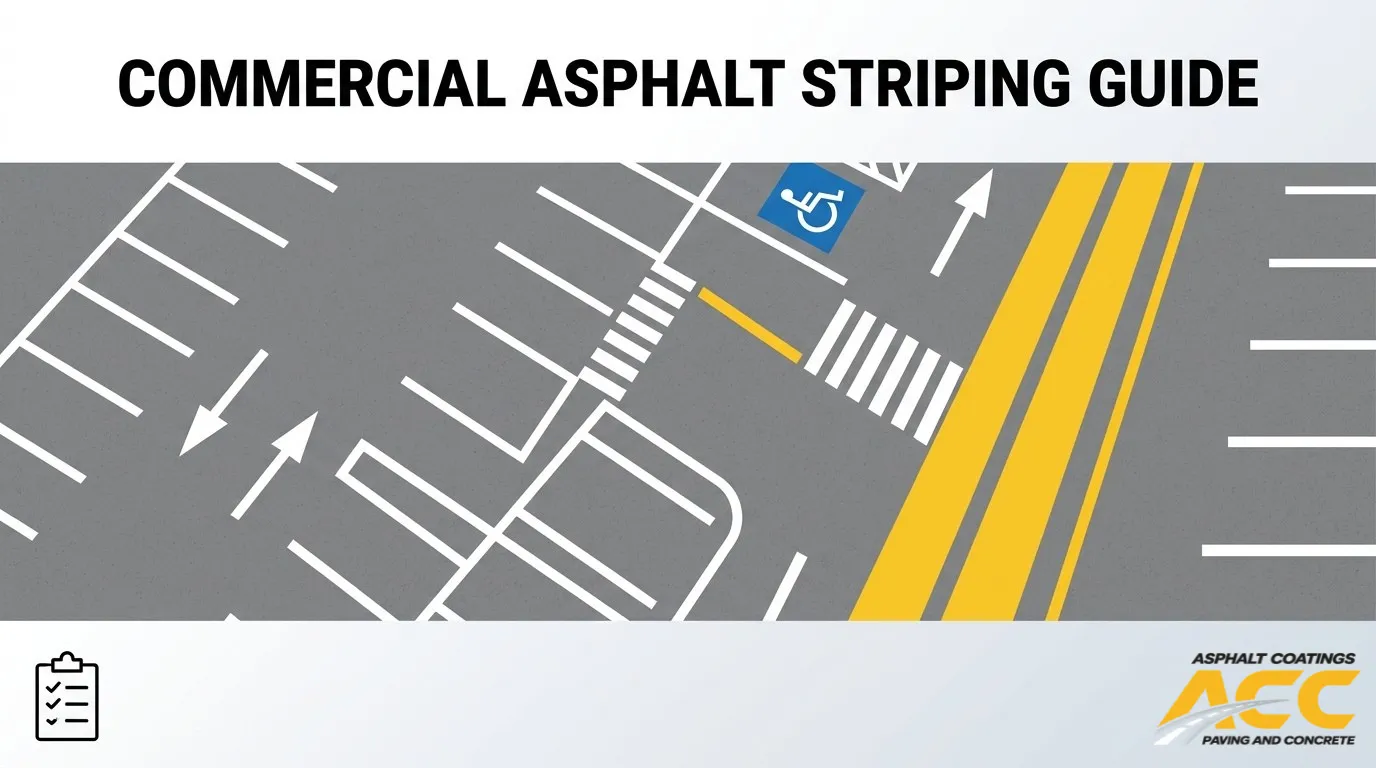
Faded striping, missing ADA symbols, and disappearing directional arrows remove the visual guidance drivers and pedestrians depend on for safe navigation. Simultaneously, dry gray surfaces and loose aggregate indicate the asphalt binder has oxidized and broken down, progressing from cosmetic fading toward structural material loss.
Cracked curbs, heaving sidewalks, and broken gutters mirror the same forces destroying your asphalt while redirecting uncontrolled water beneath the pavement. Subtler cues like increased tire noise, driver avoidance patterns, and recurring tenant complaints often reveal deterioration before visual inspections catch it.
Prioritizing safety-critical fixes first, then phasing preventive maintenance across your budget cycle, protects your investment. A proactive lifecycle plan can cost a fraction of what full reconstruction demands when damage goes unaddressed.
Why Does Timely Parking Lot Repair Matter for Fort Collins Businesses?
Timely parking lot repair matters for Fort Collins businesses because neglected asphalt damage escalates into costly reconstruction, liability exposure, and lost revenue. The financial, legal, and customer-facing consequences of deferred maintenance affect commercial properties in several critical ways.
Fort Collins experiences frequent freeze-thaw cycles that accelerate asphalt deterioration rapidly. Water enters small cracks during mild temperatures, freezes and expands as temperatures drop, then thaws and contracts when temperatures rise, leaving space for even more water to enter. This progressive weakening means minor damage left unaddressed for a single winter can become a structural failure by spring.
The financial case for timely repair is stark. According to Strike Force Striping, a proactive maintenance plan for a 50,000-square-foot commercial parking lot costs roughly $55,000 to $80,000 over a 15-year lifecycle, while a reactive approach of waiting until the lot fails costs $250,000 to $400,000 or more for full reconstruction. Well-maintained asphalt surfaces can last 20 to 30 years, but without maintenance, that lifespan can be cut in half.
Liability risk compounds the urgency. Property owners can be held liable when visitors are harmed by physical hazards or infrastructure defects in their parking lots. Premises liability settlements across commercial parking lots exceed $4 billion annually nationwide. In one notable case, a jury awarded over $3 million to a plaintiff injured by a deteriorated pothole, holding both a municipality and an adjacent business at fault.
Customer perception adds another layer of consequence. Parking lot condition shapes first impressions before anyone walks through the door. Research from Portland State University confirms that exterior appearance and atmospheric components of curb appeal directly influence consumer patronage decisions and retail real estate values. For Fort Collins commercial properties competing for foot traffic, a crumbling lot signals neglect that drives customers elsewhere.
Proactive repair protects property value, reduces emergency costs by 40 to 60 percent, and ensures compliance with ADA accessibility standards. For property managers weighing repair timing, the evidence consistently favors early intervention over waiting for visible failure to force action.
What Are the Most Common Types of Damage in Fort Collins Commercial Parking Lots?
The most common types of damage in Fort Collins commercial parking lots include cracking, potholes, surface raveling, drainage failures, faded striping, concrete deterioration, and changes in ride quality. Each damage type signals a different stage of pavement decline, and the sections below explain how to identify all seven warning signs.
How Can You Tell If Cracks in Your Parking Lot Mean It Needs Repairs?
You can tell cracks in your parking lot mean it needs repairs by evaluating their width, pattern, and location. Hairline cracks, alligator patterns, and damage near drains or edges each signal different levels of urgency.
When Do Hairline Cracks in Asphalt Become a Problem for Your Parking Lot?
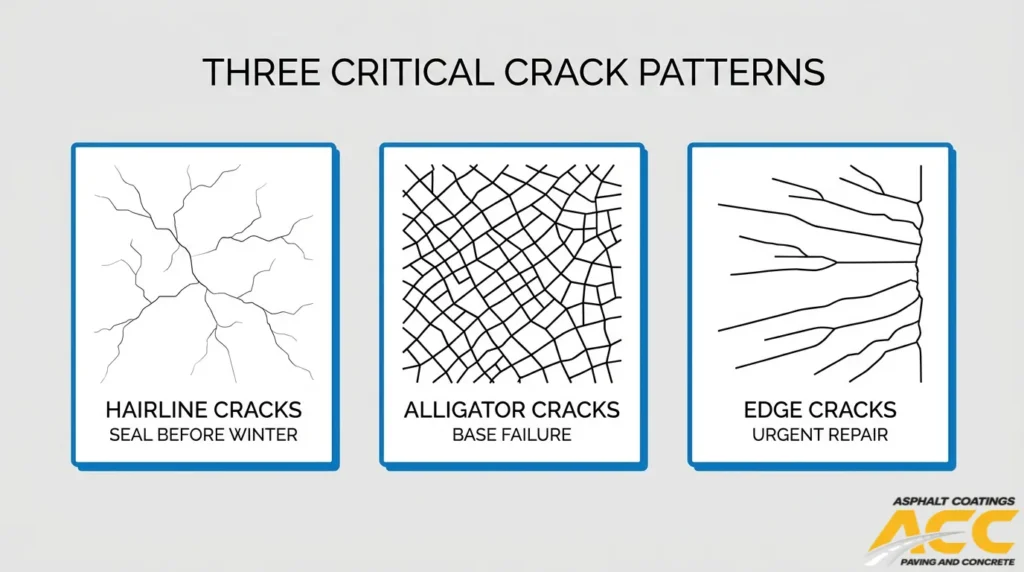
Hairline cracks in asphalt become a problem for your parking lot when freeze-thaw cycles begin widening them. Although narrow surface cracks may look harmless initially, trapped moisture transforms them into accelerating damage points.
According to Bituminous Roadways, water trapped in microscopic hairline cracks turns to ice when temperatures drop below freezing, expanding by approximately 10% and exerting upwards of 25,000 psi of pressure against the surrounding asphalt. Each cycle widens the crack slightly, inviting more water and repeating the process.
Sealing hairline cracks early is one of the most cost-effective maintenance steps a property manager can take. Once these cracks begin branching or connecting, repair costs escalate quickly.
How Do Wider Alligator or Spider Cracks Signal Structural Parking Lot Damage?
Wider alligator or spider cracks signal structural parking lot damage because their interconnected pattern indicates failure beneath the surface layer, not just cosmetic wear. These cracks resemble reptile skin, forming a grid of small, irregular polygons across the pavement.
According to the Federal Highway Administration (FHWA), alligator cracking typically indicates structural failure due to repeated traffic loading, making it one of the most common and serious pavement distresses alongside block cracking, longitudinal cracking, and raveling. Surface sealants alone cannot fix this pattern; the base or subgrade has lost its load-bearing capacity.
When alligator cracking appears in high-traffic lanes or near dumpster pads, full-depth patching or reconstruction is usually necessary rather than simple overlay.
Why Are Cracks Around Drains, Joints, and Edges Especially Urgent to Repair?
Cracks around drains, joints, and edges are especially urgent to repair because these locations concentrate water infiltration and structural stress. Pavement transitions at drain grates, expansion joints, and lot perimeters lack the continuous support found in mid-panel areas, making them vulnerable to accelerated deterioration.
Water that enters cracks at these points flows directly into the subbase, undermining the foundation from below. Edge cracking along curb lines often indicates inadequate support where the pavement meets concrete, while cracking around drains can compromise the entire drainage system. Ignoring damage in these critical zones risks turning localized failures into widespread base erosion that spreads outward into otherwise sound pavement.
Understanding crack severity helps property managers act before damage escalates to potholes or standing water.
How Do Potholes Indicate Your Commercial Parking Lot Needs Immediate Attention?
Potholes indicate your commercial parking lot needs immediate attention because they signal active structural failure beneath the surface. Below, we cover what a single pothole reveals, when multiple potholes create liability, and how Fort Collins freeze-thaw cycles accelerate the damage.
What Does a Single Small Pothole Reveal About Underlying Asphalt Failure?
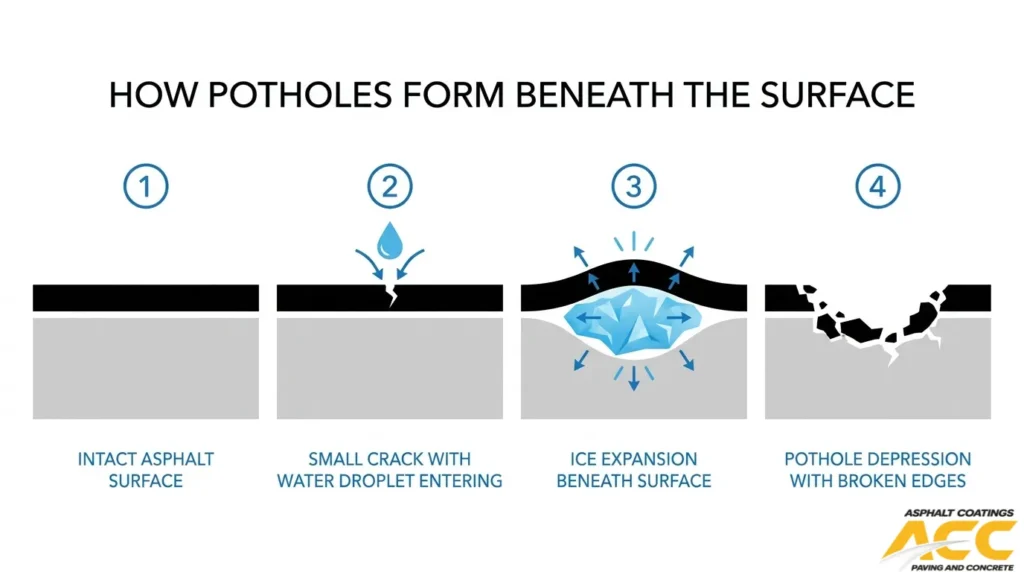
A single small pothole reveals that the asphalt layers and base material beneath your parking lot have already failed at that point. According to Pavement Interactive, potholes are bowl-shaped depressions that can range from small, shallow areas to large, deep holes penetrating through the asphalt layer into the base material.
Even a minor pothole means water has already infiltrated, weakened the subgrade, and caused pavement to break away under traffic loading. That visible depression is the final stage of a deterioration process that began with unnoticed cracks months earlier. For commercial property managers, treating a single pothole as an isolated cosmetic issue is a costly mistake; it almost always indicates broader subsurface weakness that will produce additional failures nearby.
When Do Multiple or Growing Potholes Become a Safety and Liability Risk?
Multiple or growing potholes become a safety and liability risk as soon as they present a realistic chance of injury to pedestrians, cyclists, or vehicles on your property. Premises liability law holds property owners responsible for maintaining safe conditions, and potholes are among the most common hazards cited in parking lot injury claims.
The financial exposure is significant. According to Asphalt Kingdom, over $4 billion per year is paid in premises liability settlements or lawsuits involving commercial parking lots. Potholes that widen or multiply create trip-and-fall hazards, vehicle damage claims, and potential ADA access violations. Once a pothole is documented or reported and no corrective action follows, negligence becomes far easier to establish in court.
How Do Freeze–Thaw Cycles in Fort Collins Make Pothole Damage Worse?
Freeze-thaw cycles in Fort Collins make pothole damage worse by repeatedly expanding and contracting water trapped inside asphalt cracks, progressively weakening the pavement structure. Water enters through surface cracks during mild temperatures, freezes and expands as temperatures drop, then thaws and contracts when temperatures rise, leaving room for even more water to infiltrate.
The West-Central United States experiences 68 to 91 freeze-thaw cycles per year, according to research published in Highway Research Record. Each cycle widens existing cracks and loosens surrounding material, accelerating the transition from minor crack to full pothole. In Fort Collins, this relentless seasonal pressure means a small crack discovered in autumn can become a deep pothole by spring, making early intervention especially critical for parking lot longevity. Commercial paving contractors with Colorado Front Range experience, like Asphalt Coatings Company, design maintenance schedules specifically around these regional freeze-thaw patterns to maximize pavement longevity. With decade years of local experience, understanding how Fort Collins weather impacts asphalt performance allows for more effective timing of crack sealing and preventive treatments.
Understanding how potholes form and escalate helps property managers recognize the next common warning sign: standing water.
How Does Standing Water Show That Your Parking Lot Surface or Base Is Failing?
Standing water shows that your parking lot surface or base is failing by revealing drainage deficiencies, structural settlement, and grading problems that healthy pavement prevents. The sections below cover persistent ponding, depressions, and water accumulation near critical access points.
What Does Persistent Ponding After Storms Say About Your Lot’s Drainage?
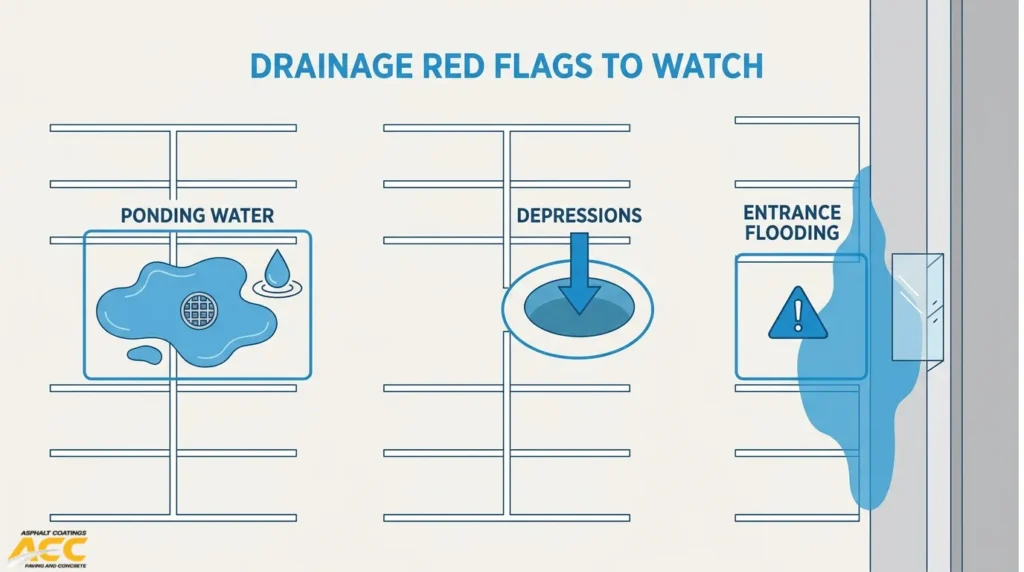
Persistent ponding after storms says your lot’s drainage has been compromised by surface deterioration, clogged infrastructure, or inadequate slope. Properly graded asphalt sheds water within minutes of rainfall ending. When puddles linger for hours or days, the causes typically include:
- Surface depressions created by repeated traffic loading on weakened pavement.
- Clogged or collapsed drain lines that no longer channel runoff effectively.
- Loss of original grade due to settling subgrade material beneath the asphalt.
Because standing water accelerates oxidation and softens the asphalt binder, each storm cycle compounds the damage. In Fort Collins, where freeze-thaw cycles can occur dozens of times per season, trapped water expands as ice and forces cracks wider with each temperature swing. Addressing ponding early prevents small drainage issues from escalating into full base failures.
How Can Depressions and Birdbaths Warn You About Base or Subgrade Issues?
Depressions and birdbaths warn you about base or subgrade issues because they form when the structural layers beneath the asphalt compact unevenly or erode. A visible low spot holding water after rain indicates the aggregate base or native soil has shifted, often from moisture infiltration or insufficient compaction during original construction.
These localized failures tend to worsen progressively. Water pools in the depression, saturates the base, and softens the subgrade further, creating a cycle of deepening settlement. In my experience, birdbaths that appear in high-traffic drive lanes almost always signal base failure rather than surface wear alone. Infrared patching or full-depth repair is usually necessary once depressions exceed half an inch, since sealcoating or thin overlays cannot restore structural integrity to compromised subgrade.
When Is Water Near Building Entrances, Curbs, or ADA Routes a Red Flag?
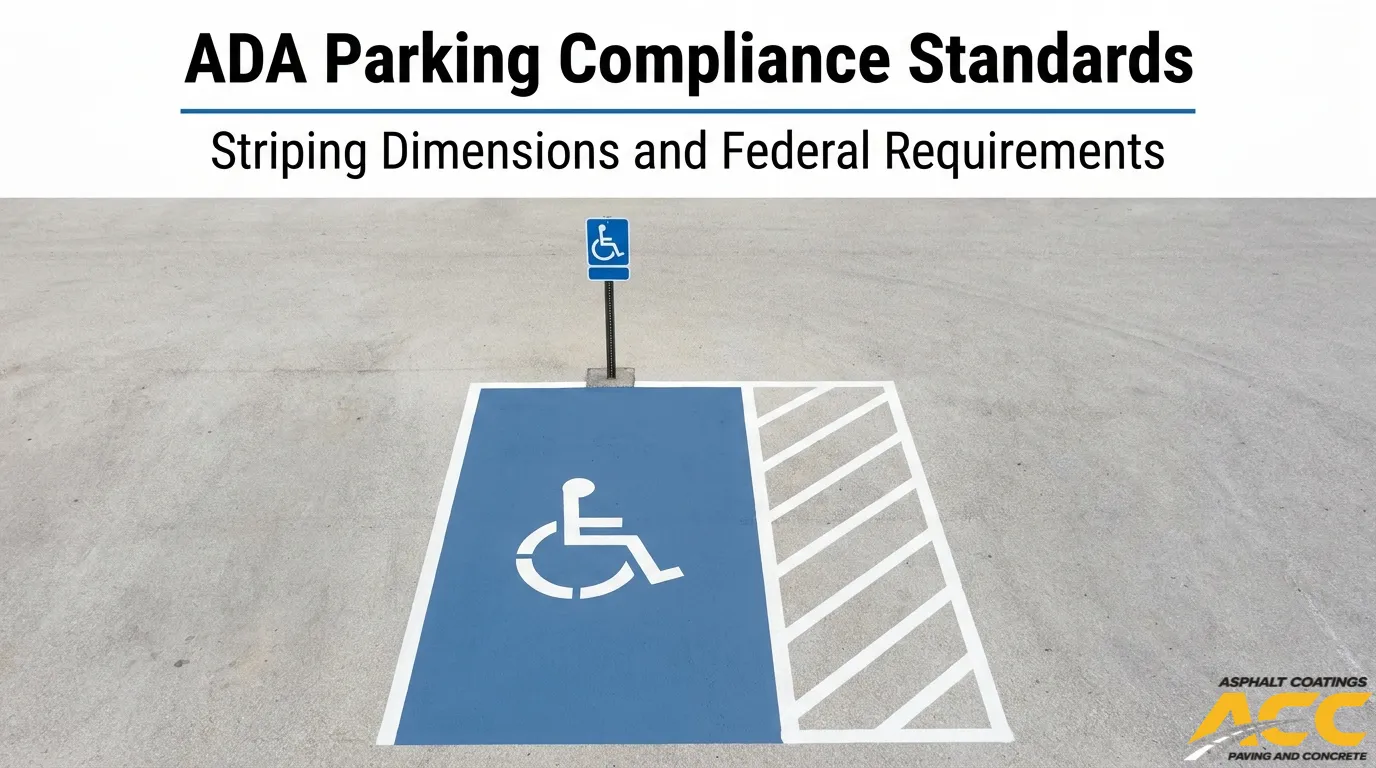
Water near building entrances, curbs, or ADA routes is a red flag when it creates slip hazards, blocks accessible pathways, or directs moisture toward building foundations. According to the U.S. Department of Justice, accessible parking spaces must be at least 96 inches wide with an adjacent access aisle, and standing water that encroaches on these areas can render them non-compliant with ADA standards.
Ponding at entrances also raises premises liability concerns. Property owners can face legal exposure when visitors encounter hazardous conditions caused by deferred maintenance. Water collecting against curb lines often signals failed gutter drainage or settling concrete, both of which redirect runoff into areas where pedestrian traffic concentrates. Correcting grading, repairing curbs, and restoring proper drainage flow at these critical zones protects both building infrastructure and the people using your facility.
With drainage failures identified, examining surface markings reveals another category of repair signals.
How Do Faded Line Striping and Worn Traffic Markings Signal Needed Repairs?
Faded line striping and worn traffic markings signal needed repairs when drivers can no longer clearly distinguish parking stalls, directional lanes, or accessibility symbols. The subsections below cover safety liability, ADA compliance risk, and the importance of directional markings.
When Does Faded Striping Become a Safety or Liability Issue for Your Property?
Faded striping becomes a safety and liability issue for your property when drivers and pedestrians can no longer follow clear visual guidance. Poorly visible lane lines, crosswalks, and stall boundaries increase the risk of collisions, pedestrian strikes, and trip-and-fall incidents.
According to a Rob Levine Law parking lot liability guide, a property owner or manager can be held liable if a visitor is harmed due to physical hazards, defects in the infrastructure, insufficient lighting, poor signage, or lack of security. Faded markings fall squarely within that “poor signage” category since courts treat worn pavement markings as evidence of deferred maintenance. For commercial property managers, restriping before markings become illegible is one of the most cost-effective steps to reduce premises liability exposure.
How Can Worn or Missing ADA Parking Symbols Put You at Compliance Risk?
Worn or missing ADA parking symbols put you at compliance risk because federal accessibility standards require clearly marked accessible spaces at all times, not just at the time of initial installation. When the International Symbol of Accessibility fades from a parking stall or access aisle, that space effectively ceases to meet ADA requirements.
Common compliance failures tied to worn markings include:
- Faded or illegible wheelchair symbols on the pavement surface.
- Missing “Van Accessible” designations on required spaces.
- Obscured access aisle hatching that allows unauthorized parking.
- Absent signage pairing where ground markings no longer match posted signs.
Violations can trigger complaints, Department of Justice investigations, and civil penalties. Routine restriping of ADA symbols protects both visitors and property owners from preventable legal action.
Why Do Disappearing Arrows, Stop Bars, and Directional Markings Matter?
Disappearing arrows, stop bars, and directional markings matter because they control the predictable flow of vehicles through your parking lot. When these markings fade, drivers lose critical cues that prevent wrong-way travel, missed stop points, and conflicting turning movements.
The consequences of invisible directional markings compound quickly in high-traffic commercial lots. Delivery trucks may enter one-way lanes from the wrong direction, customers may cut across unmarked fire lanes, and pedestrians lose the crosswalk boundaries that separate them from moving vehicles. Each scenario creates both collision risk and liability exposure. Proactive restriping of arrows, stop bars, and lane indicators keeps traffic patterns intuitive and defensible.
With markings addressed, evaluating the asphalt surface itself reveals the next category of deterioration.
How Do Raveling, Surface Wear, and Loose Gravel Show Your Asphalt Is Deteriorating?
Raveling, surface wear, and loose gravel show your asphalt is deteriorating by revealing that the binder holding aggregate together has broken down. These signs progress from cosmetic fading to structural loss, and each stage calls for a different repair approach.
What Does a Dry, Gray, or Rough Asphalt Surface Indicate About Oxidation?
A dry, gray, or rough asphalt surface indicates that oxidation has begun degrading the liquid asphalt binder that holds the pavement together. UV radiation and oxygen exposure cause the binder to become brittle over time, stripping the surface of its original dark, flexible coating.
This color shift is more than cosmetic. Once oxidation dries out the binder, the surface loses its ability to flex under traffic loads and thermal movement. Hairline cracks form more easily in oxidized pavement, and moisture penetrates faster through the roughened texture. Colorado’s high-altitude sun intensity accelerates this process considerably. Catching oxidation at the gray, rough stage is the most cost-effective intervention point; left untreated, the surface progresses to aggregate loss and structural compromise.
How Does Loose Aggregate or Gravel Point to Advanced Surface Breakdown?
Loose aggregate or gravel on your parking lot surface points to advanced surface breakdown because it means the asphalt binder can no longer hold the stone matrix in place. This stage, called raveling, follows oxidation and represents active material loss.
According to the Federal Highway Administration, raveling ranks among the most common pavement distresses alongside alligator cracking and block cracking. Once aggregate separates, the exposed subsurface erodes rapidly under tire friction and weather. Loose stones also create slip hazards for pedestrians and can damage vehicles. Addressing raveling before it progresses requires experienced assessment of whether sealcoating, patching, or overlay is most appropriate. Asphalt Coatings Company evaluates surface deterioration stages with in-house crews trained to identify the most cost-effective intervention point for each section of pavement. For commercial property managers, visible gravel accumulation signals that preventive maintenance windows have narrowed. The pavement requires more than surface treatment at this point, and delaying action accelerates deterioration toward base failure.
When Should You Choose Sealcoating Versus Asphalt Patching for Surface Wear?
You should choose sealcoating when surface wear is limited to oxidation, minor roughness, and early binder loss. Sealcoating restores a protective layer over intact pavement, blocking UV rays and moisture from penetrating further.
Asphalt patching becomes the better choice when raveling has progressed to aggregate loss, localized depressions, or areas where the surface course has eroded down to the base layer. Key factors that determine the right approach include:
- Surface integrity: If the aggregate is still bonded and the surface is merely faded or dry, sealcoating preserves remaining life.
- Depth of damage: Patching addresses areas where material is missing or the surface has failed beyond what a seal coat can cover.
- Extent of wear: Scattered raveling across a large area may warrant a mill-and-overlay rather than spot patching.
In many cases, the most effective strategy combines both methods: patching damaged sections first, then sealcoating the entire lot to unify protection.
With surface deterioration addressed, inspecting adjacent concrete curbs, sidewalks, and gutters reveals whether damage has spread beyond the asphalt itself.
How Do Concrete Curbs, Sidewalks, and Gutters Reveal Parking Lot Problems?
Concrete curbs, sidewalks, and gutters reveal parking lot problems by showing visible structural distress that often mirrors or accelerates damage in the adjacent asphalt. Cracking, settling, and broken drainage components each point to specific underlying issues.
Why Are Cracked or Spalling Concrete Curbs a Sign of Parking Lot Distress?
Cracked or spalling concrete curbs are a sign of parking lot distress because they indicate the same destructive forces acting on your asphalt are also breaking down surrounding concrete. Freeze-thaw cycles drive much of this damage; according to ACI Asphalt and Concrete, water enters cracks during mild temperatures, freezes and expands as temperatures drop, then thaws and contracts, progressively weakening the surface with each cycle.
When curbs deteriorate, they lose their ability to contain stormwater runoff and direct it toward drains. That uncontrolled water migrates beneath the asphalt, softening the base and subgrade. Spalling curbs often signal that moisture infiltration has been ongoing for multiple seasons, making adjacent pavement vulnerable to potholes and base failure.
How Do Settling or Heaving Sidewalks Create Trip Hazards Around Your Lot?
Settling or heaving sidewalks create trip hazards around your lot when soil movement pushes concrete slabs out of alignment. Frost heave lifts sections upward, while erosion or compaction causes others to sink, producing uneven joints and raised edges that pedestrians can catch underfoot.
These elevation changes pose serious liability concerns. According to Rob Levine Law, a property owner or manager can be held liable if a visitor is harmed due to physical hazards or defects in the infrastructure. Uneven sidewalks near building entrances, ADA routes, and crosswalks demand prompt correction. Ignoring these shifts also suggests the subgrade beneath your parking lot may be experiencing similar instability.
When Do Broken Gutters and Drain Pans Start Affecting Asphalt Performance?
Broken gutters and drain pans start affecting asphalt performance as soon as they can no longer channel water away from the pavement surface. Even a single cracked gutter section redirects runoff into areas without proper drainage, allowing water to pool against curb lines and seep into the asphalt base.
Over time, this trapped moisture erodes the aggregate foundation that supports the pavement above. The result is localized depressions, accelerated cracking, and eventual base failure in areas that would otherwise remain structurally sound. Repairing gutters and drain pans early is one of the most cost-effective ways to protect the asphalt investment they border. Commercial properties benefit from contractors who can address both concrete and asphalt components during a single project phase. Asphalt Coatings Company provides curb and gutter installation alongside asphalt services, ensuring drainage infrastructure and pavement work together as an integrated system rather than isolated repairs.
Recognizing concrete distress around your lot sets the stage for spotting subtler indicators, such as changes in traffic flow and ride quality.
How Can Changes in Traffic Flow, Noise, and Ride Quality Indicate Needed Repairs?
Changes in traffic flow, noise, and ride quality indicate needed repairs by revealing surface deterioration that visual inspections alone may miss. The subsections below cover tire noise, driver avoidance patterns, and stakeholder complaints.
What Does Increased Tire Noise or Vibration Mean for Your Parking Lot Surface?
Increased tire noise or vibration means your parking lot surface has developed textural irregularities that disrupt smooth contact between tires and asphalt. Raveling, aggregate loss, and shallow depressions all roughen the pavement enough to produce a noticeable hum or rumble at low speeds. Vehicles may also vibrate when crossing settled utility trenches or frost-heaved sections where the base has shifted unevenly. If drivers report a rougher ride compared to months prior, the surface has likely degraded beyond cosmetic wear. These acoustic and tactile cues often appear before cracks become visually obvious, making them valuable early warning signals for property managers monitoring lot condition.
How Do Drivers Swerving or Avoiding Certain Areas Reveal Hidden Damage?
Drivers swerving or avoiding certain areas reveal hidden damage by signaling that specific zones feel unsafe or uncomfortable to drive over. When vehicles consistently steer around the same spots, those areas likely contain developing potholes, uneven settlement, or subsurface voids that drivers sense through steering resistance and suspension response. Worn tire paths that shift away from established travel lanes create a visible map of problem zones. This avoidance behavior also concentrates traffic on narrower sections of the lot, accelerating wear in those areas and compounding the overall deterioration. Tracking these patterns during routine walkthroughs helps identify damage before it escalates into a liability concern.
When Do Complaints from Tenants, Customers, or Delivery Drivers Signal It Is Time to Repair?
Complaints from tenants, customers, or delivery drivers signal it is time to repair when feedback shifts from occasional mentions to a recurring pattern across multiple users. A single complaint may reflect personal preference, but repeated reports about rough surfaces, jarring bumps, or difficult navigation point to measurable deterioration. Delivery drivers who operate heavy vehicles are especially sensitive to pavement failures because loaded trucks amplify the impact of even minor depressions. According to ProcurementIQ, parking lot maintenance and repair prices in the US have grown 3.1% from 2022 to 2025, which means delaying action after complaints surface only increases eventual costs. Treating consistent user feedback as actionable data, rather than anecdotal noise, helps property managers schedule repairs before minor issues require full reconstruction.
With user-reported symptoms identified, the next step is prioritizing which repairs to address first.
How Can You Prioritize Repairs Once You Notice These Seven Parking Lot Warning Signs?
You can prioritize repairs by ranking each issue according to safety risk, structural severity, and budget impact. The sections below cover which problems to fix first, how to phase work strategically, and when full resurfacing makes more sense than patching.
Which Parking Lot Issues Should Fort Collins Property Managers Fix First for Safety?
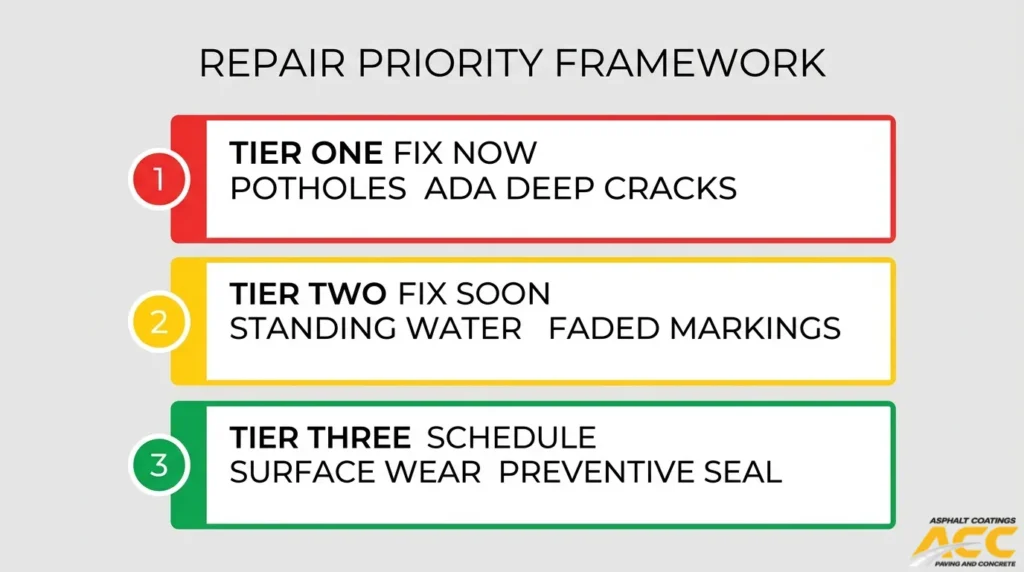
Fort Collins property managers should fix potholes, ADA access obstructions, and deep structural cracks first for safety. These hazards create the most immediate risk of injury and the greatest liability exposure. According to Asphalt Kingdom, the public pays over four billion dollars a year in premises liability settlements or lawsuits related to commercial parking lots.
After addressing direct trip-and-fall hazards, the next priority tier includes:
- Standing water near building entrances and pedestrian paths
- Broken curbs or heaving sidewalks along walkways
- Faded ADA symbols and missing stop bars at crossings
- Drainage failures that undermine the pavement base
Fixing safety-critical defects first reduces legal risk and protects visitors before cosmetic issues are addressed.
How Can You Plan a Phased Repair Strategy Around Your Budget and Operations?
You can plan a phased repair strategy by grouping repairs into urgent, short-term, and scheduled maintenance tiers that align with your operating calendar and cash flow. Start with the safety-critical fixes identified above, then schedule sealcoating and crack sealing during lower-traffic periods.
A proactive lifecycle approach dramatically reduces total cost. According to Strike Force Striping, a proactive maintenance plan for a 50,000-square-foot commercial parking lot costs roughly $55,000 to $80,000 over 15 years, while a reactive approach costs $250,000 to $400,000 or more for full reconstruction. Phasing work across fiscal quarters lets property managers spread expenses while keeping the lot operational. Prioritizing preventive measures like crack sealing before winter prevents freeze-thaw damage from escalating minor issues into major structural failures.
When Is It Smarter to Resurface or Rebuild Your Parking Lot Instead of Patching?
It is smarter to resurface or rebuild your parking lot instead of patching when damage covers more than roughly 25 to 30 percent of the total surface, or when base failure is widespread. Alligator cracking across large sections, multiple settling areas, and recurring potholes in the same zones all signal that the subgrade or base course has failed. Patching these areas provides only temporary relief because the underlying structure can no longer support traffic loads.
According to Rose Paving, a well-maintained asphalt surface can last 20 to 30 years, but without maintenance that lifespan can be cut in half. When cumulative patch costs approach the price of milling and overlay, resurfacing delivers better long-term value and a uniform, safe driving surface.
With a clear repair priority framework in place, the right paving partner can turn that plan into lasting results.
How Should You Approach Fort Collins Parking Lot Repairs With Asphalt Coatings Company?
You should approach Fort Collins parking lot repairs with Asphalt Coatings Company by scheduling a professional assessment, discussing paving, sealcoating, and crack sealing options, and building a proactive maintenance plan. The sections below cover service capabilities and key takeaways.
How Can Asphalt Coatings Company’s Paving, Sealcoating, and Crack Sealing Services Restore Your Commercial Parking Lot?
Asphalt Coatings Company’s paving, sealcoating, and crack sealing services restore your commercial parking lot by addressing damage at every stage, from hairline cracks to full structural failure. Asphalt Coatings Company performs all work with in-house crews using CDOT-approved materials, eliminating subcontractor inconsistencies common on commercial projects.
A proactive approach delivers significant cost savings. According to a lifecycle cost analysis by Strike Force Striping, a proactive maintenance plan for a 50,000-square-foot commercial parking lot costs roughly $55,000 to $80,000 over 15 years, while a reactive approach of waiting until failure requires $250,000 to $400,000 or more for full reconstruction.
Asphalt Coatings Company’s core restoration services include:
- Crack sealing fills joints and surface cracks before water infiltration causes base failure.
- Sealcoating protects against UV oxidation and freeze-thaw damage specific to Colorado’s Front Range climate.
- Asphalt patching and repair addresses potholes, birdbaths, and localized structural issues.
- Mill and pave services restore severely deteriorated surfaces without full-depth reconstruction.
- Striping and ADA-compliant marking maintain traffic flow, safety, and regulatory compliance.
For most Fort Collins commercial properties, combining these services into a phased maintenance plan is the most cost-effective path to a parking lot that lasts 20 years or longer.
What Are the Key Takeaways About the Seven Signs Your Fort Collins Commercial Parking Lot Needs Repairs We Covered?
The key takeaways about the seven signs your Fort Collins commercial parking lot needs repairs are that early detection and proactive maintenance prevent costly reconstruction, reduce liability exposure, and protect your property’s curb appeal.
The seven warning signs covered in this article are:
- Cracking patterns, from hairline fractures to alligator cracking, that signal progressive structural decline.
- Potholes that reveal base failure and create immediate safety hazards.
- Standing water and drainage failures that accelerate subsurface damage.
- Faded striping and worn ADA markings that increase compliance and liability risk.
- Raveling, surface wear, and loose aggregate indicating oxidation and binder breakdown.
- Damaged curbs, sidewalks, and gutters pointing to broader pavement system issues.
- Changes in traffic flow, tire noise, and user complaints signaling hidden deterioration.
Each sign worsens when left unaddressed, especially under Fort Collins freeze-thaw conditions. Acting on the first visible warning, rather than waiting for multiple signs to compound, is the single most important decision a property manager can make. Asphalt Coatings Company partners with commercial property owners across Colorado’s Front Range to assess these conditions and build repair strategies matched to each property’s budget, operations, and long-term goals.