Commercial asphalt sealcoating is a preventive maintenance treatment that applies a protective emulsion layer over existing pavement to shield it from UV radiation, water, chemicals, and daily traffic wear.
This guide covers pavement protection and lifespan extension, long-term cost savings, property appearance and safety improvements, scheduling and timing, property-specific applications, and contractor selection.
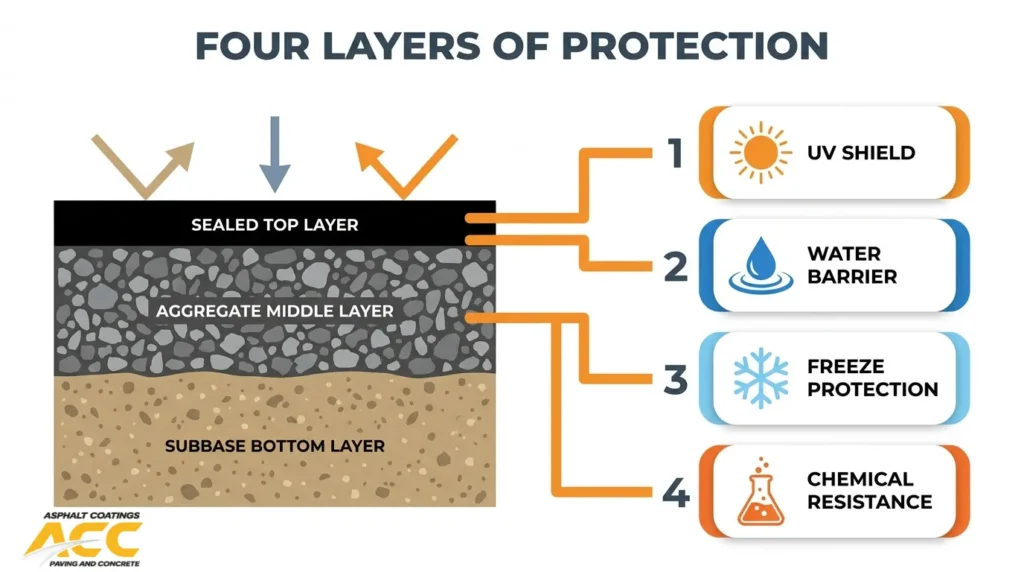
Sealcoating extends pavement lifespan by blocking the four primary damage sources: UV oxidation that makes binder brittle, water infiltration that erodes the subbase, freeze-thaw cycles that widen cracks from within, and petroleum-based spills that dissolve unprotected asphalt on contact. Each mechanism works together to keep minor surface wear from escalating into structural failure.
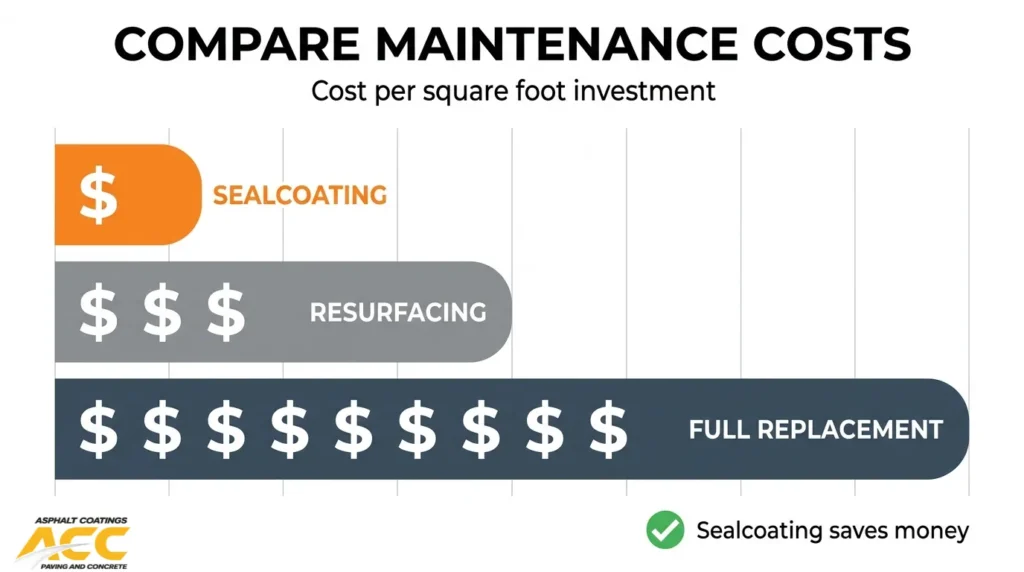
The financial case for sealcoating is equally strong. At a fraction of the cost per square foot compared to resurfacing or full replacement, scheduled applications defer major rehabilitation for years and eliminate the indirect costs of tenant disruption and emergency repairs.
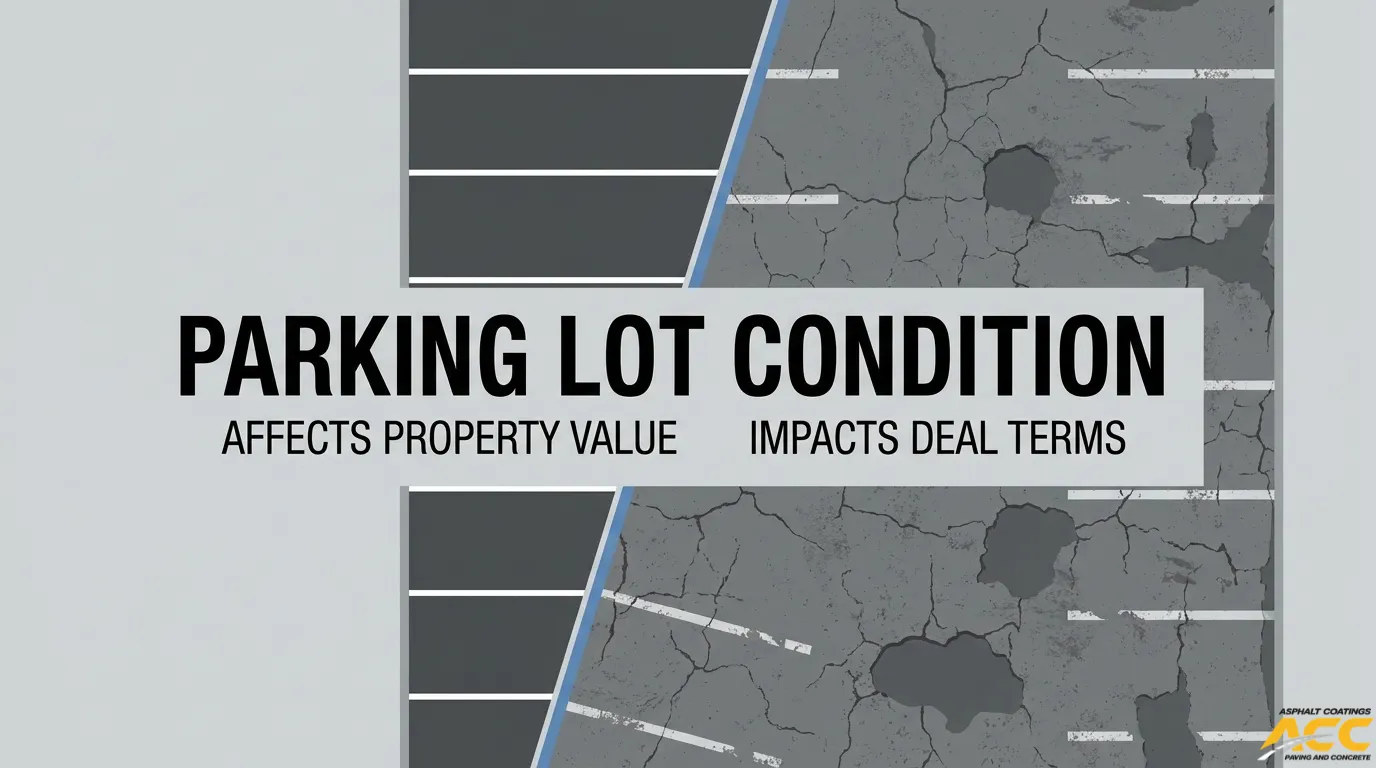
A fresh seal coat restores faded asphalt to a uniform black finish that sharpens striping contrast, improves skid resistance in wet conditions, and reduces tripping hazards from raveling and potholes. These visual and functional upgrades directly lower liability risk for property owners.
Timing and frequency depend on traffic volume, climate, and visible surface conditions; most commercial lots benefit from reapplication every two to five years during warm, dry weather. Shopping centers, office parks, industrial complexes, and HOA communities each face distinct wear patterns that sealcoating addresses differently.
Choosing a contractor with a documented quality control plan, thorough surface preparation practices, and verifiable commercial project history ensures each application delivers its full protective return.
Why Does Commercial Asphalt Need Sealcoating?
Commercial asphalt needs sealcoating because exposure to UV radiation, water, chemicals, and daily traffic steadily breaks down the binder that holds pavement together. Without a protective seal, this degradation leads to cracking, raveling, and costly structural failure. Sealcoating replenishes the binder lost through weathering and aging, providing a protective barrier against the elements that cause asphalt to become brittle, according to SealMaster’s technical guide. The asphalt liquid binder, once flexible and dark, oxidizes and turns gray as it dries out; surface voids then allow water to penetrate the base layers. For high-traffic commercial properties, this cycle accelerates because heavy vehicles compound the stress on already weakened surfaces. Proactive sealcoating interrupts this deterioration cycle before minor surface wear escalates into pavement failure requiring full-depth repair.
How Does Sealcoating Extend Asphalt Pavement Lifespan?
Sealcoating extends asphalt pavement lifespan by slowing deterioration from UV rays, water, freeze-thaw cycles, and chemical exposure. The following subsections cover each protective mechanism in detail.
How Does Sealcoating Protect Against UV Oxidation?
Sealcoating protects against UV oxidation by replenishing the asphalt binder lost through weathering and aging, creating a protective barrier against the elements that cause pavement to become brittle. Without this barrier, ultraviolet radiation breaks down the liquid asphalt cement that binds aggregate together, leading to surface cracking and raveling.
According to a technical guide published by SealMaster, sealcoating restores this critical binder while shielding the pavement surface from continued solar degradation. Once oxidation advances unchecked, the asphalt loses flexibility and becomes prone to widespread cracking. Applying sealcoat at regular intervals interrupts this cycle before structural damage sets in, which is one of the most cost-effective steps any property manager can take.
How Does Sealcoating Prevent Water Infiltration?
Sealcoating prevents water infiltration by sealing the porous surface of asphalt so moisture cannot penetrate to the subbase. When water reaches the aggregate layers beneath the pavement, it weakens structural support and accelerates pothole formation.
According to maintenance guidance from the City of Cottage Grove, MN, preventive measures such as sealcoating or crack sealing should be utilized regularly to slow water infiltration and reduce the frequency of pothole formation. Sealed surfaces shed rainwater more effectively, directing it toward drainage systems instead of allowing it to pool and seep downward. For commercial lots with heavy traffic loads, this moisture barrier is especially critical because subbase erosion under constant vehicle weight compounds damage rapidly.
How Does Sealcoating Resist Freeze-Thaw Cycle Damage?
Sealcoating resists freeze-thaw cycle damage by preventing moisture from entering surface cracks where it would expand upon freezing. Water trapped inside asphalt expands by roughly nine percent when it freezes, widening existing cracks and creating new ones with each cycle.
By maintaining a sealed, water-resistant surface, sealcoating eliminates the entry point that triggers this destructive pattern. Repeated freeze-thaw events can turn minor surface cracks into alligator cracking or full-depth failures within just a few seasons. In regions that experience wide temperature swings, this protective function alone can significantly extend pavement service life. Proactive sealing before winter is far more practical than repairing the structural failures that accumulate after multiple freeze-thaw seasons.
How Does Sealcoating Guard Against Oil and Chemical Spills?
Sealcoating guards against oil and chemical spills by forming a sacrificial barrier between petroleum-based contaminants and the asphalt binder beneath. Gasoline, motor oil, transmission fluid, and deicing chemicals dissolve unprotected asphalt binder on contact, softening the pavement and causing localized deterioration.
The sealcoat layer absorbs this chemical exposure instead of the structural asphalt. Commercial parking lots and loading areas face especially high spill risk from vehicle drip patterns and delivery operations. Regularly applied sealcoat keeps these contaminants from reaching the binder that holds aggregate in place. Because the sealcoat is designed to be reapplied periodically, each new coat restores this chemical resistance before cumulative exposure compromises pavement integrity.
With these protective layers working together, the financial case for sealcoating becomes equally compelling.
How Much Money Can Sealcoating Save on Pavement Maintenance?
Sealcoating can save commercial property owners significant money by preventing costly repairs, resurfacing, and full replacement. The sections below compare sealcoating costs against long-term repair expenses, asphalt resurfacing, and complete pavement replacement.
How Does Sealcoating Reduce Long-Term Repair Costs?
Sealcoating reduces long-term repair costs by addressing minor surface deterioration before it escalates into structural failures that demand expensive intervention. When oxidation, water infiltration, and daily traffic wear go untreated, small cracks compound into potholes and base failures. Sealcoating costs for maintenance projects typically start around $0.10 per square foot, according to data compiled by Ohio Concrete, making it one of the most affordable preventive treatments available. Compared to patching, base repair, or drainage corrections triggered by neglect, that per-square-foot investment is a fraction of reactive repair budgets. For most commercial properties, spending modestly on prevention every few years is far more cost-effective than deferring maintenance until failures force emergency work.
How Does Sealcoating Compare in Cost to Asphalt Resurfacing?
Sealcoating compares in cost to asphalt resurfacing as a substantially less expensive option when applied at the right time. Resurfacing, or overlay, involves milling the existing surface and laying new asphalt, which can cost several dollars per square foot depending on project scope. According to a life-cycle cost analysis by Iowa State University, timely pavement preservation treatments such as sealcoating provide significant long-term savings compared to reactive maintenance strategies. Sealcoating preserves the existing surface for a fraction of what an overlay requires. Early, scheduled applications can push resurfacing timelines back by years, reducing total pavement expenditure across the asset’s life. Property managers who treat sealcoating as a recurring line item consistently spend less than those who wait for conditions to demand resurfacing.
How Does Sealcoating Compare in Cost to Full Replacement?
Sealcoating compares in cost to full replacement as the most economical option by a wide margin. Complete pavement removal and reconstruction involves demolition, subgrade preparation, base installation, and new asphalt paving. This process can cost ten to twenty times more per square foot than a sealcoat application. Full replacement also disrupts tenant access and business operations for days or weeks, adding indirect costs that sealcoating avoids entirely. By maintaining the existing pavement structure through periodic sealcoating, commercial properties can defer or even eliminate the need for total reconstruction for decades. Prioritizing prevention over replacement is one of the simplest ways to protect a pavement investment.
With cost savings clearly defined, the next step is understanding how sealcoating enhances property appearance.
How Does Sealcoating Improve Commercial Property Appearance?
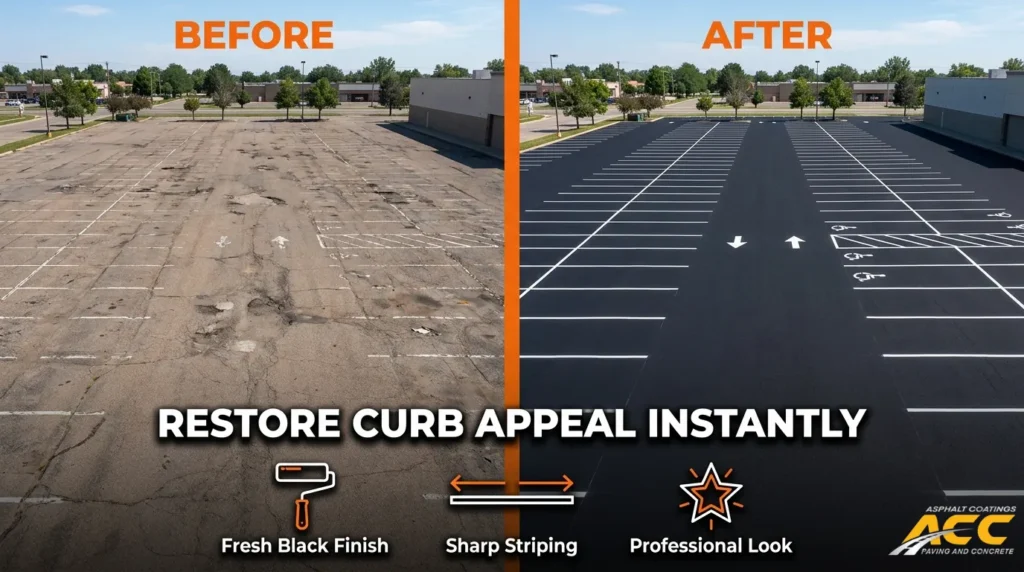
Sealcoating improves commercial property appearance by restoring faded, gray asphalt to a rich, uniform black finish that signals professionalism and active maintenance. This visual transformation affects curb appeal, tenant perception, and property value.
Fresh sealcoating creates clean, high-contrast striping visibility and eliminates the patchy, weathered look that develops as UV rays and oxidation degrade the asphalt binder over time. For commercial properties, where first impressions directly influence customer behavior and leasing decisions, a well-maintained parking lot communicates that ownership invests in the entire property. According to the National Cooperative Highway Research Program, slurry seals improve surface texture and help reduce surface distress caused by oxidation and raveling, which are the primary drivers of visual deterioration.
The difference between a neglected lot and a recently sealed surface is immediately noticeable. Faded lane markings pop against the dark background, oil stains become easier to clean, and the overall aesthetic cohesion of the property improves. This matters most for retail centers, office parks, and multi-tenant complexes where competing properties set a visual standard. Investing in appearance through sealcoating is one of the most cost-effective ways to protect perceived property value without structural renovation.
How Does Sealcoating Enhance Safety for Customers and Tenants?
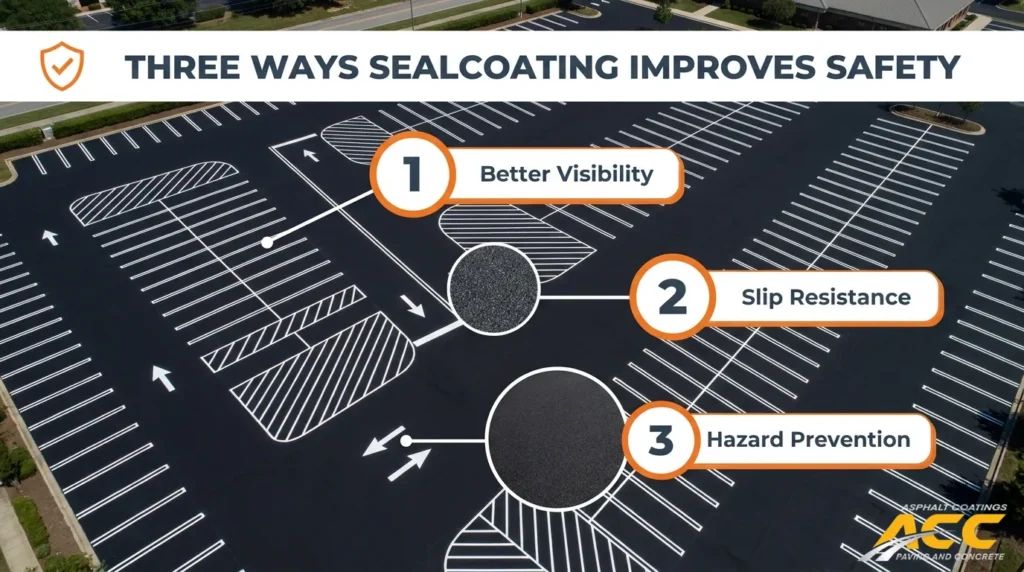
Sealcoating enhances safety for customers and tenants by restoring surface texture, improving visibility, and reducing tripping hazards caused by pavement deterioration. These benefits directly lower liability risk for commercial property owners.
A sealed parking lot creates a smoother, more uniform surface that minimizes the cracks, potholes, and loose aggregate responsible for most slip-and-fall incidents. According to the National Cooperative Highway Research Program (NCHRP), slurry seals improve surface texture for skid resistance and help reduce surface distress caused by oxidation and raveling. This friction improvement matters most during wet conditions, when unsealed pavement becomes slick from exposed aggregate and standing water in surface depressions.
The deep black finish that sealcoating produces also improves contrast with parking lot striping and pavement markings. Brighter, more visible lane lines, directional arrows, and pedestrian crosswalks help drivers navigate safely and reduce the chance of vehicle-pedestrian conflicts. For multi-tenant properties and high-traffic retail centers, this visual clarity supports orderly traffic flow during peak hours.
Beyond surface conditions, sealcoating addresses the root causes of pavement failure that create hazards over time. Key safety benefits include:
- Filling minor surface voids that collect water and freeze into ice patches during cold weather.
- Preventing raveling that loosens aggregate and creates uneven walking surfaces.
- Slowing pothole formation by blocking water infiltration into the asphalt base.
- Maintaining ADA-accessible routes by preserving smooth, level pavement transitions.
For property managers concerned about premises liability, a documented sealcoating maintenance schedule demonstrates proactive care. This record strengthens a property’s legal position if an injury claim arises, showing that reasonable steps were taken to maintain safe conditions. Investing in regular sealcoating is one of the most practical ways to protect both people and the property’s bottom line.
Understanding when to apply sealcoating ensures these safety benefits remain consistent year after year.
When Should Commercial Properties Schedule Sealcoating?
Commercial properties should schedule sealcoating based on frequency, seasonal timing, and visible pavement conditions. The following subsections cover recommended intervals, the best time of year, and the warning signs that indicate your lot needs attention.
How Often Should a Commercial Parking Lot Be Sealcoated?
A commercial parking lot should be sealcoated every two to three years under normal traffic and weather conditions. According to the Alaska Department of Transportation, the service life of pavement preservation treatments such as sealcoating typically varies from three to seven years. High-traffic lots at shopping centers or distribution warehouses often fall on the shorter end of that range, while lower-traffic office parks may extend closer to five years between applications. Monitoring actual surface wear rather than relying on a fixed calendar produces better results and avoids both premature reapplication and costly neglect.
What Time of Year Is Best for Sealcoating Application?
The best time of year for sealcoating application is late spring through early fall, when ambient temperatures consistently stay above 50°F and no rain is in the forecast for 24 to 48 hours. Sealcoat emulsions require warm, dry conditions to cure properly; cooler temperatures slow curing, and moisture prevents the coating from bonding to the pavement surface. For properties along Colorado’s Front Range, this window typically runs from May through September. Scheduling during lower-traffic periods, such as weekends or seasonal slowdowns, further minimizes disruption to customers and tenants.
What Pavement Conditions Signal It Is Time to Sealcoat?
The pavement conditions that signal it is time to sealcoat include fading color, surface raveling, hairline cracking, and minor oxidation. When asphalt shifts from deep black to gray, UV exposure has begun breaking down the binder. Small aggregate loss and fine surface cracks follow shortly after. Addressing these early signs with sealcoating is far more cost-effective than waiting for potholes or base failure to develop. When selecting a sealant, product composition matters: according to the U.S. Geological Survey, coal-tar-based sealcoat contains 35,000 to 200,000 mg/kg of PAHs, significantly more than asphalt emulsion alternatives. Asphalt-based emulsions offer effective protection with a considerably lower environmental footprint.
With the right schedule established, choosing a qualified contractor ensures these maintenance investments deliver their full return.
Which Commercial Properties Benefit Most from Sealcoating?
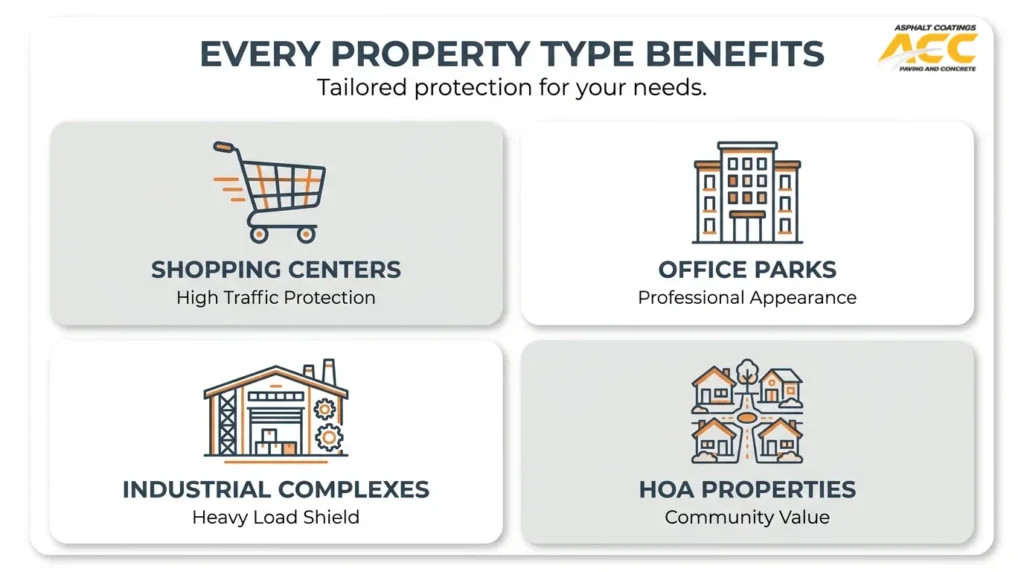
The commercial properties that benefit most from sealcoating are those with high-traffic asphalt surfaces exposed to constant vehicle loads, weather, and chemical exposure. Shopping centers, office parks, industrial complexes, and HOA communities each gain distinct advantages.
How Does Sealcoating Benefit Shopping Center Parking Lots?
Sealcoating benefits shopping center parking lots by protecting large asphalt surfaces that endure heavy daily traffic, frequent turning movements, and constant exposure to automotive fluids. These lots often span tens of thousands of square feet, making preventive maintenance far more cost-effective than reactive repairs.
A sealed surface maintains uniform color and smooth texture, which reinforces a welcoming first impression for shoppers. Sealcoating also slows water infiltration into cracks, reducing pothole formation in areas where shopping carts, delivery trucks, and pedestrians share the pavement. For retail properties where appearance directly influences foot traffic, maintaining a well-sealed lot is one of the simplest investments in curb appeal and long-term pavement performance.
How Does Sealcoating Benefit Office Park Driveways and Lots?
Sealcoating benefits office park driveways and lots by preserving the professional appearance tenants and visitors expect while extending the useful life of shared pavement infrastructure. Office parks typically feature interconnected driveways, fire lanes, and smaller lots that deteriorate unevenly under varied traffic patterns.
A consistent seal coat application creates a uniform, dark surface across all areas, eliminating the patchwork look that develops as different sections age at different rates. According to the Bureau of Transportation Statistics, pavement preservation is a crucial part of an effective maintenance program because it slows deterioration and extends service life. For property managers balancing multiple tenants, sealcoating simplifies budgeting by deferring costlier resurfacing projects while keeping the entire campus presentable.
How Does Sealcoating Benefit Industrial Complex Pavements?
Sealcoating benefits industrial complex pavements by shielding asphalt from the heavy axle loads, chemical spills, and fuel drips common in warehouse and distribution environments. Industrial lots face accelerated wear from forklift traffic, tractor-trailer turning, and concentrated loading at dock areas.
A quality seal coat acts as a sacrificial barrier between these harsh exposures and the asphalt binder underneath. This is especially valuable where diesel fuel and hydraulic fluid contact the pavement regularly, since petroleum-based chemicals soften unprotected asphalt. For facilities that cannot afford downtime from major repairs, a scheduled sealcoating program keeps pavements functional and reduces the risk of base failure in critical operational zones.
How Does Sealcoating Benefit HOA and Multi-Tenant Properties?
Sealcoating benefits HOA and multi-tenant properties by maintaining consistent pavement quality across shared roadways, parking areas, and access drives that serve diverse resident and visitor traffic. These properties face a unique challenge: multiple stakeholders share infrastructure costs, so preventive strategies that lower per-unit maintenance expenses gain broad support.
A sealed surface resists UV oxidation and water infiltration, two factors that accelerate cracking in community roads exposed to year-round weather. Sealcoating also enhances striping visibility, improving traffic flow and safety throughout the property. For HOA boards and multi-tenant managers, a proactive sealcoating schedule demonstrates responsible stewardship of community assets while preserving property values across the entire development.
Choosing the right contractor ensures these property-specific benefits are fully realized.
What Should You Look for in a Commercial Sealcoating Contractor?
You should look for a commercial sealcoating contractor that demonstrates proven quality control, proper surface preparation practices, and compliance with industry specifications. Key evaluation criteria include:
- A documented QC plan. According to the National Cooperative Highway Research Program (NCHRP), quality control for sealcoating projects includes a contractor’s QC plan, detailed records, and compliance with established industry specifications.
- Thorough surface preparation. The contractor should clean the pavement, fill cracks, and address drainage issues before applying any sealcoat material.
- Verifiable project history. Request references from similar commercial properties, such as shopping centers, office parks, or industrial complexes.
- Proper equipment and materials. Professional-grade spray systems and commercial-grade sealant products deliver more consistent coverage than consumer equipment.
- Clear communication and scheduling. The contractor should provide a detailed scope of work, realistic timelines, and a plan to minimize disruption to tenants and customers.
For most property managers, the contractor’s preparation process matters more than the quoted price per square foot. Cutting corners on crack filling or cleaning before application leads to premature sealcoat failure, negating any upfront savings. Choosing a contractor with a structured quality control process protects your pavement investment for years.
How Can Professional Sealcoating Support Your Pavement Plan?
Professional sealcoating supports your pavement plan by combining expert application with a long-term maintenance strategy. The sections below cover how Asphalt Coatings Company meets commercial sealcoating needs and the key takeaways from this guide.
Can Asphalt Coatings Company Handle Your Sealcoating Needs?
Yes, Asphalt Coatings Company can handle your sealcoating needs. Since 1986, Asphalt Coatings Company has served Colorado’s Front Range with a full suite of commercial asphalt services, including sealcoating, crack sealing, asphalt repair, and parking lot construction. Asphalt Coatings Company uses in-house crews rather than subcontractors, which gives property managers direct oversight of quality and scheduling. This single-source approach simplifies coordination for large-scale commercial projects at shopping centers, office parks, industrial complexes, and multi-tenant properties. With nearly four decades of experience navigating Colorado’s freeze-thaw cycles and high-altitude UV exposure, Asphalt Coatings Company designs sealcoating programs tailored to the specific demands each property faces.
What Are the Key Takeaways About Commercial Sealcoating?
The key takeaways about commercial sealcoating center on proactive maintenance, cost efficiency, and property protection:
- Sealcoating shields asphalt from UV oxidation, water infiltration, chemical spills, and freeze-thaw damage.
- Preventive sealcoating costs a fraction of resurfacing or full replacement, making early intervention the most economical strategy.
- Consistent application every few years preserves curb appeal, improves surface safety, and extends pavement lifespan.
- Choosing a qualified contractor with documented quality control ensures proper surface preparation and lasting results.
For property managers seeking a durable, budget-conscious pavement strategy, routine sealcoating remains one of the highest-return maintenance investments available. Partnering with an experienced commercial contractor turns reactive repairs into a planned preservation program.