
Patching vs. Full-Depth Asphalt Repair: What Denver Property Managers Must Know
July 18, 2025
Asphalt patching vs. full-depth repair in Denver is a critical decision for property managers aiming to maintain safe and durable pavements. Denver’s unique climate, marked by frequent freeze-thaw cycles, accelerates pavement damage, leading to issues like potholes and alligator cracks. According to the Colorado Department of Transportation, these cycles contribute significantly to pothole formation, especially
Read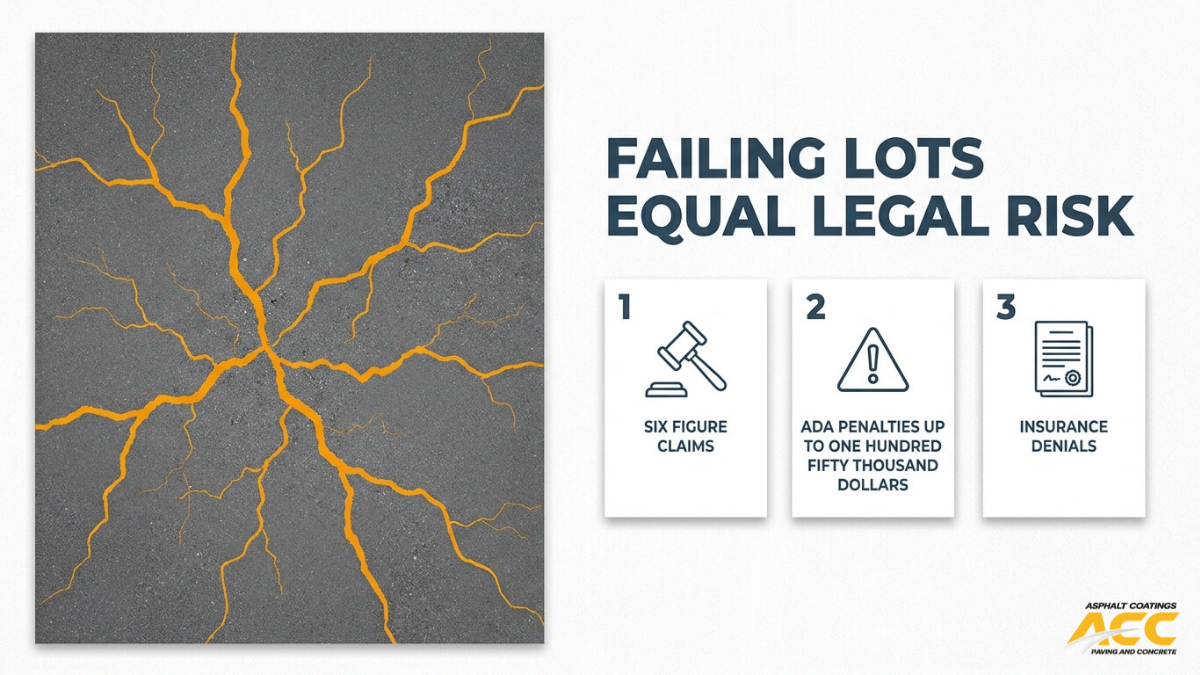
How Failing Parking Lots Increase Legal and Liability Risk
April 27, 2026
A failing parking lot is a premises liability case waiting to happen. Commercial property owners owe a legal duty of care to every person who walks across their pavement, and neglected surfaces give plaintiffs the evidence they need to prove negligence. We cover property owner legal obligations, specific surface hazards that generate claims, how slip-and-fall
Read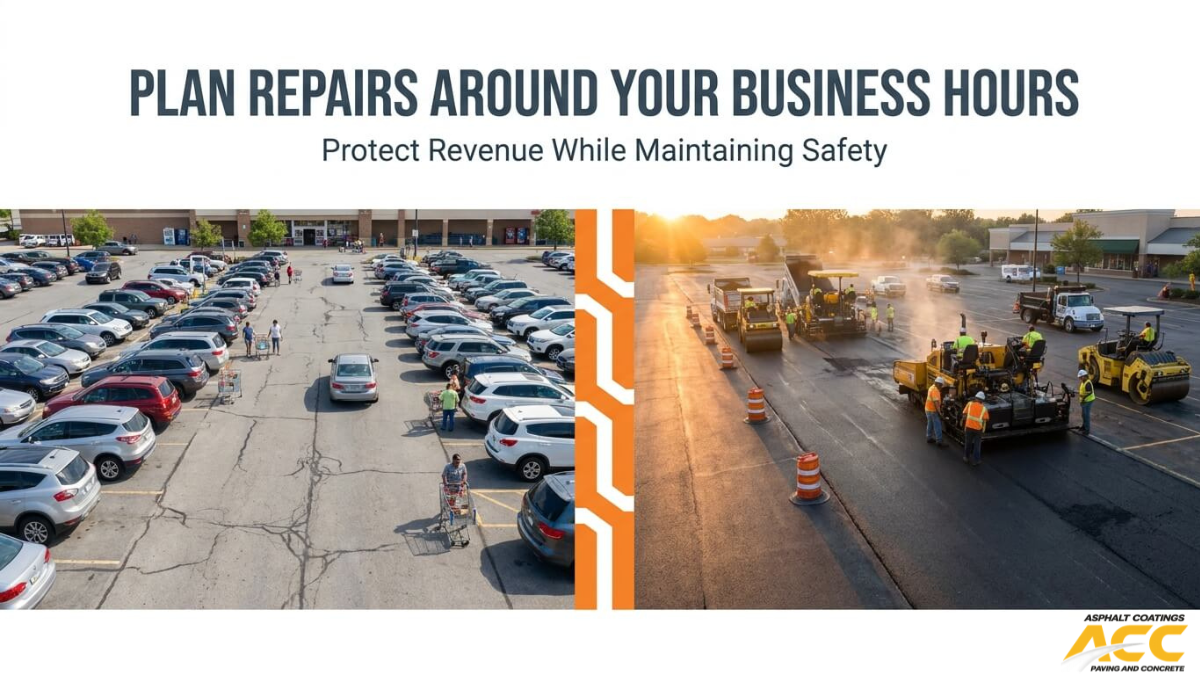
Planning Asphalt Repairs Around Peak Business Hours
April 27, 2026
Planning asphalt repairs around peak business hours is the process of scheduling pavement maintenance to align with low-traffic windows, protecting revenue, tenant relationships, and customer safety throughout the project. This guide covers the business risks of poorly timed repairs, peak traffic patterns across commercial property types, repair urgency assessment, scheduling strategies that maintain parking access,
Read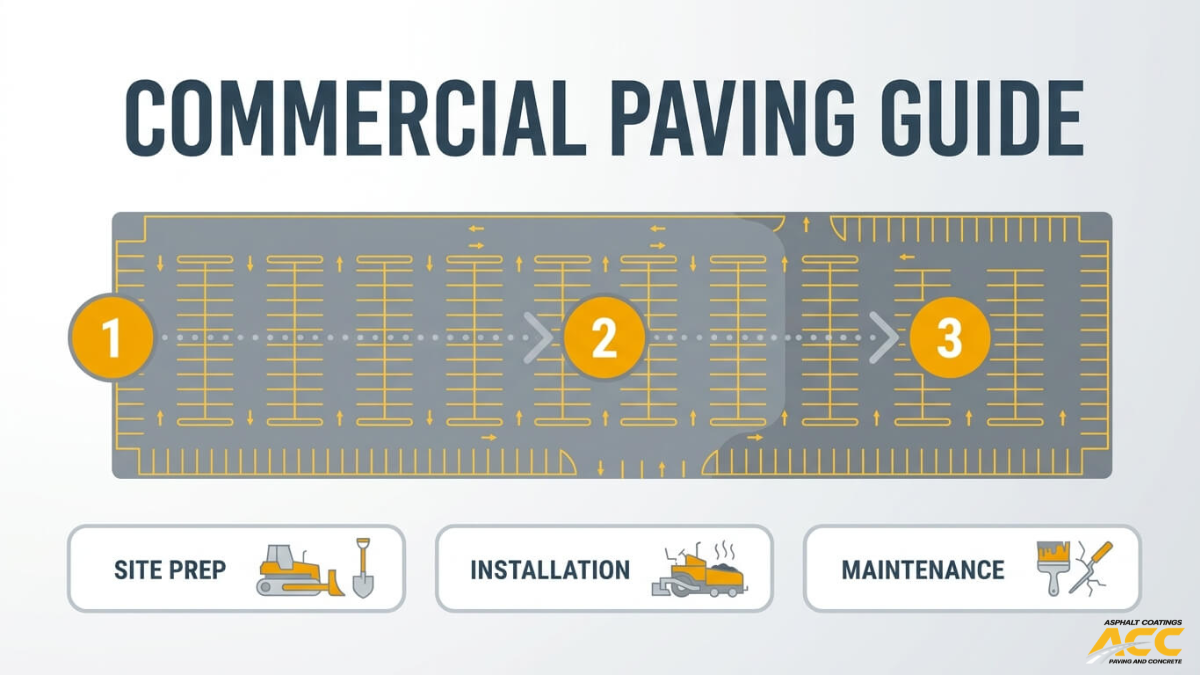
What Businesses Should Expect During a Commercial Paving Project
April 27, 2026
A commercial paving project is a multi-phase construction process that transforms a property’s asphalt surfaces through coordinated demolition, grading, installation, and finishing work. We created this guide to cover site assessment and planning, project timelines and construction phases, business disruption management, weather and regulatory factors, cost planning, quality verification, and long-term maintenance. Site assessment and
Read