
What Is Asphalt Milling and When Is It Needed?
April 9, 2025
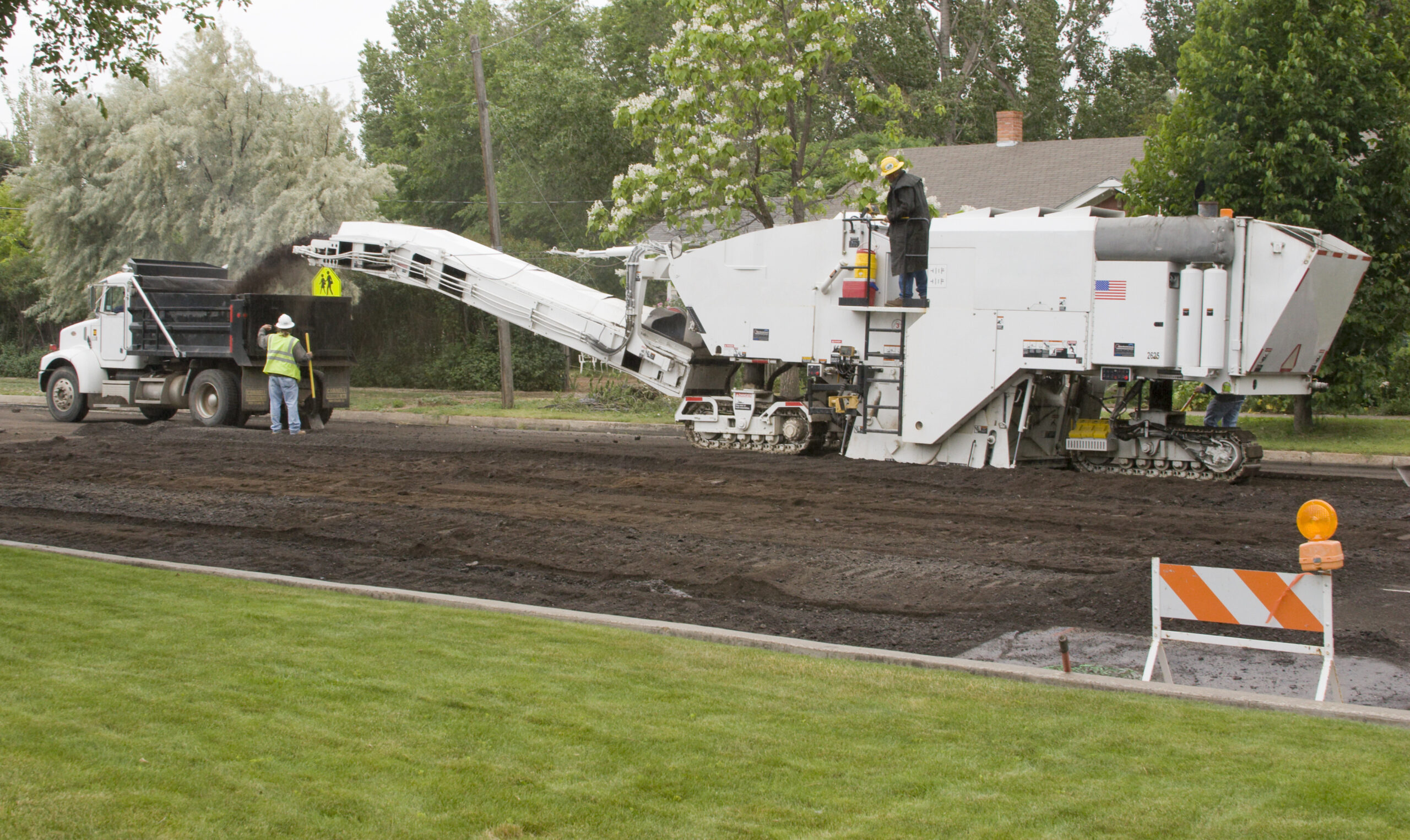
Over time, asphalt surfaces degrade due to continuous vehicular load, environmental exposure, and oxidation. Surface distress, manifesting as alligator cracking, rutting, ravelling, and pothole formation, compromises both structural integrity and safety. When conventional patching fails to provide a sustainable solution, asphalt milling emerges as the most efficient method for surface rehabilitation. Asphalt milling, also known
Read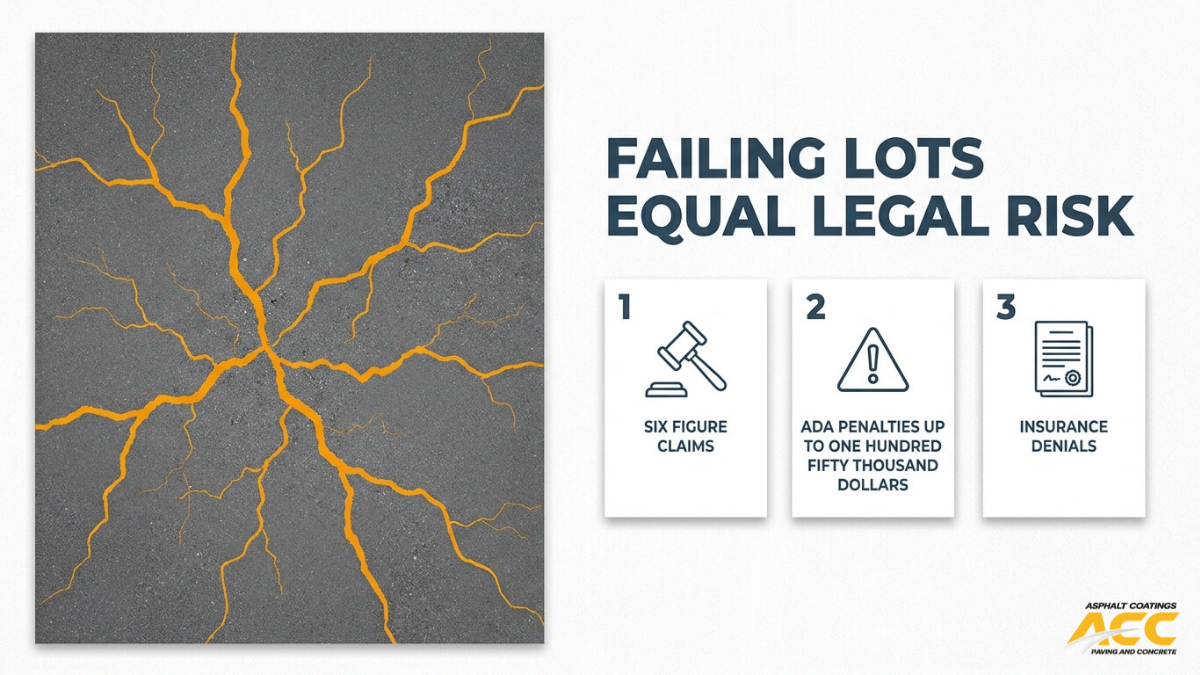
How Failing Parking Lots Increase Legal and Liability Risk
April 27, 2026
A failing parking lot is a premises liability case waiting to happen. Commercial property owners owe a legal duty of care to every person who walks across their pavement, and neglected surfaces give plaintiffs the evidence they need to prove negligence. We cover property owner legal obligations, specific surface hazards that generate claims, how slip-and-fall
Read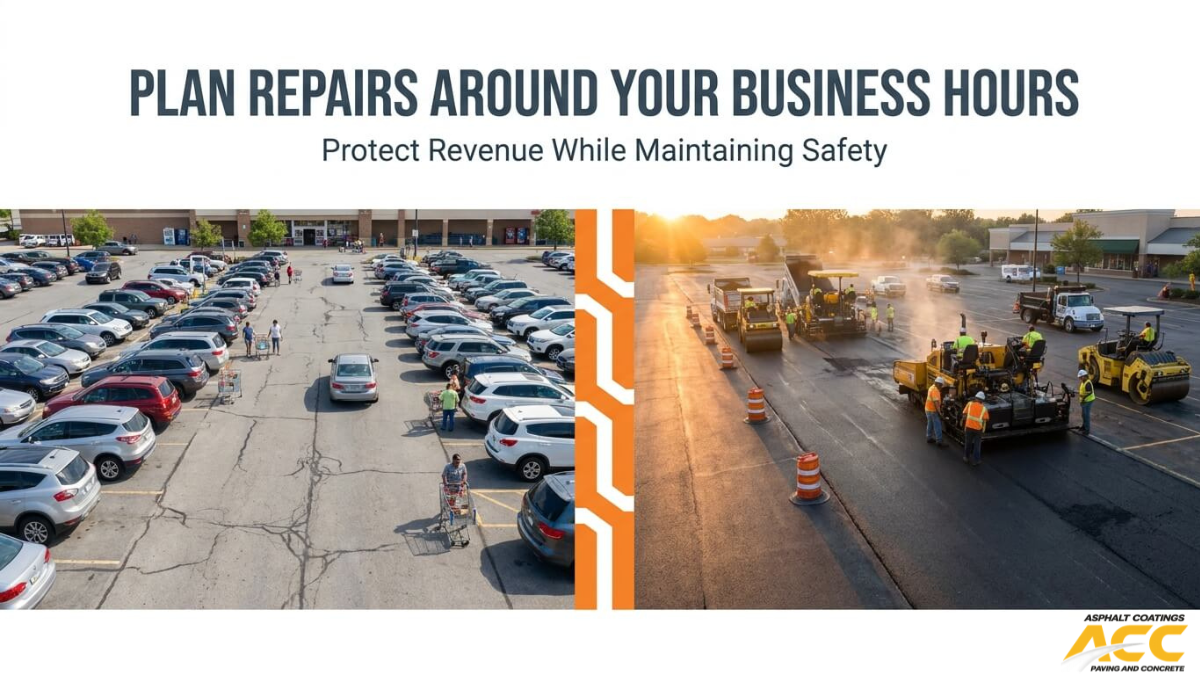
Planning Asphalt Repairs Around Peak Business Hours
April 27, 2026
Planning asphalt repairs around peak business hours is the process of scheduling pavement maintenance to align with low-traffic windows, protecting revenue, tenant relationships, and customer safety throughout the project. This guide covers the business risks of poorly timed repairs, peak traffic patterns across commercial property types, repair urgency assessment, scheduling strategies that maintain parking access,
Read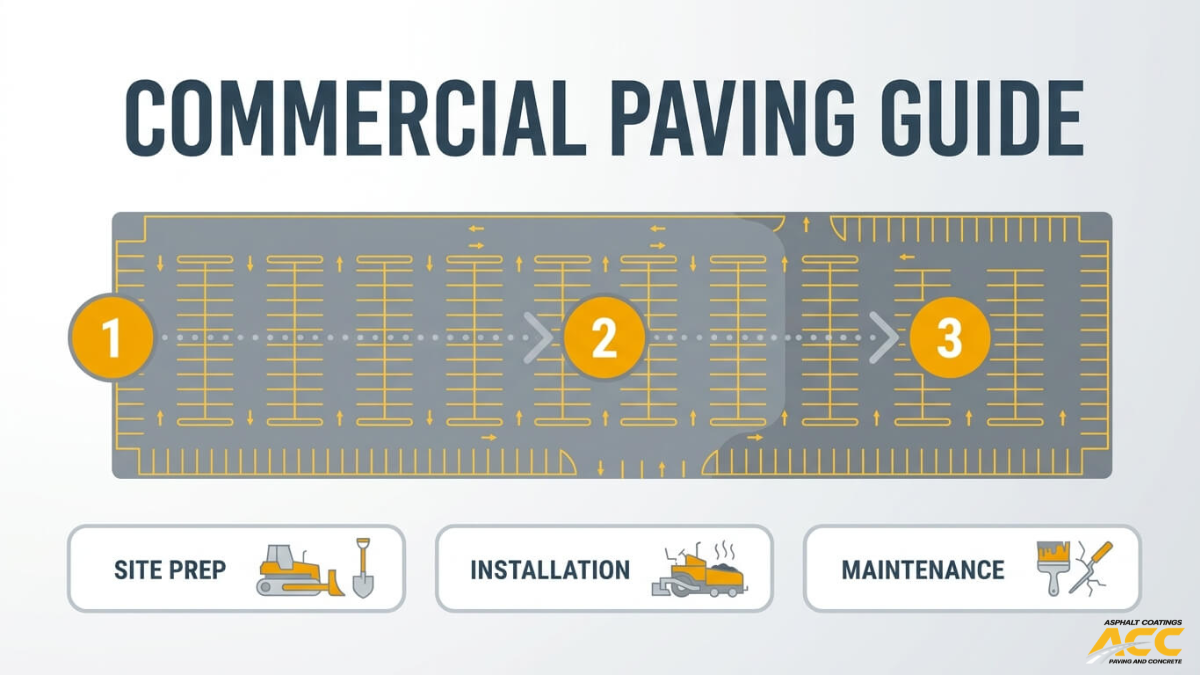
What Businesses Should Expect During a Commercial Paving Project
April 27, 2026
A commercial paving project is a multi-phase construction process that transforms a property’s asphalt surfaces through coordinated demolition, grading, installation, and finishing work. We created this guide to cover site assessment and planning, project timelines and construction phases, business disruption management, weather and regulatory factors, cost planning, quality verification, and long-term maintenance. Site assessment and
Read