
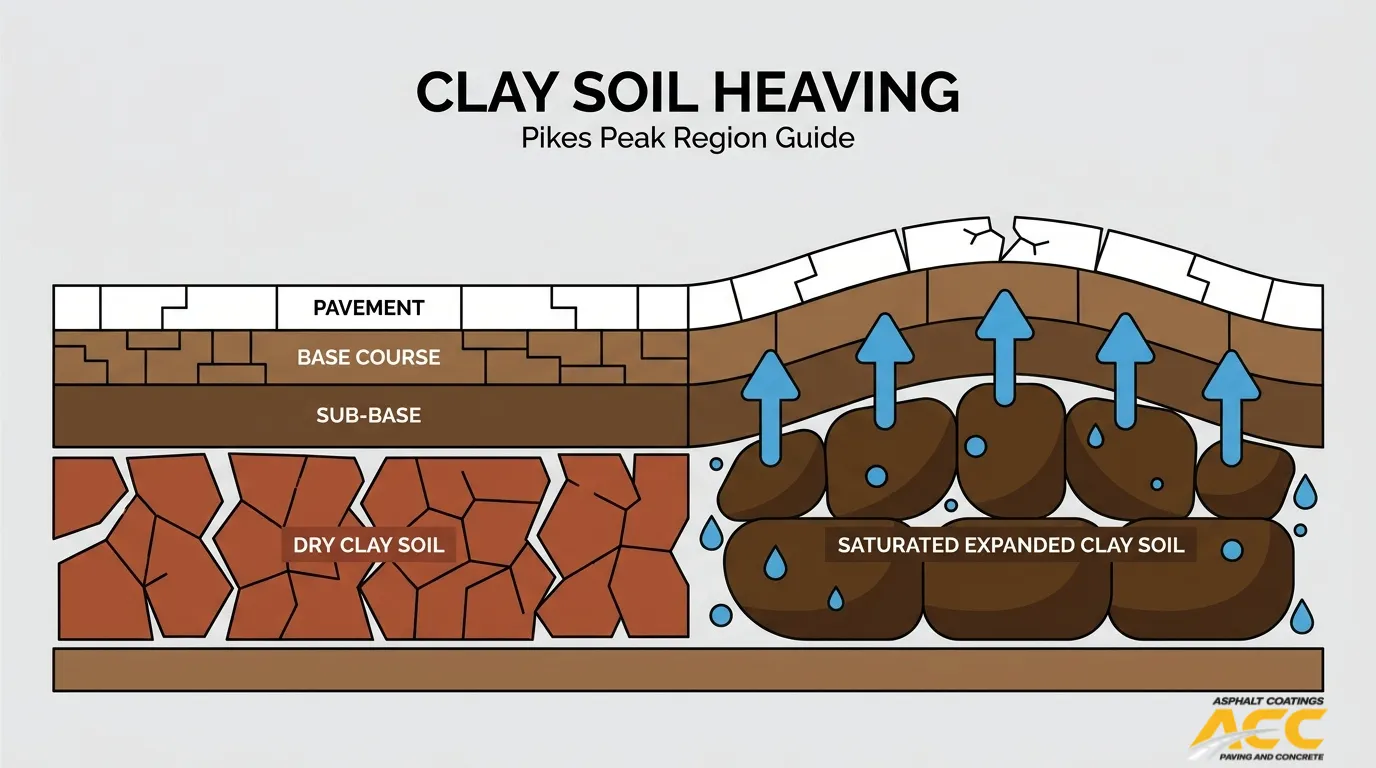
Why Do Expansive Clay Soils Cause Parking-Lot Heaving Across the Pikes Peak Region?
June 22, 2026
Expansive clay soil heaving in the Pikes Peak region is the upward displacement of parking-lot pavement caused by moisture-sensitive clay minerals in the subgrade that swell when wet and shrink when dry. The Pierre Shale and Dawson formations underlying much of Colorado Springs contain montmorillonite, smectite, and illite clays capable of generating forces that far
Read
Planning Asphalt Repairs Around Peak Business Hours
April 27, 2026
Planning asphalt repairs around peak business hours is the process of scheduling pavement maintenance to align with low-traffic windows, protecting revenue, tenant relationships, and customer safety throughout the project. This guide covers the business risks of poorly timed repairs, peak traffic patterns across commercial property types, repair urgency assessment, scheduling strategies that maintain parking access,
Read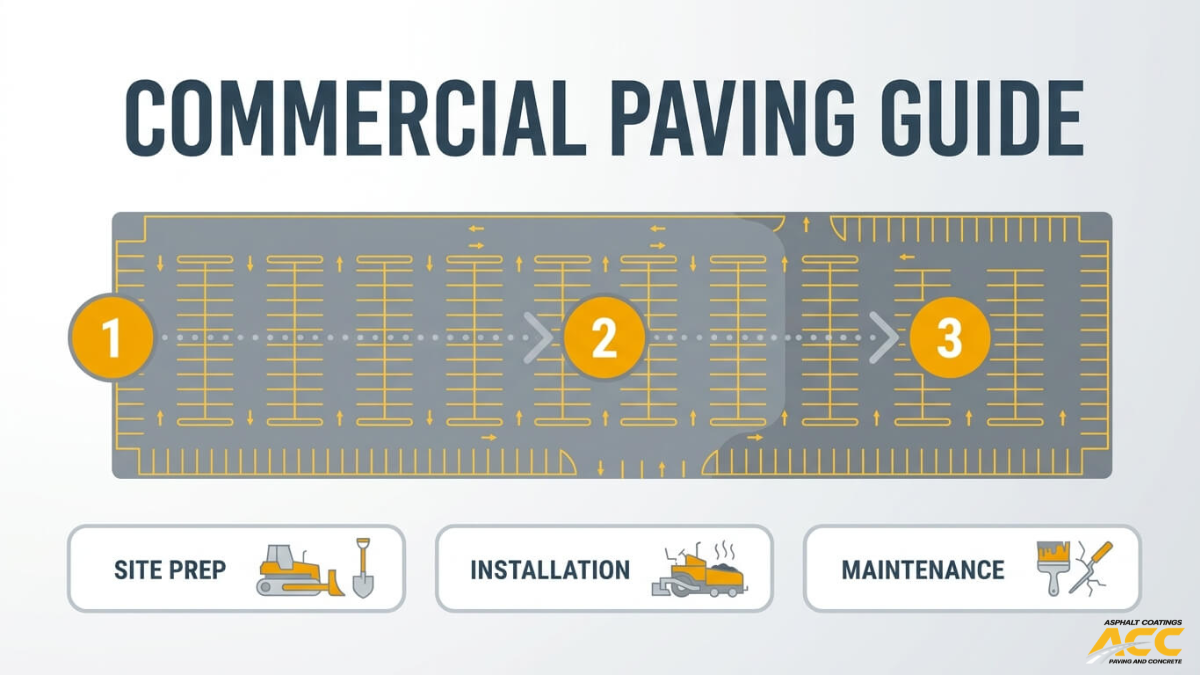
What Businesses Should Expect During a Commercial Paving Project
April 27, 2026
A commercial paving project is a multi-phase construction process that transforms a property’s asphalt surfaces through coordinated demolition, grading, installation, and finishing work. We created this guide to cover site assessment and planning, project timelines and construction phases, business disruption management, weather and regulatory factors, cost planning, quality verification, and long-term maintenance. Site assessment and
Read
How to Minimize Tenant Disruption During Asphalt Repairs
April 27, 2026
Minimizing tenant disruption during asphalt repairs is the process of coordinating communication, phased scheduling, safety measures, and contractor selection to keep commercial properties operational while pavement work proceeds. This guide covers tenant communication protocols, parking and access planning by property type, phased scheduling strategies, pedestrian safety during active paving, noise and dust control, contractor selection
Read