
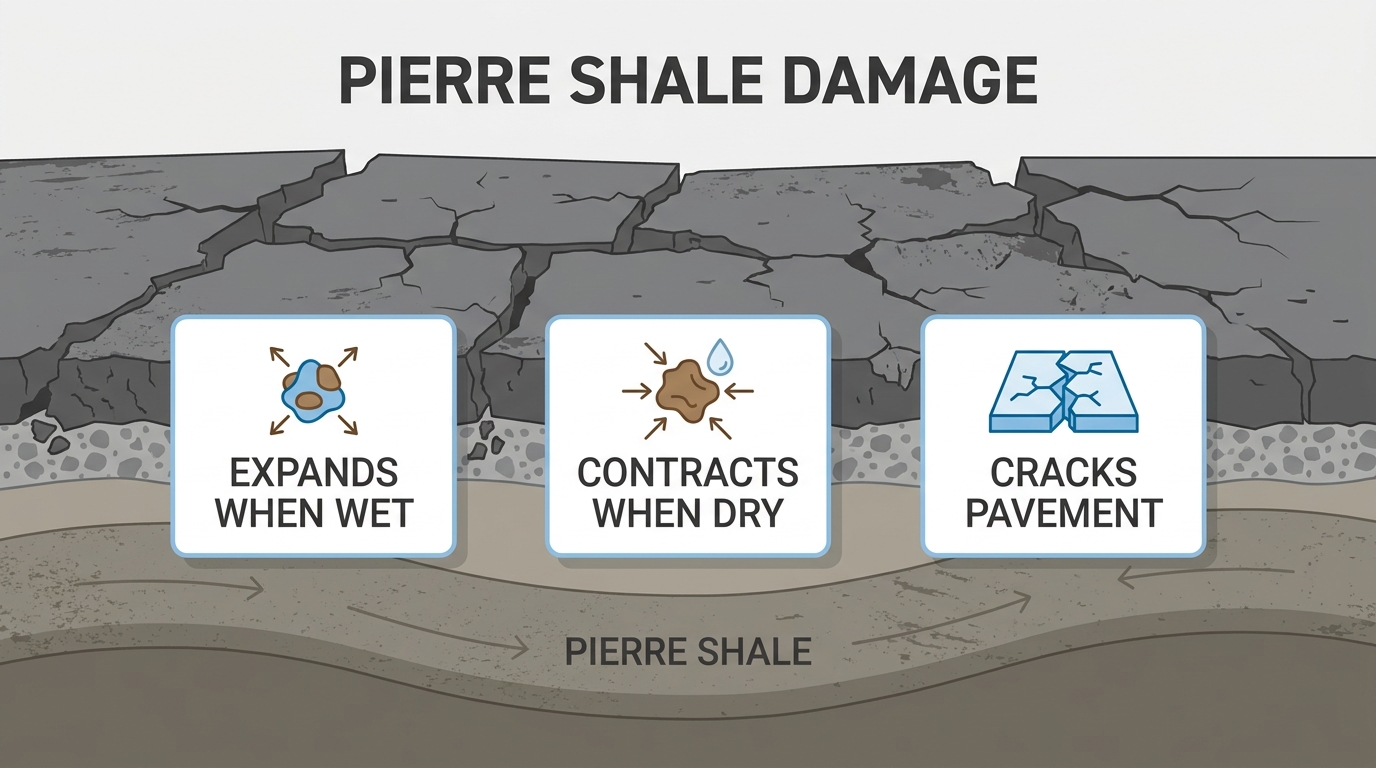
Why Do Expansive Pierre Shale Soils Crack Denver Commercial Pavements?
June 23, 2026
Pierre Shale is a Late Cretaceous marine shale formation rich in smectite and montmorillonite clay minerals that swell when wet and shrink when dry, generating a relentless swell-shrink cycle beneath Denver commercial pavements. This cycle is the primary reason parking lots, loading areas, and access roads across the metro area develop cracking, heaving, and settlement
Read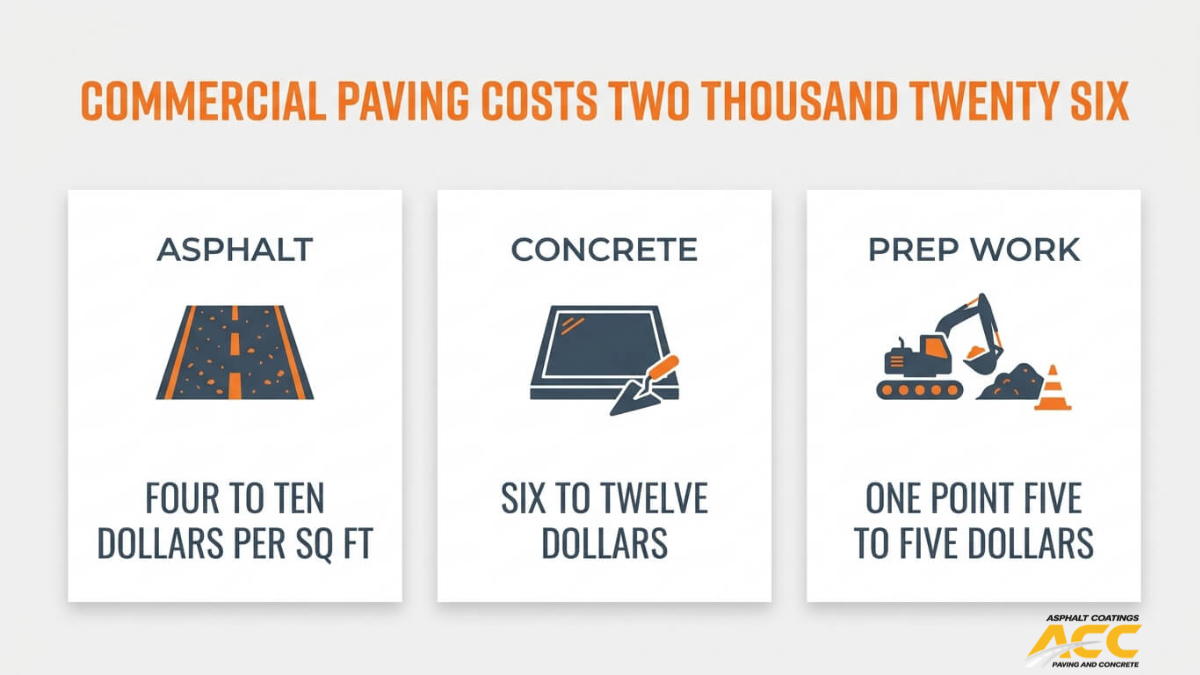
Cost to Pave Commercial Area 2026: Pricing Guide
April 27, 2026
Commercial paving cost is the total expense a property owner pays to install, prepare, and finish a paved surface on a commercial property. New asphalt installations range from $4.00 to $10.00 per square foot, while basic commercial concrete slabs cost $6 to $12 per square foot in 2026. This guide covers asphalt and concrete pricing
Read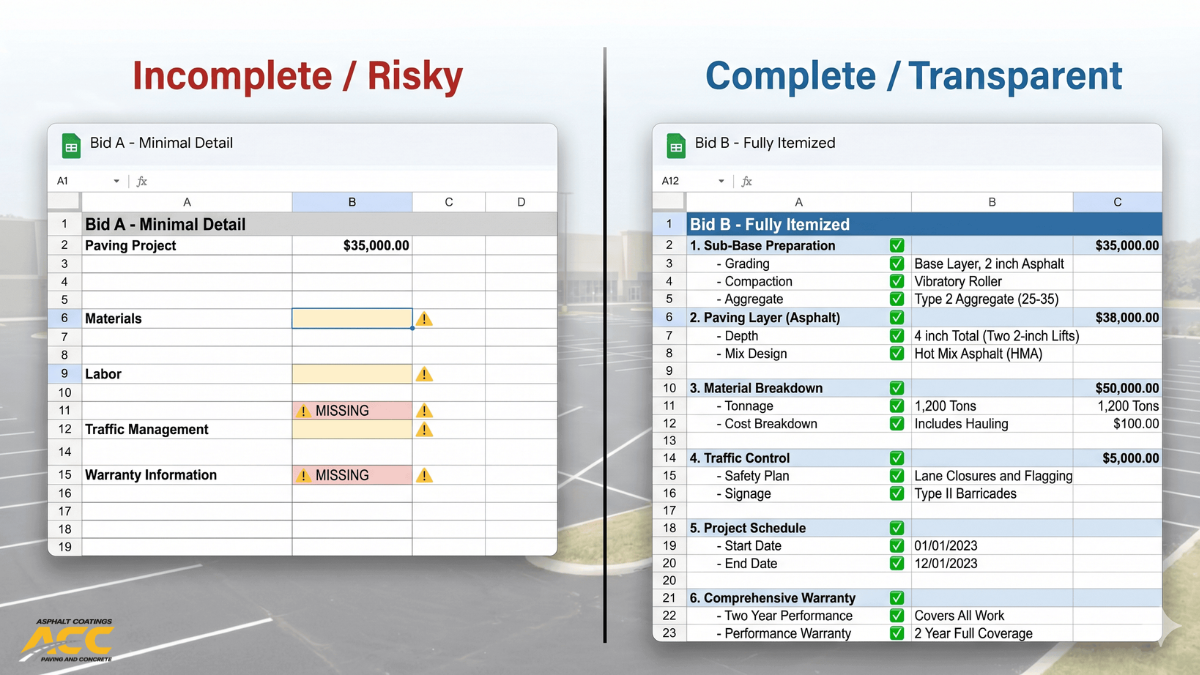
How to Compare Commercial Paving Bids & Quotes
April 27, 2026
Comparing commercial paving bids is the process of evaluating multiple contractor proposals side by side across scope, materials, pricing, qualifications, and contract terms to identify which quote delivers the best long-term value for your property. This guide covers what complete bids should contain, how to evaluate and compare pricing structures, red flags that signal risk,
Read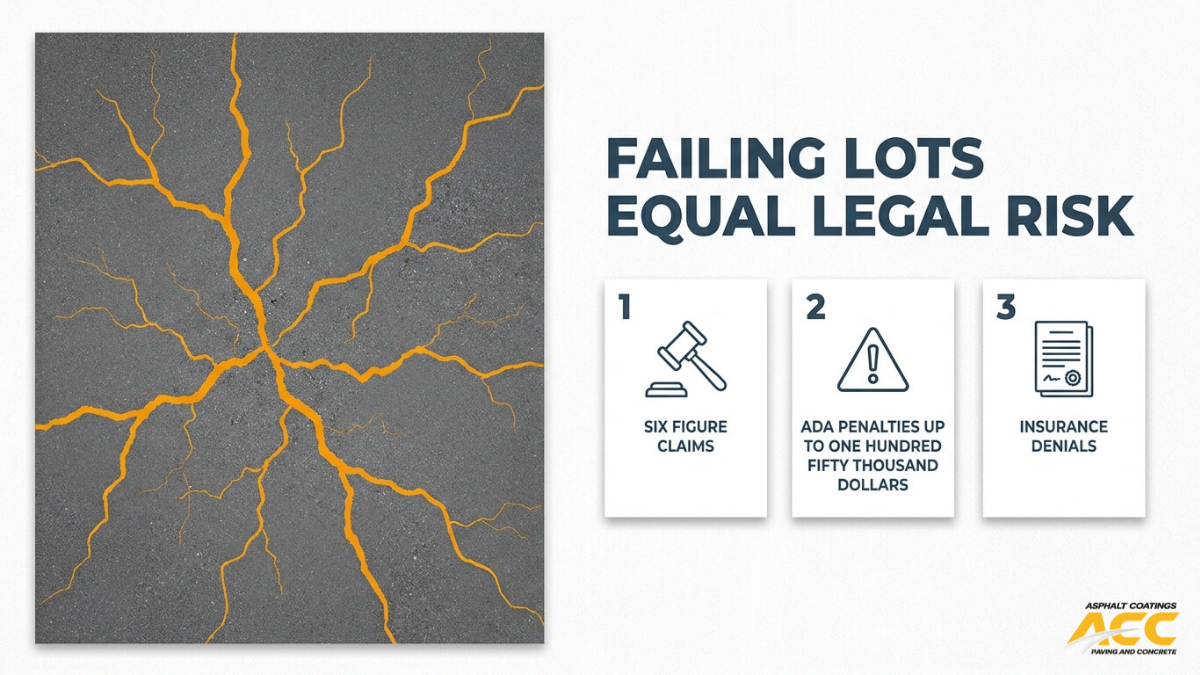
How Failing Parking Lots Increase Legal and Liability Risk
April 27, 2026
A failing parking lot is a premises liability case waiting to happen. Commercial property owners owe a legal duty of care to every person who walks across their pavement, and neglected surfaces give plaintiffs the evidence they need to prove negligence. We cover property owner legal obligations, specific surface hazards that generate claims, how slip-and-fall
Read