
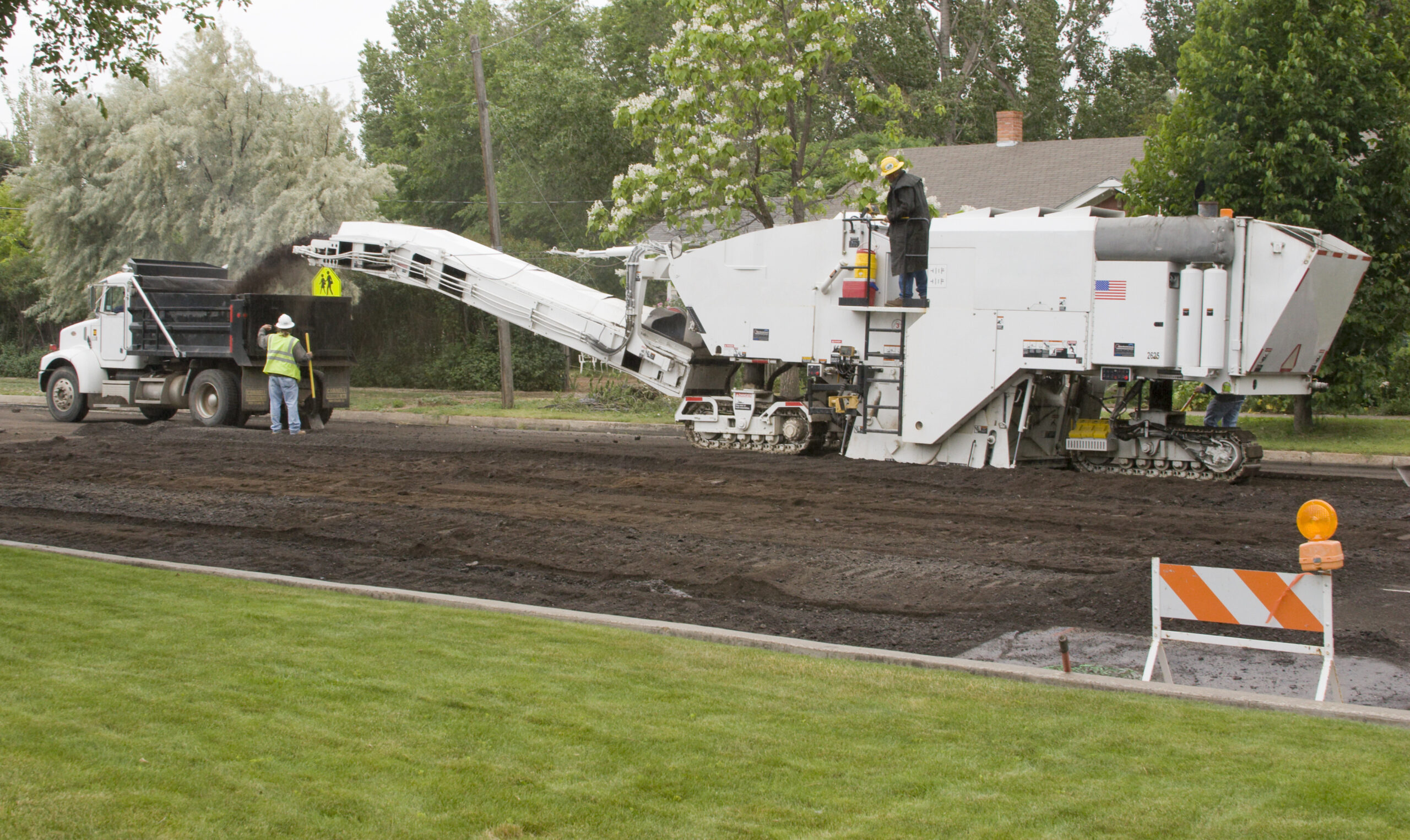
What Is Asphalt Milling and When Is It Needed?
April 9, 2025
Over time, asphalt surfaces degrade due to continuous vehicular load, environmental exposure, and oxidation. Surface distress, manifesting as alligator cracking, rutting, ravelling, and pothole formation, compromises both structural integrity and safety. When conventional patching fails to provide a sustainable solution, asphalt milling emerges as the most efficient method for surface rehabilitation. Asphalt milling, also known
Read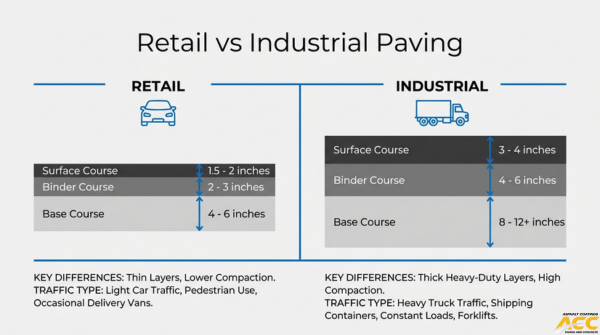
Asphalt Paving Differences for Retail vs Industrial Properties
April 6, 2026
Asphalt paving for retail properties differs from industrial properties in structural design, material selection, and maintenance strategy because each property type faces distinct traffic loads, environmental exposures, and regulatory requirements. This guide covers traffic demands and load profiles, asphalt thickness and mix design, subbase and drainage engineering, striping and layout standards, maintenance scheduling, freeze-thaw performance,
Read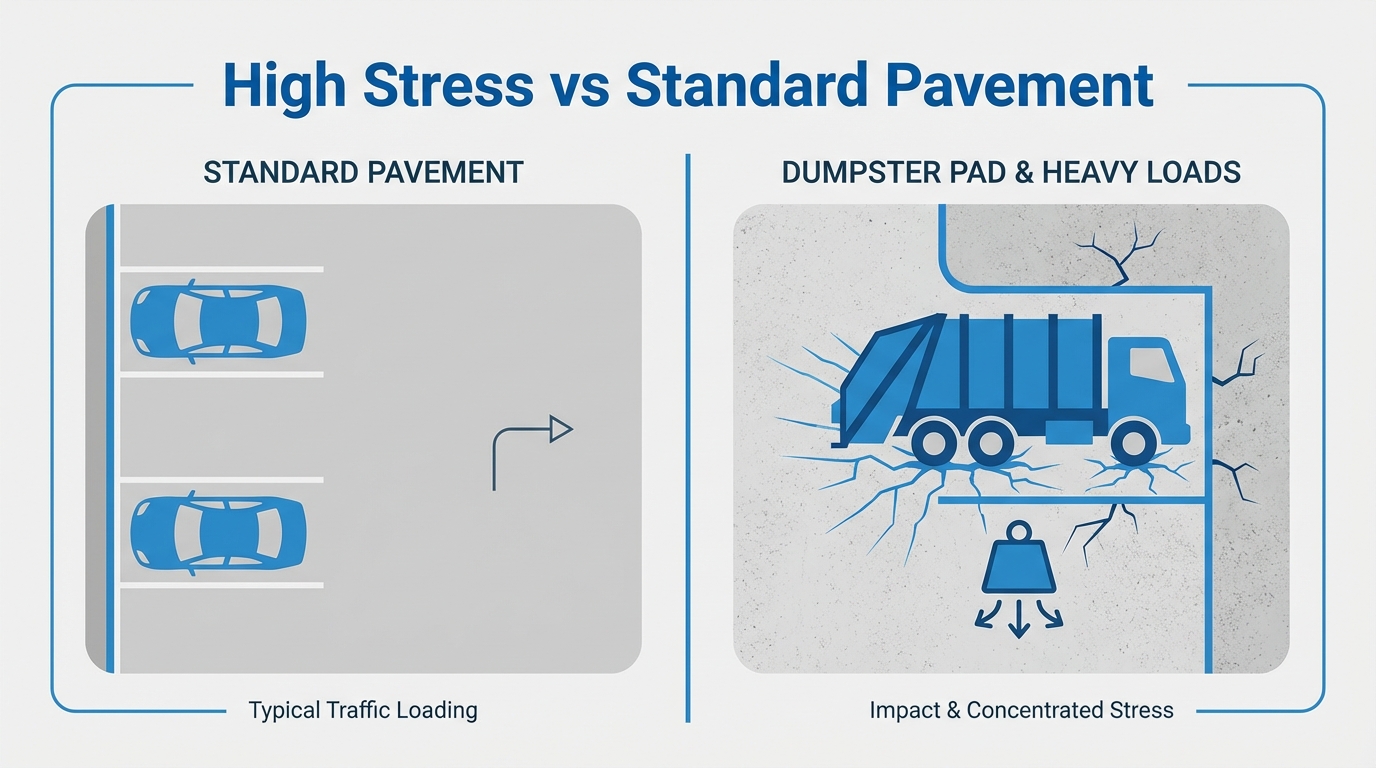
Why Dumpster Pads and Fire Lanes Fail Faster Than Parking Areas
April 6, 2026
Dumpster pads and fire lanes are high-stress pavement zones that deteriorate faster than standard parking areas because they endure concentrated heavy loads, chemical exposure, and extreme mechanical forces that conventional parking lot designs were never engineered to handle. We cover what makes these zones structurally different from parking lots, the specific forces that destroy them,
Read
How to Compare Asphalt Paving Quotes Without Getting Burned
March 4, 2026
Comparing asphalt paving quotes is the process of evaluating competing bids across material specifications, pricing structures, contractor qualifications, and contract terms to identify the best value for a durable pavement installation. This guide covers quote evaluation fundamentals, hidden fees and exclusions, contractor experience and credentials, communication and transparency during quoting, reference verification, and choosing comprehensive
Read