
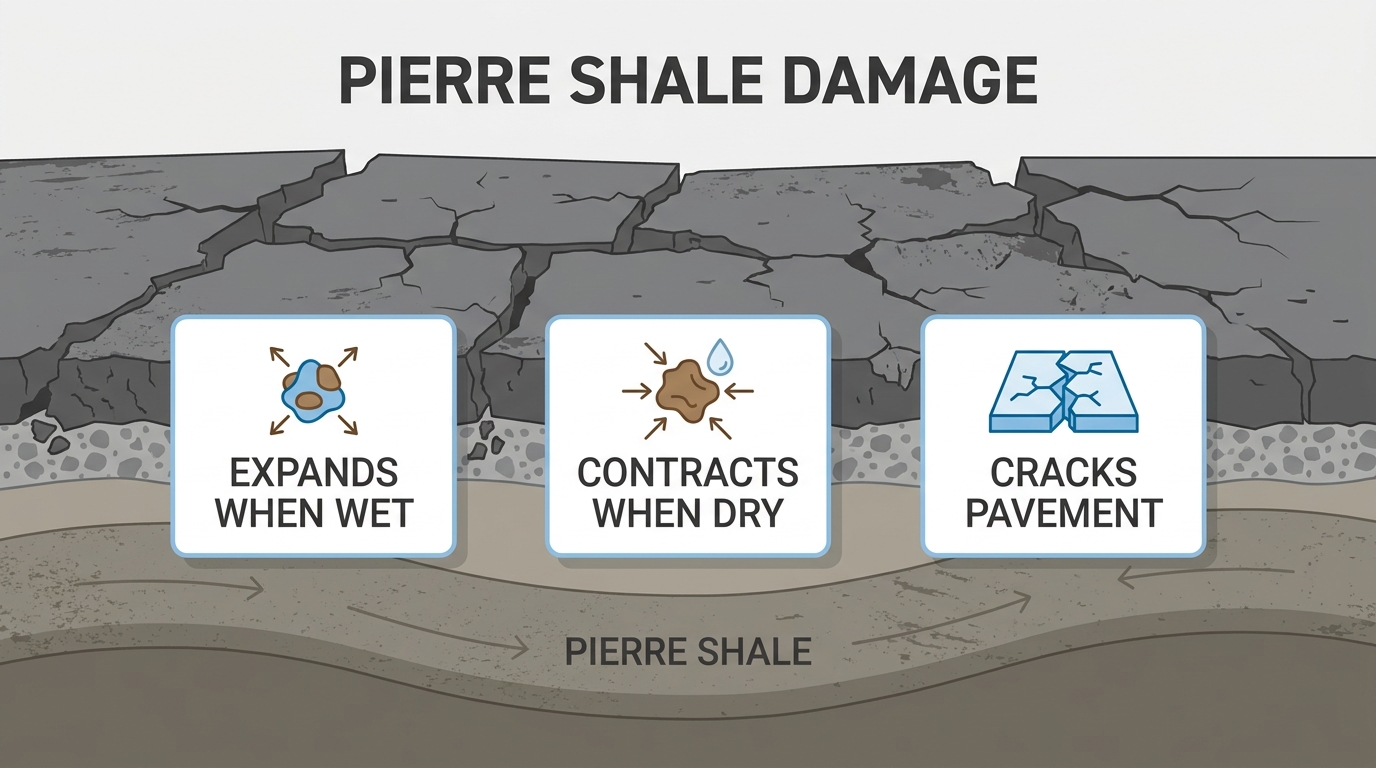
Why Do Expansive Pierre Shale Soils Crack Denver Commercial Pavements?
June 23, 2026
Pierre Shale is a Late Cretaceous marine shale formation rich in smectite and montmorillonite clay minerals that swell when wet and shrink when dry, generating a relentless swell-shrink cycle beneath Denver commercial pavements. This cycle is the primary reason parking lots, loading areas, and access roads across the metro area develop cracking, heaving, and settlement
Read
How Milling & Paving Improves Parking Lot Safety
April 10, 2025
A well-maintained parking lot is critical for safety, accessibility, and liability prevention. Over time, asphalt deteriorates due to heavy traffic loads, extreme weather, and oxidation, leading to cracks, potholes, and uneven surfaces. These hazards not only compromise vehicle performance but also increase the risk of pedestrian injuries and costly legal claims. Milling and paving provide
Read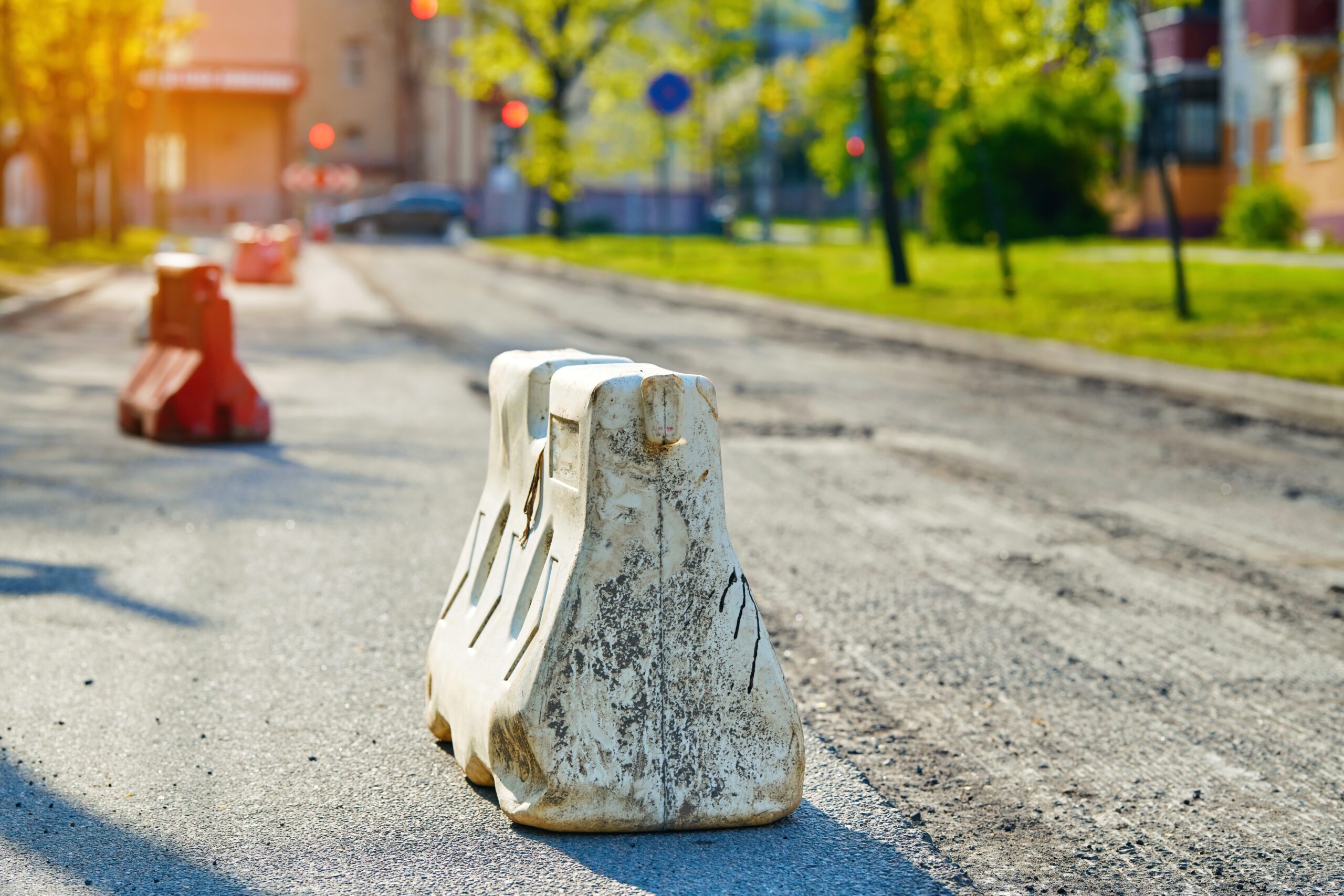
How to Maintain Your Pavement After a Mill & Pave: Expert Tips for Longevity
April 10, 2025
A newly resurfaced asphalt pavement is a critical asset, whether it’s a commercial parking lot in Colorado Spring, municipal roadway, or private driveway. The mill and pave process, also known as asphalt milling and overlay, effectively restores deteriorated surfaces by removing damaged layers and applying a fresh asphalt overlay, enhancing both structural integrity and curb
Read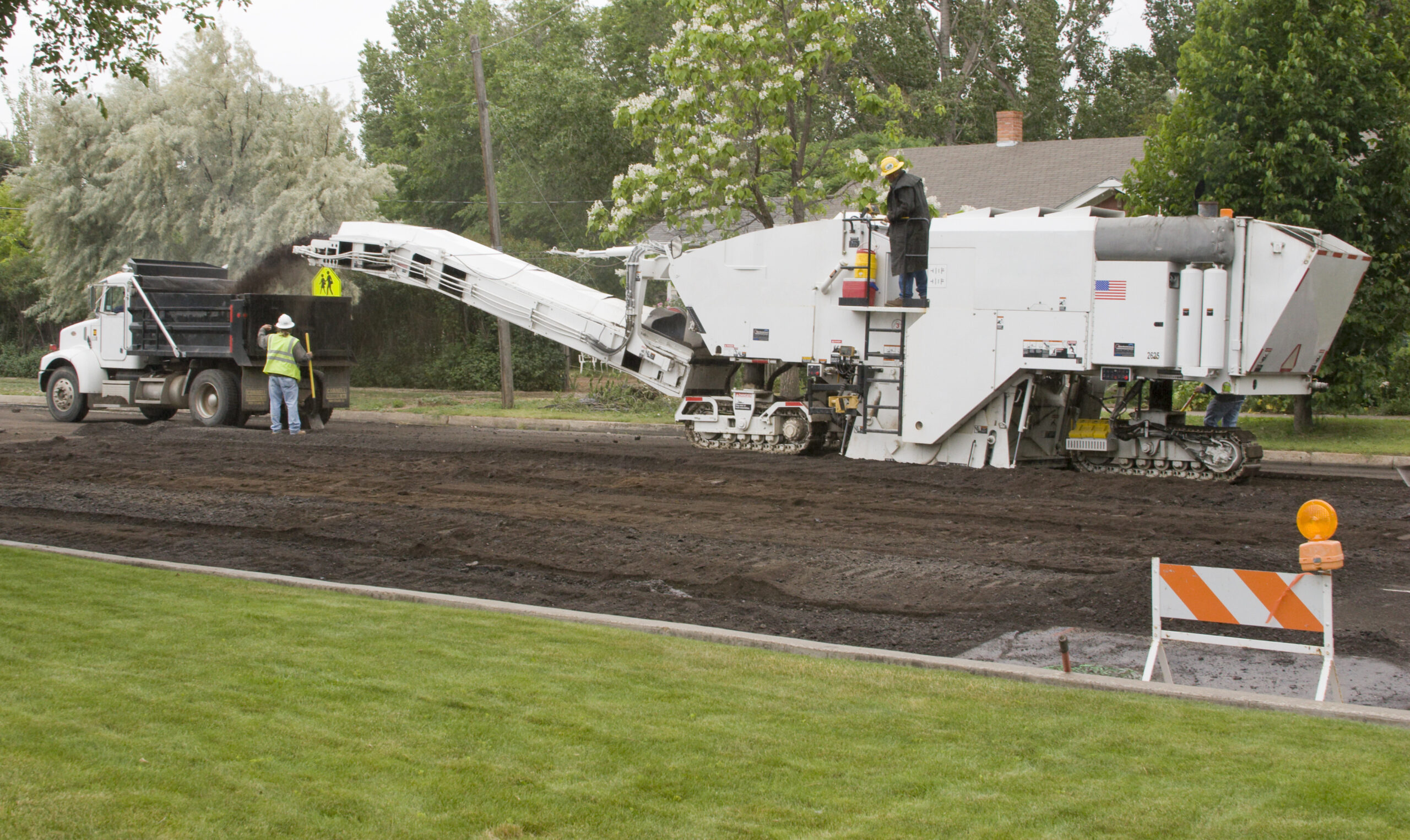
What Is Asphalt Milling and When Is It Needed?
April 9, 2025
Over time, asphalt surfaces degrade due to continuous vehicular load, environmental exposure, and oxidation. Surface distress, manifesting as alligator cracking, rutting, ravelling, and pothole formation, compromises both structural integrity and safety. When conventional patching fails to provide a sustainable solution, asphalt milling emerges as the most efficient method for surface rehabilitation. Asphalt milling, also known
Read