
Phased Asphalt Paving Strategies for Multi-Tenant Properties
April 6, 2026
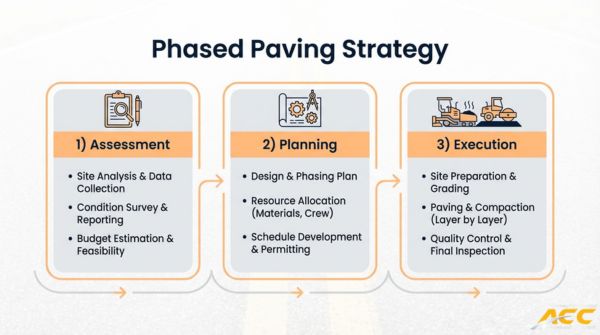
Phased asphalt paving is a construction approach that divides a multi-tenant parking lot into sequenced work zones, resurfacing one section at a time so the property stays operational throughout the project. This guide covers pre-construction evaluation, property-specific phase design, seasonal scheduling, tenant access and communication, phase transition quality, cost structure, and long-term maintenance planning. Successful
Read
Parking Lot Maintenance Solutions: A Comprehensive Guide
September 6, 2025
Parking lot maintenance solutions such as striping, crack sealing, and sealcoating are vital for preserving safety, appearance, and structural durability. Preventive care offers a compelling return. Washington State Transport Center estimates that for every $1 spent on preventative pavement maintenance, between $4 and $10 is saved on rehabilitation, effectively extending pavement lifespan. This evidence highlights
Read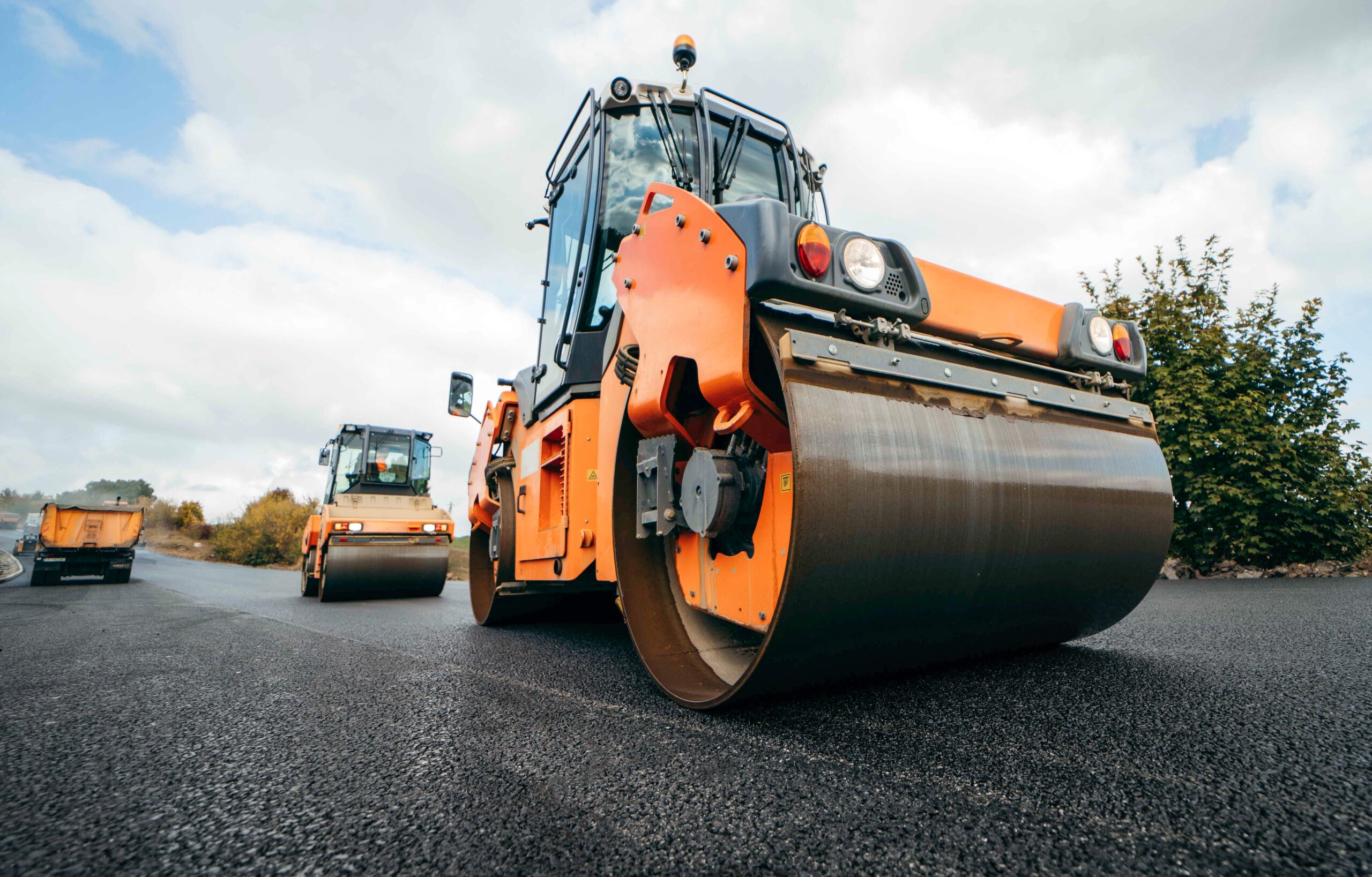
New Asphalt Construction: A Comprehensive Guide
September 6, 2025
Asphalt construction is the process of building paved surfaces, such as roads, parking lots, driveways, airport runways, and pathways, using asphalt, which is a mixture of aggregates (like crushed stone, sand, or gravel) bound together with bitumen (a sticky, petroleum-based material). Constructing new asphalt surfaces from scratch is the cornerstone of building strong and reliable
Read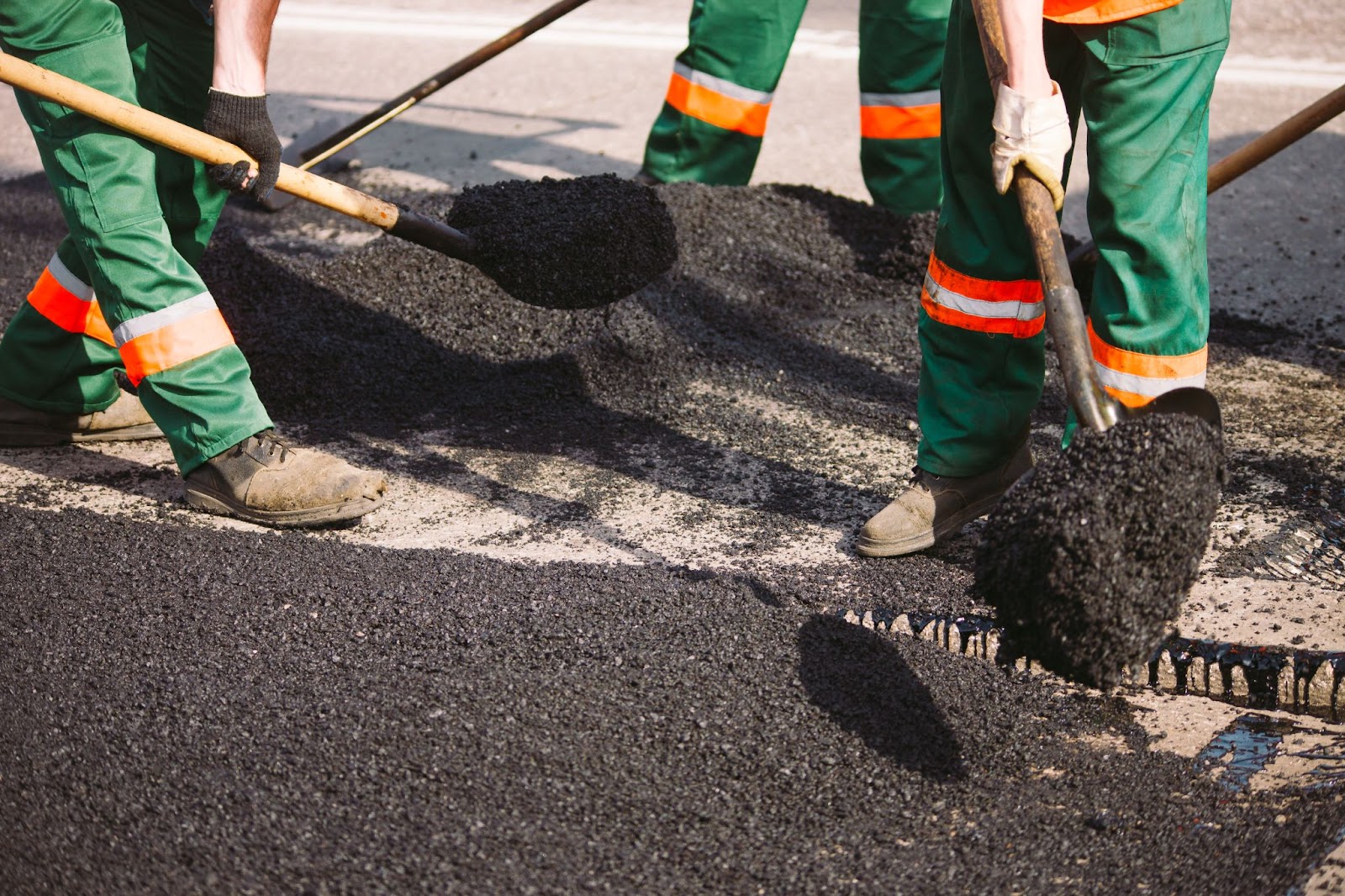
Asphalt Repair: Key Considerations Before Starting
September 6, 2025
Asphalt repair encompasses targeted techniques, such as crack filling, patching, seal coating, or resurfacing, designed to address damage or wear on asphalt surfaces without resorting to full reconstruction. These repairs are vital for preserving pavement integrity, extending its usable life, and preventing minor defects from escalating into costly replacements. According to industry estimates, the cost
Read