
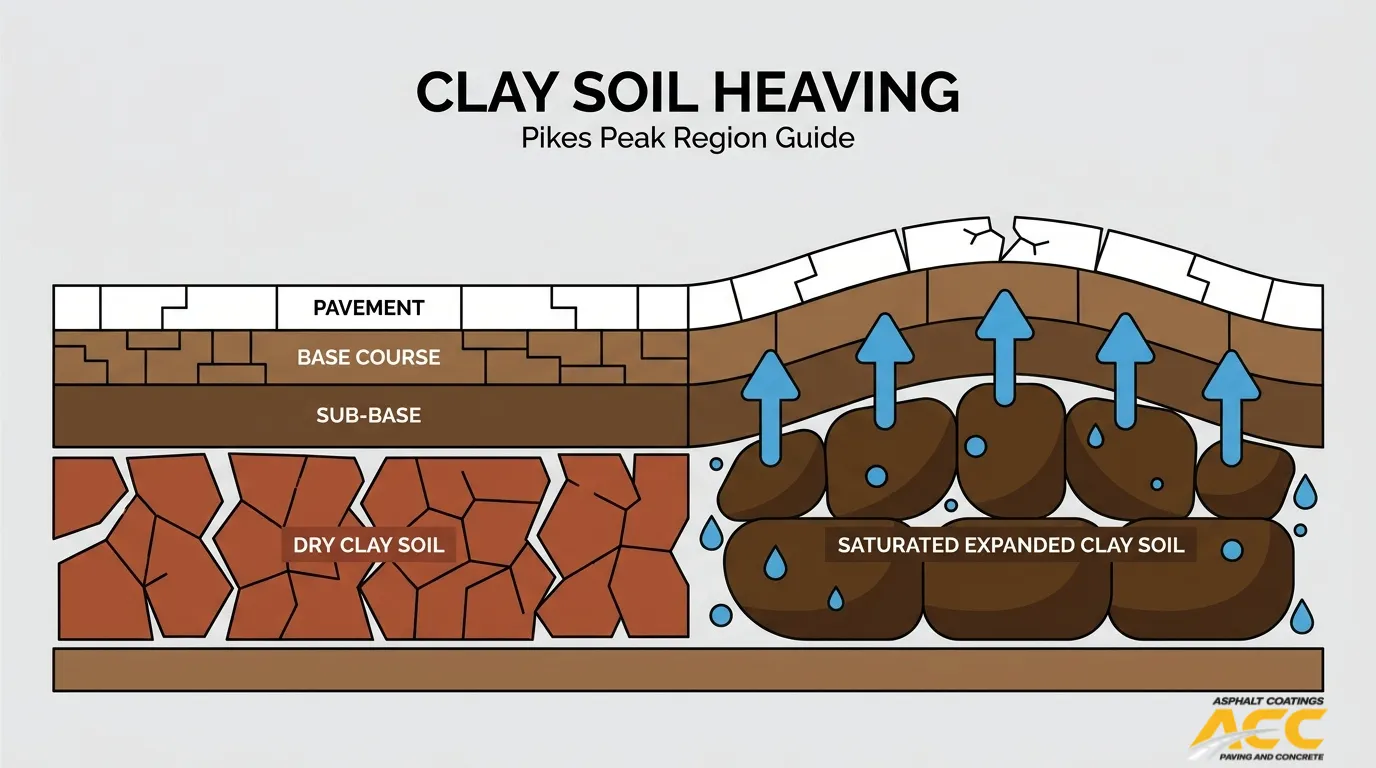
Why Do Expansive Clay Soils Cause Parking-Lot Heaving Across the Pikes Peak Region?
June 22, 2026
Expansive clay soil heaving in the Pikes Peak region is the upward displacement of parking-lot pavement caused by moisture-sensitive clay minerals in the subgrade that swell when wet and shrink when dry. The Pierre Shale and Dawson formations underlying much of Colorado Springs contain montmorillonite, smectite, and illite clays capable of generating forces that far
Read
Parking Lot Striping: Boosting Safety and Aesthetics for Denver Businesses
October 5, 2025
Parking lot striping is the process of applying painted lines and markings on asphalt or concrete surfaces to guide traffic, designate parking spaces, and ensure compliance with safety standards. Beyond being functional, striping also enhances the property’s overall appearance. According to the National Safety Council, tens of thousands of parking lot accidents occur annually in
Read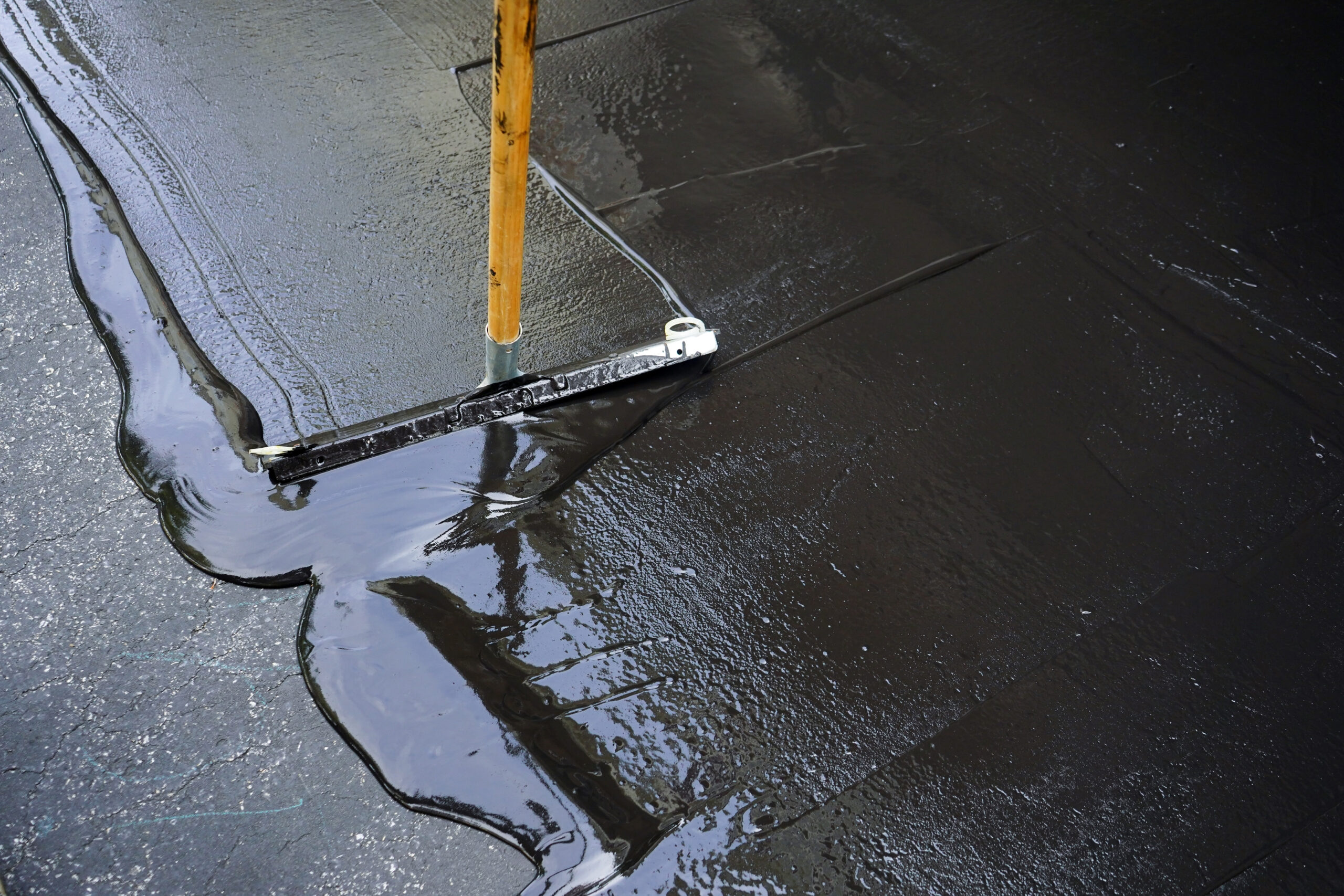
How Regular Sealcoating Keeps Denver Parking Lots in Top Condition
October 5, 2025
Sealcoating is the process of applying a protective coating to asphalt pavement to shield it from damage caused by weather, traffic, and chemical spills. It acts as a barrier that preserves the asphalt’s flexibility and appearance. According to the Minnesota Department of Transportation, sealcoating can extend the life of asphalt pavement by 3-5 years per
Read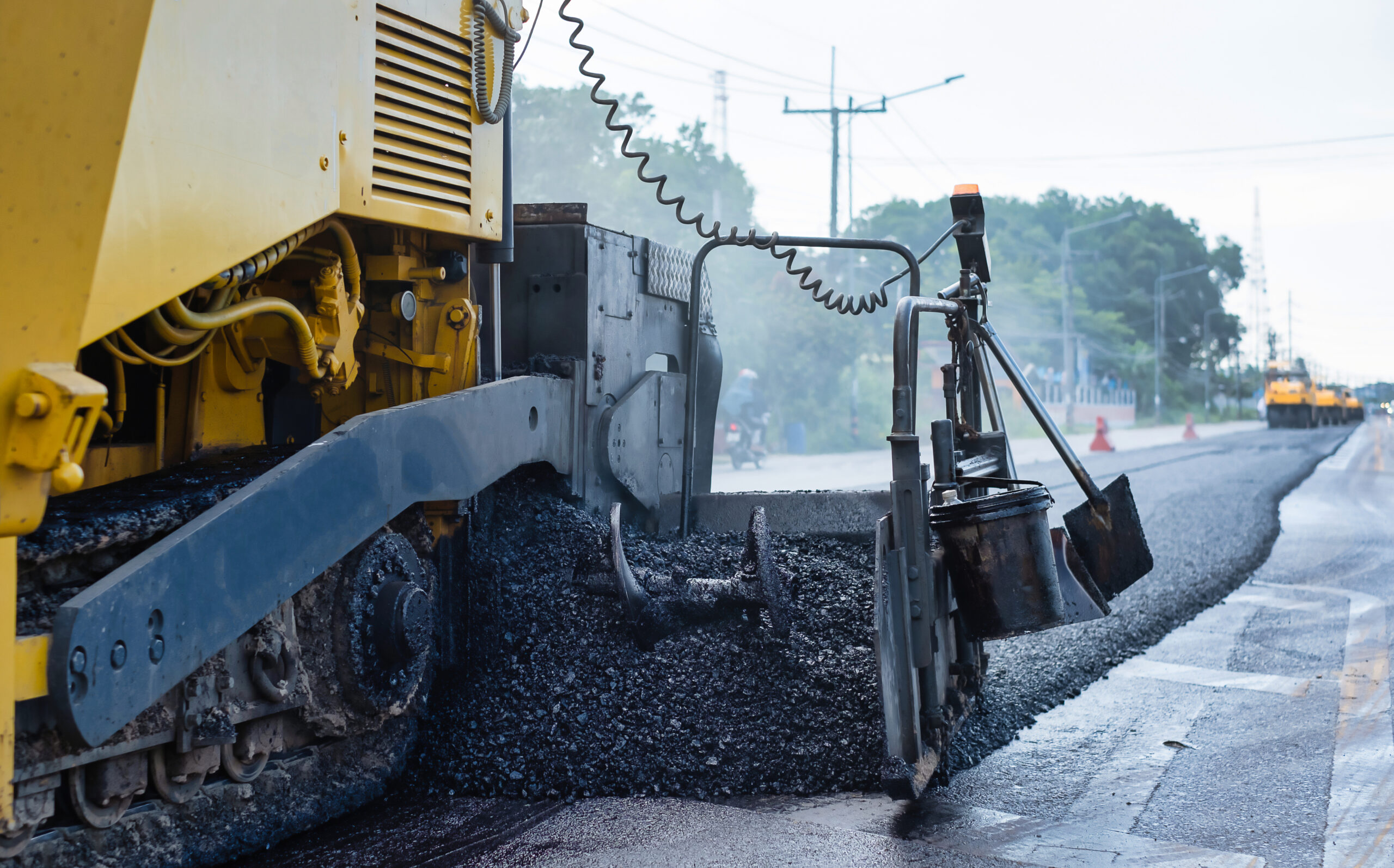
Denver’s Urban Growth: Why the City Needs Quality Asphalt Paving Services
October 5, 2025
Denver is experiencing rapid growth. New housing communities, expanding business districts, and large-scale development projects are changing the face of the city, so much so that the urbanized area of Denver expanded from about 150 square miles in 1950 to nearly 499 square miles by 2000 (U.S. Geological Survey). With this growth comes a pressing
Read