
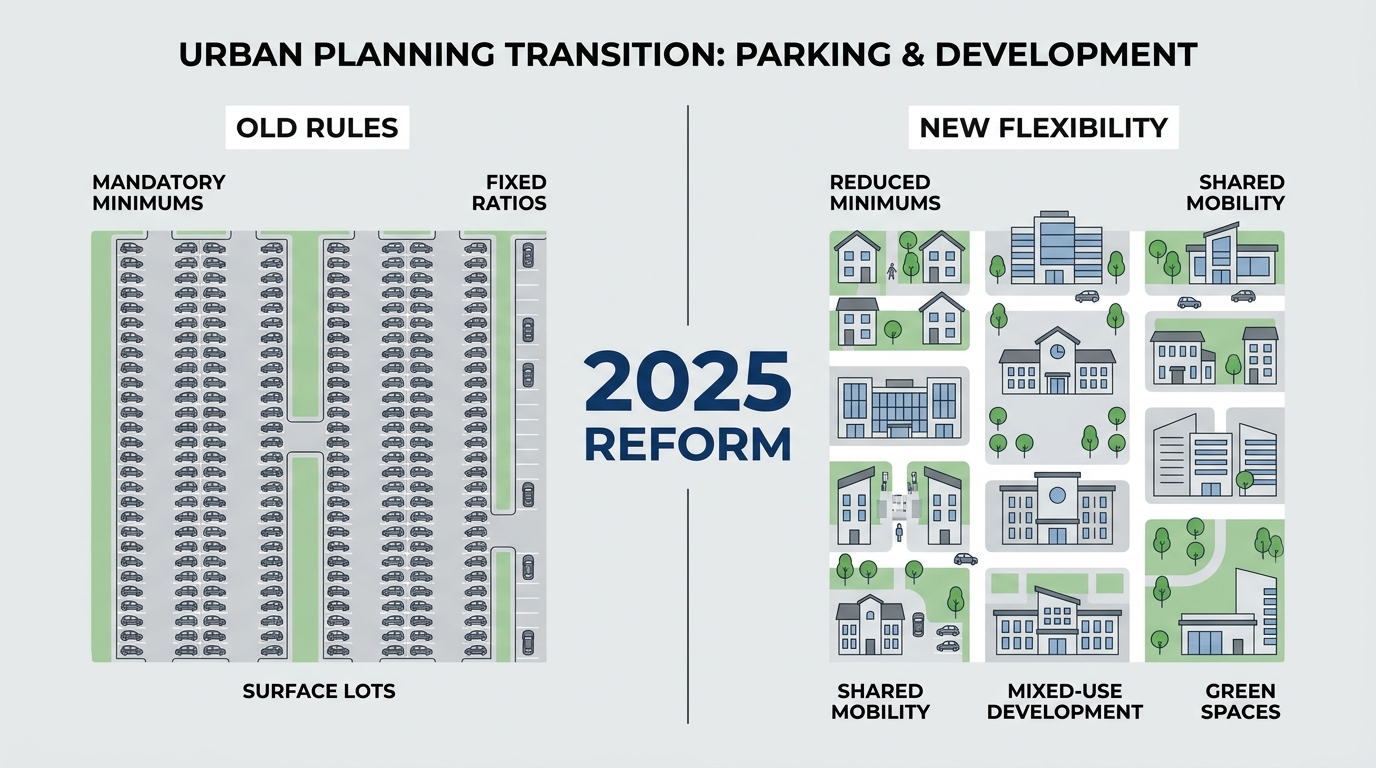
What Does Denver’s 2025 Elimination of Parking Minimums Mean for Commercial Property Owners?
June 23, 2026
Denver’s elimination of parking minimums is a citywide zoning reform that removes all mandatory parking space ratios for new developments, giving commercial property owners full control over how much parking to build or retain. This guide covers the policy’s origins and mechanics, its impact on existing commercial properties, new development and monetization opportunities, right-sizing parking
Read
How to Compare Asphalt Paving Quotes Without Getting Burned
March 4, 2026
Comparing asphalt paving quotes is the process of evaluating competing bids across material specifications, pricing structures, contractor qualifications, and contract terms to identify the best value for a durable pavement installation. This guide covers quote evaluation fundamentals, hidden fees and exclusions, contractor experience and credentials, communication and transparency during quoting, reference verification, and choosing comprehensive
Read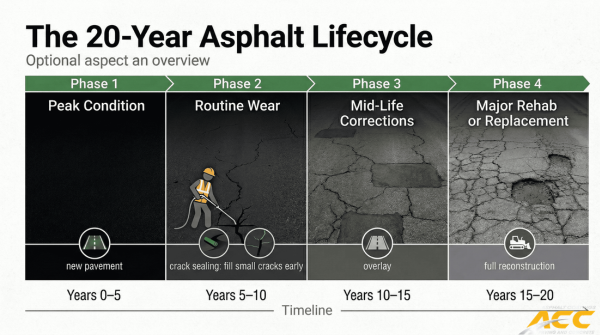
The 20-Year Lifecycle of a Commercial Asphalt Parking Lot
March 4, 2026
The 20-year lifecycle of a commercial asphalt parking lot is the predictable progression of pavement condition from initial installation through eventual reconstruction, shaped by material quality, environmental exposure, and maintenance decisions at every stage. This guide covers the distinct phases of pavement aging, the maintenance strategies that extend useful life, the environmental factors that accelerate
Read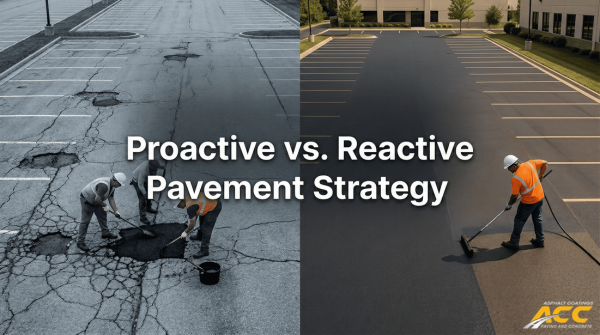
How to Build a Long-Term Pavement Management Plan
March 4, 2026
A long-term pavement management plan is a data-driven strategy for maintaining and preserving pavement assets through scheduled inspections, preventive treatments, and budgeted repairs rather than reactive fixes. It shifts spending toward early interventions that extend surface life and reduce total cost of ownership. This guide covers pavement condition assessment, environmental and traffic factors that drive
Read