
Why Is Contractor Insurance Important for Paving Projects?
July 24, 2026
Contractor insurance for paving is a collection of specialized commercial policies that protect paving businesses, property owners, and the public from financial losses caused by jobsite accidents, property damage, environmental contamination, and professional errors. These policies function as a financial safeguard for every party involved in asphalt and concrete projects. This guide covers policy types
Read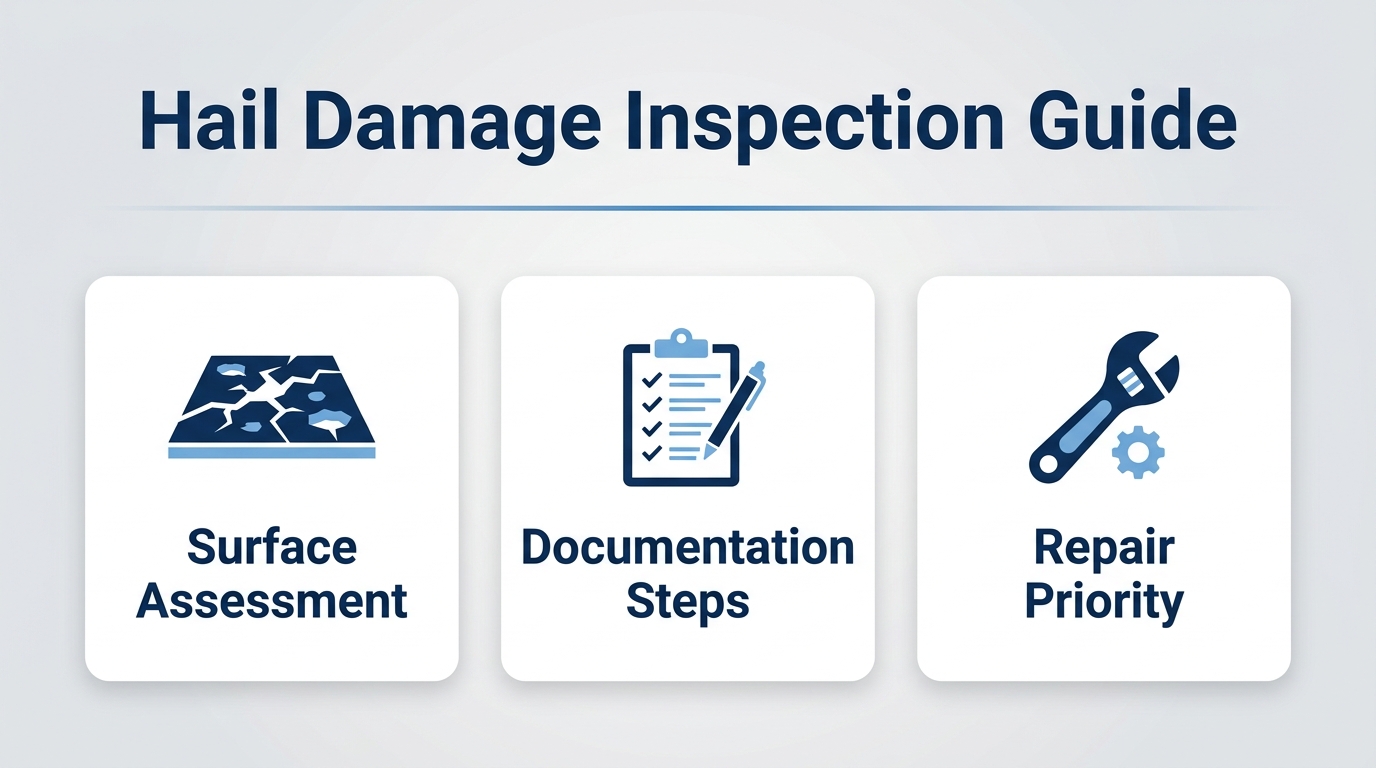
What Should a Post-Hailstorm Pavement Inspection Checklist Cover for Denver Property Managers?
June 26, 2026
A post-hailstorm pavement inspection checklist for Denver property managers is a systematic evaluation of parking lot surfaces, drainage infrastructure, and pavement markings conducted after severe hail to identify damage, document conditions for insurance claims, and prioritize repairs before deterioration accelerates. This guide covers pre-inspection safety protocols, damage identification for asphalt and concrete surfaces, drainage system
Read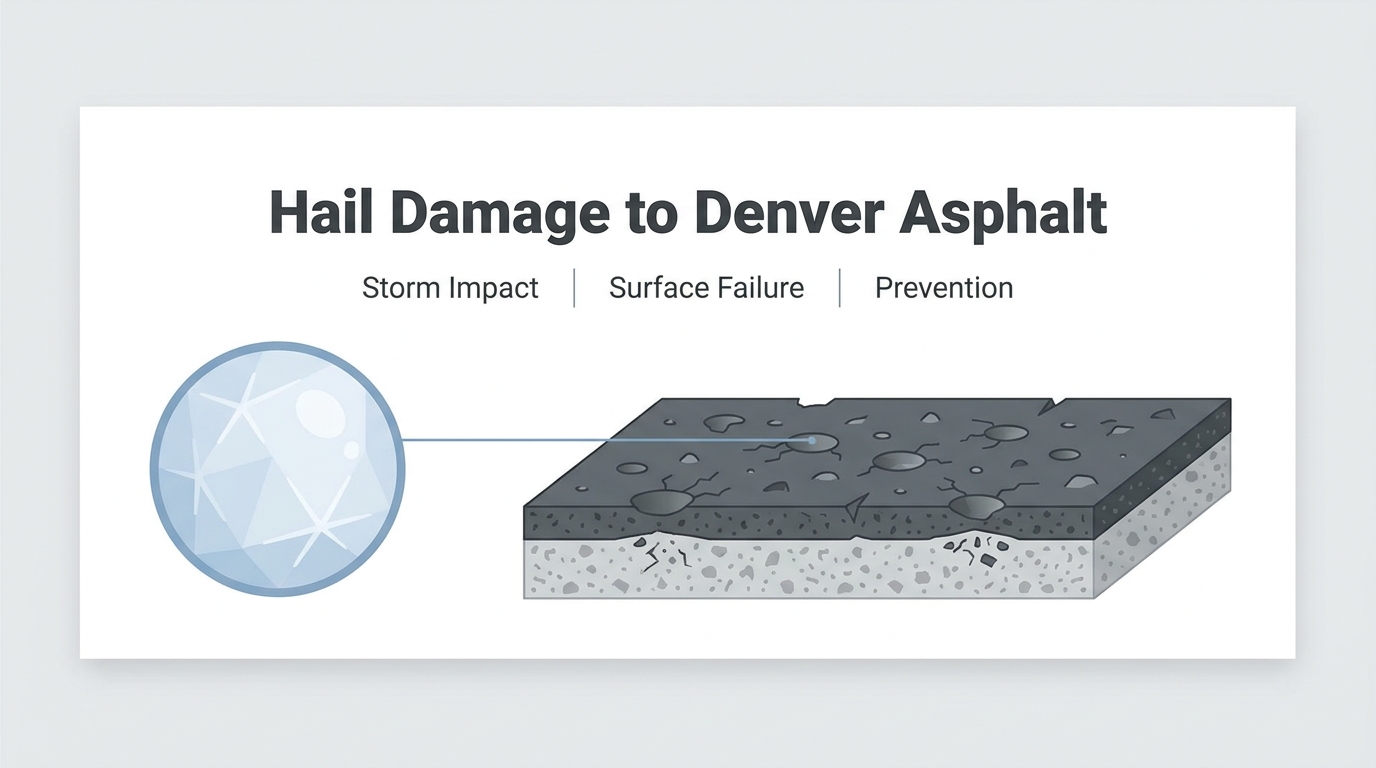
How Do Hail Alley Storms Damage Denver Commercial Asphalt and Sealcoat?
June 26, 2026
Hail Alley storm damage to Denver commercial asphalt is the progressive destruction of pavement surfaces and protective sealcoat caused by repeated hailstone impacts, compounded by the Front Range’s unique elevation, UV intensity, and freeze-thaw cycling. This guide covers Denver’s Hail Alley geography, asphalt and sealcoat vulnerability to hail impact, the types of damage storms produce,
Read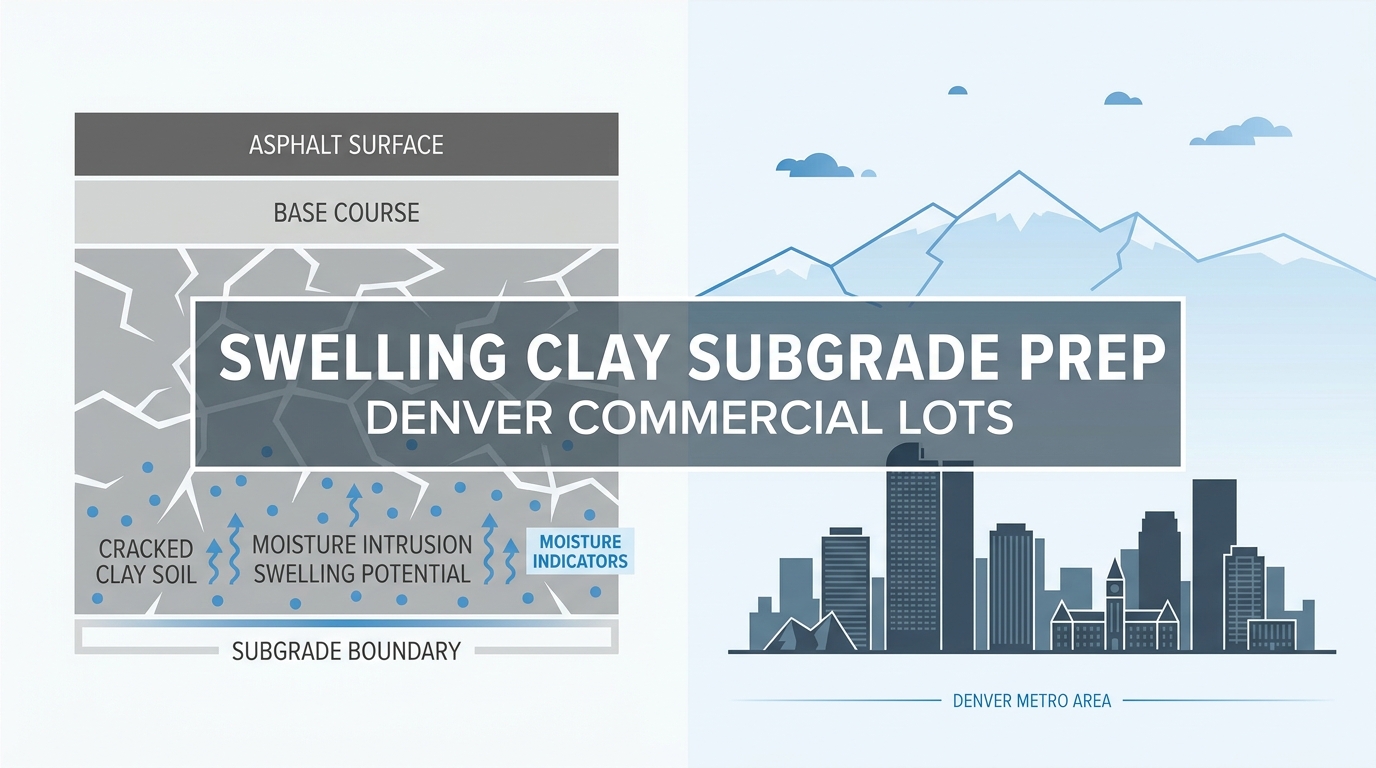
What Is Subgrade Preparation for Denver Commercial Lots on Swelling Clay Soils?
June 25, 2026
Subgrade preparation for Denver commercial lots on swelling clay soils is the process of testing, treating, and stabilizing expansive clay beneath a parking lot or commercial surface so the pavement structure can resist heave, settlement, and cracking over its full service life. This guide covers clay behavior and identification along the Front Range, the step-by-step
Read